
Blockchain Technology Explained: Guides, Trends & Tools
When working with Blockchain Technology, a distributed ledger system that records transactions across many computers. Also known as blockchain tech, it enables trust without a central authority. One of its core extensions is Decentralized Identity, a model that puts personal data back in the user’s hands using cryptographic keys. Another key piece is Sharding, a scaling method that splits a blockchain into smaller pieces to process more transactions in parallel. Finally, Smart Contracts are self‑executing code that run on the ledger, turning simple transactions into programmable agreements. Together they form the backbone of modern decentralized applications.
How the pieces fit together
Think of Blockchain Technology as a city’s infrastructure. Decentralized Identity acts like a digital passport that you control, which reduces the need for third‑party verification. Sharding works like expanding the city’s road network, allowing more traffic to flow without jams. Smart Contracts are the traffic lights and rules that keep everything moving safely. Because of this, the technology encompasses identity solutions, requires programmable contracts, and benefits from scalability tricks like sharding. When developers deploy a new DApp, they rely on smart contracts to enforce logic, while sharding ensures the app can handle many users at once. Meanwhile, users enjoy privacy and ownership through decentralized identity.
Recent trends push these ideas even further. The rise of cross‑chain bridges lets a DApp on one blockchain talk to another, making sharding’s data‑availability challenges a hot research area. Zero‑knowledge proofs add privacy layers to smart contracts, so you can prove a statement without revealing the underlying data. And projects like BitVM show how layer‑2 designs can bring contract‑like functionality to Bitcoin without creating a new coin. All these developments point to a future where blockchain tools are as routine as a web browser, and understanding each component today prepares you for the ecosystem of tomorrow.
Below you’ll find a curated set of articles that break down each of these topics. From a beginner’s guide to Ethereum smart contracts to a deep dive on blockchain sharding, the collection offers practical steps, real‑world examples, and clear explanations. Dive in to see how the pieces connect, what challenges developers face, and which innovations are shaping the next wave of decentralized technology.
Wrapped Assets vs Native Assets: Which Should You Use in 2026?
Learn the key differences between wrapped and native assets. Discover how wrapped tokens enable cross-chain DeFi participation, the security risks involved, and when to choose one over the other.
August 19 2026
Price Oracles for Cryptocurrency: How DeFi Gets Real-World Data
Discover how price oracles solve the oracle problem in DeFi. Compare Chainlink and Uniswap solutions, understand manipulation risks, and learn implementation best practices for secure smart contracts.
August 16 2026
Understanding Bitcoin Network Hash Rate: Security, Metrics, and Future Trends
Explore Bitcoin hash rate: what it is, why it matters for security, and how mining difficulty works. Learn about ASICs, network resilience, and future trends in 2026.
July 25 2026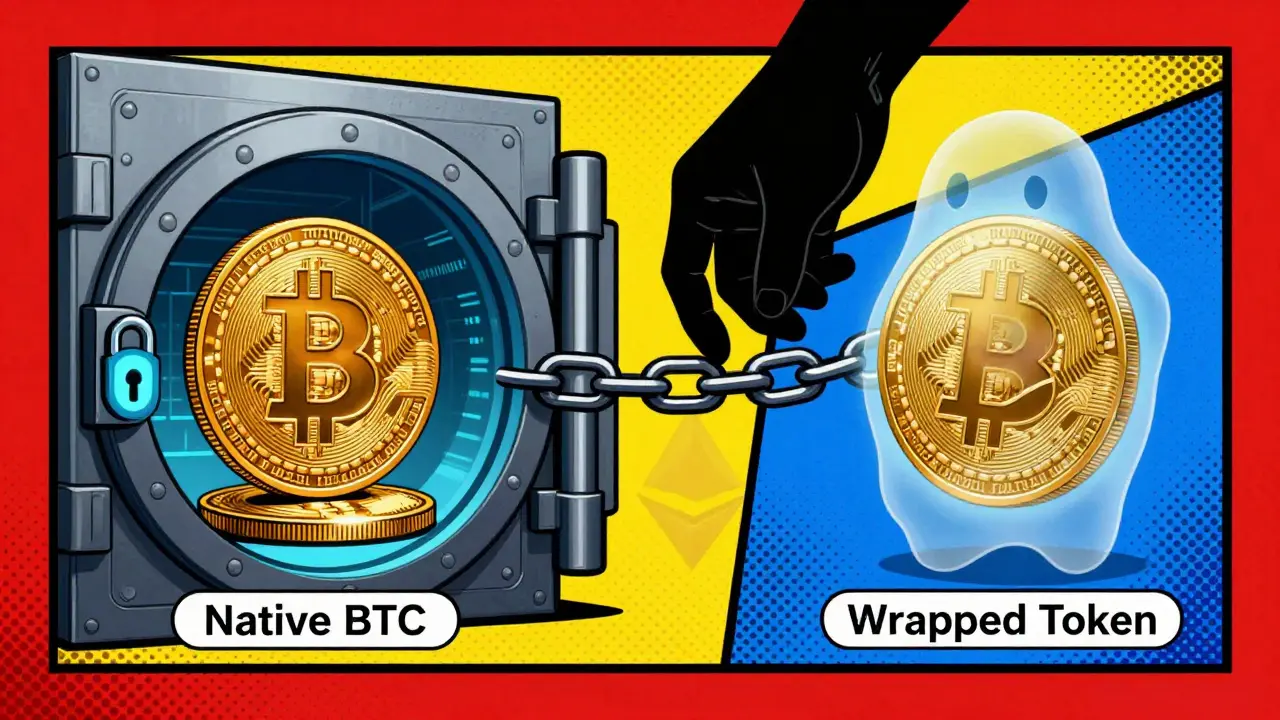
Wrapped Asset Custody and Trust: How Cross-Chain Bridges Actually Work
Explore how wrapped asset custody works, the risks of trusting custodians like BitGo and Coinbase, and why cross-chain bridges are both essential and dangerous for DeFi users.
July 16 2026
Probabilistic vs Absolute Finality: Which Blockchain Security Model Wins?
Explore the key differences between probabilistic and absolute finality in blockchain. Learn how Bitcoin's gradual security compares to the instant certainty of BFT networks like Algorand and Cosmos.
July 15 2026
Full Nodes vs Light Nodes: Which Blockchain Node Do You Need?
Discover the key differences between full nodes and light nodes in blockchain networks. Learn about storage requirements, security models, and which node type suits your needs.
June 29 2026
KYC Verification with Blockchain: How Decentralized Identity Works
Explore how blockchain transforms KYC verification, offering secure, decentralized identity management that reduces costs and improves user experience for financial institutions.
June 21 2026
Blockchain Charity Platforms: How Nonprofits Build Trust and Cut Costs in 2026
Explore how blockchain charity platforms transform fundraising with transparency and lower fees. Compare top tools like The Giving Block and Every.org for nonprofits in 2026.
May 30 2026
Why the Genesis Block is Special in Cryptocurrency
Discover why the Genesis Block is the cornerstone of cryptocurrency. From its hidden political message to its unspendable reward, explore the technical and historical reasons this first Bitcoin block defines the entire blockchain industry.
May 17 2026
Blockchain Record Keeping Requirements: A Compliance Guide for 2026
Explore how blockchain record keeping meets 2026 regulatory standards. Learn about GDPR compliance, immutable audit trails, and industry-specific requirements for finance, healthcare, and trade.
May 14 2026
How to Verify NFT Ticket Authenticity: A Step-by-Step Guide
Learn how NFT ticket authenticity verification works using blockchain technology. Discover the step-by-step process, smart contract benefits, and how to avoid fraud in 2026.
May 10 2026
Understanding Liquidity Pool Risks: A Guide to Impermanent Loss and Smart Contract Dangers
Explore the hidden dangers of DeFi liquidity pools. From impermanent loss to smart contract hacks, learn how to protect your assets while earning yield.
May 9 2026