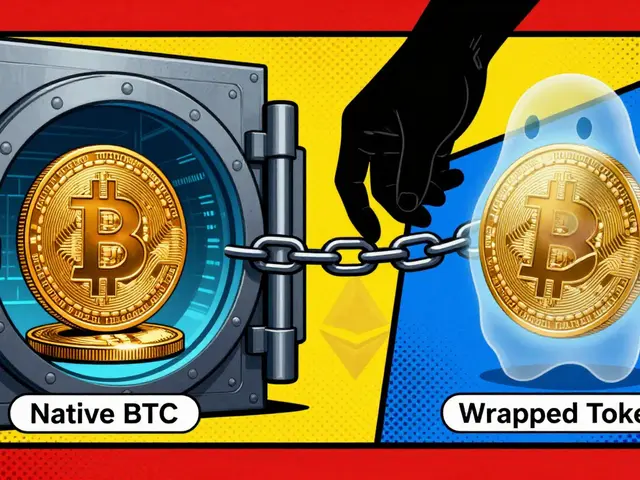
You hold Bitcoin in your wallet. It’s secure, private, and yours. But what if you want to use that Bitcoin to earn interest on Ethereum? You can’t just send BTC to an Ethereum address-it won’t work. The networks don’t talk to each other. This is where wrapped asset custody comes in. It’s the invisible engine behind most DeFi activity today, allowing assets like Bitcoin to function on foreign blockchains by creating a digital twin-a “wrapped” token-that represents the original asset one-to-one.
But here’s the catch: for that wrapped token to exist, someone has to hold your real Bitcoin. That someone is the custodian. And this arrangement introduces a massive layer of trust into a technology built on distrust. When you wrap your assets, you are trading cryptographic certainty for institutional promises. Understanding how this custody model works, who holds the keys, and what happens when things go wrong is critical for anyone navigating the modern crypto landscape.
The Mechanics of Wrapping: Who Holds Your Keys?
To understand the risk, you first need to understand the mechanism. Wrapped asset systems rely on three main actors: the user (you), the merchant (who initiates the request), and the custodian (who holds the underlying asset). Let’s look at the industry standard, Wrapped Bitcoin (WBTC), which launched in January 2019 through a partnership between BitGo, Kyber Network, and Republic Protocol.
When you decide to wrap your Bitcoin, you send your BTC to a specific address controlled by the custodian. In the case of WBTC, that custodian is BitGo. They don’t just throw your coins into a hot wallet. They store them in multi-signature cold storage wallets. These require multiple parties-often five different signers-to authorize any movement of funds. This is designed to prevent a single point of failure or insider theft.
Once BitGo confirms they have received your Bitcoin, they instruct a smart contract on the Ethereum network to mint new WBTC tokens and send them to your Ethereum wallet. The ratio is strict: 1 BTC equals 1 WBTC. If you later want your Bitcoin back, you send the WBTC to a burn address. The smart contract destroys the tokens, and BitGo releases your original Bitcoin from cold storage.
This process sounds seamless, but it creates a hybrid trust model. On one side, you have the transparency of blockchain verification. On the other, you have traditional financial custody practices. You are trusting that BitGo actually has the Bitcoin, that their internal controls are sound, and that they will release your funds when you ask. This is fundamentally different from holding native Bitcoin, where you control the private key.
The Trust Deficit: Centralized vs. Decentralized Models
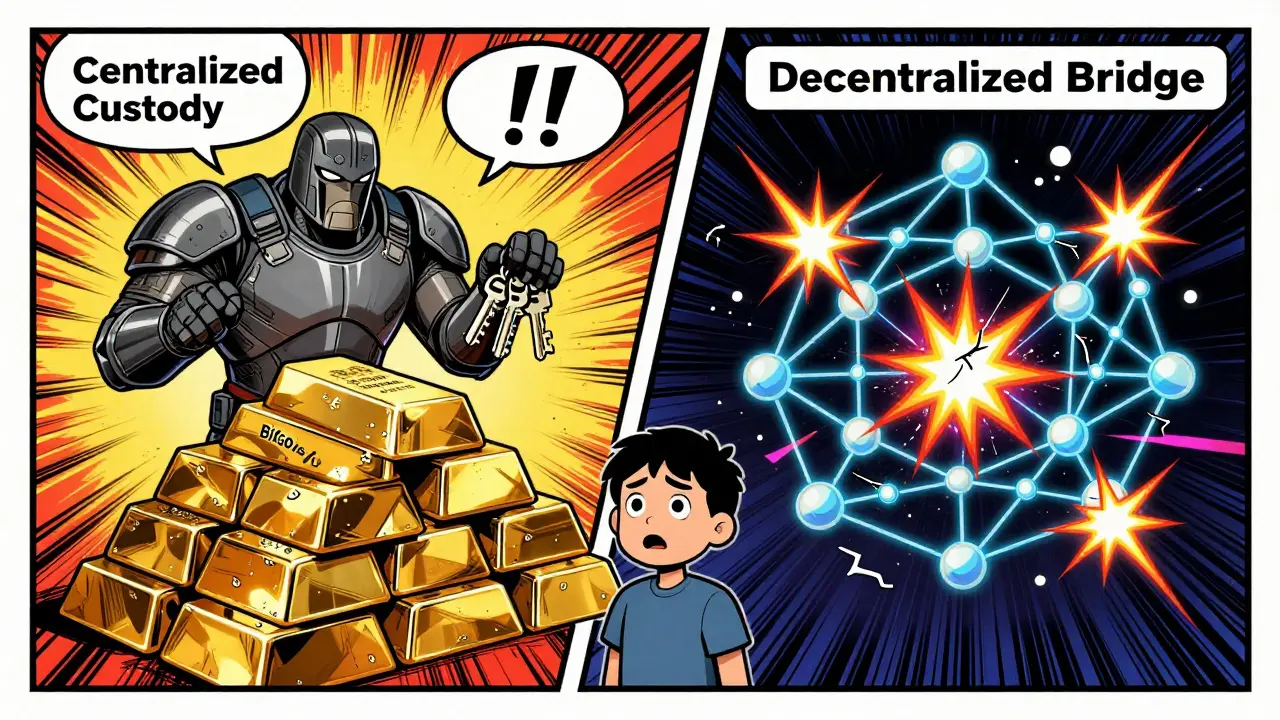
Not all wrapped assets are created equal. The biggest divide in the market is between centralized custodial models and decentralized alternatives. Each has distinct trade-offs regarding security, liquidity, and trust.
| Model | Custodian Type | Key Risk | Market Share (Approx.) |
|---|---|---|---|
| WBTC | Centralized (BitGo) | Custodian insolvency, regulatory action | 68.3% |
| cbBTC | Centralized (Coinbase) | Platform risk, FDIC limits | Growing rapidly |
| renBTC | Decentralized (renVM) | Smart contract bugs, bridge hacks | Shut down March 2023 |
| sBTC | Hybrid (Synthetix) | High collateral requirements | 8.7% |
WBTC dominates the market because it offers deep liquidity and institutional familiarity. However, it is highly centralized. As of mid-2024, only 18 multisig signers control the entire supply. If those signers collude, or if BitGo faces legal seizure, your access to your Bitcoin could be frozen. This centralization risk was highlighted when the SEC charged BitGo with unregistered securities offerings in June 2024, raising fears about the future of WBTC.
On the other end of the spectrum is Coinbase Wrapped Bitcoin (cbBTC). Launched in February 2023, cbBTC leverages Coinbase’s existing custodial infrastructure. For many users, the appeal is simple: Coinbase is a publicly traded company with FDIC-insured cash reserves (up to $250,000 per customer). While this doesn’t insure the Bitcoin itself, it provides a layer of corporate accountability that decentralized protocols lack. Within six months, cbBTC reached $1.2 billion in total value locked (TVL), showing strong institutional preference for regulated custodians.
Decentralized options like renBTC tried to solve the trust issue by using a distributed network of nodes (renVM) to hold the Bitcoin. No single entity had control. However, these systems proved vulnerable to complex smart contract attacks. RenBridge suffered severe security issues, leading to its shutdown in March 2023. Users lost access to funds, highlighting that decentralization doesn’t automatically mean safety-it often means more complex code surfaces for hackers to exploit.
Real-World Failures: What Happens When Trust Breaks?
Theoretical risks become terrifyingly real when bridges fail. Between 2020 and 2024, cross-chain bridges were stolen from over $2.8 billion, according to Chainalysis data. These aren’t just small glitches; they are catastrophic events that erase wealth instantly.
Consider the Harmony Horizon Bridge hack in June 2022. Hackers exploited a vulnerability in the bridge’s logic, allowing them to mint billions of dollars worth of wrapped assets without depositing any underlying collateral. The custodial controls failed to detect the anomaly in time. The result? A $650 million loss that wiped out the project’s treasury and left users with worthless tokens.
Then there’s the TerraUSD (UST) collapse in May 2022. While not a traditional wrapped asset hack, it demonstrated how fragile custodial trust assumptions are. When UST lost its peg, the algorithmic mechanism relied upon to maintain stability failed. Because so much value was tied up in wrapped representations of stablecoins across various chains, the contagion spread rapidly, erasing $40 billion in market value. Users who trusted the system found themselves unable to unwrap their assets because the underlying reserves had vanished.
These examples show a hard truth: wrapped asset custody shifts security from cryptography to organizational competence. If the custodian is hacked, goes bankrupt, or makes a coding error, your wrapped token becomes a piece of digital paper. There is no backup plan.
Regulatory Headwinds and Institutional Adoption
Despite the risks, institutions are rushing into wrapped assets. Why? Because they need exposure to Bitcoin within compliant frameworks. Traditional finance firms cannot easily hold native crypto due to custody regulations. Wrapped assets, especially those issued by regulated entities like Coinbase, offer a middle ground.
In March 2024, Fidelity reported that 47% of traditional finance firms plan to allocate capital to wrapped assets within 18 months. They prefer custodial models because they provide audit trails, KYC/AML compliance, and legal recourse. PwC’s 2024 survey found that 67% of institutions cite custodial risk as their primary barrier, yet 82% require quarterly third-party attestations to feel safe. This paradox drives demand for transparent, audited custodians.
However, regulators are catching up. The SEC’s enforcement action against BitGo in June 2024 established a precedent that wrapped tokens might be classified as securities. This isn’t just a label-it changes everything. If WBTC is a security, it must comply with federal registration rules, which could restrict who can buy or sell it. Similarly, the European Union’s MiCA regulation, fully implemented in June 2025, requires custodians to hold 130% capital reserves against wrapped assets. This aims to protect consumers but adds significant operational costs.
For retail users, this regulatory tightening might mean fewer options. Smaller, decentralized projects may struggle to meet compliance demands, pushing the market further toward big players like Coinbase and BitGo. While this increases safety, it also recentralizes power.

How to Evaluate Custody Risk Before You Wrap
If you’re considering wrapping your assets, you need to do your homework. Don’t just look at the token symbol; look at the structure behind it. Here’s a checklist to assess custody risk:
- Who is the custodian? Is it a known institution like BitGo or Coinbase, or an anonymous DAO? Institutions have skin in the game and legal obligations. Anonymous teams have neither.
- Are reserves verified? Look for monthly attestations from independent accounting firms. Armanino LLP has attested WBTC reserves since 2019. If you can’t find proof of reserves, assume they don’t exist.
- What is the withdrawal history? Check Dune Analytics dashboards for average unwrapping times. Delays can signal liquidity issues or technical problems. WBTC typically takes 15-30 minutes, but during stress periods, this can stretch to days.
- Is the code audited? Smart contracts governing the mint/burn process should be audited by reputable firms like Trail of Bits or OpenZeppelin. Note that audits are snapshots in time-they don’t guarantee future safety.
- What is the insurance coverage? Does the custodian offer crime insurance? Coinbase offers limited coverage, but understand exactly what is covered. Most policies exclude market volatility or smart contract failures.
Remember, wrapping is a convenience feature, not a core necessity. If you don’t need to use Bitcoin in Ethereum DeFi, keep it native. Only wrap what you actively intend to use, and never wrap your life savings into a single custodial solution.
The Future: Moving Toward Hybrid Solutions
The industry is aware of its flaws. Experts predict a shift toward hybrid custody models by 2026. These would combine the efficiency of centralized custodians with the transparency of decentralized verification. For example, Ethereum’s upcoming Verkle tree implementation, scheduled for Q4 2024, aims to reduce the cost of verifying custodial proofs by 87%. This could enable real-time, on-chain proof of reserves without relying solely on PDF reports.
Additionally, projects like Chainflip and THORChain are building decentralized swap protocols that eliminate the need for wrapped tokens altogether. Instead of wrapping Bitcoin to spend it on Ethereum, you would swap directly across chains using atomic swaps. This removes the custodian entirely, restoring the trust-minimized ethos of blockchain.
Until then, wrapped asset custody remains a necessary evil. It enables interoperability in a fragmented ecosystem, but it does so by reintroducing counterparty risk. As Dr. Gavin Andresen noted in 2023, these systems create systemic concentration points. Your job as a user is to recognize that risk, manage it through diversification, and stay informed about regulatory changes that could alter the landscape overnight.
What is the safest way to wrap Bitcoin?
The safest method currently available is using a regulated custodian like Coinbase (cbBTC) or BitGo (WBTC). These entities undergo regular audits, maintain multi-signature cold storage, and operate under legal frameworks that provide some recourse in case of misconduct. Always verify the latest reserve attestations before depositing large amounts.
Can I lose my money if a wrapped asset bridge gets hacked?
Yes. If the smart contract managing the wrapped asset is compromised, or if the custodian’s keys are stolen, your wrapped tokens may become worthless. Unlike native Bitcoin, you cannot recover wrapped assets if the issuing protocol fails. Diversify your holdings and avoid keeping large sums in high-risk decentralized bridges.
Why do institutions prefer custodial wrapped assets?
Institutions require compliance with Know Your Customer (KYC) and Anti-Money Laundering (AML) laws. Custodial providers like Coinbase and BitGo integrate these checks into their platform, making it easier for banks and hedge funds to participate in DeFi without violating regulations. Additionally, insured custody options provide a layer of financial protection that decentralized protocols cannot match.
Will decentralized bridges replace custodial models?
Eventually, yes. Projects like THORChain and Chainflip are developing trustless cross-chain swap mechanisms that eliminate the need for wrapped tokens. However, these solutions currently suffer from lower liquidity and higher complexity. Until they achieve scale and ease of use comparable to WBTC, custodial models will likely remain dominant, especially among institutional investors.
How long does it take to unwrap my assets?
Unwrapping times vary by protocol. For WBTC, it typically takes 15 to 30 minutes under normal conditions, as the custodian must move funds from cold storage and confirm receipt on the Bitcoin network. During periods of high congestion or security reviews, delays can extend to several hours or even days. Always check current status updates on platforms like Dune Analytics before initiating large withdrawals.