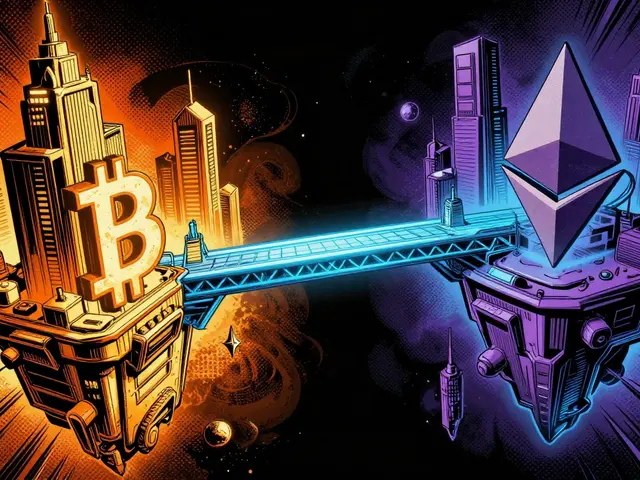
Imagine holding Bitcoin but wanting to earn yield on Ethereum. You can’t just move the coins over; they live on different networks. This is where wrapped assets come in. They are digital tokens that represent an asset from another blockchain, allowing you to use it in new ecosystems without selling your original holdings.
On the other hand, native assets are the original cryptocurrencies existing on their home blockchains, like Ether on Ethereum or Bitcoin on its own network. Understanding the difference between these two is crucial for anyone navigating modern decentralized finance (DeFi). It determines your security posture, liquidity options, and overall user experience.
The Core Difference: Origin vs. Representation
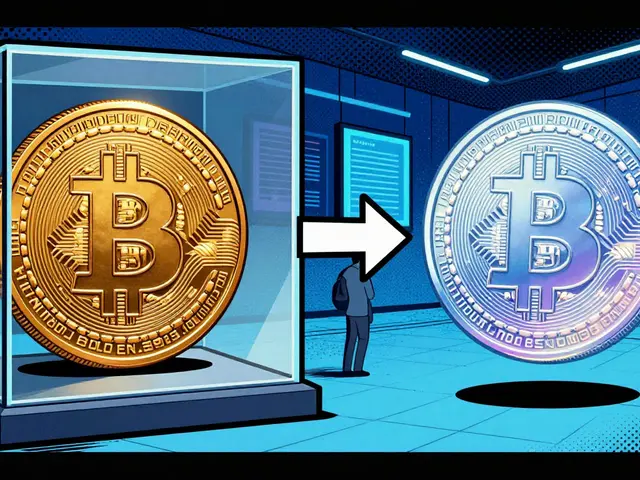
To grasp this, think of a native asset as the original painting hanging in a museum. It exists exactly where it was created, under the specific rules of that institution. A wrapped asset is like a high-quality reproduction of that painting, displayed in a gallery in a different city. The value is pegged to the original, but it’s a separate object with its own set of conditions.
Native assets operate directly under the consensus mechanism of their specific chain. For example, Bitcoin relies on Proof-of-Work, while Ethereum uses Proof-of-Stake. These assets don’t need external validation to be valid; their existence is secured by the network itself. In contrast, wrapped tokens rely on a 1:1 peg mechanism. Each wrapped token corresponds to one unit of the underlying native asset held in reserve. This reserve is typically managed by a custodian or a smart contract system that mints and burns tokens as needed.
- Native Asset: Exists only on its origin chain (e.g., BTC on Bitcoin).
- Wrapped Asset: Exists on a target chain (e.g., WBTC on Ethereum) representing the origin asset.
- Security Model: Native assets are secured by the chain’s consensus; wrapped assets rely on custodians or bridge protocols.
How Wrapped Assets Work Under the Hood
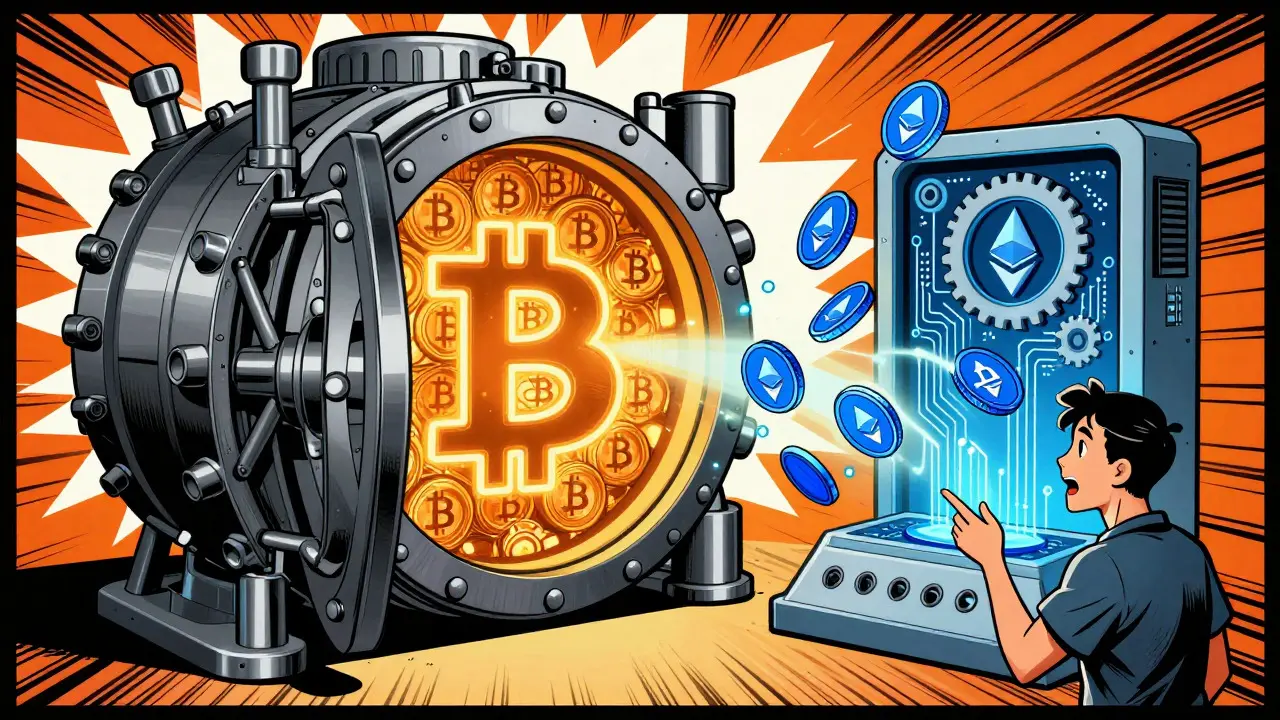
The architecture of a wrapped token usually involves three core components. First, there’s a custodian who holds the native assets in a secure vault. Second, there’s a minting/burning smart contract on the target blockchain. Third, there’s a verification mechanism to ensure the peg remains intact.
Let’s look at WBTC, or Wrapped Bitcoin, which launched in January 2019. If you want to convert your Bitcoin into WBTC, you send your BTC to a merchant partner, such as BitGo. BitGo locks those coins in a multisignature wallet. Once confirmed, a smart contract on Ethereum mints an equivalent amount of WBTC. To get your Bitcoin back, you reverse the process: you burn the WBTC, and BitGo releases the locked BTC to your address.
This process introduces a layer of trust. While native Bitcoin transactions are peer-to-peer and censorship-resistant, wrapping them means relying on the integrity of the custodian and the smart contracts. As of late 2023, WBTC accounted for approximately 78% of the market share in wrapped Bitcoin solutions, highlighting its dominance despite these structural dependencies.
Comparing Security, Liquidity, and Utility
When choosing between native and wrapped versions, you’re essentially trading off security for utility. Native assets offer the highest level of protocol-level security. Bitcoin’s network hashrate exceeds 300 exahashes per second, making it incredibly robust. However, this security comes with isolation. You can only use Bitcoin within the Bitcoin ecosystem unless you wrap it.
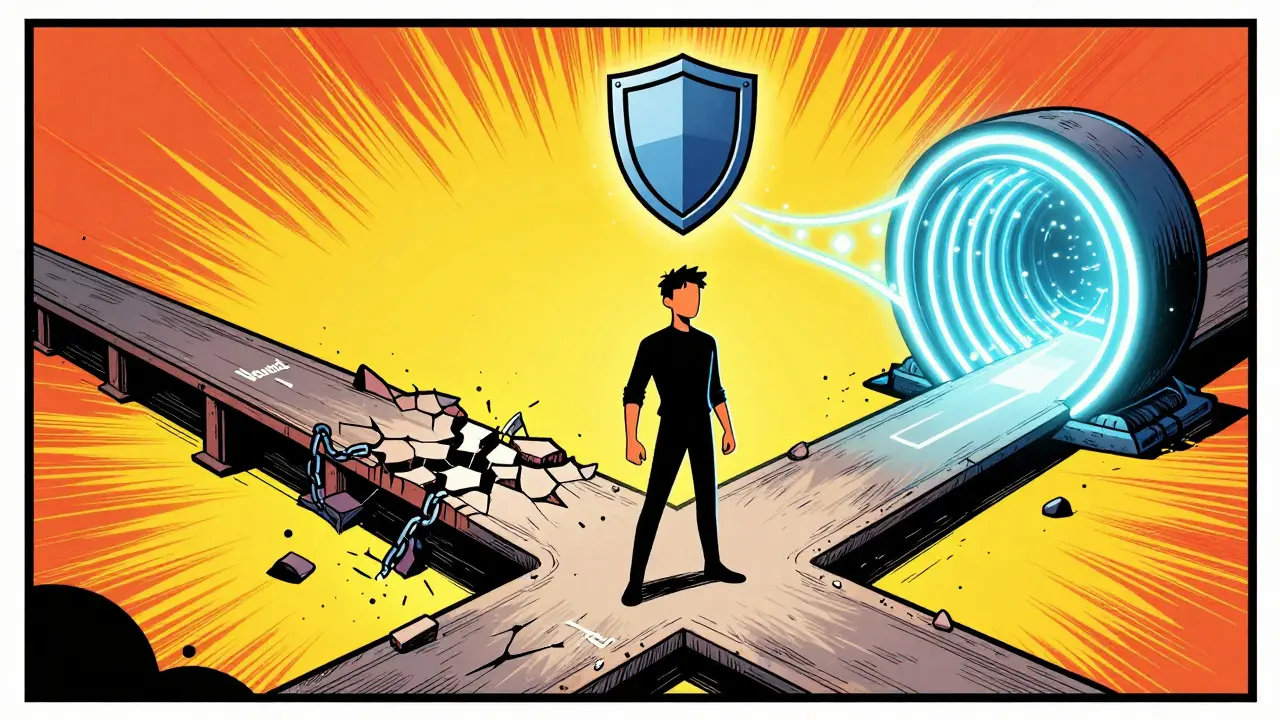
Wrapped assets unlock cross-chain functionality. By using WBTC on Ethereum, you gain access to a massive DeFi market worth billions of dollars. You can lend, borrow, or provide liquidity in protocols like Aave or Compound. This significantly enhances capital efficiency. However, this convenience introduces "bridge risk." If the bridge connecting the chains fails or gets hacked, your funds could be lost. The Nomad bridge hack in August 2022, which resulted in a $600 million loss, serves as a stark reminder of these systemic risks.
| Feature | Native Assets | Wrapped Assets |
|---|---|---|
| Location | Origin Chain Only | Cross-Chain (Target Chain) |
| Security | Secured by Chain Consensus | Relies on Custodians/Bridges |
| Liquidity Access | Limited to Home Ecosystem | Access to Multiple Ecosystems |
| Transaction Speed | Varies by Chain (e.g., 10 min for BTC) | Faster on Target Chain (e.g., 15-30 sec on ETH) |
| Trust Assumptions | Low (Decentralized Protocol) | Higher (Custodial/Smart Contract Risk) |
Real-World Scenarios: When to Use Which
Your choice depends heavily on your goals. If you are a long-term holder looking for maximum security and minimal counterparty risk, sticking with native assets is often the safer bet. Keeping your Bitcoin in a hardware wallet on the Bitcoin network eliminates the complexity of bridges and custodians.
However, if you are an active DeFi participant, wrapped assets are indispensable. Suppose you hold Bitcoin but want to participate in an Ethereum-based lending pool to earn interest. Converting to WBTC allows you to do this without selling your position. You maintain your exposure to Bitcoin’s price action while earning yield. Similarly, if you hold Ether and want to use it on a faster, cheaper chain like Polygon, wrapping it as wMATIC or bridging it via Layer 2 solutions enables this flexibility.
For institutional investors, the landscape is evolving. JPMorgan’s Onyx platform has implemented wrapped versions of JPM Coin across seven blockchain networks to facilitate daily transactions worth over $1 billion. This shows that even traditional finance is adopting wrapped structures to solve interoperability issues.
Risks and Pitfalls to Watch Out For
While wrapped assets offer great utility, they aren’t without flaws. The most significant risk is custodial failure. If the entity holding the native reserves goes bankrupt or freezes withdrawals, your wrapped tokens may become illiquid. During the FTX collapse in 2022, users reported delays of over 72 hours in processing wrapped asset withdrawals, causing anxiety among holders.
Another common pitfall is network confusion. Users sometimes accidentally send wrapped tokens to addresses meant for native assets, or vice versa. According to Etherscan data from October 2023, this error resulted in $2.1 million in stranded assets. Always double-check the network parameters before sending any transaction involving wrapped tokens.
Additionally, not all wrapped tokens are created equal. Some have higher minting fees than others. Coinbase’s WBTC service, for instance, charges a 0.875% fee for minting, which can eat into your profits if you’re frequently moving assets between chains. Decentralized alternatives like renBTC might offer lower custody risk but often suffer from slower transaction times and lower liquidity depth.
The Future: Moving Toward Trust Minimization
The industry is actively working to reduce the trust assumptions associated with wrapped assets. Technologies like Zero-Knowledge Proofs (ZKPs) are being developed to create trust-minimized implementations. These methods allow for cross-chain communication without needing a centralized custodian to verify every transaction. Analysts predict that ZK-based solutions could capture 65% of the market share by 2025.
Meanwhile, protocols like Chainlink’s CCIP (Cross-Chain Interoperability Protocol) aim to standardize how assets move between chains, reducing the fragmentation currently seen in the market. Vitalik Buterin, co-founder of Ethereum, advocates for native cross-chain messaging as the ultimate solution, which would eventually reduce the need for wrapped tokens altogether. Until then, wrapped assets remain the primary bridge connecting isolated blockchain islands.
As you navigate this space, keep an eye on the total value locked (TVL) in major wrapped assets. High TVL generally indicates stronger community trust and deeper liquidity. Currently, the total value locked across wrapped token implementations has grown significantly, reflecting increasing adoption by both retail and institutional investors.
Is WBTC safe to hold?
WBTC is considered relatively safe due to its established track record and audit history, but it carries custodial risk. Your Bitcoin is held by BitGo, so you are trusting their operational security and solvency. For maximum decentralization, some users prefer non-custodial alternatives, though these are less liquid.
What happens if a bridge gets hacked?
If a bridge protocol securing wrapped assets is hacked, the wrapped tokens may lose their peg or become worthless until the issue is resolved. This is why diversifying across multiple bridge providers or using trusted, audited protocols is recommended. Always check the security audits and insurance funds associated with the bridge you are using.
Can I use wrapped assets for payments?
Yes, but it depends on the merchant’s acceptance. Most merchants accept native assets. Using wrapped assets for payments requires the merchant to support the specific target chain (e.g., Ethereum for WBTC). It adds complexity and potential gas fees compared to direct native transfers.
Which is better for staking: Native or Wrapped?
Native staking is generally preferred for its simplicity and direct protocol integration. Wrapped staking tokens (like stETH) offer liquidity benefits, allowing you to trade or use your staked assets in DeFi while still earning rewards. However, they introduce additional smart contract risks.
How do I convert a wrapped asset back to native?
The process is called "unwrapping" or "burning." You typically send the wrapped token to a designated address or use a swap interface to burn the token. This triggers the release of the equivalent native asset from the custodian or bridge to your native wallet address. Check the specific documentation for the wrapped token you are using, as steps vary.