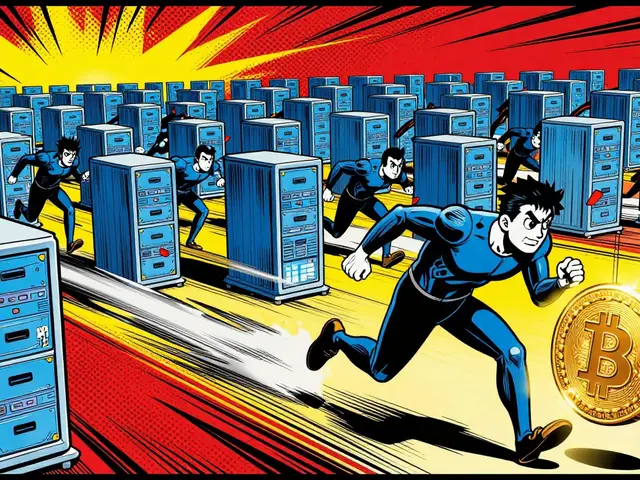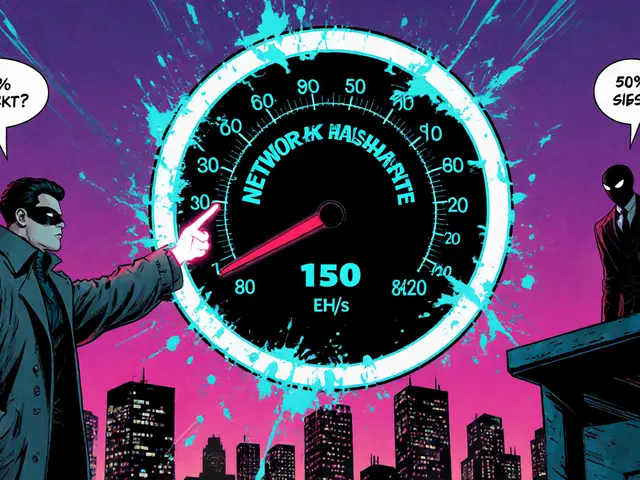
Imagine a global competition where millions of computers race to solve a complex mathematical puzzle every ten minutes. The winner gets rewarded with new Bitcoin, but more importantly, they secure the entire network for everyone else. This isn't just a game; it's the heartbeat of the Bitcoin ecosystem. We call this collective computational power the Bitcoin hash rate. It is not just a number on a chart-it is the primary measure of how safe your digital money really is.
If you have ever wondered why Bitcoin hasn't been hacked despite holding trillions of dollars in value, the answer lies here. But what exactly is this metric? Why does it fluctuate? And should you care if it drops? Let's break down the mechanics behind the scenes without the heavy jargon.
What Is Bitcoin Hash Rate?
At its core, the Bitcoin hash rate is the total number of calculations performed by all miners on the Bitcoin network per second. Think of it like the horsepower of a car engine, but instead of moving a vehicle, it moves data and secures transactions.
Miners use specialized hardware to guess random numbers until one matches a specific target set by the network. Each guess is called a "hash." When a miner finds the right hash, they get to add a new block of transactions to the blockchain. The speed at which these guesses are made across the entire world is the hash rate.
We measure this in hashes per second (H/s). Because the numbers are so massive, we use larger units:
- Gigahashes per second (GH/s): One billion hashes per second.
- Terahashes per second (TH/s): One trillion hashes per second.
- Exahashes per second (EH/s): One quintillion hashes per second.
To put that in perspective, as of mid-2026, the Bitcoin network operates at hundreds of exahashes per second. That is a number with eighteen zeros following it. A single modern mining rig might produce tens of terahashes, meaning thousands of these rigs are working together globally to maintain that exahash scale.
Why Hash Rate Equals Security
You might ask, "So what if the number goes up or down?" Here is the critical part: Hash rate is directly tied to network security. In a decentralized system like Bitcoin, there is no central bank to stop fraudsters. Instead, we rely on math and energy.
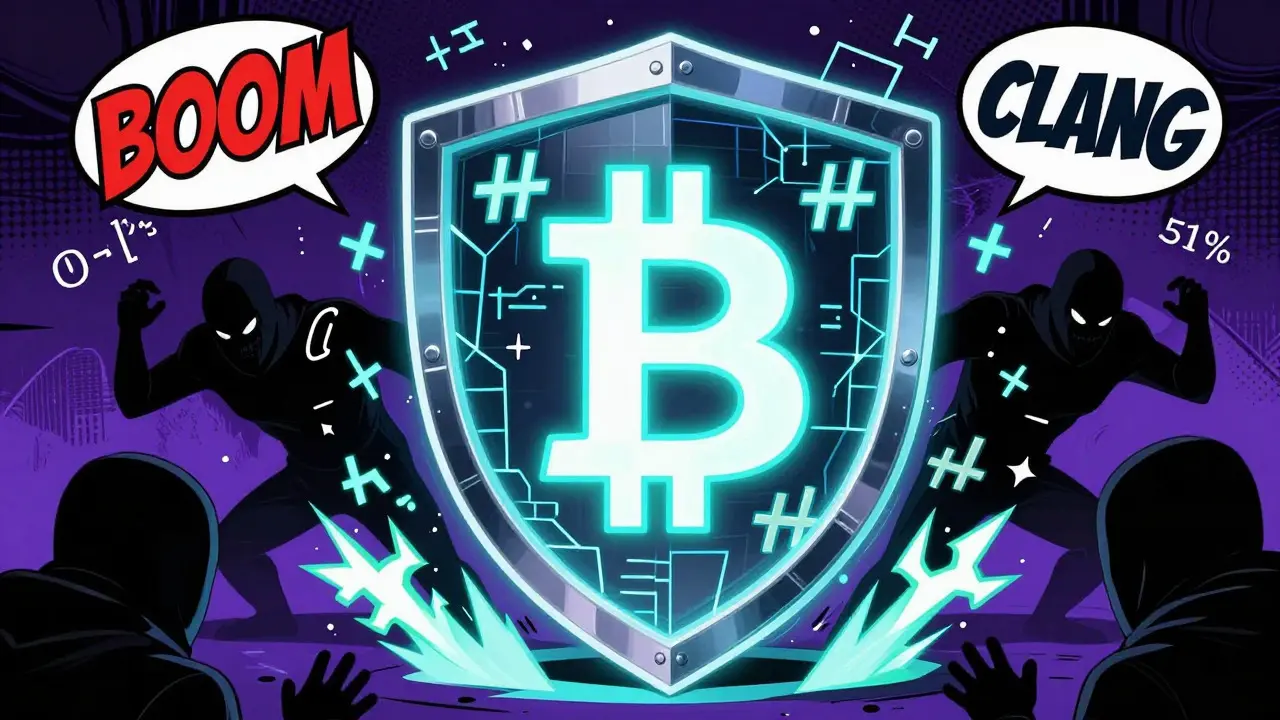
The biggest theoretical threat to Bitcoin is a 51% attack, where a single entity or group controls more than half of the network's computing power. If someone controls 51% of the hash rate, they can reverse their own transactions, double-spend coins, or prevent new blocks from being confirmed. It sounds scary, but here is the catch: doing this requires an astronomical amount of money and electricity.
Because the hash rate is so high, attacking the network would cost billions of dollars in hardware and energy bills. Plus, such an attack would likely crash Bitcoin's price, destroying the attacker's investment. So, a higher hash rate means the network is more expensive to attack, making it safer for you and me.
| Scenario | Impact on Security | User Experience |
|---|---|---|
| High & Stable Hash Rate | Maximum protection against attacks | Predictable confirmation times |
| Sudden Drop in Hash Rate | Temporary vulnerability window | Potential delays or exchange pauses |
| Gradual Increase | Strengthening decentralization | No immediate change for users |
The Role of Mining Difficulty
If more people start mining, doesn't that mean blocks are found too fast? Not necessarily. Bitcoin has a self-correcting mechanism called Mining Difficulty, which adjusts the complexity of the mathematical puzzle to keep block time around 10 minutes.
Every 2,016 blocks-which takes roughly two weeks-the network checks the average hash rate. If the hash rate went up, meaning more computers joined the party, the difficulty increases. The puzzle becomes harder to solve. If the hash rate drops because miners turned off their machines, the difficulty decreases. The puzzle gets easier.
This adjustment ensures that regardless of how powerful the hardware becomes, new Bitcoin enters circulation at a steady pace. It’s a delicate balance. For example, after the 2024 halving event reduced miner rewards, some less efficient miners shut down temporarily, causing a slight dip in hash rate. The difficulty adjusted downward shortly after, stabilizing the network.
Hardware Behind the Numbers: ASIC Miners
In the early days of Bitcoin, you could mine with a regular laptop. Those days are long gone. Today, the network relies on ASIC Miners, or Application-Specific Integrated Circuits designed exclusively for Bitcoin mining.
These machines are built for one thing: solving the SHA-256 algorithm used by Bitcoin. They are incredibly efficient compared to general-purpose computers but consume significant electricity. Major manufacturers like Bitmain produce models that deliver hundreds of terahashes per second while optimizing for joules per terahash (energy efficiency).
The shift to ASICs centralized mining in terms of technology-you need expensive gear-but it also forced miners to organize into pools. A Mining Pool allows individual miners to combine their hash rate to increase their chances of finding a block. Rewards are then split based on contribution. This structure helps stabilize income for smaller operators and keeps the overall network hash rate consistent.
Geographic Distribution and Decentralization
Where these miners are located matters. If all Bitcoin miners were in one country, that government could theoretically shut down the network by cutting power. Fortunately, the hash rate is geographically distributed. As of 2026, major mining hubs include the United States, Canada, Kazakhstan, and parts of Europe.
Regulatory changes often drive this movement. When China banned crypto mining in 2021, a huge chunk of the hash rate migrated elsewhere, primarily to the US. This diversification actually strengthened the network's resilience. Now, even if one region faces a blackout or political instability, the rest of the world keeps validating transactions.
Renewable energy is also playing a bigger role. Many miners are locating near hydroelectric dams or wind farms to reduce costs and environmental impact. This trend suggests that future hash rate growth may be more sustainable than previous cycles.

Monitoring Hash Rate: What Should You Watch?
As an investor or user, do you need to track hash rate daily? Probably not. But understanding trends can help you gauge network health. Sudden spikes often follow Bitcoin price rallies, as profits incentivize new mining investments. Conversely, sharp drops might signal economic stress within the mining sector.
Keep an eye on these indicators:
- All-Time Highs: Consistent new highs suggest growing confidence and adoption.
- Difficulty Adjustments: Large upward adjustments indicate rapid growth in mining capacity.
- Exchange Pauses: If major exchanges halt deposits due to low hash rate, it’s a warning sign of potential instability.
Remember, hash rate is a lagging indicator of price but a leading indicator of security. Even if Bitcoin’s price dips, a stable or rising hash rate shows that miners believe in the long-term value of the asset.
Future Outlook: Where Is Hash Rate Heading?
Looking ahead, the trajectory points upward. Hardware efficiency continues to improve, allowing miners to generate more hash rate with less power. Additionally, institutional interest in Bitcoin mining infrastructure is growing, bringing professional management and capital to the industry.
However, challenges remain. Energy consumption debates continue, pushing miners to prove their sustainability credentials. Regulatory clarity varies by country, creating uncertainty for large-scale operations. Despite these hurdles, the fundamental relationship between hash rate and security remains unchanged. As long as Bitcoin exists, its hash rate will be its shield.
For everyday users, this means peace of mind. Your Bitcoin is protected by the most powerful computer network on Earth. Understanding this gives you confidence in the system, knowing that it is constantly evolving to stay secure.
Can the Bitcoin hash rate ever drop to zero?
Technically yes, but practically no. If every miner turned off their machines simultaneously, the hash rate would hit zero. However, since mining is profitable and decentralized globally, it is highly unlikely that all participants would stop at once. Even during crashes, enough miners usually stay online to keep the network running.
Does a higher hash rate mean faster transactions?
Not directly. Transaction speed depends on block space and fees, not hash rate. A higher hash rate makes blocks more secure and predictable in timing (every 10 minutes), but it doesn’t increase the number of transactions per block. Layer-2 solutions like the Lightning Network handle speed improvements.
How often does mining difficulty adjust?
Mining difficulty adjusts every 2,016 blocks, which occurs approximately every two weeks. The adjustment aims to keep the average block time close to 10 minutes, compensating for changes in the total network hash rate.
Is Bitcoin mining environmentally friendly?
This is debated. While Bitcoin consumes significant electricity, many miners now use renewable sources like hydro, wind, and solar. The industry is increasingly focused on carbon-neutral operations, though the environmental impact remains a topic of discussion among experts.
What happens if a 51% attack succeeds?
A successful 51% attack could allow an attacker to double-spend coins or censor transactions. However, it cannot create new Bitcoin out of thin air or steal funds from unrelated wallets. Due to the high cost of acquiring such power, most experts consider it economically unfeasible for Bitcoin today.