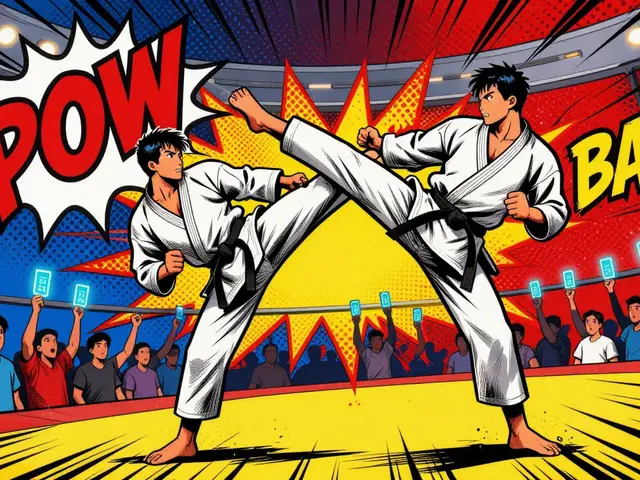
Imagine watching a martial arts fight where you don't just cheer from the sidelines-you actually help decide who fights whom, how much they get paid, and even what rules apply. That is the promise of Karate Combat, a full-contact karate league that has turned its entire operation into a decentralized autonomous organization (DAO). At the heart of this experiment is the KARATE token, a cryptocurrency designed not just for trading, but for governing a real-world sports league.
If you have seen ads for this project or heard whispers in crypto communities about "sports tokens," you might be wondering if it is legitimate, how it works, and whether it is worth your attention. The short answer is that KARATE is a unique utility token tied to a specific niche: combat sports governance and fan engagement. It operates on both the Ethereum and Hedera networks, offering features like "Up Only Gaming" where fans can predict outcomes without risking their principal balance. However, like many experimental crypto projects, it comes with significant volatility and community controversy.
How Karate Combat Works as a Sports DAO
To understand the token, you first need to understand the league. Founded in 2018, Karate Combat started as a traditional professional karate organization. But in 2023, it underwent a radical shift. The league was sold to an ownerless trust and foundation, effectively removing individual equity holders. Instead, control was handed over to the KarateDAO, a governance structure powered by the KARATE token.
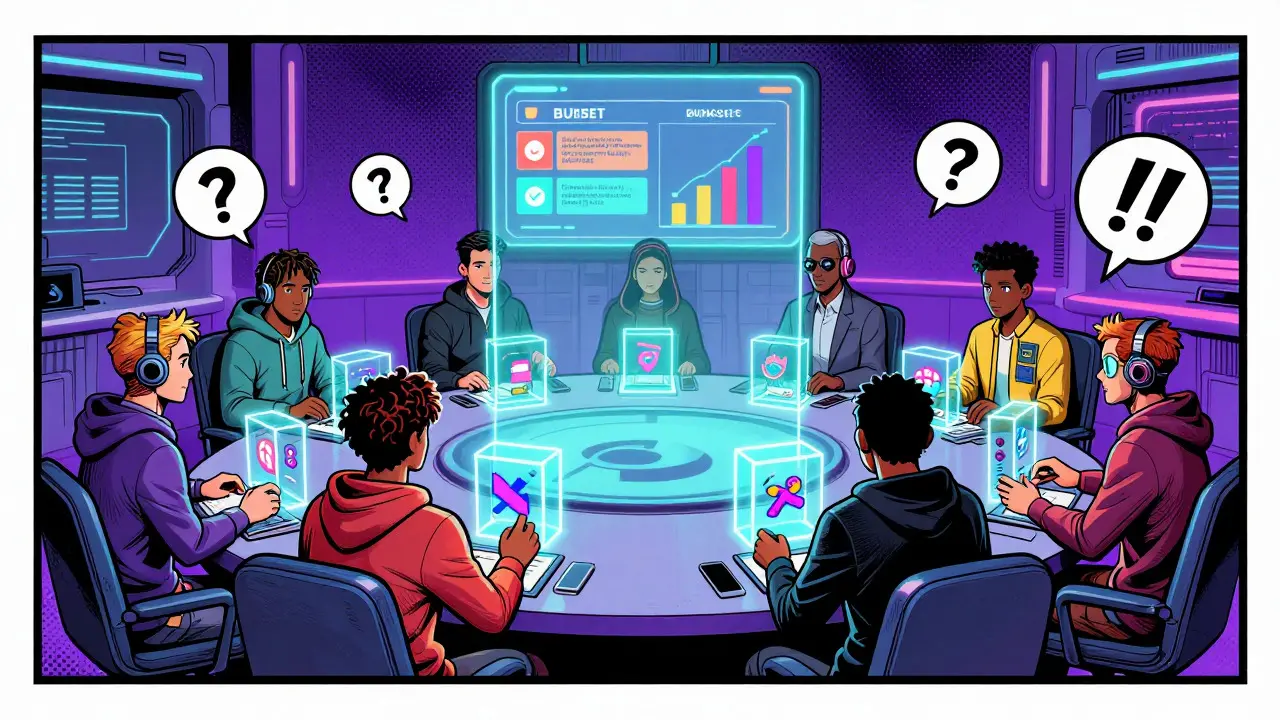
This means that if you hold KARATE tokens, you are technically part-owners of the league's direction. You aren't just buying a digital receipt; you are buying a vote. Token holders can cast ballots on critical operational decisions, including:
- League Budgets: Deciding how funds are allocated across marketing, events, and fighter pay.
- Matchmaking: Influencing which fighters face off against each other.
- Rule Changes: Voting on modifications to the sport's regulations.
- Supplier Selection: Choosing vendors for equipment and services.
This model is distinct from typical "fan tokens" issued by major soccer teams, which often only allow users to vote on trivial matters like jersey designs or social media posts. Karate Combat claims to offer "real control rights," making it one of the most ambitious attempts to merge Web3 governance with physical sports.
The Core Utility: Up Only Gaming
Governance is important, but for most users, the day-to-day value of holding KARATE comes from its primary utility feature: Up Only Gaming. This is a prediction game built directly into the Karate Combat mobile app.
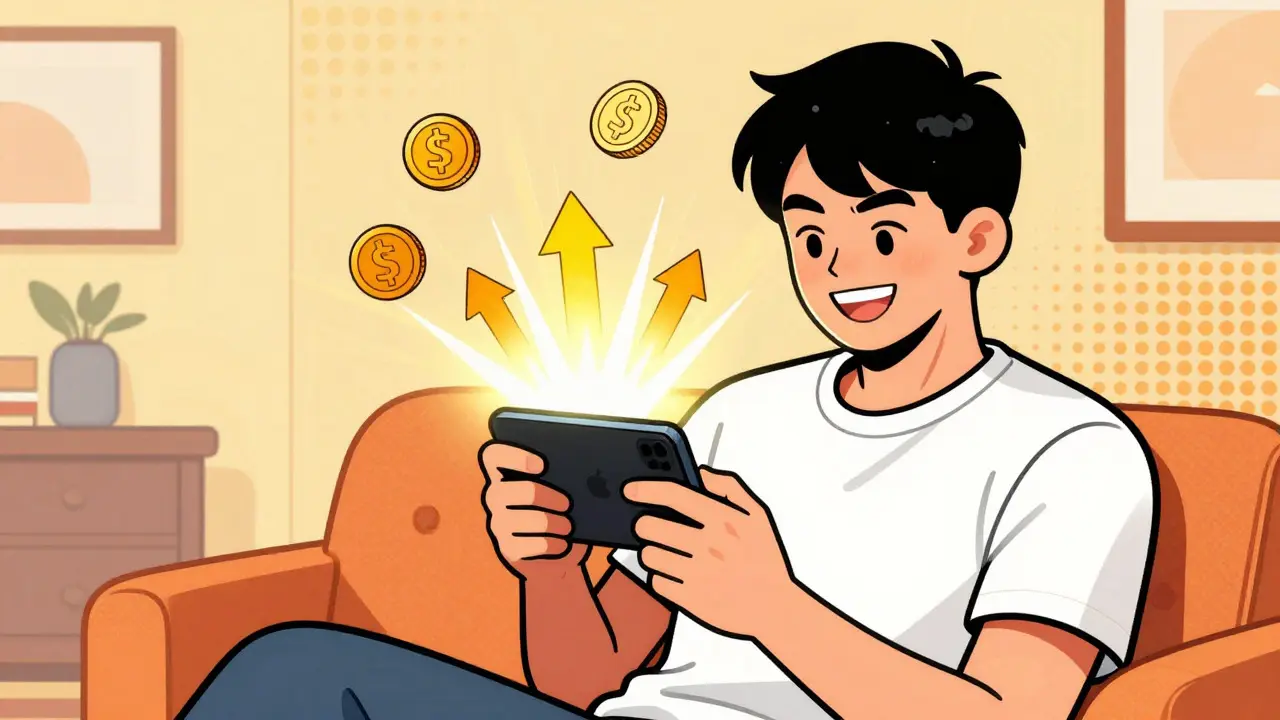
Here is how it works. Before a live event, fans use their KARATE tokens to vote on who they think will win a specific fight. If your pick wins, you earn additional KARATE tokens from the league's treasury. If your pick loses, you do not lose your original stake. Your balance remains unchanged. Hence, the name "Up Only."
This mechanism differentiates KARATE from traditional sports betting. In standard betting, if you guess wrong, you lose your money. In Up Only Gaming, the worst-case scenario is missing out on rewards. The rewards themselves come from new token issuance rather than other players' losses. This design aims to gamify the viewing experience, keeping fans engaged and rewarding them for participation without the financial risk associated with gambling.
Additionally, a portion of the tokens used in these predictions goes directly to the winning fighter, boosting their prize pool beyond their base contract. This creates a direct link between fan engagement and athlete compensation.
Technical Structure: Ethereum and Hedera
Unlike many cryptocurrencies that launch on a single blockchain, KARATE was deployed simultaneously on two networks: Ethereum (as an ERC-20 token) and Hedera Hashgraph (as an HTS token). The total maximum supply is capped at 110 billion tokens, split evenly between the two chains.
This dual-chain approach allows users flexibility. You can bridge your tokens between Ethereum and Hedera using third-party infrastructure like Hashport. This is useful because liquidity and user bases differ across ecosystems. For instance, Ethereum offers access to larger decentralized exchanges like Uniswap, while Hedera provides lower transaction fees and faster speeds via platforms like SaucerSwap.
| Feature | Ethereum (ERC-20) | Hedera (HTS) |
|---|---|---|
| Transaction Speed | Variable (can be slow during congestion) | Fast (consistent ~3-5 seconds) |
| Gas Fees | Higher (depends on network demand) | Lower (fraction of a cent) |
| Primary DEXs | Uniswap V3 | SaucerSwap |
| Supply Allocation | 55 Billion (approx. half) | 55 Billion (approx. half) |
Tokenomics and Supply Dynamics
Understanding the supply mechanics is crucial for evaluating the token's long-term viability. The maximum supply is fixed at 110 billion KARATE tokens. However, the circulating supply-the amount actually available in the market-has been a point of confusion and debate among investors.
According to official documentation and various market trackers, the circulating supply hovers around 66 to 67 billion tokens, representing roughly 60% of the total cap. The remaining tokens are locked or reserved for future distribution. A significant portion of the supply-50% according to early whitepapers-is earmarked for "giveaways" through airdrops and Up Only Gaming rewards. This aggressive distribution strategy aims to maximize adoption but introduces inflationary pressure.
While the total supply is capped, the continuous issuance of reward tokens for gaming means that active participants receive newly minted KARATE. Proponents argue this does not dilute value because the rewards go only to engaged users, increasing their holdings relative to inactive holders. Critics, however, point out that constant issuance can suppress price appreciation if demand does not keep pace.
Market Performance and Risks
From a purely financial perspective, KARATE has experienced significant volatility. After its initial coin offering (ICO) in May 2023 at approximately $0.000727 per token, the price saw an initial spike before entering a prolonged decline. As of mid-2026, the token trades in the fractions of a penny, often below $0.000025.
This represents a drawdown of over 95% from its all-time high. Such performance is common in speculative altcoins, but it highlights the risks involved. The market capitalization typically ranges between $1 million and $10 million, placing it in the lower tiers of ranked cryptocurrencies. Liquidity can be thin, meaning large buy or sell orders can significantly impact the price.
Community sentiment is mixed. Some fans appreciate the innovative governance model and enjoy using the app for free engagement. Others have criticized the project for insider selling, noting that founder Robert Bryan sold billions of tokens during periods of low prices. These controversies have fueled skepticism about the project's transparency and long-term sustainability.
How to Get Started with KARATE
If you are interested in participating, there are two main paths: engaging as a fan or trading as an investor.
- Download the App: Install the Karate Combat app on iOS or Android. Sign up to receive an initial allocation of tokens (often around 88 KARATE) and look for promo codes for additional bonuses.
- Use the Wallet: You can hold tokens in the in-app wallet or transfer them to compatible third-party wallets like MetaMask (for Ethereum) or HashPack (for Hedera).
- Participate in Governance: Once you hold tokens, you can vote on proposals within the KarateDAO interface. Pay attention to upcoming votes on budgets and matchups.
- Play Up Only Gaming: Use your tokens to predict fight outcomes. Remember, losing picks do not cost you your stake, so it is a low-risk way to potentially earn more tokens.
- Trade on Exchanges: If you want to buy or sell larger amounts, you can use centralized exchanges like Bybit, Gate.io, KuCoin, or Bitfinex. For decentralized trading, use Uniswap (Ethereum) or SaucerSwap (Hedera).
Is KARATE Right for You?
Karate Combat occupies a unique niche at the intersection of sports, gaming, and blockchain technology. It is not a general-purpose currency, nor is it a passive investment vehicle. Its value is derived entirely from its utility within the Karate Combat ecosystem.
If you are a martial arts enthusiast who wants deeper involvement in the sport, the token offers a compelling way to engage. The ability to influence league decisions and earn rewards for watching fights adds a layer of interactivity that traditional broadcasting lacks. However, if you are looking for stable returns or low-risk exposure, KARATE may not be suitable. The high volatility, complex tokenomics, and ongoing community debates require careful consideration.
Always conduct your own research. Look at the latest on-chain data, read community discussions on Reddit and Discord, and assess whether the league's growth trajectory aligns with your expectations. The future of sports DAOs is still being written, and Karate Combat is one of the earliest chapters in that story.
What is the maximum supply of KARATE tokens?
The maximum supply of KARATE tokens is capped at 110 billion. This supply is split evenly between the Ethereum and Hedera networks, with approximately 55 billion tokens on each chain.
Can I lose my tokens when playing Up Only Gaming?
No, you cannot lose your principal balance in Up Only Gaming. If your prediction is correct, you earn additional KARATE tokens from the treasury. If your prediction is incorrect, your original stake remains unchanged. This is why it is called "Up Only" gaming.
Which blockchains support the KARATE token?
KARATE is issued on two blockchains: Ethereum (as an ERC-20 token) and Hedera Hashgraph (as an HTS token). Users can bridge tokens between these networks using third-party services like Hashport.
How does Karate Combat DAO governance work?
Token holders can vote on key league decisions, including budgets, fighter matchmaking, rule changes, and supplier selection. The league operates under an ownerless trust, meaning control is decentralized among KARATE holders rather than held by individual executives.
Where can I buy KARATE tokens?
You can buy KARATE on centralized exchanges such as Bybit, Gate.io, KuCoin, and Bitfinex. Alternatively, you can trade it on decentralized exchanges like Uniswap V3 (for Ethereum) and SaucerSwap (for Hedera).
Is KARATE a safe investment?
Like most altcoins, KARATE is highly volatile and carries significant risk. It has experienced substantial price declines since its launch. Investors should consider it a high-risk asset and only invest what they can afford to lose. Community controversies regarding insider selling also add to the uncertainty.