
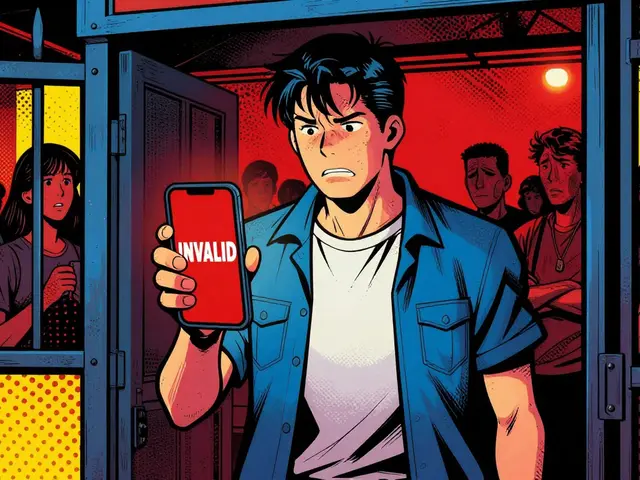
You’ve bought a ticket to the biggest concert of the year. You’re excited. But as you scan your phone at the gate, the scanner flashes red. "Invalid," it says. Your heart drops. Was it a fake? Did someone duplicate your QR code? In the old world of paper tickets and static barcodes, this was a nightmare scenario that cost fans billions and organizers millions in lost trust.
That’s where NFT ticket authenticity verification changes the game. By moving ticketing onto the blockchain, we aren’t just swapping paper for pixels. We are replacing fragile, centralized databases with immutable, cryptographic proof of ownership. If you’re an event organizer or a savvy fan looking to understand how this works in 2026, you need to know exactly how these tickets are verified, why they can’t be faked, and what happens when things go wrong.
The Core Problem: Why Traditional Tickets Fail
To appreciate why NFTs are different, you first have to look at why traditional ticketing is so broken. Most events still use QR codes or barcodes linked to a central database. When you buy a ticket from a platform like Ticketmaster or StubHub, their servers say, "Yes, this code is valid." The problem? That server can be hacked, the data can be leaked, and the image of that QR code can be copied.
I remember attending a festival in Bristol a few years back. My friend showed up with a printed copy of his ticket because his phone died. The staff scanned it, let him in, and then minutes later, another person walked up with the exact same printout. Chaos ensued. Both people were kicked out, or worse, one got in while the other waited outside. This is a single point of failure. The verification relies entirely on the integrity of one company’s database and the physical security of a piece of paper or a static image.
NFTs solve this by removing the middleman. Instead of asking a central server if a ticket is real, the blockchain itself holds the record. It’s not about trusting a company; it’s about trusting mathematics.
What Is an NFT Ticket?
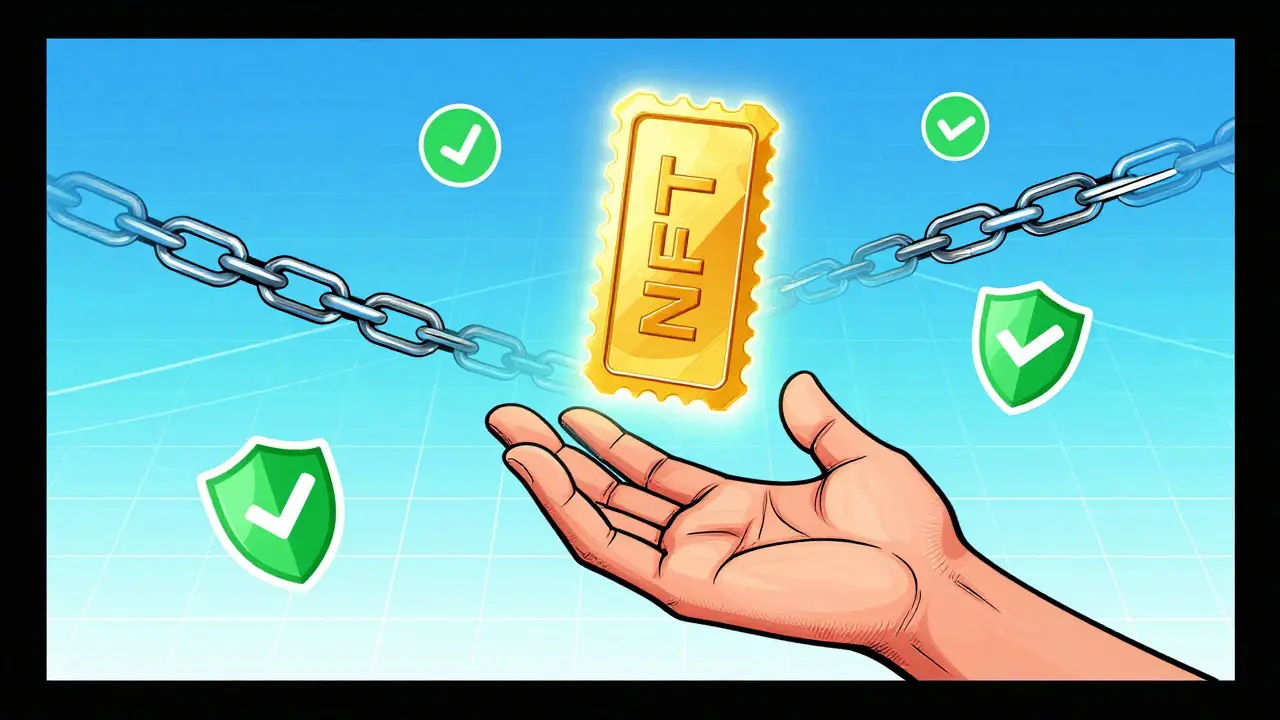
An NFT (Non-Fungible Token) is a unique digital certificate stored on a blockchain. Unlike Bitcoin, which is fungible (one Bitcoin is identical to another), an NFT is distinct. Each ticket has a unique ID, metadata, and ownership history that cannot be altered.
When you buy an NFT ticket, you aren’t just downloading a PDF. You are receiving a token in your digital wallet-likely an Ethereum-compatible wallet like MetaMask or Phantom. This token contains:
- Unique Identifier: A specific hash that distinguishes this ticket from every other ticket sold.
- Ownership Record: A permanent log showing who created it, who bought it, and who currently holds it.
- Metadata: Details like seat number, entry time, and access level (VIP, General Admission).
Because this data lives on a decentralized network of computers, no single hacker can change it. If someone tries to forge a ticket, the blockchain simply rejects it because the cryptographic signature doesn’t match the original minted token.
How Verification Works at the Gate
This is the part most people get wrong. You don’t just "show" an NFT like a photo. The verification process involves a dynamic interaction between your wallet and the venue’s scanning system. Here is how it typically plays out in 2026:
- Wallet Connection: At the entrance, you open your mobile wallet app. The venue’s scanner prompts you to connect via a secure protocol (like WalletConnect) or scans a dynamic QR code generated by your wallet.
- Cryptographic Proof: Your wallet signs a message proving you control the private key associated with the NFT ticket. You never reveal your private key; you only prove you possess it.
- Blockchain Check: The scanner queries the blockchain (or a Layer 2 solution for speed) to verify two things: Does this NFT exist? And does it belong to the address signing the request?
- Real-Time Validation: Once confirmed, the smart contract marks the ticket as "used" or "checked-in." This is crucial. It prevents the same ticket from being used twice.
Companies like SeatlabNFT have optimized this process so the heavy lifting happens in the background. Venue staff see a green light within seconds. They don’t need to check a database manually. The truth is self-evident on the chain.
The Role of Smart Contracts in Security
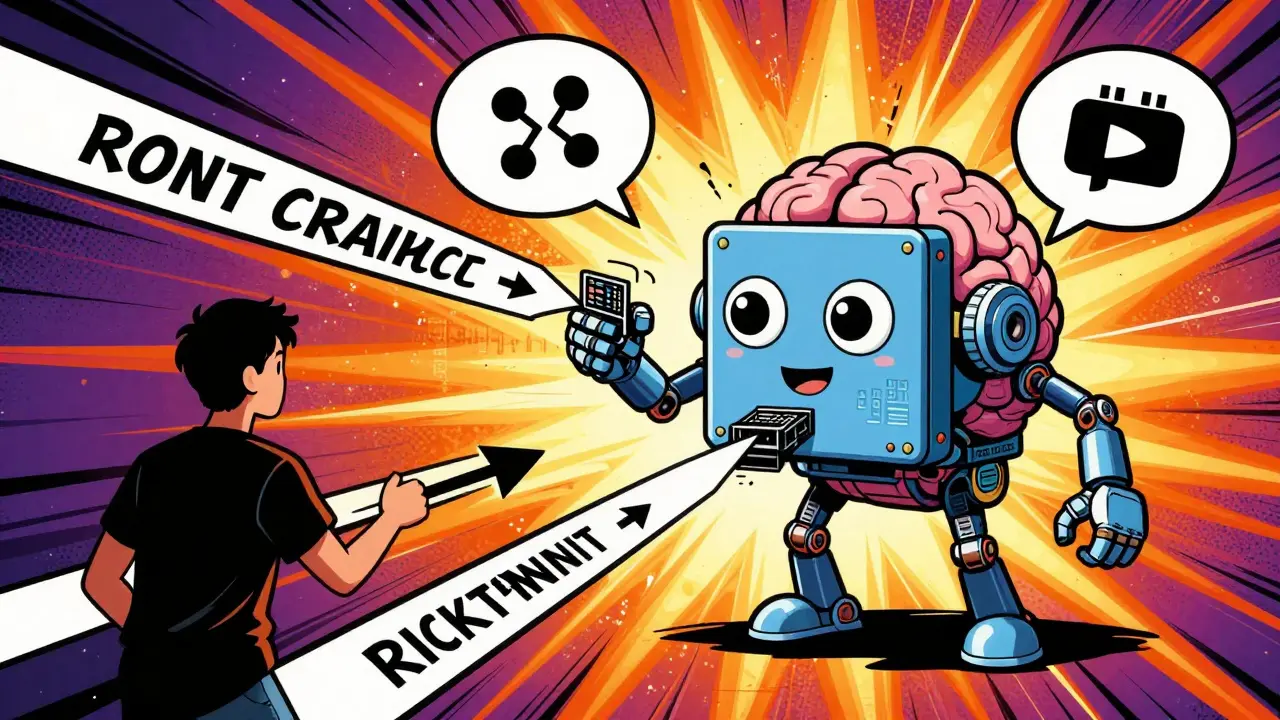
Smart contracts are self-executing programs stored on the blockchain. They are the brain behind NFT ticketing. While the NFT is the ticket, the smart contract is the rulebook.
Organizers can program specific conditions into these contracts. For example:
- Anti-Scalping Limits: The contract can prevent resale above a certain price cap, ensuring fair access for fans.
- Royalty Splits: If you resell your ticket, the smart contract can automatically send 5% of the sale price back to the artist or venue. This creates a new revenue stream without extra work.
- Time-Locked Access: The ticket might only become active 24 hours before the event, reducing the window for fraud.
This automation removes human error. There’s no customer service rep forgetting to update a status. The code executes exactly as written, every single time.
Comparison: NFT vs. Traditional Ticketing
| Feature | Traditional Ticketing | NFT Ticketing |
|---|---|---|
| Verification Method | Centralized Database Lookup | Cryptographic Signature on Blockchain |
| Fraud Risk | High (QR duplication, forged papers) | Near Zero (Impossible to duplicate unique hash) |
| Resale Control | Limited (Relies on platform policies) | Programmable (Smart contract rules enforce limits) |
| Ownership History | Opaque (Hard to track transfers) | Transparent (Full ledger visible on-chain) |
| User Experience | Simple but vulnerable | Requires crypto wallet knowledge |
Pitfalls and Challenges to Watch For
It’s not all perfect. Adopting NFT ticketing comes with real-world hurdles that both buyers and sellers must navigate.
The "Used Ticket" Coordination Problem: One technical glitch remains: marking a ticket as used. In a fully decentralized system, there’s no central server to instantly flag a ticket as "entered." If I pass my phone to my friend after I enter, could they use the same NFT? Some systems rely on a hybrid approach where the venue’s local server communicates with the blockchain to mark the NFT as burned or transferred upon entry. Without this coordination, re-entry fraud is possible. Look for platforms that explicitly state how they handle post-scan invalidation.
Gas Fees and Speed: On the main Ethereum network, transaction fees (gas) can spike during high-demand events. If verifying a ticket costs $10, venues won’t do it. Most modern solutions use Layer 2 networks like Polygon or Optimism, which offer near-zero fees and instant finality. Always check which blockchain the ticket is built on.
Wallet Complexity: The average fan isn’t a crypto expert. Asking them to manage seed phrases and gas tokens is a barrier. Successful platforms now offer "custodial wallets" or social login options, where the user accesses their NFT through a familiar email or phone number, abstracting away the technical complexity.
Future Trends: Beyond Just Entry
In 2026, NFT tickets are evolving beyond simple access passes. They are becoming membership keys. Imagine buying a ticket to a conference that also grants you lifetime access to exclusive content, voting rights for future event locations, or even physical merchandise discounts. The NFT becomes a persistent relationship between the fan and the brand, not just a one-time transaction.
We’re also seeing more integration with identity layers. Verified Digital IDs linked to NFTs can ensure that each person gets only one ticket, eliminating bots and scalpers at the source. This makes the entire ecosystem fairer and more transparent.
Can NFT tickets be duplicated?
No. Because each NFT is a unique cryptographic token on a blockchain, it cannot be copied. Anyone trying to create a fake version will fail because the blockchain will not recognize the invalid signature. Only the holder of the private key can transfer or validate the original token.
What happens if I lose my wallet?
If you lose access to your private keys or seed phrase, you lose access to your NFT ticket permanently. Blockchain wallets are non-custodial, meaning there is no "forgot password" button. This is why using reputable wallet providers with strong backup mechanisms or custodial solutions provided by the ticketing platform is critical.
Do I need to pay gas fees to enter?
Ideally, no. Many modern NFT ticketing platforms use Layer 2 blockchains or sponsored transactions where the venue pays the gas fees. However, if the ticket is on the main Ethereum network, you might need a small amount of ETH to sign the verification transaction. Check the platform’s policy before purchasing.
How do I verify an NFT ticket before buying it second-hand?
Always check the token’s history on a blockchain explorer like Etherscan or Polygonscan. Look for the minting date, the creator’s address, and the current owner. Ensure the metadata matches the event details. Never buy from a private seller unless you can verify the token ID directly on the chain.
Is NFT ticketing environmentally friendly?
It depends on the blockchain. Older Proof-of-Work chains like early Ethereum were energy-intensive. However, most NFT ticketing today uses Proof-of-Stake chains or Layer 2 solutions like Polygon, which are significantly more energy-efficient and carbon-neutral compared to traditional data centers used by legacy ticketing giants.
NFT ticket authenticity verification is no longer a futuristic concept-it’s a practical tool solving real fraud issues. By understanding the mechanics of smart contracts and blockchain verification, you can participate in events with confidence, knowing your ticket is secure, yours, and impossible to fake.
Jan Gilmore
May 12, 2026 AT 08:16Look, I’ve been in the blockchain space since 2017 and this is exactly how it’s supposed to work. The problem isn’t the tech, it’s that venues are too lazy to implement proper Layer 2 solutions. If you’re still using mainnet Ethereum for ticketing in 2026, you’re just incompetent. Polygon or Base should be standard by now. Gas fees killing the user experience is an excuse for bad engineering.
Gavin Wonnacott
May 14, 2026 AT 07:57You people really think a database on a server is less secure than a public ledger anyone can audit? Please. The real issue is that your wallet gets hacked because you stored your seed phrase on a sticky note under your keyboard. NFTs don’t stop theft, they just make the theft permanent and traceable while you cry about losing your private key. It’s not magic, it’s just another point of failure.
Samara McCallum
May 15, 2026 AT 08:38i mean... is it really that hard to just trust the guy at the gate? like we used to have paper tickets and nobody died. now we need cryptography to prove i bought a seat. maybe the problem is we stopped trusting each other instead of fixing the scanners
Sheldon Friesen
May 17, 2026 AT 01:28Oh, absolutely! The irony is palpable here, wouldn't you agree?! You see, the entire premise rests on the assumption that decentralization equals security, which is a fallacy if there ever was one! But sure, keep telling yourself that your MetaMask is safer than a printed PDF! Haha!
Tricia Alach
May 18, 2026 AT 16:06this sounds so cool but im scared i will lose my phone and then lose the ticket forever. is there like a reset button? i always forget passwords so this seems risky for me lol
robert Whitehead
May 18, 2026 AT 22:21The article completely ignores the environmental cost of maintaining these chains even with PoS. You are prioritizing convenience over planetary health. Furthermore, the 'anti-scalping' smart contracts are just corporate control mechanisms disguised as fairness. You are handing over your financial autonomy to a line of code written by a developer who doesn't care about you. Wake up.
Mike S
May 20, 2026 AT 04:39Let me guess, you actually believe this works without bugs? Because I watched a show last week where the QR code failed and they had to manually check IDs. Now you want us to trust a script? Brilliant. Just brilliant. The only thing being verified is how much money you're willing to waste on gas fees.
H F
May 22, 2026 AT 00:13Actually, this is huge! I went to a gig in London last month and the whole process took three seconds. Green light, walk in. No lines, no arguing. It’s finally catching up to what it promised. We just need more venues to adopt it properly instead of half-assing the integration.
Michael Berggren
May 22, 2026 AT 20:40I’m all for innovation! 🚀 The idea of having a digital souvenir that also grants access is pretty sweet. I got a token from a conference last year and it unlocked exclusive content later. It feels good to own something tangible in the digital world. Keep pushing this forward! 💪
John Gonzalez Bentham
May 24, 2026 AT 00:13you guys are missing the point entirely. its not about the ticket its about the data collection. every time you connect your wallet you are giving them your identity. traditional tickets were anonymous. now you are tracked. big brother is watching your concert history
Ellie Riddell
May 24, 2026 AT 15:03Sure, it’s ‘immutable,’ but let’s talk about the UX nightmare for anyone over forty. My mom tried to buy a ticket for her birthday and spent two hours trying to figure out what a ‘seed phrase’ was. Until this is seamless for non-tech people, it’s just a toy for crypto bros.
Destiny Kilby
May 24, 2026 AT 15:34the concept is sound but the execution leaves much to be desired in terms of accessibility. many platforms do not provide adequate support for users who encounter technical difficulties. this creates a barrier that excludes those less familiar with digital technologies which is unfortunate
Jerry CUNNINGHAM SR
May 24, 2026 AT 16:17It is important to consider the inclusivity aspect here. While the technology offers benefits, we must ensure that it does not disenfranchise individuals who are not comfortable with cryptocurrency interfaces. A hybrid approach might be more prudent until adoption rates improve significantly across all demographics.
Tobias Gjerlufsen
May 26, 2026 AT 08:34stop pretending this solves fraud. bots buy them up instantly anyway. the smart contract doesnt stop the bot it just makes the resale faster. you are solving a symptom not the disease. the disease is demand exceeding supply and crypto doesnt fix economics
Ruben Michel
May 27, 2026 AT 10:19One must acknowledge the sophistication required to manage such assets properly. It is not merely a transaction; it is a custodial responsibility. Those who lack the discipline to safeguard their private keys are simply unprepared for the modern digital economy. Do not mistake complexity for inconvenience.
Larry Port
May 27, 2026 AT 19:53I get why people are skeptical. I was too. But once you set up a wallet, it’s actually easier than dealing with Ticketmaster’s customer service. If you lose the ticket, well, that’s on you. But if you keep it safe, you never worry about fakes again. It’s a trade-off most people haven’t made yet.
Jocelyn Garcia
May 29, 2026 AT 08:35The interoperability issues between different L2 networks remain a significant bottleneck for widespread adoption. Users often find themselves stranded with assets on chains that lack sufficient liquidity or bridge options. This fragmentation undermines the promise of a unified digital ownership ecosystem.
Amit Varpe
May 30, 2026 AT 21:42In India we use UPI for everything. Instant. Cheap. No crypto nonsense. Why cant westerners just build a simple payment system instead of inventing new problems? :)
Bronwen Butler
May 31, 2026 AT 05:20it is not impossible to fake. if the venue scanner is compromised or the oracle feeding data is malicious the blockchain shows nothing. you are trusting the hardware not the chain. naive thinking
Pauline Larocco71
June 2, 2026 AT 04:55i love the idea of getting royalties back to artists but honestly i dont know how to sell my ticket on opensea or whatever. its too complicated for a casual fan. i just want to go to the show not learn finance
beti macedo
June 3, 2026 AT 14:01This represents a significant leap forward in digital asset management. The potential for secondary market transparency is undeniable. However, regulatory frameworks must evolve to protect consumers from irreversible errors in transaction processes. Caution is advised.
Michelle Bonahoom
June 4, 2026 AT 07:04another way for corporations to track our movements. i refuse to participate. keep your blockchain i have a paper ticket thank you very much
Matt Davis
June 5, 2026 AT 03:24Oh, spare me the techno-utopian drivel. You think a piece of code prevents scalping? Scalpers will just create thousands of wallets and buy them all via API before you blink. The rich still get in, the poor still get shut out, and now you have to pay gas fees to be disappointed.
Albert Lee
June 6, 2026 AT 08:49I hear your frustration, and it’s valid. The transition period is rough. But imagine a world where you can resell your ticket directly to a friend without a platform taking 15%. That’s the dream. We’re not there yet, but we’re closer than we were five years ago. Hang in there.