Have you ever checked your old Bitcoin wallet and found a strange new token sitting there? You might have stumbled upon Bitcoin God, also known as GOD coin. It is a digital asset created as a hard fork of Bitcoin in December 2017, designed with a charitable mission and proof-of-stake consensus.
If you are wondering what this coin is, why it exists, and whether it has any value today, you are not alone. Many people received these tokens during the chaotic fork season of 2017-2018. Today, the picture is quite different. Let’s break down exactly what Bitcoin God is, how it works, and where it stands in the current crypto landscape.
The Origin Story: A Christmas Gift?
Bitcoin God emerged during a specific moment in crypto history. In late 2017, the market was buzzing with excitement. Prices were soaring, and developers were experimenting with splitting existing blockchains to create new ones. This process is called a "hard fork."
The project was founded by Chandler Guo, a Chinese investor active in the Ethereum and Bitcoin communities. He announced that he would launch Bitcoin God at block height 501,225 on the Bitcoin blockchain. The planned date was December 25, 2017-Christmas Day. However, technical delays pushed the actual execution to December 27, 2017.
Guo framed the fork as a "gift" to Bitcoin holders. His pitch was simple: if you held Bitcoin at the time of the fork, you would automatically receive an equal amount of GOD tokens. The ratio was 1:1. For every 1 BTC you owned, you got 1 GOD. At that time, there were roughly 16.8 million Bitcoins in circulation, meaning about 17 million GOD tokens were distributed to early adopters.
How Does Bitcoin God Work? Technical Details
While Bitcoin God started as a copy of Bitcoin, it quickly diverged in its technical design. The goal was to solve problems associated with centralized systems and energy-intensive mining.
| Feature | Bitcoin (BTC) | Bitcoin God (GOD) |
|---|---|---|
| Consensus Mechanism | Proof-of-Work (PoW) | Proof-of-Stake (PoS) |
| Max Supply | 21,000,000 | 21,000,000 |
| Block Reward | Varies (Halving) | 0.19 GOD per block |
| Smart Contracts | Limited | Supported |
| Lightning Network | Yes | Planned Support |
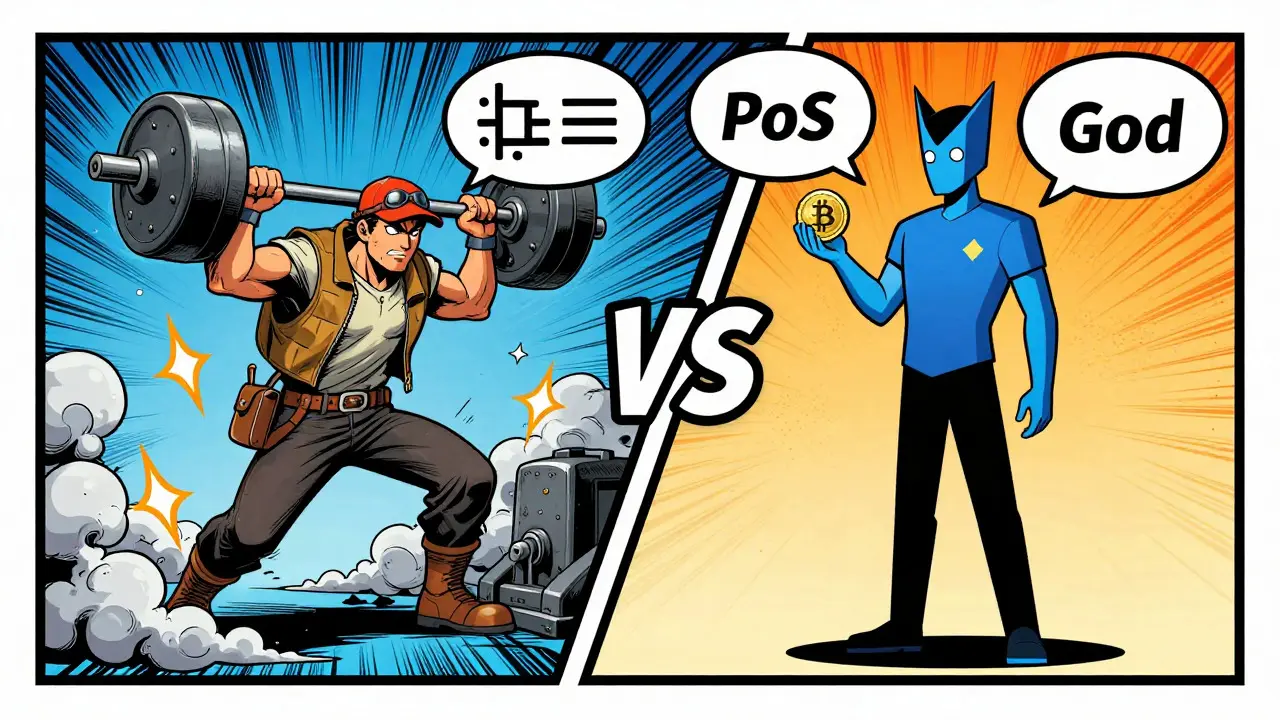
The most significant change is the shift from Proof-of-Work to Proof-of-Stake. Bitcoin miners use powerful computers to solve complex puzzles, consuming vast amounts of electricity. Bitcoin God validators simply need to hold coins to secure the network. This makes it more energy-efficient.
The codebase is open-source under the MIT license. Developers can run a node using commands like `bitcoingodd` on Windows, Linux, or macOS. The peer-to-peer port is set to 8885, and the RPC port is 8886. These details matter for technical users who want to verify transactions or participate in the network directly.
The Charitable Mission and Tokenomics
One of the unique selling points of Bitcoin God was its focus on philanthropy. Unlike many forks that aimed solely at profit or scaling, GOD positioned itself as a non-profit, borderless organization.
The total supply is capped at 21,000,000 GOD, mirroring Bitcoin. Here is how the tokens were allocated:
- Airdrop to Holders: Approximately 17,000,000 GOD went to Bitcoin holders at the fork.
- Charity Reserve: About 4,000,000 GOD were reserved for charitable causes.
- PoS Rewards: Within that reserve, roughly 400,000 GOD were designated for proof-of-stake mining rewards to incentivize network participants.
The idea was that daily token output from the PoS mechanism would fund community projects and donations. This narrative attracted some users who believed in a crypto ecosystem driven by social good rather than pure speculation.
Market Performance: From Hype to Silence
If you are holding GOD tokens, you probably want to know their value. The short answer is: very little. The long answer involves looking at the dramatic price history.
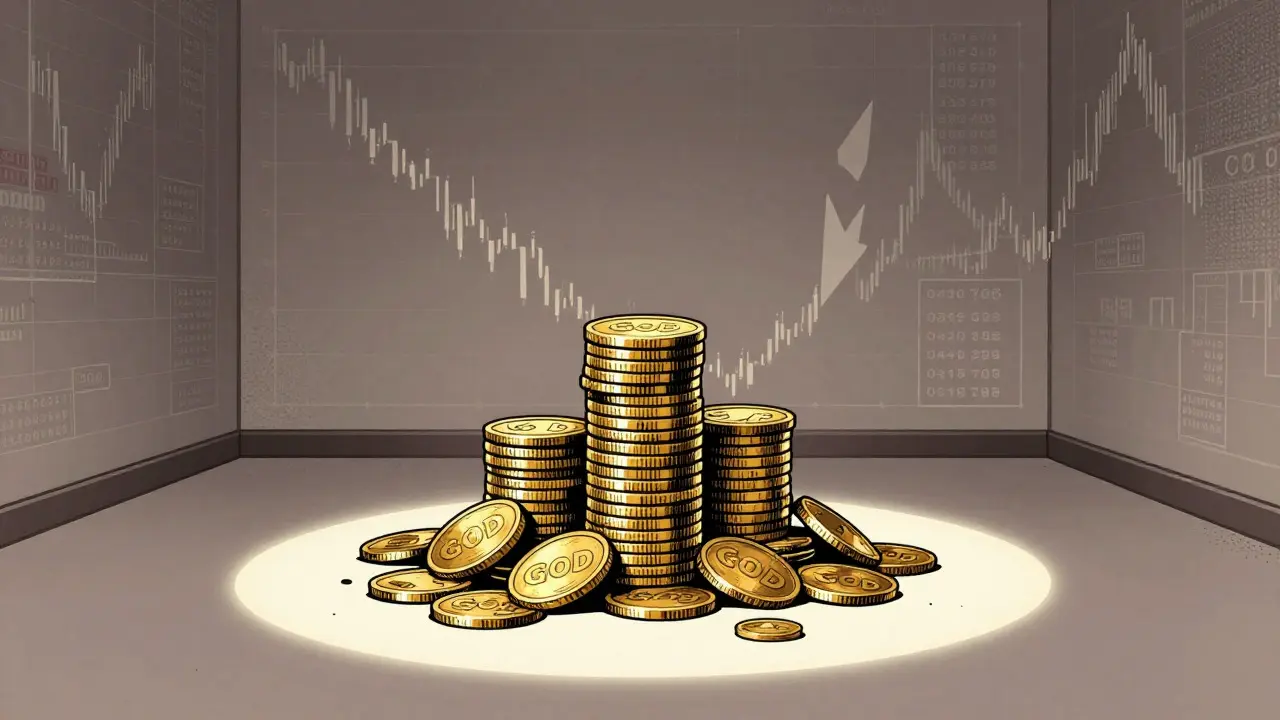
In early 2018, right after the fork, there was significant hype. On February 4, 2018, reports showed GOD trading at around $15.45 USD. Some sources even claimed an all-time high near $220.30 USD in January 2018. This would have given the project a massive initial market capitalization.
However, this was typical of the 2017-2018 fork bubble. More than 44 Bitcoin hard forks launched during this period. Most failed to maintain value. Bitcoin God fell approximately 99.9% from its peak. By 2025 and 2026, the situation had stabilized into quiet obscurity.
Current data from major aggregators shows a stark reality:
- Price: Fluctuates between $0.33 and $0.84 USD depending on the exchange or data source.
- Circulating Supply: Often reported as 0 GOD on major platforms.
- Trading Volume: Frequently listed as $0 USD or negligible amounts (e.g., $12/day).
- Market Cap: Effectively zero due to lack of recognized circulation.
This discrepancy arises because many exchanges delisted the token, or liquidity dried up completely. While some niche dashboards still quote a price, finding a buyer or seller for GOD is extremely difficult. Coingecko noted that trading stopped entirely for periods in mid-2025. Holder.io lists it as "awaiting listing," implying no active markets exist.
Is Bitcoin God Still Active?
Technically, yes. The GitHub repository for the Bitcoin God core client shows updates as recently as January 2026. This means someone is maintaining the code. The network itself likely continues to produce blocks via Proof-of-Stake.
However, "active" does not mean "popular." There is no large community forum, no major news coverage, and no institutional interest. The project remains a small, experimental chain. If you are a developer interested in PoS mechanics or historical forks, the code is available for study. But for the average investor, it offers little utility.
Common Questions About Bitcoin God
Did I get free Bitcoin God coins?
If you held Bitcoin before December 27, 2017, you technically received GOD tokens. However, claiming them required running a full node or using a specific wallet at that time. Many users missed the window. If you see GOD in an old wallet file now, it is likely just a record of that past event.
Can I sell Bitcoin God (GOD) for money?
It is very difficult. Most major exchanges do not list GOD. Liquidity is near zero. Even if a platform shows a price, you may find no buyers. Treat any remaining tokens as having minimal financial value unless a new exchange lists them with significant volume.
Is Bitcoin God a scam?
Not necessarily a scam in the traditional sense, but it was a speculative experiment that failed to gain traction. The founder promoted it as a gift, but the market rejected it. The value drop of 99.9% reflects lack of adoption, not necessarily fraud. Always research forks carefully.
How is Bitcoin God different from Bitcoin Cash?
Bitcoin Cash focused on increasing block size for faster transactions while keeping Proof-of-Work. Bitcoin God switched to Proof-of-Stake, added smart contracts, and emphasized charity. Bitcoin Cash became a major asset; Bitcoin God remained a niche project.
Where can I download the Bitcoin God wallet?
The official client is available on the BitcoinGod GitHub repository. It supports Windows, Linux, Unix, and macOS. Be cautious of third-party downloads. Since the project is low-profile, ensure you are getting the verified open-source code.
Final Thoughts
Bitcoin God serves as a fascinating case study in the crypto world. It highlights the risks of fork speculation and the importance of sustained community support. While it introduced interesting concepts like charitable distribution and PoS efficiency, it ultimately could not compete with established networks.
If you hold GOD tokens, keep them in a secure cold storage wallet just in case. But do not expect them to make you rich. For most investors, focusing on assets with higher liquidity and stronger development teams is a safer bet. Bitcoin God remains a relic of the 2017 boom-a reminder that not every fork creates a future giant.