
Imagine you just sent $10,000 to a friend. You hit send, the transaction appears on your screen, and you feel relieved. But here it is done. But in the world of blockchain, that relief might be premature. Depending on which network you used, that money could still be reversed, stolen, or lost in a chain reorganization. This isn't a glitch; it's a fundamental design choice known as finality.
Finality answers one simple question: When is a transaction truly, permanently settled? The answer splits the crypto world into two camps. One side believes in probabilistic finality, where security grows over time like a snowball rolling downhill. The other side demands absolute finality, where a transaction is locked in stone the moment it hits the ledger. Understanding this difference is not just for developers; it affects every user who holds, trades, or spends digital assets.
What Is Probabilistic Finality?
Probabilistic Finality is a consensus model where transaction security increases exponentially with each new block added to the chain, but theoretical reversibility always remains. This approach was pioneered by Bitcoin, created by Satoshi Nakamoto in 2009. It relies on Proof-of-Work (PoW), where miners compete to solve complex mathematical puzzles to add blocks.
In this model, there is no single moment when a transaction becomes "absolute." Instead, you wait for confirmations. Each new block mined on top of your transaction makes it harder to reverse. If an attacker wants to undo your payment, they must redo the work of your block plus all subsequent blocks, faster than the rest of the honest network. As more blocks are added, the computational cost of this attack becomes astronomical, making reversal practically impossible, even if it remains theoretically possible.
For Bitcoin, the industry standard is six confirmations. Since a new block is mined roughly every ten minutes, this means waiting about sixty minutes for high-value transactions. During this window, the transaction is secure enough for most purposes, but not invincible. Exchanges and merchants use this rule because the economic cost of attacking the Bitcoin network after six blocks exceeds any potential gain from stealing funds.
What Is Absolute Finality?
Absolute Finality, also called deterministic finality, provides immediate and irreversible confirmation once a transaction is included in a block. Unlike probabilistic systems, there is no waiting period and no chance of future reversal. This is achieved through Byzantine Fault Tolerance (BFT) mechanisms.
Nets like Ripple, Stellar, Cosmos, and Algorand use variations of BFT. In these systems, validators reach a consensus agreement before a block is finalized. As long as less than one-third of the validators act maliciously or fail, the transaction is permanent. There is no "maybe" and no "wait for six blocks." The moment the consensus is reached, the state of the ledger is fixed forever.
This immediacy is crucial for certain applications. If you are using a decentralized finance (DeFi) protocol to swap tokens or provide liquidity, you need to know instantly whether your trade executed. Waiting an hour for certainty introduces risks like price slippage or failed multi-step contracts. Absolute finality eliminates this uncertainty, allowing for faster, more predictable interactions.
| Feature | Probabilistic Finality | Absolute Finality |
|---|---|---|
| Security Model | Economic cost of attack increases with time | Cryptographic guarantee via validator consensus |
| Time to Certainty | Minutes to hours (e.g., 60 mins for Bitcoin) | Seconds (immediate upon block inclusion) |
| Reversibility | Theoretically possible, practically unlikely | Impossible unless majority of validators collude |
| Decentralization | High (thousands of nodes/miners) | Moderate (hundreds of validators) |
| Energy Consumption | High (Proof-of-Work requires massive compute) | Low (Validators use minimal resources) |
| Best Use Case | Store of value, high-value settlements | Payments, DeFi, high-throughput applications |

The Trade-Off: Decentralization vs Speed
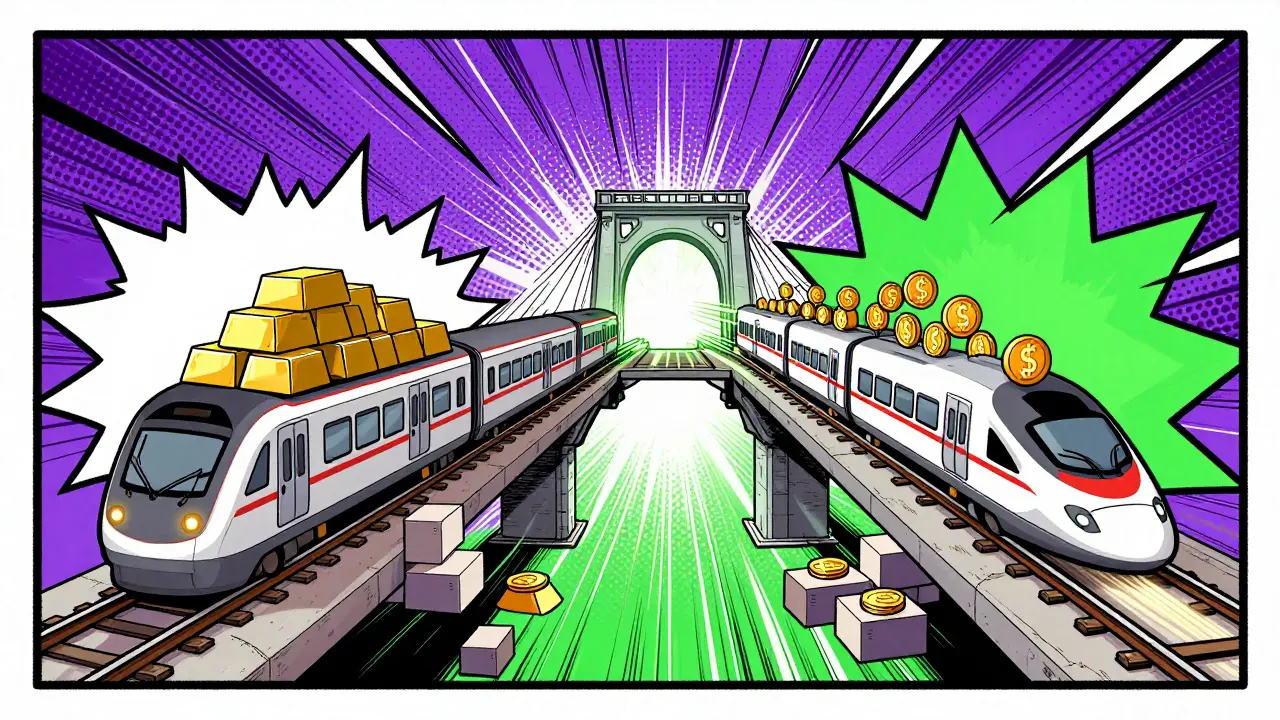
You cannot have everything. The core tension between these two models lies in the CAP theorem, which states that a distributed system can only guarantee two out of three properties: Consistency, Availability, and Partition Tolerance. Probabilistic systems like Bitcoin prioritize availability and partition tolerance, accepting temporary inconsistencies (forks) that resolve over time. Absolute finality systems prioritize consistency and partition tolerance, often sacrificing some availability if validators disagree.
This trade-off impacts decentralization. Bitcoin’s probabilistic model allows anyone with hardware to join as a miner, resulting in over 15,000 reachable nodes globally. This vast network makes it incredibly resistant to censorship and attacks. Absolute finality networks, however, require validators to communicate frequently to reach consensus. This limits the number of validators to hundreds rather than thousands, as too many participants would slow down communication and break the consensus mechanism. While still decentralized compared to traditional banks, these networks are less permissionless than Bitcoin.
Throughput is another major differentiator. Bitcoin processes approximately seven transactions per second (TPS). This is sufficient for settlement but inadequate for global payment processing. Absolute finality networks like Algorand claim capabilities exceeding 1,000 TPS. The ability to finalize blocks quickly without waiting for multiple confirmations allows these chains to handle higher volumes of data and transactions efficiently.
Hybrid Models and Future Trends
The debate isn't strictly binary anymore. Many modern blockchains are adopting hybrid approaches to get the best of both worlds. Ethereum, for instance, transitioned from Proof-of-Work to Proof-of-Stake. While it retains elements of probabilistic security for individual transactions, it introduced Casper FFG, a finality gadget that provides absolute finality at the epoch level (every 32 blocks, or roughly five minutes). This gives users near-immediate certainty while maintaining robust security.
Layer-2 solutions are also bridging the gap. Bitcoin’s Lightning Network enables instant, off-chain payments with absolute finality for small amounts, while settling disputes on the main Bitcoin chain using probabilistic finality. This combination allows for high-speed microtransactions backed by the deep security of the underlying layer.
Researchers are exploring "fractional finality," where users can choose their desired security level. A low-value coffee purchase might accept immediate, lower-security finality, while a house sale would wait for maximum probabilistic security. This adaptive approach acknowledges that not all transactions carry the same risk profile.
Which Should You Choose?
Your choice depends on your priorities. If you view cryptocurrency primarily as a store of value or insurance against systemic financial failure, probabilistic finality is likely preferable. Its proven track record, massive decentralization, and censorship resistance make it ideal for holding large sums of wealth. Bitcoin’s energy consumption is a drawback, but its security budget-totaling billions annually in mining rewards and fees-creates a formidable barrier to attack.
If you are building or using applications that require speed and interaction, such as gaming, social media, or DeFi, absolute finality is essential. The ability to execute smart contracts without fear of reorgs simplifies development and improves user experience. Networks like Cosmos and Algorand offer this efficiency, though users must trust the smaller set of validators securing the network.
Ultimately, neither model is inherently superior. They solve different problems. Probabilistic finality excels at securing value in a hostile environment. Absolute finality excels at facilitating rapid, reliable computation. As the technology matures, we will likely see more convergence, with systems dynamically adjusting their finality guarantees based on context and user preference.
Is Bitcoin's finality really probabilistic?
Yes. Bitcoin uses Proof-of-Work, which means transactions are confirmed as more blocks are added. While six confirmations make reversal economically unfeasible, it is theoretically possible for an attacker with >51% hash power to rewrite history. Thus, finality is probabilistic, increasing with time but never reaching 100% mathematical certainty.
Can absolute finality be hacked?
Absolute finality can be compromised if more than one-third of the validators collude or act maliciously. Unlike Bitcoin, where an attacker needs majority hash power, BFT systems fail if the trusted validator set is corrupted. However, slashing conditions and reputation systems deter such behavior.
Why does Ethereum use a hybrid model?
Ethereum aims to balance security and usability. By using Casper FFG, it provides absolute finality every few minutes, reducing the risk of reorgs for users and developers, while maintaining the robust, decentralized nature of its Proof-of-Stake consensus.
Which finality type is better for DeFi?
Absolute finality is generally preferred for DeFi. Smart contracts often involve multiple steps and external data feeds. Immediate certainty prevents issues like front-running, failed atomic swaps, or liquidity mismatches caused by pending transactions being reversed.
Does absolute finality mean faster transactions?
Not necessarily. Finality refers to permanence, not speed. However, absolute finality networks often have higher throughput (TPS) because they don't need to wait for multiple block confirmations to consider a transaction safe. This results in a faster user experience for confirming payments.
Guy Davis
July 17, 2026 AT 06:03bitcoin is just a scam for the rich lol
Lisa Chong
July 17, 2026 AT 20:02I have been watching the financial systems collapse from the shadows for years and this article barely scratches the surface of the grand conspiracy. The elites want you to believe that probabilistic finality is secure because they are the ones who control the mining pools and the hash rate distribution. It is all a carefully orchestrated illusion designed to keep the little people in a state of perpetual anxiety while their wealth evaporates into the ether. You think six confirmations are enough? Ha! The deep state has algorithms that can reverse those blocks faster than you can blink, especially if your transaction threatens the established order. We are being herded into these centralized absolute finality chains because they allow for easier censorship and tracking by the surveillance apparatus. Do not trust the validators, do not trust the miners, and certainly do not trust the narrative pushed by these tech bro prophets. They are selling you snake oil wrapped in cryptographic jargon to distract you from the fact that your digital assets are merely entries in a ledger controlled by entities with no accountability whatsoever. Wake up before it is too late.
Ran Tao
July 19, 2026 AT 04:42Oh look, another boring technical discussion about blockchain mechanics 🙄 I mean really, who cares about the nuances of BFT vs PoW when we could be talking about something actually interesting like why my portfolio is down 40% this week 😂 But sure, let's pretend that understanding 'finality' will somehow save us from the inevitable crash of this entire speculative bubble. It is so typical of the crypto crowd to hide behind complex terminology to mask the fact that most of these projects are vaporware. I guess for some people, reading about consensus mechanisms is more exciting than actual life events. How quaint 🎭
Heather Austin
July 19, 2026 AT 20:38i mean honestly both have their place but ppl forget that decentralization isnt just about node count its about economic incentives and attack vectors which makes the comparison way more nuanced than a simple table can show
like sure bitcoin is slow but its security budget is insane compared to most altcoins so the tradeoff makes sense for store of value use cases whereas for defi you literally cant wait an hour for a swap to finalize or you get arbitraged out of existence
also the hybrid models like ethereum post merge are kinda cool because they try to bridge the gap without sacrificing too much on either side though the centralization concerns around staking providers are real and worth watching
Ella Collinson
July 21, 2026 AT 19:25The epistemological framework underpinning probabilistic finality is fundamentally flawed when applied to high-frequency institutional settlement layers. By relying on computational entropy rather than cryptographic determinism, Bitcoin introduces an unacceptable variance in state verification latency. This stochastic approach necessitates a redundant confirmation window that effectively throttles throughput, rendering it obsolete for modern DeFi primitives that require atomic composability. Absolute finality via BFT variants offers a superior ontological certainty, ensuring that state transitions are irreversible upon block inclusion, thereby mitigating the risk of reorganization-induced liquidity fragmentation. The continued adherence to Proof-of-Work paradigms is a vestigial holdover from an era where energy expenditure was mistakenly equated with security robustness, ignoring the diminishing returns of hash rate accumulation against coordinated Sybil attacks.
Ray Arney
July 22, 2026 AT 10:22I agree with the point about DeFi needing speed. It makes sense that different apps need different things.
Andrew Schneider
July 23, 2026 AT 04:00Ugh, here we go again with the same old tired debate about whether your digital rocks are safe or not 🤦♂️ It is like watching two toddlers argue over who gets the bigger slice of pizza while the house burns down. Probabilistic finality? Absolute finality? Please. The whole system is a house of cards built on sand and hope. One day the servers will crash, the validators will vanish, and we will all be left holding nothing but empty wallets and regret. But sure, keep arguing about milliseconds and confirmations while the real world moves on without you. What a spectacle 🎪
Eric Braddock
July 24, 2026 AT 15:01You fools are dancing to the tune of the algorithmic overlords. They want you obsessed with finality metrics so you never notice the backdoors they have installed in the validator nodes. Every time you click 'confirm', you are feeding data to the AI that predicts your next move. The probabilistic model is a smokescreen for a deterministic trap set by the shadowy cabal controlling the cloud infrastructure. Your keys might be yours, but your mind is theirs. The reorganizations are not bugs; they are features designed to reset your cognitive dissonance. Stay vigilant, or become another statistic in the great harvest. The matrix is rewriting itself in real-time, and you are too busy counting blocks to see the code changing around you.
Nick G
July 24, 2026 AT 22:15It is truly fascinating how these technological debates reflect broader societal tensions regarding trust and authority. In many cultures, the concept of immediate certainty is deeply valued, yet there is also a profound respect for processes that take time to mature and solidify, much like the aging of fine wine or the development of long-term relationships. Perhaps the solution lies not in choosing one side over the other, but in cultivating a mindset that appreciates the unique strengths of each approach. We must remember that technology serves humanity, not the other way around, and that our emotional well-being should not be sacrificed at the altar of efficiency. Let us strive for a harmonious balance that honors both the need for speed and the wisdom of patience, fostering a community where diverse perspectives are welcomed and celebrated rather than dismissed or attacked.
Nick Wengel
July 25, 2026 AT 02:46I think both sides have good points. Some people like fast transactions for buying coffee, others like strong security for saving money. It depends on what you need.
Alicia Hull
July 25, 2026 AT 06:13This analysis is severely lacking in critical depth. You present absolute finality as a panacea for DeFi inefficiencies, yet you fail to address the catastrophic centralization risks inherent in validator sets that number in the hundreds rather than thousands. Is this not a direct contradiction to the ethos of decentralization that supposedly underpins the entire cryptocurrency movement? Furthermore, your dismissal of Bitcoin's energy consumption ignores the geopolitical implications of energy sovereignty and grid stability. Are we to assume that low-energy consensus mechanisms are inherently ethical, regardless of their impact on democratic participation in network governance? I demand a more rigorous examination of the trade-offs involved, particularly regarding censorship resistance and the potential for collusion among validator entities.
Johan Otto
July 25, 2026 AT 13:36Boring stuff 😒
Who cares?
Just give me free money 💸
Anuj Kashyap
July 26, 2026 AT 15:41Ah, the eternal dance between probability and certainty 🎲🔒 It reminds me of the ancient philosophical question: if a tree falls in a forest and no one is around to hear it, does it make a sound? Or in this case, if a transaction is reversed but no one notices, did it ever happen? The irony is palpable. We seek absolute truth in a universe governed by chaos theory. Yet, perhaps that is the beauty of it all. The uncertainty keeps us humble. The probability keeps us engaged. So, shall we embrace the fog or demand the light? 🌫️☀️
Tracy Marshall
July 28, 2026 AT 12:29the moral decay of society is evident in this obsession with instant gratification through absolute finality (x_x) we used to wait for letters to arrive now we expect digital coins to settle in seconds and wonder why our souls are empty the validators are the new priests demanding tribute in the form of stake and offering absolution in the form of block inclusion but who watches the watchers (T_T) the true sin is the abandonment of patience and virtue in favor of speed and convenience may god have mercy on our collective conscience as we rush towards the abyss of total surveillance and loss of privacy
KEITH WONG
July 29, 2026 AT 21:00listen up kids 🧐 bitcoin is dead and you know it. the whales are moving to solana and algorand because they want speed not history lessons. stop clinging to your dusty old hard drives and wake up to the future. absolute finality is the only way forward or you can stay poor forever 📉💀
Natalie Lucas
July 30, 2026 AT 18:42yo this is such a cool topic!! i love learning about how blockchain works even if some parts are confusing. its amazing how much thought goes into making sure our money is safe online. lets keep exploring and asking questions together!!! ✨
Curtis Johnson
July 31, 2026 AT 22:49Wow, what a passionate discussion everyone has here! It is clear that we all care deeply about the future of finance and technology. While some of us prefer the rock-solid security of Bitcoin, others are excited by the speed of newer chains. There is no right or wrong answer, only different choices for different needs. Let us continue to support each other and learn from our differences. After all, we are all in this together, navigating the wild west of crypto! 🚀❤️