
Donors are tired of wondering if their money actually reaches the people who need it. For decades, traditional fundraising has relied on trust alone, with charities promising that funds will be used wisely while donors wait for annual reports to verify those claims. That era is ending. In 2026, blockchain charity platforms are rewriting the rules of philanthropy by offering real-time transparency, lower transaction fees, and global accessibility that traditional banking simply cannot match.
The shift isn't just theoretical. The market for blockchain solutions in non-profits was valued at $500 million in 2025 and is growing rapidly, driven by a donor base that demands proof of impact. These platforms use distributed ledger technology to create an immutable record of every donation, from the moment it leaves a donor's wallet to the second it pays for supplies or services. This article breaks down how these platforms work, which ones lead the market, and why your organization should consider making the switch now.
How Blockchain Solves the Trust Deficit
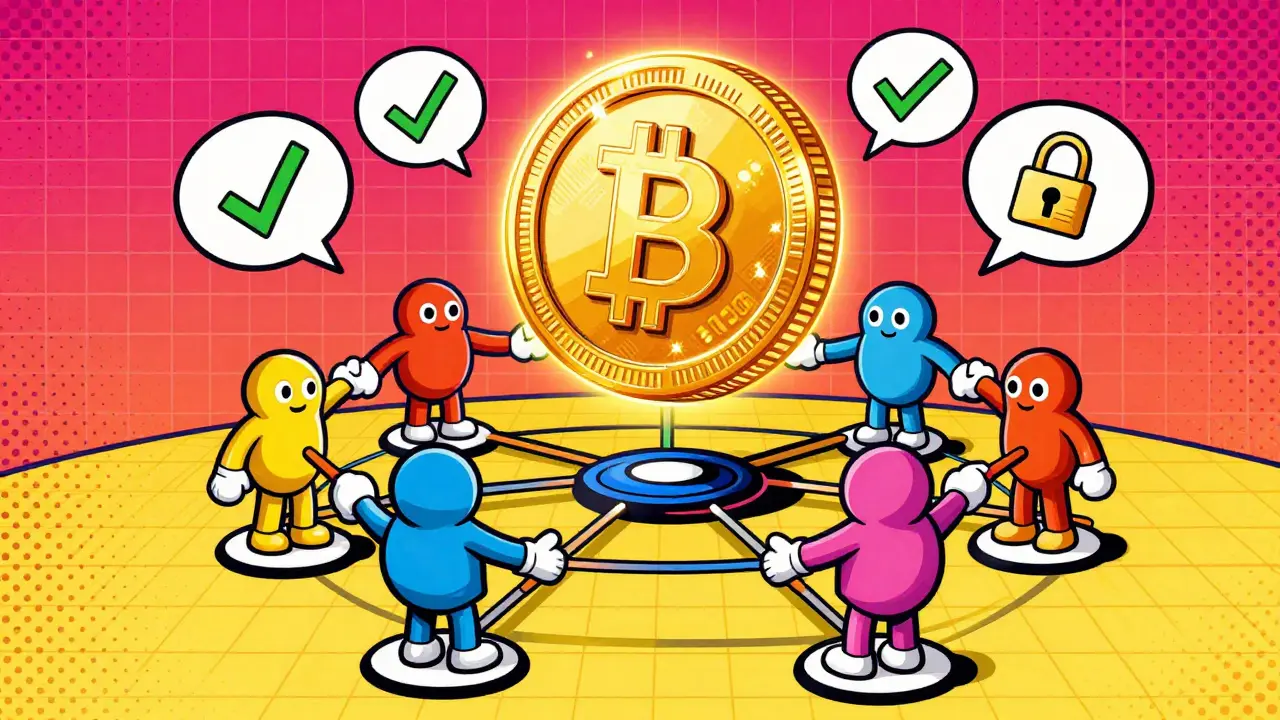
The core problem in traditional charity is opacity. When you donate via a credit card processor, the money moves through several intermediaries-banks, payment gateways, and clearing houses-each taking a cut and obscuring the final destination. Blockchain removes these middlemen. By recording transactions on a public ledger, every step becomes visible and verifiable.
This transparency builds what experts call 'immutable trust.' Once a transaction is recorded on the blockchain, it cannot be altered or deleted. For a nonprofit, this means you can provide donors with a direct link to see exactly how their contribution was spent. It’s not just a promise; it’s a cryptographic fact. This level of accountability is particularly powerful in disaster relief scenarios, where speed and integrity are critical. Donors no longer have to guess if their funds helped rebuild a home or got lost in administrative overhead.
Key Benefits for Nonprofits and Donors
Adopting a blockchain charity platform offers tangible advantages that go beyond marketing buzzwords. Here is what changes when you integrate this technology:
- Reduced Transaction Costs: Traditional cross-border donations often incur high fees from banks and currency conversion services. Crypto donations bypass much of this infrastructure, allowing more of the donor's money to reach the cause.
- Automated Compliance: Smart contracts can automate tax receipt generation and ensure funds are only released when specific conditions are met, reducing administrative burden.
- Global Reach: Anyone with an internet connection and a digital wallet can donate, regardless of their local banking infrastructure. This opens up a new demographic of tech-savvy, international donors.
- Enhanced Security: Blockchain's decentralized nature makes it resistant to fraud and hacking attempts that target centralized databases.
For donors, the benefit is peace of mind. They can track their impact in real-time. For nonprofits, the benefit is efficiency. Less time spent on manual reconciliation and more time spent on mission-critical activities.
Top Blockchain Charity Platforms in 2026
Not all platforms are created equal. Some focus on ease of use for small NGOs, while others offer enterprise-grade compliance for large foundations. Here are the leading options currently shaping the landscape:
| Platform | Best For | Key Feature | Fees/Conversion |
|---|---|---|---|
| The Giving Block | Mainstream nonprofits seeking easy integration | Seamless API integration with existing donation systems; supports NFT giving | Standard processing fees apply; converts to fiat |
| Every.org | Organizations wanting zero risk from crypto volatility | Donor-Advised Fund (DAF) model; auto-converts to GBP/fiat with zero fees for nonprofits | Zero fees for nonprofits; covers transaction costs |
| Engiven | UK charities and religious organizations | High-security compliance tools; HMRC-compliant tax receipts | Auto-converts to fiat; competitive rates |
| BitGive | Projects requiring granular tracking and transparency | GiveTrack platform allows real-time visibility into fund usage | Supports Bitcoin and major cryptos; variable fees |
| Binance Charity | Large-scale humanitarian efforts and disaster relief | 100% of donations go to beneficiaries; Binance covers operational costs | No deduction from donations |
The Giving Block stands out for its user-friendly approach, making it easy for nonprofits without technical expertise to start accepting crypto. It integrates directly with popular fundraising software, meaning you don't have to overhaul your entire tech stack. On the other hand, Every.org appeals to risk-averse organizations. By acting as a Donor-Advised Fund, it accepts the crypto, instantly converts it to stable currency, and handles the regulatory complexity, ensuring the nonprofit never holds volatile assets.
For UK-based entities, Engiven provides crucial compliance features, including tax receipts that meet HMRC standards. Meanwhile, BitGive pioneered the concept of tracked donations with its GiveTrack system, allowing donors to see exactly how funds are utilized in projects like the Chandolo Primary School Water Project in Kenya. Finally, Binance Charity leverages the massive reach of the Binance exchange to support large-scale initiatives, guaranteeing that every cent donated goes directly to the cause.
Real-World Impact: Case Studies
Theory is convincing, but results are undeniable. Two major examples demonstrate the power of blockchain in action.
The World Food Programme (WFP) implemented a blockchain system called Building Blocks in refugee camps in Jordan. By October 2018, over 100,000 refugees were using biometric verification to redeem cash-for-food assistance via this blockchain network. This system reduced transaction costs significantly compared to traditional banking methods and ensured that aid reached the intended recipients without leakage or corruption. It proved that blockchain could handle high-volume, low-value transactions securely and efficiently.
Another notable example is BitGive’s work in Kenya. Through its crowdfunding platform, they raised BTC 1.2 (approximately $15,000 USD) for the Chandolo Primary School Water Project. Donors could track the progress of the rainwater catchment tank and latrine construction in real-time. This transparency not only secured funding but also built a community of engaged supporters who saw the direct result of their contributions.

Challenges and Considerations
Despite the benefits, adopting blockchain charity platforms is not without hurdles. Volatility remains a primary concern. Cryptocurrency prices can fluctuate wildly, which might reduce the value of a donation between the time it is sent and the time it is converted. Platforms like Every.org mitigate this by converting instantly, but organizations holding crypto must manage this risk carefully.
Regulatory uncertainty is another factor. Laws regarding cryptocurrency vary by country and are still evolving. Nonprofits must ensure they comply with local financial regulations, anti-money laundering (AML) laws, and tax requirements. Engiven and similar platforms help by providing built-in compliance tools, but due diligence is essential.
Finally, there is the learning curve. Staff members may need training to understand digital wallets, private keys, and blockchain interfaces. However, most modern platforms are designed to be intuitive, abstracting away the complex technical details so that administrators can focus on fundraising rather than cryptography.
Future Trends in Blockchain Philanthropy
As we move through 2026, several trends are emerging. First, the integration of AI-powered donor analytics with blockchain data will allow nonprofits to predict giving patterns and personalize engagement strategies. Second, Non-Fungible Tokens (NFTs) are becoming a popular fundraising tool, allowing organizations to sell unique digital assets to raise funds while building community engagement.
We are also seeing the rise of hybrid models, where platforms combine traditional payment methods with crypto options, lowering the barrier to entry for hesitant donors. Supply chain management is another area of growth, with blockchain being used to track physical goods-from medical supplies to food aid-ensuring they reach their destinations intact and on time.
The future of charity is transparent, efficient, and global. Blockchain charity platforms are not just a niche trend; they are becoming the standard for organizations that want to prove their impact and build lasting trust with their supporters.
What is a blockchain charity platform?
A blockchain charity platform is a service that allows nonprofits to accept cryptocurrency donations and track them using distributed ledger technology. This ensures transparency, reduces fees, and provides immutable records of how funds are used.
Do I need technical knowledge to use these platforms?
No. Most modern platforms like The Giving Block and Every.org are designed for non-technical users. They handle the complex blockchain interactions behind the scenes, offering simple dashboards for managing donations and generating reports.
How do these platforms handle cryptocurrency volatility?
Many platforms, such as Every.org, automatically convert cryptocurrency donations into stable fiat currencies (like USD or GBP) immediately upon receipt. This protects the nonprofit from price fluctuations while still allowing donors to give in crypto.
Are crypto donations tax-deductible?
In many jurisdictions, yes. Platforms like The Giving Block and Engiven provide automated tax receipts that comply with local regulations, such as HMRC in the UK or IRS in the US. Donors should consult their own tax advisors for specific advice.
Which platform is best for a small UK charity?
Engiven is highly recommended for UK charities due to its focus on HMRC compliance and security. Every.org is also a strong option if you want to avoid handling crypto assets directly, as it acts as a donor-advised fund.