
Crypto Regulations: What’s Legal, What’s Banned, and Where You Stand
When we talk about crypto regulations, the rules governments set to control how digital assets are used, traded, and taxed. Also known as cryptocurrency law, these rules decide whether you can buy Bitcoin in your country, if you owe taxes on your gains, or if using a VPN to access a banned exchange could land you in trouble. It’s not just about rules—it’s about real consequences. In South Korea, you could pay up to 45% in taxes on crypto profits. In Algeria, trading crypto after 2025 means going underground. And in China, using a VPN to bypass the ban isn’t just risky—it’s illegal.
These rules don’t exist in a vacuum. They’re shaped by how governments classify crypto itself. Is it property, a digital asset treated like real estate or stocks for tax purposes. Also known as digital property, it—meaning you pay capital gains when you sell? Or is it currency, a medium of exchange subject to money transmission laws. Also known as legal tender, it—meaning exchanges need licenses and users face anti-money laundering checks? The answer changes everything. In Pakistan, the 2025 Virtual Assets Bill is trying to classify crypto as a regulated financial asset, not just a gamble. Meanwhile, in countries like the U.S. and UK, exchanges like OKX are blocked from offering derivatives because regulators see them as too risky.
And it’s not just about what you can do—it’s about where you can do it. Crypto regulations have created a global patchwork. Some places, like zero-tax crypto havens, lure users with no capital gains. Others, like Myanmar and Algeria, have banned crypto outright—but the market didn’t disappear. It just went dark, with premiums rising as people trade peer-to-peer under the radar. That’s why you see articles about underground crypto premiums and how bans actually drive up prices. The same forces that shut down OKX in the U.S. are forcing users in Egypt or Afghanistan to pay more just to get access.
Then there’s the human side. Crypto regulations affect everyday people—not just traders. If you’re holding meme coins like DORKY or MICRODOGE, you’re still subject to the same tax rules as Bitcoin. If you’re trying to claim an airdrop, you need to know if the platform you’re using is legally allowed to operate where you live. Even crypto ATMs, which lost $246 million to scams last year, are now under tighter scrutiny because regulators finally started asking: who’s behind these machines?
What you’ll find below isn’t a list of laws. It’s a collection of real stories—how people in Pakistan are adapting to legalization, how South Koreans calculate their taxes, how Algerians trade in secret, and why some exchanges like YEX are red flags not just because they’re shady, but because they ignore regulation entirely. These aren’t abstract ideas. They’re the rules shaping your next move. Whether you’re holding, trading, or just trying to stay safe, what happens in one country affects you everywhere.
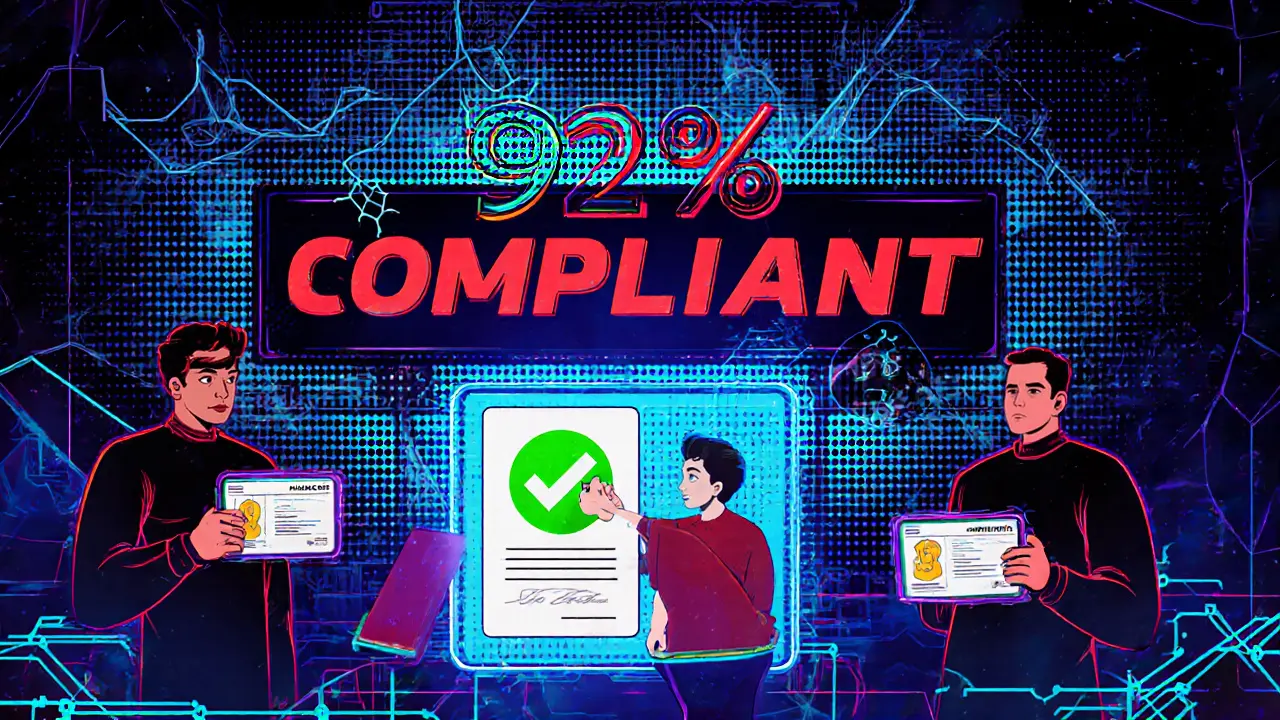
Future of KYC in Crypto Industry: How Compliance Is Reshaping Crypto in 2025 and Beyond
KYC in crypto is no longer optional-it's mandatory, fast, and powered by AI. By 2025, 92% of exchanges require identity verification. Here’s how it works, what’s changing, and what it means for users and the future of crypto.
October 28 2025