
KYC Crypto: What It Is, Why It Matters, and Where It Blocks You
When you sign up for a crypto exchange, you’re often asked to prove who you are—that’s KYC crypto, Know Your Customer, a regulatory process that verifies your identity before letting you trade. Also known as identity verification, it’s become as standard as opening a bank account—but far more invasive. You upload a photo of your ID, a selfie, sometimes even a utility bill. In return, you get access to trading, withdrawals, and sometimes even staking. But what happens when you don’t want to share your documents? Or when the exchange blocks you anyway?
That’s where crypto exchange KYC requirements, the specific rules each platform enforces for identity checks. Also known as verification levels, they vary wildly. On Coinbase, you might need just a driver’s license. On OKX, you’re locked out in the U.S. and UK unless you use a VPN—which doesn’t work and can get you banned. Some platforms like YEX don’t even pretend to be legitimate, skipping KYC entirely because they’re scams. And then there are countries like China and Algeria, where the government bans crypto outright, making KYC not just a formality—it’s a legal risk.
crypto regulations, laws that force exchanges to collect user data to prevent money laundering and fraud. Also known as AML rules, they’re the reason KYC exists. The U.S., EU, and South Korea enforce them strictly. But in places like Pakistan, the rules are shifting fast—from total ban to regulated markets under PVARA. And in underground markets in Myanmar or Egypt, users trade peer-to-peer to avoid KYC entirely, paying higher premiums just to stay anonymous. These aren’t edge cases—they’re the reality for millions.
Not all KYC is the same. Some exchanges do light checks for small trades. Others demand full documentation for any withdrawal. And some—like the ones with no audits or reviews—skip it completely because they’re not trying to be legal. That’s why you’ll find posts here about OKX’s country restrictions, YEX’s red flags, and how crypto ATMs are being exploited by scammers who don’t care about your ID. You’ll also see how people in banned countries bypass KYC, what risks they take, and why it’s often not worth it.
If you’ve ever been asked to send a selfie with your passport and wondered why, this collection explains it. If you’ve been blocked from trading because of your location, you’ll find out why. If you’ve ever questioned whether KYC is worth the loss of privacy, you’ll see the trade-offs laid out plainly. These aren’t theoretical debates—they’re real experiences from users who’ve hit walls, lost access, or dodged bans. Below, you’ll find guides on where KYC works, where it fails, and how to protect yourself when the system turns against you.
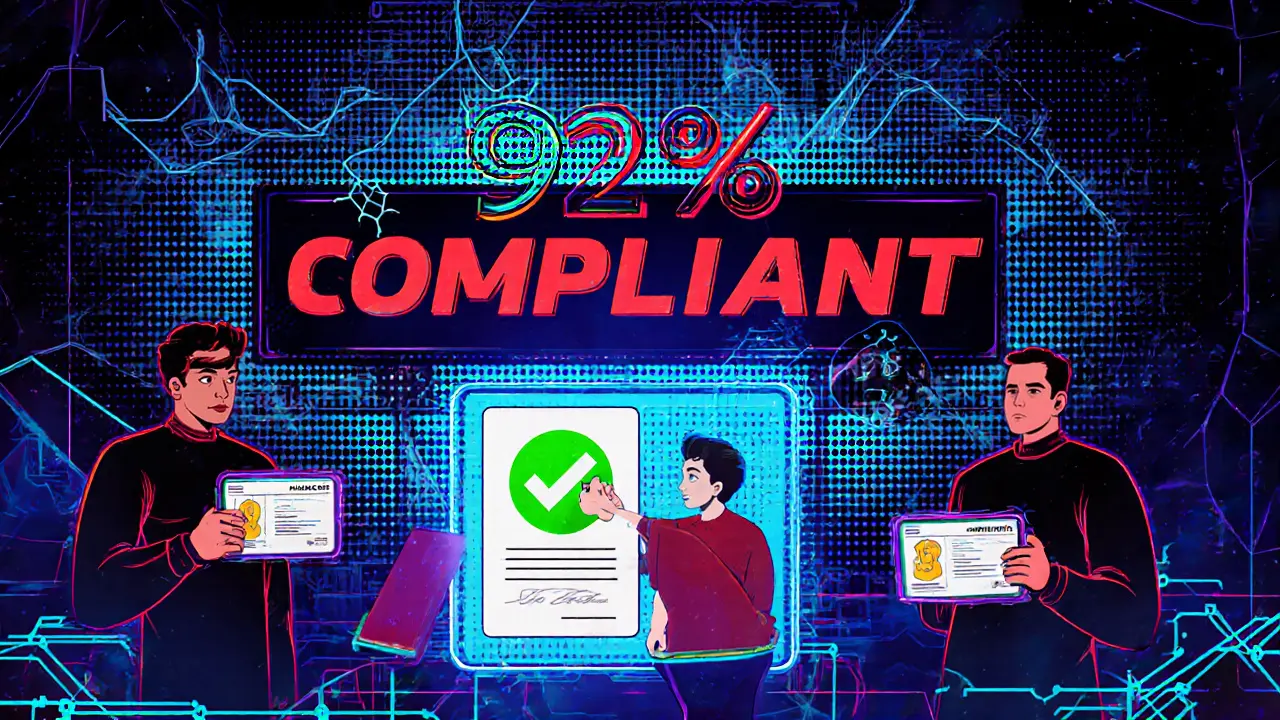
Future of KYC in Crypto Industry: How Compliance Is Reshaping Crypto in 2025 and Beyond
KYC in crypto is no longer optional-it's mandatory, fast, and powered by AI. By 2025, 92% of exchanges require identity verification. Here’s how it works, what’s changing, and what it means for users and the future of crypto.
October 28 2025