
Crypto KYC 2025: What’s Changed, Who Requires It, and How to Stay Compliant
When you sign up for a crypto exchange today, you’re not just creating an account—you’re going through crypto KYC, the process of verifying your identity before you can trade or withdraw digital assets. Also known as Know Your Customer, it’s no longer optional on major platforms. In 2025, governments worldwide are forcing exchanges to lock down access, and if you haven’t completed KYC, you might find your funds frozen or your account blocked.
It’s not just about proving you’re not a criminal. crypto regulations, the legal frameworks governments use to control digital asset flows have tightened dramatically. Countries like the U.S., UK, Canada, and Australia now require full identity verification for even small trades. Meanwhile, places like Algeria and Myanmar have banned crypto outright—but even there, underground traders often need fake IDs to access peer-to-peer markets, which increases risk and cost. crypto exchanges, the platforms where you buy, sell, or trade digital assets like OKX and YEX are caught in the middle: some refuse to operate without KYC, while others vanish overnight, leaving users with no recourse.
Why does this matter to you? Because if you skip KYC, you’re not avoiding bureaucracy—you’re avoiding access. You can’t use most DeFi apps, stake coins, or withdraw to a bank without passing verification. Even airdrops from legitimate projects now require proof of identity. And if you try to bypass it with a VPN, you’re risking more than just a ban—you could be breaking laws. Countries like China and Pakistan have made VPN use for crypto access a punishable offense. The truth? KYC isn’t going away. It’s evolving into something more invasive, more global, and more unavoidable.
So what’s new in 2025? Facial recognition is now standard. Some exchanges ask for live video verification. Others cross-check your ID against government databases in real time. Even small platforms are being forced to comply—or shut down. That’s why you’re seeing fewer shady exchanges like YEX still operating. The ones that remain are either fully compliant or completely underground. And underground means higher premiums, zero legal protection, and no way to recover your funds if something goes wrong.
Here’s what you need to do: get your documents ready—passport, proof of address, and a clear selfie. Don’t wait until you’re trying to withdraw $10,000 to realize you’re locked out. Pick one trusted exchange, complete KYC once, and stick with it. Avoid platforms with no reviews, no security details, or no clear legal structure. If it feels too good to be true, it probably is. The crypto world still has room for freedom, but not for anonymity. In 2025, your identity is the key to your assets.
Below, you’ll find real-world examples of how KYC impacts users—from country bans to exchange crackdowns—and what you can do to protect yourself without getting tangled in scams or legal trouble.
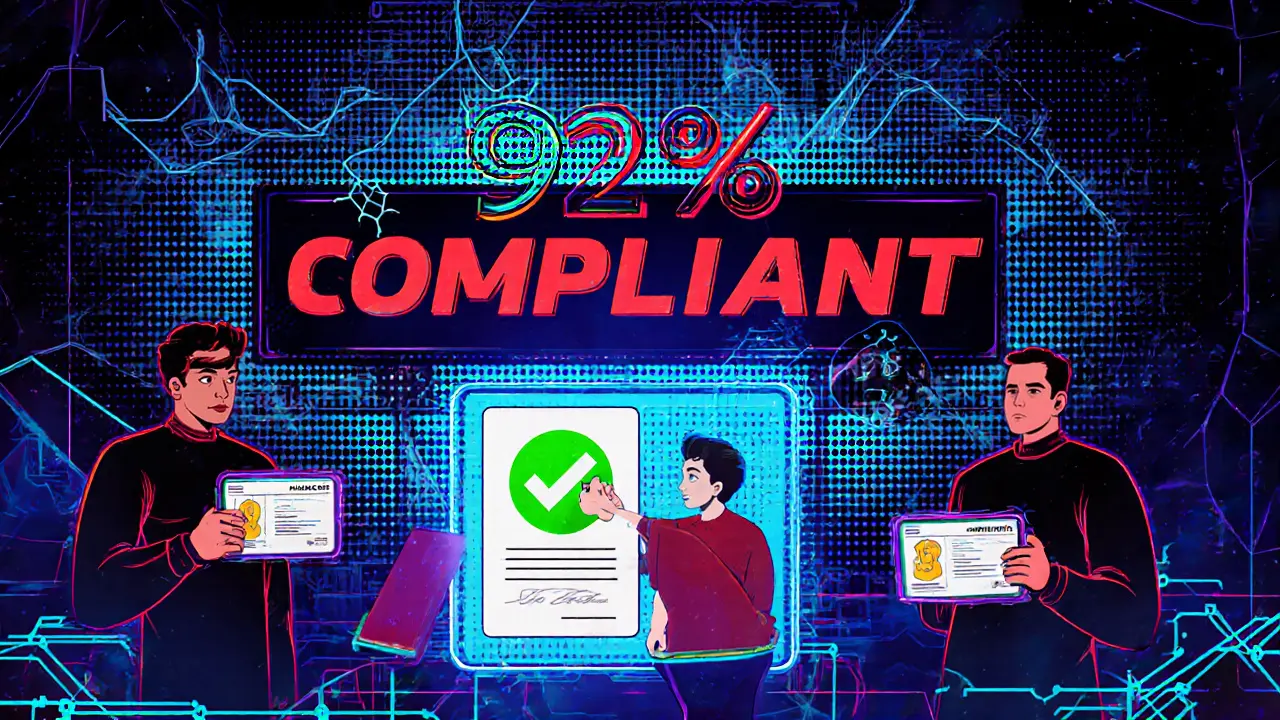
Future of KYC in Crypto Industry: How Compliance Is Reshaping Crypto in 2025 and Beyond
KYC in crypto is no longer optional-it's mandatory, fast, and powered by AI. By 2025, 92% of exchanges require identity verification. Here’s how it works, what’s changing, and what it means for users and the future of crypto.
October 28 2025