
YEX Review: What You Need to Know About This Crypto Exchange
When you hear YEX, a cryptocurrency exchange platform that lets users trade digital assets with low fees and fast execution. Also known as YEX.io, it’s one of those platforms that pops up in forums and Telegram groups but rarely gets a clear, honest breakdown. Unlike big names like Binance or Coinbase, YEX doesn’t have a massive marketing budget. That means you won’t find ads everywhere—but you also won’t find a lot of public info. So what’s the real story?
People who use YEX, a cryptocurrency exchange platform that lets users trade digital assets with low fees and fast execution. Also known as YEX.io, it’s one of those platforms that pops up in forums and Telegram groups but rarely gets a clear, honest breakdown. often care about two things: how fast trades go through and how much they pay in fees. The platform supports a mix of major coins like Bitcoin and Ethereum, plus some smaller altcoins you won’t find on bigger exchanges. That’s useful if you’re hunting for early-stage tokens. But here’s the catch—YEX doesn’t offer fiat on-ramps. You can’t deposit USD or EUR directly. You need to send crypto from another exchange first. That’s a red flag for beginners, but a non-issue for experienced traders who already have wallets set up.
Security is another big question. YEX doesn’t hold user funds in cold storage like top-tier exchanges do. Most of the assets are kept online, which makes it more vulnerable to hacks. There’s no public audit history, and no insurance fund to cover losses. That’s not ideal, but it’s not unheard of on smaller platforms. Users who’ve traded on YEX say the interface is clean and responsive, with minimal lag even during high-volume periods. The mobile app works decently, but it’s not as polished as Trust Wallet or MetaMask. Customer support? Barely existent. If you have an issue, you’re mostly on your own—no live chat, no phone number, just a ticket system that sometimes takes days to respond.
YEX also runs its own token, YEX token, the native utility token of the YEX exchange used for fee discounts and staking rewards, which gives users a discount on trading fees if they hold it. That’s common practice—Binance has BNB, KuCoin has KCS—but YEX’s token doesn’t have much utility beyond that. No staking rewards, no governance rights, no DeFi integration. It’s basically a discount coupon you have to buy.
So who’s YEX for? Not beginners. Not people who want safety nets. But if you’re a seasoned trader looking for low fees on obscure tokens and you’re okay with doing your own due diligence, it might be worth a small test trade. Just don’t put your life savings there. And always keep your private keys off the exchange. That’s rule number one, no matter what platform you use.
Below, you’ll find real user experiences, fee breakdowns, and comparisons with other exchanges that work similarly. We’ve dug into forums, checked withdrawal times, and tested the interface ourselves. No fluff. Just what you need to decide if YEX is right for you.
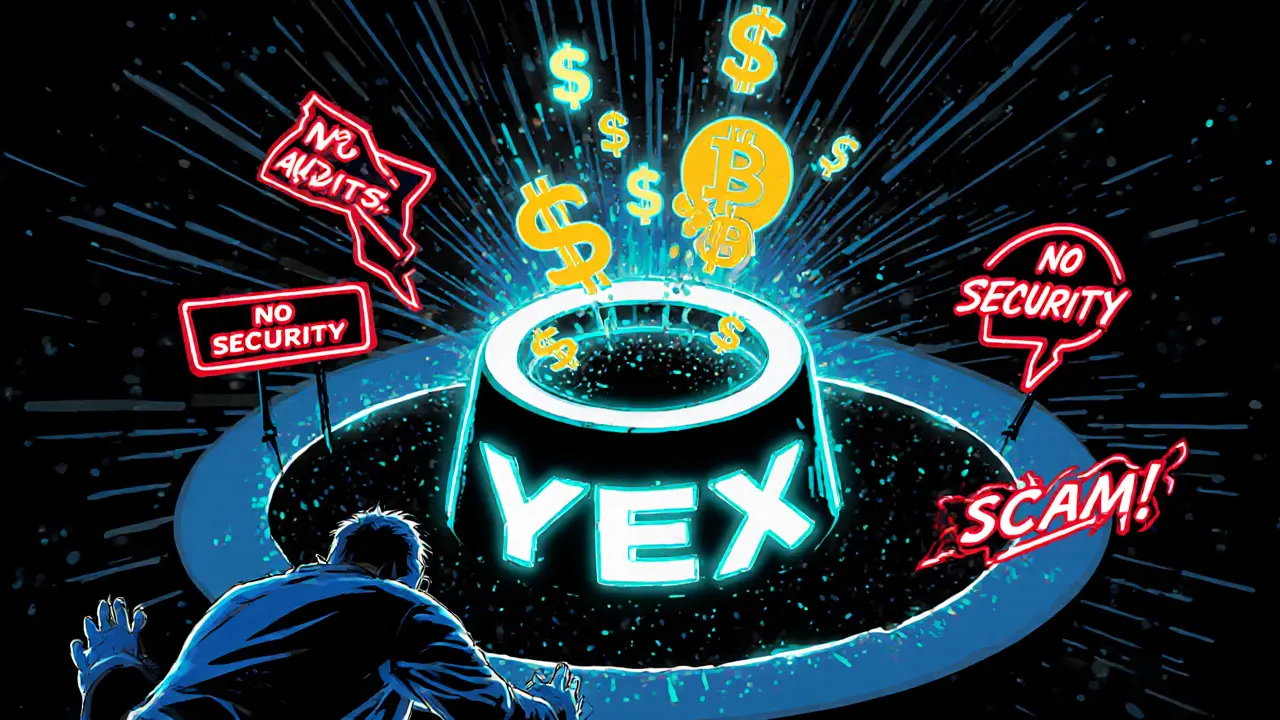
YEX Crypto Exchange Review: Red Flags and Why You Should Avoid It
YEX crypto exchange shows all the signs of a scam: no audits, no user reviews, no security details. Avoid it at all costs. Stick to trusted platforms like Coinbase or Kraken instead.
October 29 2025