
Imagine sending a high-value payment and seeing a "Success" message on your screen. Most people assume the money is gone and the deal is done. But in the world of distributed ledgers, that "success" might be a lie. Depending on the network, a transaction could technically be reversed or "undone" if a group of miners or validators decides to rewrite the history of the chain. This is where blockchain finality is the point at which a transaction is considered immutable and cannot be altered, reversed, or canceled. Understanding this is the difference between a secure trade and a catastrophic loss of funds.
Key Takeaways
- Probabilistic Finality: Security grows over time; never truly "final" but becomes exponentially safer.
- Deterministic Finality: Immediate and absolute; once confirmed, it cannot be reversed.
- Economic Finality: Security is backed by financial penalties (slashing) for validators.
- L2 Dependency: Layer 2 networks rely on the finality of their underlying Layer 1 (L1) chain.
The Probabilistic Model: Building a Wall Brick by Brick
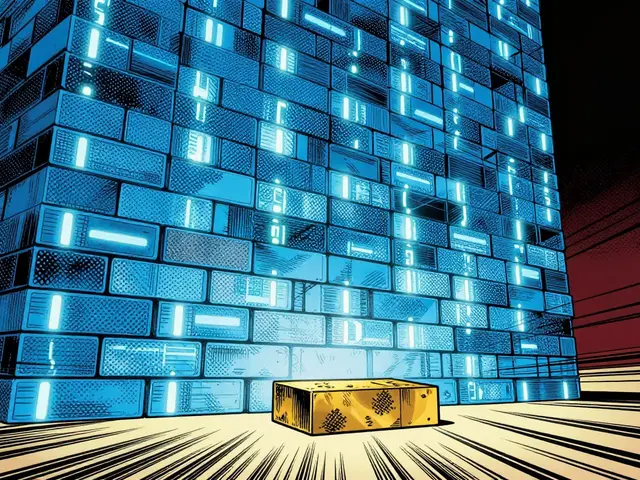
If you use Bitcoin, you're dealing with probabilistic finality. In this system, there is no single moment where a block is "locked." Instead, every new block added to the chain makes the previous blocks harder to change. It's like building a brick wall; the deeper a brick is buried under new layers, the harder it is to pull it out without knocking down the whole structure.
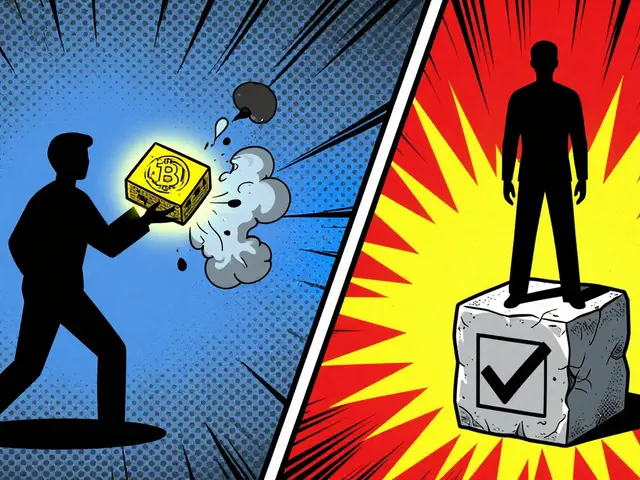
For most users, one confirmation is enough for a cup of coffee. But for a $10,000 transfer? You'll likely wait for six confirmations. Because Bitcoin blocks average 10 minutes, this means a 60-minute wait for a reasonable level of security. The risk here is a "chain reorganization" or a 51% attack, where a malicious actor gains enough hashing power to create a longer alternative chain, effectively erasing your transaction. For smaller networks with low hash rates, this risk is much higher because hashing power can be rented from cloud providers.
Deterministic Finality: The Circuit Breaker
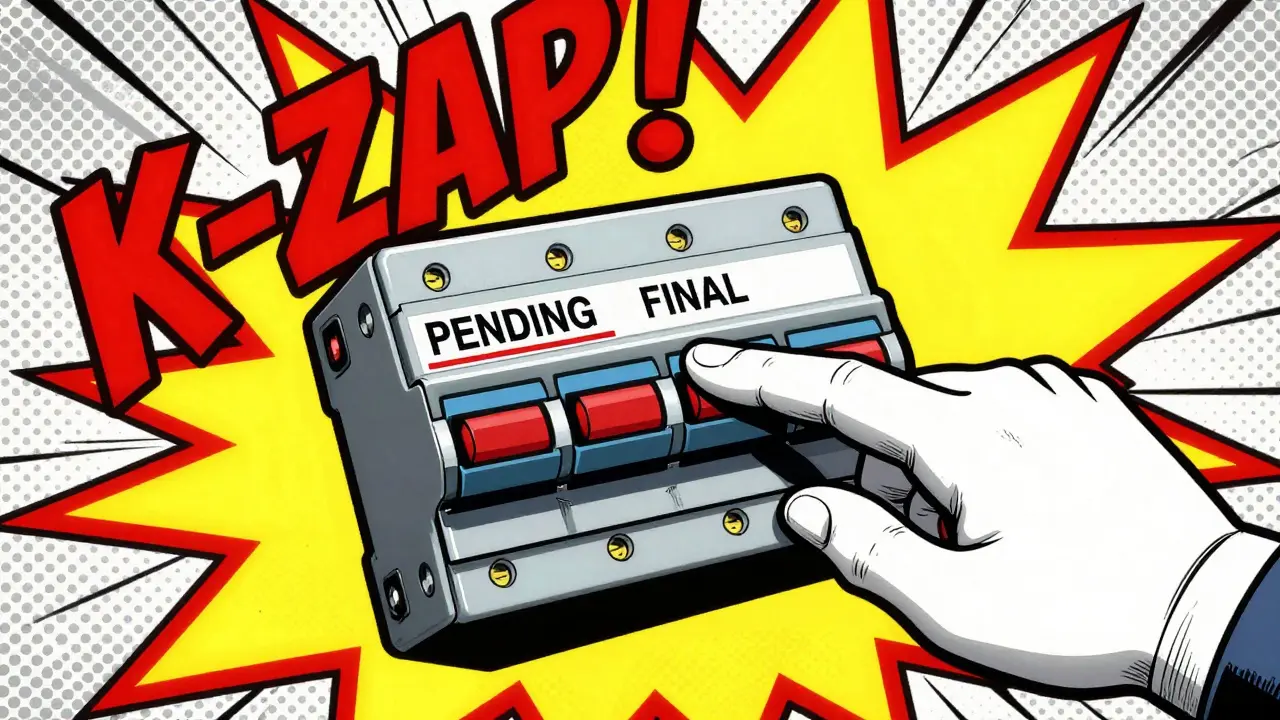
Some networks don't believe in "probably." They use Deterministic Finality, which works like a circuit breaker: once it's flipped, it's over. This is common in networks using Byzantine Fault Tolerance (BFT) consensus, such as Tendermint or Ripple.
In these systems, validators must reach a specific agreement (usually a two-thirds majority) before a block is even added to the chain. The moment that block is committed, it is final. There is no waiting for six more blocks. This makes these chains a dream for high-frequency trading and enterprise supply chains where a business needs to know instantly that a shipment has been paid for and the record is permanent.
Economic Finality: Putting Money on the Line
Then there's the hybrid approach used by Ethereum after its move to Proof-of-Stake. This is called Economic Finality. Instead of relying on raw computing power (hash rate), it relies on financial collateral.
Validators stake their own cryptocurrency to participate. If they try to revert a finalized block, they face "slashing," meaning a significant portion of their staked funds is destroyed. While Ethereum produces blocks every 12 seconds, it takes longer for a block to reach full economic finality. This adds a layer of complexity for developers who have to track both when a transaction is "included" in a block and when it is truly "finalized" by the validator set.
| Blockchain | Finality Type | Time to Finality (TTF) | Security Basis |
|---|---|---|---|
| Bitcoin | Probabilistic | ~60 Minutes (6 blocks) | Cumulative Hash Power |
| Ethereum | Economic | ~12-15 Minutes | Staked Collateral/Slashing |
| Cosmos (Tendermint) | Deterministic | Instant (1 block) | BFT Validator Agreement |
| Polygon PoS | Hybrid/L1-Dependent | ~30 Minutes (Checkpoint) | Ethereum L1 Checkpoints |
The Layer 2 Trap: Inherited Finality
If you're using Arbitrum, Optimism, or StarkNet, you might be under a dangerous illusion. These Layer 2 (L2) networks provide an incredibly fast user experience, often making transactions feel instant. However, L2s do not have their own independent consensus for finality; they inherit it from the L1 they sit on (usually Ethereum).
Your transaction might be "confirmed" on the L2 sequencer in milliseconds, but it isn't truly final until the batch of transactions is posted to the L1 and that L1 block reaches its own finality. If the L1 chain suffers a reorganization, the L2 state can be affected. This is a critical point for developers building bridges or cross-chain swaps; if you treat an L2 confirmation as final too early, you risk "ghost" transactions that vanish when the L1 settles.

Implementation Challenges for Developers
Choosing a blockchain isn't just about gas fees; it's about how you handle the wait. Developers working with delayed or probabilistic finality have to build "dual-tracking" systems. You can't just listen for a transaction_received event; you have to track the block height and wait for a specific number of confirmations before triggering an off-chain action, like releasing a physical product for delivery.
Conversely, integrating with an instant-finality chain is straightforward. You get the confirmation, and you act. But there's a trade-off: deterministic systems are often more centralized. To get that "instant" flip of the switch, you need a smaller, known set of validators. Probabilistic systems like Bitcoin can handle thousands of anonymous miners, which is why they are seen as more decentralized and secure for long-term storage.
Which One Should You Choose?
The "best" finality depends entirely on what you're doing. If you're building a store-of-value application, the slow, grinding security of probabilistic finality is actually a feature, not a bug. It's the gold standard for stability.
If you're running a DeFi arbitrage bot, a 60-minute wait is a death sentence. You need deterministic finality to capture price gaps between exchanges before they disappear. For institutional finance, where legal compliance requires a definitive "yes or no" on a transaction, deterministic or economic finality is the only way to satisfy auditors and regulators.
What is the difference between a confirmation and finality?
A confirmation means a transaction has been included in a block. Finality is the guarantee that this block cannot be changed. In Bitcoin, one confirmation is a start, but you need six for finality. In Tendermint, one confirmation IS finality.
Can a transaction ever be reversed after it's "confirmed"?
Yes, in probabilistic systems. If a longer chain is produced (a chain reorg), the previous blocks are discarded. This is why high-value merchants wait for multiple confirmations.
Why does Ethereum use economic finality?
Economic finality allows Ethereum to achieve faster settlement than Bitcoin while maintaining security through financial incentives. Validators risk their staked ETH if they attempt to revert a finalized block.
Is Layer 2 finality safe?
L2 finality is as safe as the L1 it is built upon. If you trust Ethereum, you can trust an Optimistic or ZK-Rollup, provided you account for the time it takes for the L2 data to be finalized on the L1.
What is Time to Finality (TTF)?
TTF is the total time elapsed from the moment a user submits a transaction to the moment it is considered immutable. It is the primary metric for comparing the efficiency of different consensus mechanisms.
Michael Harms
April 16, 2026 AT 06:43Really helpful breakdown of a tricky topic! It's great to see these concepts explained in a way that actually makes sense for regular folks. Keep it up!
Adedamola Oyebo
April 16, 2026 AT 07:22Solid summary!! Very accurate points regarding TTF...
Michelle Stanish
April 16, 2026 AT 10:55Still just sounds like a way to lose money.
Joshua Salwen
April 16, 2026 AT 18:01Umm, did we just ignore the fact that "deterministic" systems are basically just centralized databases with a fancy name? Honestly, it's absolute madness that people think this is decentralized!! Like, really, who is actually in control here?? The whole thing is a total joke lol.
Luke George
April 18, 2026 AT 02:38Exactly. The "validators" are just a small group of elites deciding what's true. It's all rigged to keep the power in the hands of the few while we're told it's a revolution. Just follow the money and you'll see the strings.
Abhinav Chaubey
April 18, 2026 AT 07:56Actually, the logic behind BFT is mathematically sound regardless of your delusions. Most people just don't have the intellectual capacity to grasp how consensus algorithms work in a distributed environment.
Saurav Bhattarai
April 19, 2026 AT 06:36Imagine thinking you're the smartest person in the room while discussing basic blockchain finality. How quaint. Truly a masterclass in mediocrity.
Thomas Jewett
April 19, 2026 AT 14:56The lack of morallity in these systems is what realy bothers me, we are trading human values foralgorithms that dont care about the soul of a nation and i think it is high time we realize that the US must lead the way in regulating this mess before the entyre global economy colapses under the weight of greed!!
Anna Grealis
April 20, 2026 AT 19:04idk why people care. its all just scams anyway... too much reading for a post that basically says "wait longer for btc".
John and Lauren Busch
April 22, 2026 AT 14:40lol imagine being this stressed about it.
Jeff Barlett
April 22, 2026 AT 17:19Wait, hold up. I actually disagree with the whole "L2 trap" section. It's not a trap, it's a design choice. People just love to dramatize everything on this platform to get views. It's just scaling, not a conspiracy!
Kim Smith
April 23, 2026 AT 19:26I find it laaaaately fascinating how we try to quantify the concept of "finality" as if time itself isnt just a fluid construct in our digital age... like maybe the waiting is actually a meditative process that reminds us that not everything in life needs to be instant and immediate, even though the tech bros want us to believe that speed is the only metric of success in this late-stage capitalistic spiral we call a society.
Kaitlyn Wu
April 24, 2026 AT 20:11We need to be clear that L2s are an essential tool for accessibility. While the finality lag is real, it shouldn't be framed as a "trap" but as a trade-off that allows millions more people to actually use these tools without paying $50 in gas.
Keri Pommerenk
April 25, 2026 AT 19:44totally agree with that point. its all about balance and finding the right tool for the job
nikki krinkin
April 27, 2026 AT 01:29Just reading the comments and seeing everyone argue over this. It's interesting how much tension there is around simple technical definitions.
Mark Pfeifer
April 27, 2026 AT 12:58Actually, I'm curious about the economic finality part. If the stake is too large, does that just create a new form of centralization where the rich get to decide the finality? Seems like a loophole.
siddharth narula
April 28, 2026 AT 18:42One must contemplate the ethical dimensions of slashing 😇. It is essentially a digital purgatory where the errant validator is punished for their transgression against the collective truth of the ledger. Truly, we are witnessing the birth of a new algorithmic morality 🌟.
Sean Mitchell
April 29, 2026 AT 19:45This is absolutely exhausting. The sheer audacity of trying to compare these three models in a simple table is practically a crime against computer science! I am physically pained by the oversimplification of the BFT consensus process!