
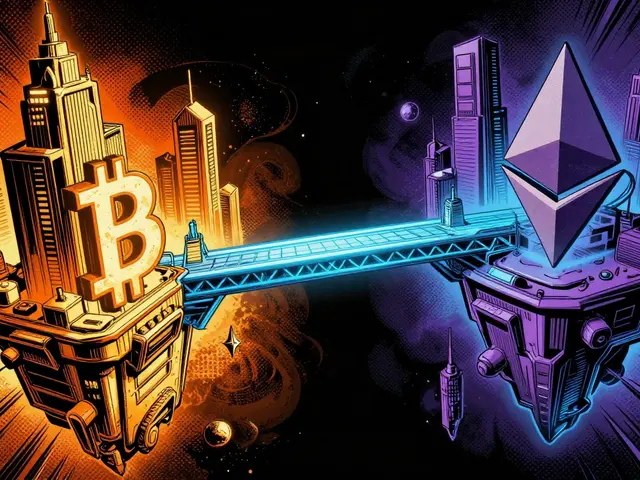
Imagine trying to send a text message from an iPhone to an Android, but the two phones speak entirely different languages and exist in separate dimensions. That is essentially the problem blockchain networks face. While we have hundreds of different chains, they are mostly isolated silos. Cross-chain bridges is a specialized protocol or decentralized application that establishes secure connections between separate blockchain networks, enabling the transfer of digital assets, data, and commands. Without these "adapters," your Bitcoin stays in a Bitcoin wallet, and your Ethereum stays in an Ethereum wallet, with no way to use one on the other's network.
The need for these tools exploded around 2019 and 2020. Developers realized that if the ecosystem wanted to grow, users needed a way to move value without relying on a centralized exchange. One of the first big moves was the launch of Wrapped Bitcoin (WBTC) in late 2019. By locking real Bitcoin and minting an equivalent token on Ethereum, users could suddenly use their BTC in DeFi protocols. It worked so well that by early 2022, it had locked up over $1.2 billion. However, this growth came with a steep learning curve and some terrifying security flaws.
How Bridges Actually Work: The Three Main Models
Not all bridges are built the same. Depending on whether you are moving a token or a piece of data, the bridge uses a different architectural logic. Most of the market currently relies on three primary methods.
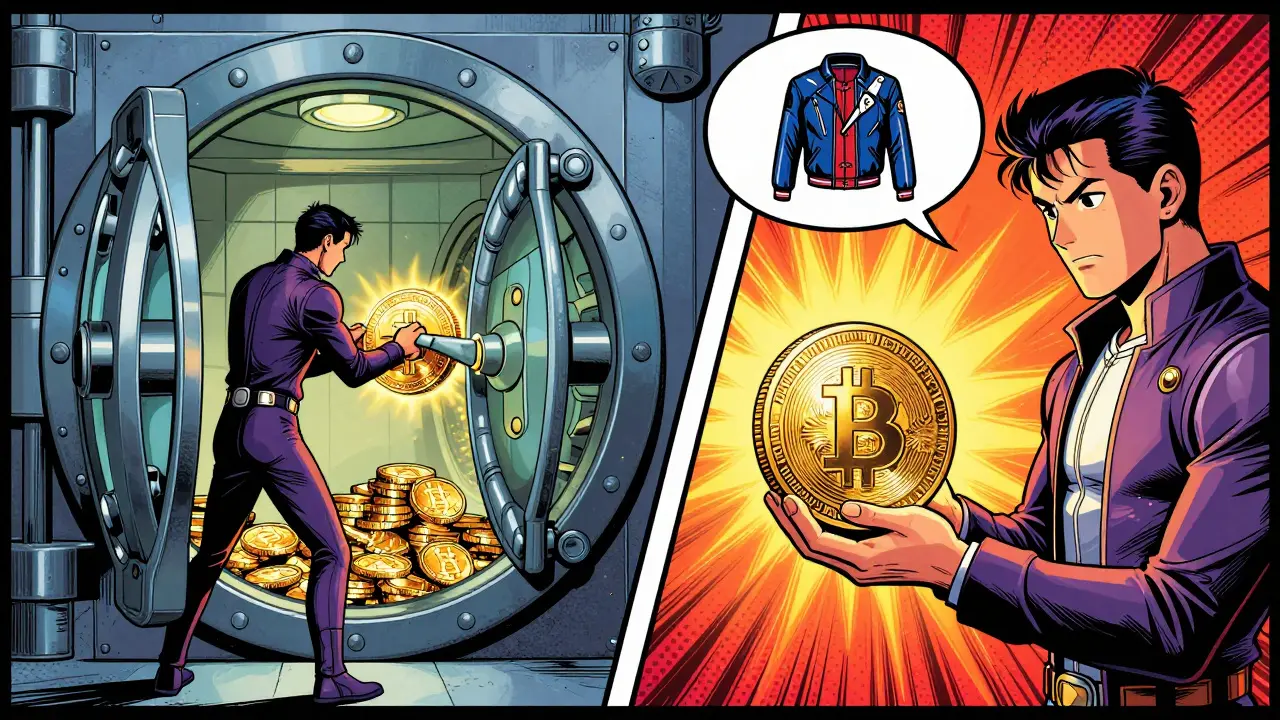
The most common approach is the lock-and-mint model. Here, you lock your assets in a smart contract on the source chain, and the bridge mints a "wrapped" version of that asset on the destination chain. It's like checking your coat at a club; you give them your jacket (the asset) and they give you a ticket (the wrapped token). You can use the ticket around the club, but to get your actual jacket back, you have to return the ticket and unlock the original asset. While popular, this is the riskiest model because the smart contract holding all the "jackets" becomes a massive target for hackers.
Then there is the burn-and-mint model. Instead of locking assets, this method destroys (burns) the tokens on the source chain and creates new native ones on the target chain. This removes the need for a giant vault of locked assets, which naturally lowers the risk of a massive heist. Finally, lock-and-unlock bridges use liquidity pools on both sides. Instead of creating new tokens, they simply swap assets between pools. THORChain is a prime example of this, avoiding wrapped tokens entirely and processing hundreds of millions in monthly volume by maintaining native liquidity.
| Model | Mechanism | Primary Risk | Market Share (Approx) |
|---|---|---|---|
| Lock-and-Mint | Locks asset $ ightarrow$ Mints wrapped token | Smart contract honeypot | 68% |
| Burn-and-Mint | Destroys asset $ ightarrow$ Mints native token | Minting logic bugs | 17% |
| Lock-and-Unlock | Liquidity pool swaps | Liquidity imbalance/Slippage | 15% |
The Security Trade-off: Who Do You Trust?
When you use a bridge, you aren't just trusting the code; you're trusting the custody model. This is where the real tension lies for most users. On one end, you have custodial bridges. These are basically"trusted third parties" who manage multi-signature wallets. They are fast and easy, but if the humans running the wallet decide to steal your money, there isn't much you can do.
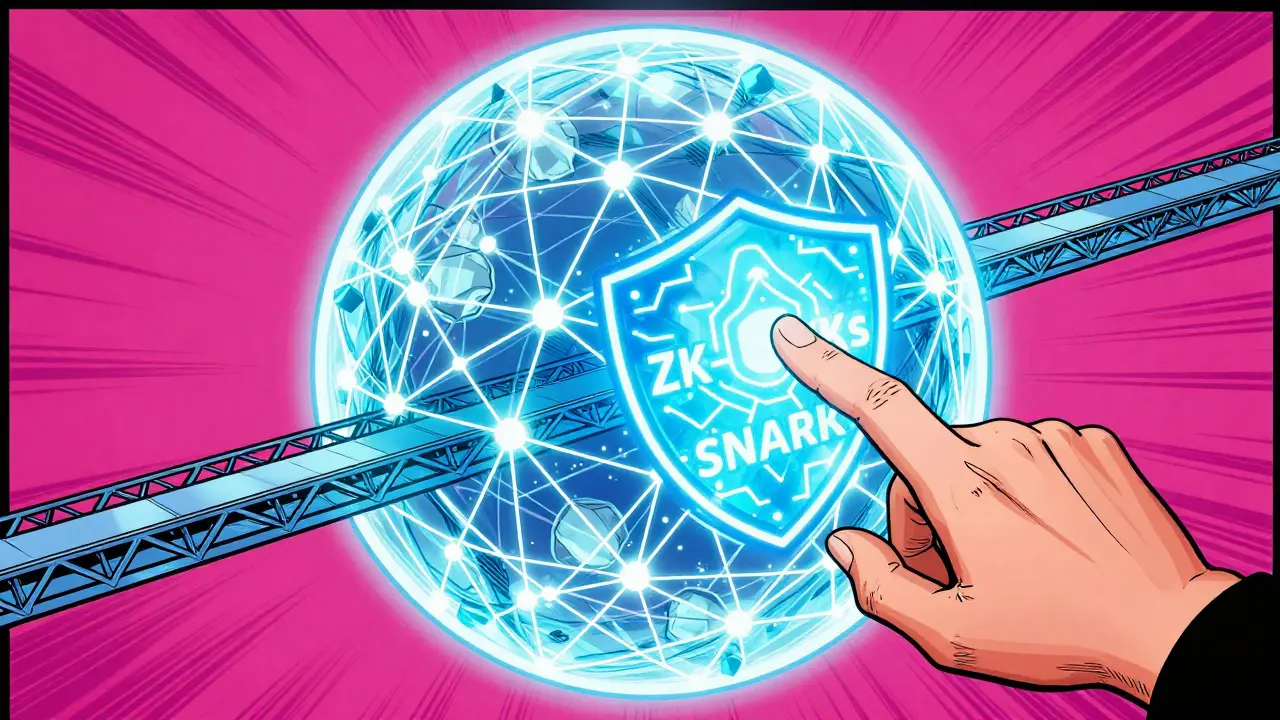
Moving up the security ladder, we find semi-custodial bridges. These use a group of validators who are economically incentivized to be honest. If they lie or steal, their stake is "slashed" (taken away). While better, it's still a game of social trust. The gold standard is the trust-minimized bridge. These use heavy-duty math, like Zero-Knowledge Proofs (specifically ZK-SNARKs), to prove a transaction happened on another chain without needing a middleman. The catch? These are slower and can be 30-40% more expensive in fees.
The danger of getting this wrong is immense. In 2022 alone, bridge-related hacks totaled roughly $2.1 billion. The Ronin Bridge hack, which saw $625 million vanish, proved that even popular bridges can have catastrophic single points of failure. This is why many experts, including Ethereum's Vitalik Buterin, have called bridges a "necessary evil"-essential for now, but a liability in the long run.
The Shift Toward Programmable Interoperability
We are moving past the era of simple "asset swapping." The new frontier is programmable token bridges. Instead of just moving a coin from point A to point B, these bridges allow for complex instructions. For example, you could send a command that says, "Move this USDC to Arbitrum, and the moment it arrives, deposit it into a specific yield farm."
Chainlink's Cross-Chain Interoperability Protocol (CCIP) is leading this charge. By creating a standardized way for different chains to talk, it aims to turn bridges into something like the DNS of the blockchain world-invisible infrastructure that just works. Similarly, the Cosmos IBC (Inter-Blockchain Communication) protocol provides a highly secure, trust-minimized way for chains to interact, though it requires those chains to use a specific consensus mechanism (Tendermint), which limits its reach.
Practical Realities: What Users Actually Experience
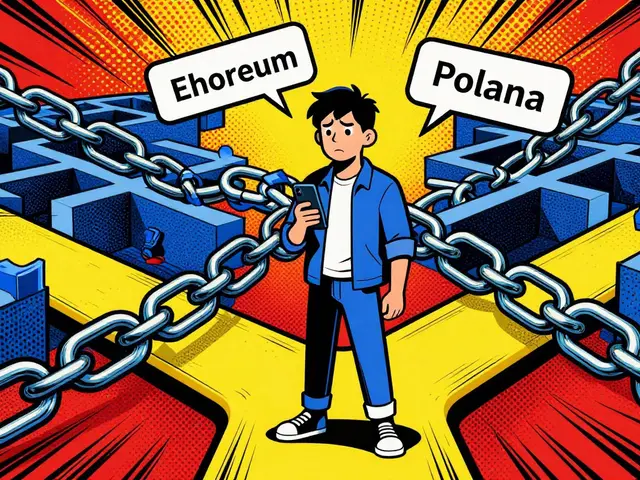
If you've ever tried to bridge assets, you know it's not always a smooth ride. For a beginner, the process can take over an hour just to figure out. The most common headache is the "gas token problem." You might successfully bridge your funds to a new chain, only to realize you have no native tokens on that chain to pay for the transaction to move those funds out. You're essentially stranded on a digital island with a bag of gold but no boat to get home.
Another point of confusion is wrapped asset redemption. Some users find that the process of "unwrapping" their tokens is complex and poorly documented. While major bridges like the official Avalanche Bridge are generally praised for their MetaMask integration, smaller bridges often lack the support needed when a transaction hangs or fails. This gap in user experience is the biggest hurdle to mainstream adoption.
Where Is This All Heading?
The future of blockchain interoperability likely involves the slow death of the "bridge" as we know it. We are seeing a push toward native interoperability, where chains are built from the ground up to communicate via shared sequencing or data availability layers. Instead of a clunky bridge, the network becomes a seamless web.
By 2026, projections suggest that trust-minimized bridges will capture the vast majority of the market. Users are tired of losing millions to hacks, and they are becoming more willing to pay a slightly higher fee for the peace of mind that comes with cryptographic proof. The industry is consolidating; we will likely see a few dominant protocols that provide a "universal plug" for all blockchains, making the technical details of bridging invisible to the end user.
What is the safest type of cross-chain bridge?
Trust-minimized bridges that use cryptographic proofs (like ZK-SNARKs) are generally the safest because they don't rely on a centralized party or a small group of validators. The Cosmos IBC is often cited as one of the most secure implementations due to its architectural design, though it only works with compatible chains.
Why are wrapped assets risky?
Wrapped assets rely on a lock-and-mint model. The risk is that the original assets are stored in a single smart contract. If that contract is exploited or the keys are stolen, the "wrapped" tokens on the other chain lose their backing, potentially crashing in value because the 1:1 peg is broken.
What is "gas" in the context of bridging?
Gas refers to the transaction fee paid to the network. A common problem for bridge users is arriving at a destination chain with assets but having no native tokens of that specific chain to pay for the gas required to move or trade those assets.
How long does a cross-chain transfer take?
It varies wildly. Optimistic-validated bridges (like the Polygon PoS Bridge) can take 2-3 minutes, while fully trust-minimized solutions may take 15-20 minutes or more to ensure the transaction is finalized and verified on both ends.
Can bridges be completely eliminated?
Some architects believe so. The goal is native interoperability, where blockchains share a common layer for data and security, making a separate "bridge" protocol unnecessary. However, others argue that as long as independent chains exist, some form of bridge will always be needed to connect them.
Amanda Faust
April 14, 2026 AT 15:46everyone knows the lock and mint model is basically a honeypot for hackers so why are people still using it like its 2020
Swati Sharma
April 14, 2026 AT 16:52The architectural trade-offs here are fascinating! Moving toward an atomic cross-chain swap mechanism would really mitigate the liquidity imbalance risks mentioned. We need more focus on the ZK-SNARK implementation to ensure state-transition validity without sacrificing the throughput of the destination chain. Totally agree that the UX needs a massive overhaul to handle the gas abstraction layer properly
Jessie Tayaban
April 16, 2026 AT 10:19Omg I literally almost lost everything tryin to bridge to Arbitrum last week!! 😱 I had no gas and I was just staring at the screen like a total idiot. Its so stressful and the documentation is basically useless lol!!
EDOZIEM MICHAEL
April 17, 2026 AT 00:08money is just a flow of energy moving from one place to another and bridges are just the river beds we build for it to travel safely
william manes
April 18, 2026 AT 06:02Useless tech 🙄 Use US-based coins 🇺🇸 🚀
Tyler Webb
April 18, 2026 AT 16:49That gas token problem is such a nightmare. I remember feeling so stranded when it happened to me. :( Just be careful everyone!
Rebecca Violette
April 19, 2026 AT 00:05i spent three hours tryin to unwrap tokens and i just wanna cry lol why is it so hard to move my own money
Samson Selleck
April 19, 2026 AT 09:13The superficial analysis of liquidity pools in this text is quaint, yet the failure to address the asymptotic complexity of ZK-proof generation in a trustless environment renders the conclusion largely moot. It is an exercise in redundancy for those of us who actually understand the underlying cryptography.
daniella davis
April 21, 2026 AT 07:55Ugh finally someone mentions the Ronin hack!! I remember everyone pretending it wouldnt happen to them and then boom, millions gone. Its honestly laughible how many people trust their life savings to a smart contract that has basically zero audits lol
Artavius Edmond
April 21, 2026 AT 09:39Honestly, it's all just a bit of a wild west right now, but that's the fun part of crypto!
Lela Singh
April 23, 2026 AT 02:44ZK-proofs are pure magic! ✨ Absolute game changer for security!
jennelle williams
April 23, 2026 AT 08:48just be patient with yourself
Alan Seiden
April 23, 2026 AT 13:40This is utterly rubbish. The British financial system is far more robust than these digital play-toys. Only a fool would trust a "bridge" over a proper ledger.
Will Dixon
April 25, 2026 AT 08:03i think the lapped tokens r confuseing for new peeple
Jason Davis
April 26, 2026 AT 11:44Actually the IBC protocol is great but it does require Tendermint which is a bit limiting for some chains. Still, way better than trustting a random multisig wallet in the middle of nowhere!
Stanly Hayes
April 27, 2026 AT 05:36Look, we can talk about these fancy bridges all day, but the US is where the real innovation happens. Any bridge not utilizing American-led security standards is just asking for a breach! Wake up!
Prasanna Shembekar
April 28, 2026 AT 02:12my heart breaks for the people who lost money in 2022 just so sad
Jonathan Chamma
April 28, 2026 AT 23:13It is a journey of learning for all of us. The bridge might be clunky now, but we are building a more inclusive financial web together.
Terrance Hausmann
April 30, 2026 AT 06:21I really believe that if we just stay open to the different models and support the developers who are trying to fix the UX, we will eventually reach a place where the technical side is totally invisible. It takes time to build something this complex and we should be patient while the trust-minimized systems mature because safety is more important than speed in the long run.
Lane Montgomery
April 30, 2026 AT 10:14Which bridge you use?
Mikayla Murphy
May 2, 2026 AT 01:24It is interesting to see how different cultures approach risk in the DeFi space. Some are more comfortable with custodial solutions while others demand full autonomy.
Agnessa Dale
May 2, 2026 AT 20:13Exciting times ahead for interoperability!
jennelle williams
May 4, 2026 AT 00:07we all learn slow