
Russian Crypto Regulations: What's Legal, What's Banned, and How It Affects You
When it comes to Russian crypto regulations, the official stance from the Central Bank of Russia is strict: cryptocurrency is not legal tender, and its use as payment is prohibited. Also known as crypto rules in Russia, these laws aim to control financial flows and protect the ruble—but they don’t stop people from holding or trading digital assets. The government doesn’t want you buying Bitcoin to pay for groceries, but it doesn’t ban you from owning it in a wallet. That’s the weird middle ground most Russians live in.
What’s banned? Any business that accepts crypto as payment. Banks can’t process crypto transactions. Exchanges can’t offer fiat on-ramps without a special license—and even then, they’re heavily monitored. Crypto mining, once a booming industry in Siberia thanks to cheap power. Also known as Bitcoin mining Russia, it’s now under heavy scrutiny. The state wants to control energy use, and mining rigs that drain the grid get shut down. Some miners moved to remote areas or went underground. Others just stopped. Then there’s crypto taxation, a gray area where the government hasn’t clearly defined how to report holdings. Also known as crypto tax Russia, the rules are still evolving. If you sell crypto for profit, you *should* pay tax—but few do, and enforcement is rare. The state is more focused on stopping money laundering than collecting small gains from retail investors.
Wallets? You can hold them. No law says you can’t. But if you use a foreign exchange like Binance or Coinbase, your account might get flagged. Russian banks monitor transactions closely, and large crypto deposits can trigger anti-money laundering checks. Some people use peer-to-peer platforms like LocalBitcoins or P2P features on exchanges to avoid banks entirely. Others stick to privacy coins—though even those are getting harder to trade legally.
There’s no official ban on holding crypto, but the environment is hostile. You won’t find crypto ATMs in Moscow. You won’t get a crypto credit card from Sberbank. And if you’re a business owner, trying to accept Bitcoin could land you in trouble. The state’s message is clear: use the ruble. If you want crypto, keep it quiet.
What you’ll find in the posts below are real stories from people caught in this system. From miners who lost equipment to traders who dodged bank freezes, these aren’t theoretical debates—they’re lived experiences. You’ll see how Russian users adapt, what tools they rely on, and why some projects quietly disappeared after running into regulatory walls. This isn’t about hype. It’s about survival in a space where the rules change overnight.

Are Crypto Payments Allowed in Russia? What You Need to Know in 2025
Crypto payments are banned for domestic use in Russia as of 2025, though ownership is legal. Only licensed companies can use crypto for international trade under strict rules. Fines up to 1 million rubles and asset seizures apply for violations.
December 28 2025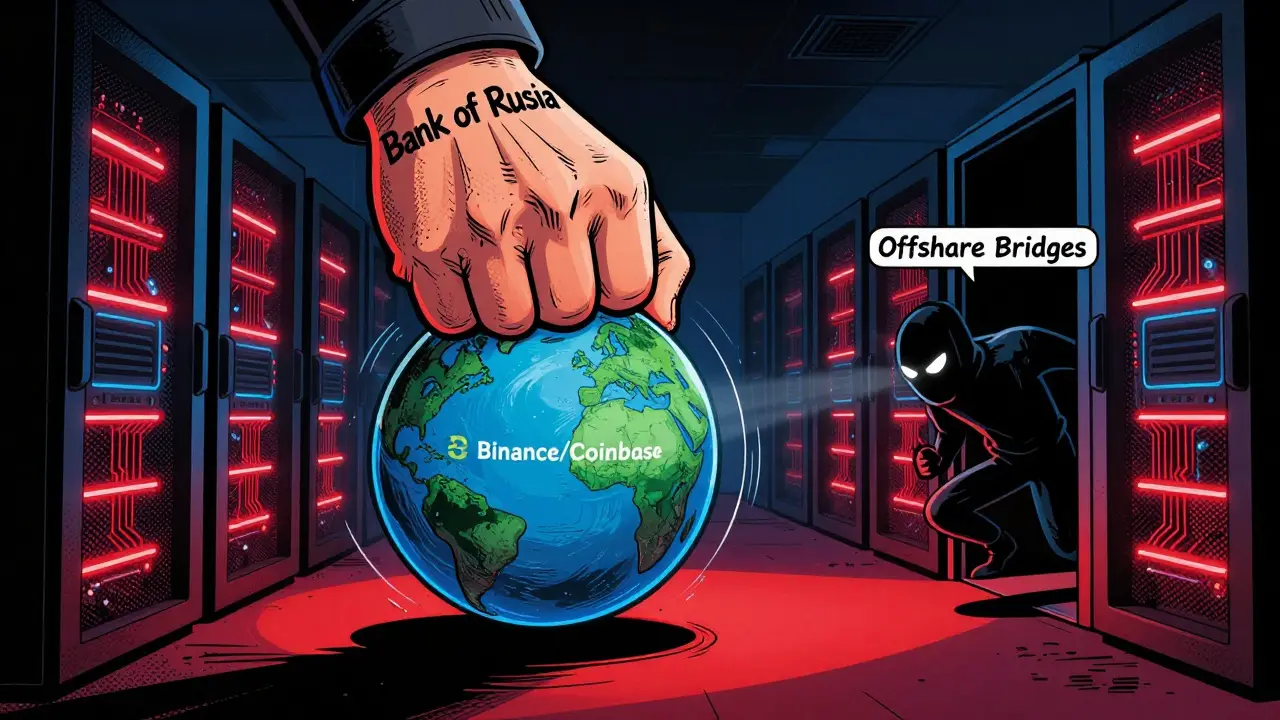
What Crypto Exchanges Are Banned in Russia? The Full Regulatory Breakdown
Russia doesn't ban all crypto exchanges-it bans the ones that don't follow its rules. Learn which platforms are blocked, why Garantex collapsed, and how the state is building its own crypto system.
December 4 2025