
Nigeria Crypto Withdrawal Safe Amount Estimator
Safe Withdrawal Calculator
Calculate maximum withdrawal amounts based on your banking history to avoid account freezes. Remember: Nigerian banks monitor transaction patterns closely.
Enter your details to see recommendations
Key Requirements
- Only use SEC-licensed exchanges (e.g., Luno)
- Complete full KYC verification
- Spread withdrawals over multiple days
- Avoid large single transactions
As of 2025, withdrawing crypto to fiat in Nigeria isn’t about whether you can do it-it’s about whether your bank will let you. The rules changed in late 2023, but the reality on the ground hasn’t become easier. Nigerian banks don’t block crypto withdrawals outright anymore, but they’ve built a maze of restrictions that make the process risky, slow, and unpredictable. If you’re trying to cash out Bitcoin, Ethereum, or USDT into naira, you’re not just dealing with a financial transaction-you’re navigating a regulatory minefield.
What Changed After the CBN Ban Was Lifted
In February 2021, Nigeria’s Central Bank (CBN) banned banks from handling any cryptocurrency transactions. That ban lasted over two years. During that time, traders turned to peer-to-peer (P2P) platforms, informal brokers, and cash-in-hand deals just to convert crypto to naira. But by December 2023, the CBN reversed course. It released new guidelines allowing banks to work with licensed crypto exchanges. Then, in March 2025, President Tinubu signed the Investments and Securities Act (ISA 2025), making digital assets legal securities under the oversight of the Securities and Exchange Commission (SEC). This sounds like good news, right? Not exactly. The lifting of the ban didn’t mean banks welcomed crypto with open arms. Instead, they adopted a “trust but verify” approach-where verification is strict, slow, and often arbitrary.Banks Only Process Withdrawals from Licensed Exchanges
If you’re using an unlicensed platform like Binance, KuCoin, or a random P2P seller, your bank will likely freeze your account. In September 2024, Nigeria’s Economic and Financial Crimes Commission (EFCC) froze 22 bank accounts linked to USDT sellers on unlicensed exchanges. The total amount frozen was over ₦548 million ($330,000). The reason? Authorities claimed these accounts were being used to manipulate the naira’s exchange rate. Banks don’t make these decisions on their own. They follow orders from the EFCC and SEC. If the SEC says a platform isn’t licensed, banks are legally required to block any transactions tied to it. That’s why only a handful of exchanges-like Luno-are still operating smoothly in Nigeria. These platforms are fully licensed by the SEC, follow strict KYC rules, and report all transactions to regulators. If you’re using Luno or another approved exchange, your withdrawal to your Nigerian bank account can go through in a few hours. But even then, your bank may still flag it.Why Your Bank Might Freeze Your Account Anyway
Even if you’re using a licensed exchange, your bank can still freeze your account. Why? Because banks treat all crypto-related activity as high-risk. They monitor for:- Sudden spikes in transaction volume
- Large, repeated withdrawals that don’t match your income history
- Deposits from multiple crypto platforms in a short time
- Withdrawals that look like “structuring”-breaking large amounts into smaller ones to avoid detection
No Cash Withdrawals Allowed-Only Bank Transfers
You can’t walk into a bank branch and ask to cash out your crypto as naira bills. That’s explicitly forbidden. All withdrawals must go through electronic bank transfers. Even if you’re withdrawing ₦5,000, it has to land in your account online. No tellers, no envelopes, no hand-to-hand deals. This rule exists because cash makes money laundering easier. Regulators want every transaction traceable. So if you’re trying to get cash, you’ll need to transfer the naira to your account first, then withdraw it like any other deposit.
Withdrawal Limits Are Hidden-and Low
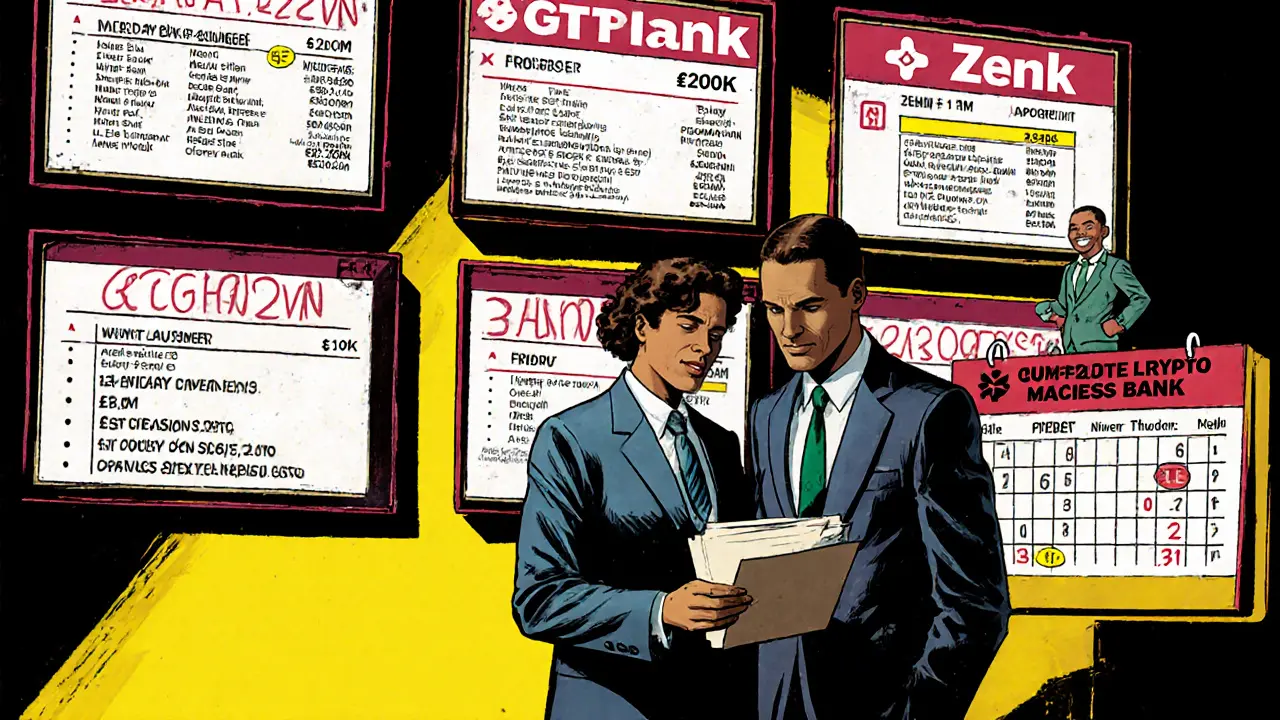
There’s no public list of how much you can withdraw from crypto to fiat. Each bank sets its own limits, and they’re not shared with customers. Some users report daily limits as low as ₦200,000. Others say weekly caps of ₦1 million. These limits are often lower than what you’d get for a regular salary deposit. Fintech banks like Opay, Kuda, and Palmpay are slightly more flexible. Traditional banks like GTBank, Zenith, and Access Bank tend to be stricter. Why? Because they’re more exposed to regulatory scrutiny. Digital banks have less legacy risk and are more used to dealing with new financial models. If you need to move a large amount, you’ll need to space out your withdrawals over weeks. One withdrawal of ₦5 million? Almost guaranteed to trigger a freeze. Five withdrawals of ₦1 million over 10 days? Still risky, but more likely to slip through.Taxes Are Coming-And Banks Will Report You
The Federal Inland Revenue Service (FIRS) has said crypto gains are taxable. Right now, there’s no official tax law for it-but that’s changing. A proposed Finance Bill, expected to pass in early 2026, will require crypto traders to pay capital gains tax. Once that law passes, banks will be required to report all crypto-to-fiat withdrawals to tax authorities. If you’ve withdrawn ₦10 million from crypto in a year and your declared income is ₦2 million, you’ll get a letter from FIRS asking for an explanation. Don’t assume you can hide it. Banks keep detailed records. Your crypto withdrawals will show up in your account statements. If you’re audited, those transactions will be flagged.How to Withdraw Crypto to Fiat Without Getting Your Account Frozen
If you want to avoid trouble, follow these rules:- Only use SEC-licensed exchanges-Luno is the most reliable. Avoid Binance, Bybit, or any platform not on the SEC’s official list.
- Complete full KYC on both your exchange and bank account. Incomplete verification = instant red flag.
- Keep records of every transaction: wallet addresses, timestamps, exchange receipts, and screenshots.
- Don’t withdraw large sums at once. Spread withdrawals over weeks. Match your withdrawal pattern to your normal banking behavior.
- Avoid P2P trading. Even if you’re selling to a “trusted” buyer, the bank doesn’t care. If the money comes from an unlicensed source, your account is at risk.
- Use multiple banks. If one freezes your account, you still have access to your money through another.
The Bigger Picture: Why Nigeria Is So Strict
Nigeria’s strict rules aren’t about hating crypto. They’re about survival. The country is on the Financial Action Task Force’s (FATF) Gray List because of weak anti-money laundering controls. If Nigeria doesn’t fix this, it could lose access to international loans and foreign investment. The government is trying to make Nigeria a regulated crypto hub-not a wild west. That means banks act as gatekeepers. They’re not here to help you cash out quickly. They’re here to protect the system. That’s why even licensed users get treated with suspicion. It’s not personal. It’s policy.What Happens If Your Account Gets Frozen?
If your account is frozen, don’t panic. But don’t assume it’ll be fixed quickly, either. Steps to take:- Contact your bank’s compliance department. Ask for the reason in writing.
- Provide all documentation: exchange statements, wallet history, proof of income.
- If the bank says it’s an EFCC request, you may need to contact the EFCC directly.
- Consider hiring a lawyer who specializes in financial compliance. Many charge flat fees for this type of case.
Brian Bernfeld
November 29, 2025 AT 00:27Man, I’ve seen this play out in Nigeria with friends who trade crypto. Banks act like they’re investigating a drug cartel, not someone trying to pay rent. It’s not about legality-it’s about control. And honestly? The fact that they freeze accounts without explanation is just pure bureaucratic terror. You’re not a criminal, but they treat you like one. No warning, no grace. Just silence until you hire a lawyer. That’s not finance. That’s intimidation.
And don’t even get me started on the ‘spread withdrawals over weeks’ advice. That’s not a workaround-it’s a punishment. Why should I have to stretch out my own money like it’s a government grant? This isn’t capitalism. It’s financial hostage-taking.
Also, the EFCC freezing half a million dollars because someone used Binance? Bro, that’s not anti-money laundering-that’s anti-innovation. They’re scared of decentralized tech because they can’t control it. And now they’re using banks as their enforcers. Sad.
But hey, at least they didn’t ban crypto outright anymore. Progress? Maybe. But it’s progress wrapped in barbed wire.
Still, if you’re smart, you stick with Luno. It’s the only one that doesn’t make you feel like you’re smuggling diamonds through customs.
Rachel Thomas
November 30, 2025 AT 00:49Wow. So the government says crypto’s legal but the banks act like it’s illegal. Classic. I’m just waiting for the next tweet from Tinubu saying ‘we support crypto’ while his buddies at Zenith Bank freeze 200 accounts tomorrow.
SARE Homes
November 30, 2025 AT 02:53Of course this is happening. Nigeria’s financial system is a dumpster fire wrapped in a Nigerian flag. People think they’re ‘crypto pioneers’-but they’re just reckless gamblers who think blockchain magic makes them rich. And now they’re mad when the system they exploited finally wakes up and slaps them? Pathetic. You don’t get to break the rules for two years and then cry when the cops show up. You got what you deserved.
Puspendu Roy Karmakar
November 30, 2025 AT 17:18Bro, I’ve been doing this since 2022. I’ve had accounts frozen, unfrozen, frozen again. The real hack? Use Kuda. They’re digital, they’re faster, and they don’t ask dumb questions unless you go over ₦500k. Also, never link your main salary account to crypto. Always use a separate one. I’ve got three accounts now. One for salary, one for crypto, one for my mom’s pension. Keeps things clean.
And yeah, KYC is a pain-but do it. Full name, full ID, full selfie with your passport. No half-measures. If you skip a step, they’ll freeze you. No second chances.
Tina Detelj
November 30, 2025 AT 18:57It’s not just Nigeria-it’s the entire Global South. The West says ‘decentralize!’ then builds walls so high that only the rich can climb over them. Crypto was supposed to be the people’s bank. Instead, it became a compliance circus where your bank manager plays judge, jury, and executioner. We were promised freedom. We got bureaucracy with a blockchain sticker on it.
And the tax thing? Oh, honey. The IRS will be knocking on your door before you even finish reading this comment. They already have your transaction history. They’re just waiting for the law to catch up so they can start garnishing your wages. Welcome to the future. It’s not shiny. It’s paperwork.
Sam Daily
December 1, 2025 AT 03:27Big respect to anyone who’s been through this. I’ve watched friends lose months of their lives fighting banks over crypto withdrawals. One guy spent 8 months and $3,000 in legal fees just to get his account back. And for what? To get his own money? That’s not finance. That’s trauma.
But here’s the thing-you’re not alone. There’s a whole underground network of Nigerian crypto users who swap tips like war veterans. WhatsApp groups, Telegram channels, even offline meetups in Lagos. They share which banks are ‘safe’ that week, which lawyers won’t scam you, which exchanges still work. It’s not glamorous. But it works.
Stay low. Stay documented. And never, ever trust a bank’s ‘customer service’ line. They don’t know anything. They’re just reading scripts from a manual written by regulators who’ve never touched Bitcoin.
Tony spart
December 2, 2025 AT 02:14Why are we even letting these African countries play with crypto? They don’t even have stable electricity. Now they want to turn their financial system into a meme? The U.S. and EU built real economies. Nigeria? They’re still figuring out how to stop power outages. Let them figure out their own mess. Crypto’s not for them. It’s for people who know how to build things-not just cash out.
Vaibhav Jaiswal
December 2, 2025 AT 17:28My cousin in Abuja just got his account unfrozen after 3 months. He didn’t even do anything wrong-just withdrew ₦800k from Luno. The bank called him ‘suspicious’ because his last salary was ₦250k/month. That’s not a red flag. That’s just a hardworking guy.
They don’t care about your story. They care about their risk models. And those models were built by guys in London who’ve never seen a naira.
So yeah. It’s broken. But we’re still here. Still trading. Still surviving. Nigeria’s not going anywhere. Neither are we.
Komal Choudhary
December 3, 2025 AT 10:21Wait, so if I use Luno, I’m safe? But then why did my friend’s account get frozen last week? She used Luno. She did KYC. She only withdrew ₦300k. What’s the catch? Did she not fill out the right form? Is there a secret checklist I don’t know about? Why is this so confusing? I just want to turn my crypto into naira to buy my kid’s school uniform. Is that too much to ask?
Felicia Sue Lynn
December 4, 2025 AT 21:25The deeper irony here is that Nigeria’s regulators are trying to build a framework for digital assets that mirrors Western financial systems-systems that themselves are built on centuries of exclusion, gatekeeping, and surveillance. The promise of crypto was liberation from those very systems. Now, we’re recreating them, just with more forms and fewer cashiers.
Is this progress? Or is it just colonialism with a blockchain logo?
Michael Labelle
December 5, 2025 AT 09:20I’ve been in crypto since 2017. I’ve seen this movie before-in Argentina, in Turkey, in Venezuela. Every time the government says ‘we’re open,’ the banks say ‘not here.’ Every time someone says ‘it’s legal,’ the real power says ‘not for you.’
It’s not about crypto. It’s about who gets to control money. And right now, the people with the most power are terrified of letting go.
So yeah. Withdraw slowly. Use Luno. Keep receipts. But don’t expect fairness. Just expect to outlast them.
SHIVA SHANKAR PAMUNDALAR
December 5, 2025 AT 22:00Let me ask you something: if the CBN lifted the ban, why are banks still acting like they’re under martial law? Is it because they’re scared of losing their monopoly? Or because they’re still on the payroll of the old guard? Either way, it’s not the people who are broken-it’s the system. And no amount of KYC or SEC licenses will fix that.
Also, why do we keep pretending that ‘licensed exchanges’ are the solution? They’re just middlemen with better PR. The real power still lies with the banks. And they don’t want you to win.
jeff aza
December 6, 2025 AT 05:52Let’s be real. This whole thing is a regulatory theater. The SEC doesn’t care about consumer protection-they care about revenue streams. Licensed exchanges pay fees. Banks get to charge ‘compliance fees.’ The EFCC gets to flex their power. And the user? They’re just a data point in a spreadsheet.
Also, ‘spread withdrawals over weeks’? That’s not advice. That’s a tax on liquidity. You’re paying in time and stress just to access your own assets. That’s not finance. That’s extortion.
Savan Prajapati
December 7, 2025 AT 00:28Use Kuda. Always. They’re the only ones who don’t act like you’re a criminal. And if you get frozen? Call their support. They reply in 2 hours. Banks? You’ll wait 3 weeks. And then they’ll say ‘we’re not allowed to tell you why.’
George Kakosouris
December 7, 2025 AT 06:37This is what happens when you deregulate without institutional maturity. You get a regulatory vacuum filled by rent-seeking bureaucrats who’ve never coded a smart contract but think they know better than Satoshi. The CBN didn’t lift the ban-they just moved the goalposts. Now it’s not ‘crypto is illegal’-it’s ‘crypto is legal, but only if you jump through 17 hoops written in invisible ink.’
And don’t get me started on the FATF Gray List. That’s not about money laundering. That’s about geopolitical leverage. Nigeria’s being punished for being too independent. And now their citizens are paying the price.
Joel Christian
December 7, 2025 AT 22:19why do banks even exist anymore? like… if i can send bitcoin to someone in tokyo in 10 mins, why do i need a bank to move naira? they’re just middlemen who charge you to do what the internet already does better. and now they freeze your account because you’re ‘suspicious’? lol. i’m suspicious of them.
Abby cant tell ya
December 8, 2025 AT 10:27Oh please. You think you’re the only one with problems? My cousin got her account frozen for 6 months because she received ₦400k from a friend who bought crypto. She didn’t even trade. She just got paid. And now she can’t pay her rent. Banks are monsters. They don’t care who you are. They care about their risk score. And your name? It’s just a number now.
priyanka subbaraj
December 8, 2025 AT 22:33They’ll freeze your account. They’ll make you hire a lawyer. They’ll demand six months of receipts. And then, when you finally get your money back, they’ll raise your fees. This isn’t banking. It’s a ransom scheme.
Mark Adelmann
December 9, 2025 AT 21:13For anyone new to this: start small. Withdraw ₦50k first. See if it goes through. Wait 3 days. Then try ₦100k. If that works, wait another week. Don’t rush. The system isn’t broken-it’s just slow. And if you’re patient, it’ll work. I’ve moved over ₦2 million this way. No freezes. No drama. Just slow, steady, documented steps.
And always keep a screenshot of your Luno withdrawal confirmation. That’s your golden ticket.
Shelley Fischer
December 10, 2025 AT 10:55It is worth noting that the ISA 2025, while a step forward, does not guarantee access to banking services-it merely decriminalizes the activity. The legal right to hold digital assets is distinct from the contractual right to access financial infrastructure. This distinction is critical. One does not imply the other. Banks retain discretion under private contract law, and regulatory guidance does not override their fiduciary risk assessments. Thus, the observed behavior is not unlawful-it is legally defensible, even if ethically questionable.
Sierra Myers
December 12, 2025 AT 01:01Wait, so you can’t even get cash? Like, literally? You have to transfer it and then withdraw it? That’s insane. Why not just let people walk in and get money? Are they scared people will steal it? Or is this just another way to make you pay fees?
SHASHI SHEKHAR
December 13, 2025 AT 13:46Bro, I’ve been through this. I used to trade on Binance P2P. Got my account frozen twice. Lost 2 weeks of work. Then I switched to Luno. Did full KYC. Used only one bank-Kuda. Spaced out withdrawals. Kept screenshots. And guess what? I moved ₦8 million in 4 months. No freeze. No lawyer. No panic.
Here’s the secret: banks don’t hate crypto. They hate chaos. If you’re calm, clean, and consistent, they’ll let you through. It’s not about being rich. It’s about being predictable.
Also, use WhatsApp to talk to other traders. There’s a whole group in Lagos called ‘Crypto Cashout Warriors.’ They share bank codes that work that week. It’s like a secret map. And yeah, it’s weird. But it works.
Eddy Lust
December 15, 2025 AT 02:14i just want to turn my btc into naira so i can buy my sister a birthday present. is that too much to ask? why does it feel like i’m smuggling heroin? i didn’t rob a bank. i mined crypto. i earned it. now i’m being treated like a criminal because my bank doesn’t understand what blockchain is. and they’re the ones with the money. not me.
also, why is it always the poor people who get punished? the rich guys? they use offshore accounts. they don’t even touch naira. but me? i’m stuck in this mess because i’m trying to live in my own country.
Wilma Inmenzo
December 16, 2025 AT 12:56Let me guess: the SEC is owned by the same people who run the banks. And the EFCC? Their boss’s brother owns Luno. And the ‘licensed’ exchanges? They’re just shell companies that pay bribes to get the stamp. This isn’t regulation. It’s a cartel. And you? You’re the patsy paying for their monopoly. The whole thing is a scam. They’re not protecting the system-they’re protecting their profits. And they’ll freeze your account to prove it.
Ian Esche
December 16, 2025 AT 21:47Why are we even talking about Nigeria? The real story is how the West is using FATF to control financial sovereignty in developing nations. Nigeria didn’t choose this. They were forced into it. If they don’t comply, they lose access to SWIFT, IMF loans, foreign investment. So they sacrifice their people’s freedom to access their own money. This isn’t about crypto. It’s about imperialism with a compliance checklist.
Grace Zelda
December 18, 2025 AT 21:20I’m not surprised. The system is designed to make you feel powerless. But here’s the thing: you’re not powerless. You have records. You have proof. You have the internet. And if enough people document this, if enough people speak up, they can’t ignore it forever. The real revolution isn’t in blockchain-it’s in collective testimony. Keep documenting. Keep sharing. One day, someone will listen.