
OSL Crypto Exchange: Not for Beginners, But Strong for Institutions
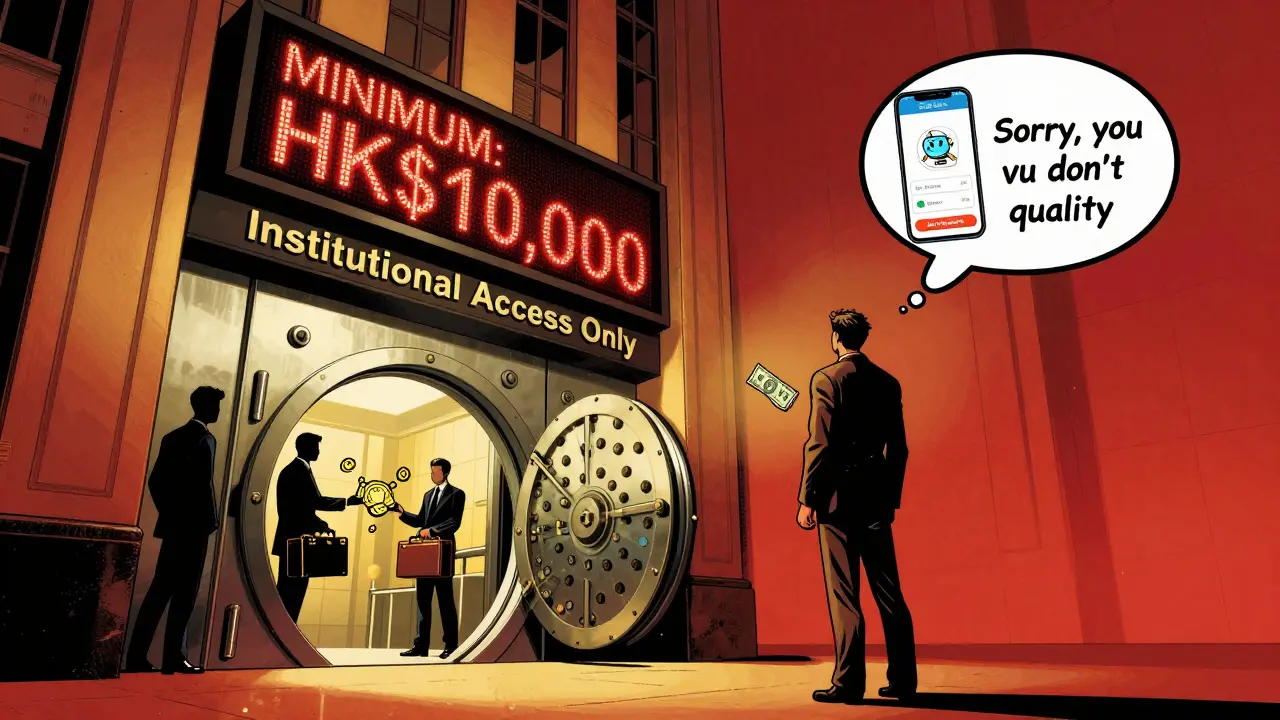
If you're looking for a crypto exchange that feels like a Wall Street trading floor but with Bitcoin and Ethereum, OSL might be the one. But if you're just starting out with $100 to trade, you’ll be turned away at the door. OSL isn’t built for casual traders. It’s built for investors with at least HK$10,000 (around $1,280 USD) to deposit - and even then, you’ll need to prove you understand crypto before you can trade.
OSL, operated by BC Group, is headquartered in Hong Kong and has a strong presence in Singapore. It doesn’t market itself with flashy ads or TikTok influencers. Instead, it targets hedge funds, family offices, and high-net-worth individuals who need deep liquidity, privacy on large trades, and institutional-grade security. That’s why its interface feels dense, its onboarding is strict, and its fees are almost invisible.
Zero Trading Fees - But Only If You’re Rich Enough
One of the most surprising things about OSL is that it charges HK$0 for trading. Yes, you read that right. No maker-taker fees. No withdrawal fees. No custody fees. That’s rare in any exchange, let alone one targeting institutions. But here’s the catch: you need to deposit HK$10,000 just to open an account. That’s not a typo. You can’t start with $500 or even $2,000. You need to be in the top tier of retail investors or be an institution.
This isn’t a gimmick. It’s a filter. OSL doesn’t want small traders clogging its order books. It wants clients who move millions. That’s why it offers its intelligent Request for Quote (iRFQ) system - a tool that lets big players get custom prices without moving the market. If you’re trading $50,000 worth of Bitcoin, OSL will quietly find a counterparty and give you a locked-in price. No slippage. No public order book. Just privacy.
Security: $1 Billion Insurance, But Is It Enough?
OSL says it insures up to $1 billion in digital assets. That’s more than most exchanges - even bigger names like Coinbase or Kraken. It’s a strong signal that they take security seriously. The insurance covers theft, hacks, and internal fraud. That’s reassuring, especially if you’re moving large sums.
But insurance isn’t the whole story. OSL doesn’t publish details about its cold storage setup, multi-sig wallets, or employee access controls. Most top-tier exchanges do. OSL keeps it vague. That’s not necessarily bad, but it’s not great either. If you’re a cautious investor, you want transparency - not just promises.
On the bright side, OSL is part of BC Group, a publicly listed company on the Hong Kong Stock Exchange. That means it has to follow corporate governance rules. It’s not a fly-by-night startup. But being publicly listed doesn’t mean it’s regulated like a bank.
The Regulatory Mess: Licensed or Not?
This is the biggest red flag.
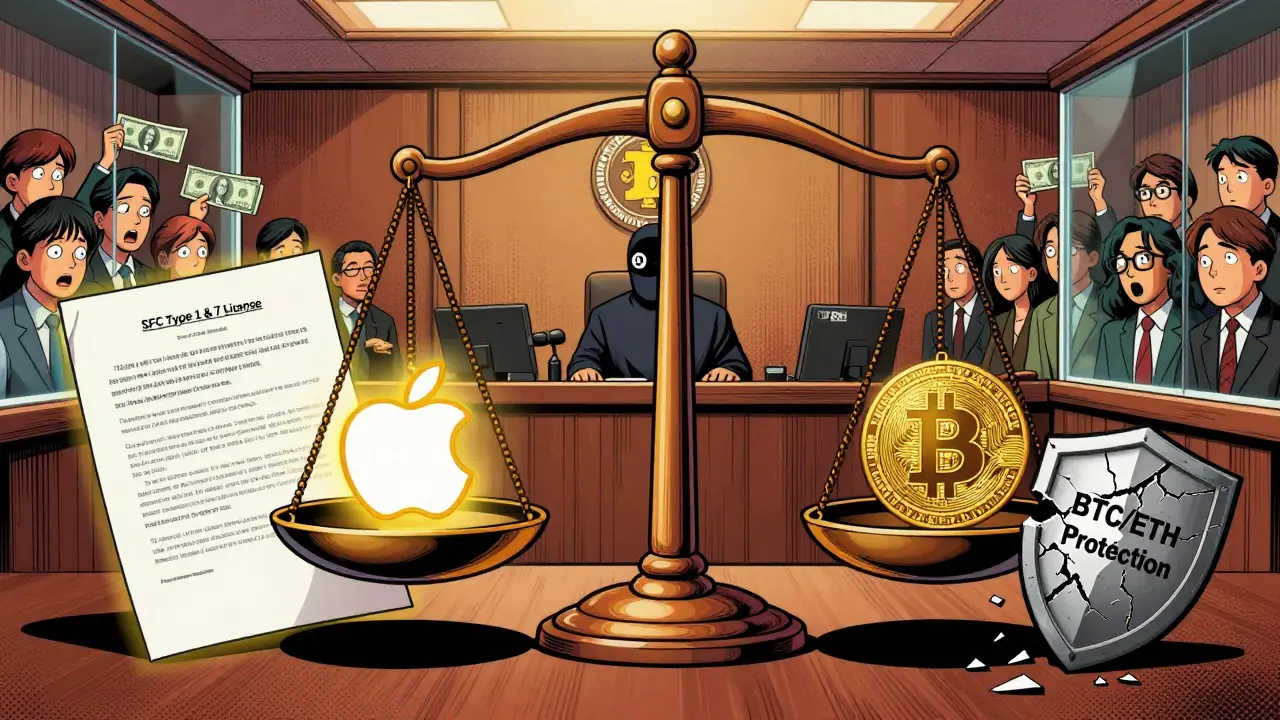
MoneySmart Hong Kong says OSL is licensed in Hong Kong. That’s true - it holds a Type 1 (Dealing in Securities) and Type 7 (Automated Trading Services) license from the Securities and Futures Commission (SFC). That’s a big deal. Only a handful of crypto firms in Hong Kong have this. It means OSL is legally allowed to trade securities-like tokens and operate an automated exchange under strict oversight.
But BrokerChooser says OSL is not regulated by a top-tier authority and calls it "not trusted." Why the contradiction?
Because the SFC license doesn’t cover all crypto assets. It only covers tokens that qualify as securities under Hong Kong law - like tokenized stocks or ETFs. Most cryptocurrencies - Bitcoin, Ethereum, Solana - aren’t classified as securities. So OSL can legally trade those, but not under its SFC license. That’s a loophole. And that’s where the risk lives.
For users, this means: your Bitcoin holdings aren’t protected by SFC rules. Only your tokenized assets are. If something goes wrong with your ETH or SOL, you’re not covered by the same legal safeguards as someone holding a tokenized Apple stock on the same platform.
OSL Singapore is certified by the Singapore FinTech Association, but that’s an industry group - not a government regulator. It’s like being a member of a trade club, not having a government-issued license.
Who Is OSL Actually For?
OSL is not for you if:
- You want to trade with less than $1,280
- You’re new to crypto and don’t know what a wallet or private key is
- You expect a simple app like Robinhood or Binance
- You’re looking for a 24/7 phone support line
OSL is for you if:
- You have $10,000+ to invest and want to trade large volumes
- You need private, over-the-counter (OTC) trades without price impact
- You want to lend or borrow crypto for yield
- You care more about security and compliance than flashy UI
Its interface is clunky. Users report it feels outdated. There’s no mobile app for iOS or Android. You trade on a desktop browser. That’s not a bug - it’s a feature. OSL assumes you’re not scrolling through crypto on your phone. You’re managing a portfolio on a dual-monitor setup.
Customer Support: Available, But Not Great
OSL says it offers 24/7 support via live chat and email. That’s true. But user reviews on WikiBit and Reddit say responses are slow, and solutions are generic. If you have a complex issue - like a failed withdrawal or a tax-related question - you’ll likely be handed a template reply.
There’s no phone number. No dedicated account manager unless you’re a corporate client. For most users, it’s chatbot → human → wait 24 hours. That’s not terrible for an institutional platform, but it’s far from user-friendly.
Current Promotions: Free Bitcoin for Depositing $1,280
As of late 2025, OSL is pushing hard to attract new users. Through MoneySmart Hong Kong, you can get:
- HK$88 in Bitcoin just for opening an account
- HK$100 in Bitcoin for depositing HK$10,000 and holding for 14 days
- HK$100 in Bitcoin for making your first trade over HK$100
- HK$128 in Bitcoin if you trade over HK$1,000 between August 15 and September 30, 2025
- Plus a HK$500 gift card (Apple, ParknShop, or HKTVmall)
That’s up to HK$916 ($117 USD) in Bitcoin and a $64 gift card - all for meeting the $1,280 deposit requirement. It’s one of the most generous crypto promotions in Asia right now. But remember: you still need to deposit $1,280. You’re not getting free money. You’re getting a bonus on top of your own money.
How to Open an OSL Account (5 Steps)
- Sign up with your email
- Verify your phone number with a code
- Upload government ID and proof of address
- Complete a 10-question quiz on crypto risks and basics
- Deposit HK$10,000 (or equivalent in crypto)
The quiz is real. It asks things like: "What is slippage?" and "Can you lose more than your deposit on margin?" If you fail, you can retake it. But you can’t skip it. That’s unusual. Most exchanges just want your ID. OSL wants to make sure you’re not getting in over your head.
Alternatives to OSL
If OSL’s $10,000 minimum is too high, here are other options:
- Kraken: Lower minimum ($10), strong regulation (U.S. and EU), good security, but higher fees
- Bybit: No minimum, great for derivatives, but less focus on spot trading and compliance
- Binance: Largest liquidity, low fees, but regulatory troubles in many countries
- Bitstamp: Licensed in Europe, solid for EU users, but limited altcoin selection
None of these offer the same OTC depth as OSL. If you need to trade $1 million in Bitcoin without moving the market, OSL is still one of the few that can handle it.
The Bottom Line
OSL is not a typical crypto exchange. It’s a private trading desk disguised as a platform. It’s secure, it’s institutional, and it’s expensive to join. If you have the money and the experience, it’s one of the most reliable places in Asia to trade crypto at scale. But if you’re just starting out, or you want to buy $200 of Dogecoin, look elsewhere.
The regulatory gray area is real. You’re not getting full government protection. But you are getting corporate backing, $1 billion insurance, and access to liquidity most retail traders can’t touch. It’s a trade-off - and one only a few should make.
Is OSL regulated by the Hong Kong SFC?
Yes, but only partially. OSL holds a Type 1 and Type 7 license from the Hong Kong Securities and Futures Commission (SFC), which allows it to trade securities-like digital assets and operate an automated exchange. However, this license does not cover standard cryptocurrencies like Bitcoin or Ethereum. Those trades are conducted under a different legal framework, meaning your BTC or ETH holdings aren’t protected by the same regulatory safeguards as tokenized stocks.
What is the minimum deposit for OSL?
The minimum deposit to open an account on OSL is HK$10,000 (approximately $1,280 USD). This is non-negotiable and applies to all users, whether retail or institutional. You must deposit this amount before you can trade, and it must be done after completing identity verification and a crypto knowledge quiz.
Does OSL have a mobile app?
No, OSL does not have a mobile app for iOS or Android. The platform is designed for desktop use only, with a web-based interface optimized for professional traders using multiple monitors. This is intentional - OSL targets users who trade large volumes and don’t rely on mobile alerts.
Are OSL’s trading fees really zero?
Yes, as of 2025, OSL charges HK$0 for trading, custody, and withdrawals. This applies to all supported cryptocurrencies. However, this zero-fee model is only available to users who meet the HK$10,000 minimum deposit. Smaller traders on other platforms pay maker-taker fees, so OSL’s pricing is only accessible to those with significant capital.
Is OSL safe for storing large amounts of crypto?
OSL offers up to $1 billion in insurance coverage for digital assets, which is among the highest in the industry. It also uses institutional-grade cold storage and internal controls. However, because it lacks full transparency on its security protocols and operates in a regulatory gray zone for most cryptocurrencies, it’s not as safe as a fully regulated bank or a U.S.-based exchange like Coinbase. It’s safe for institutional use, but not without risk.
Can I use OSL if I’m not in Hong Kong or Singapore?
Yes, OSL accepts users from many countries outside Asia, including the UK, Canada, Australia, and parts of Europe. However, some jurisdictions are restricted due to local laws. You must complete full KYC and declare your country of residence during registration. OSL does not accept users from the United States, North Korea, Iran, or other sanctioned regions.
Does OSL offer staking or lending?
Yes, OSL offers crypto lending and borrowing services. You can lend your Bitcoin, Ethereum, or other supported assets to earn interest, or borrow against your holdings. Rates vary based on market demand and asset type. This service is only available to users who meet the HK$10,000 minimum deposit and have completed full verification.
How long does account verification take on OSL?
Verification typically takes 1 to 3 business days after submitting your ID and proof of address. The crypto knowledge quiz is completed instantly, but the manual review of documents can take longer if your documents are unclear or if you’re from a high-risk jurisdiction. Some users report delays during peak periods like tax season or crypto market surges.
SUMIT RAI
December 27, 2025 AT 18:39surendra meena
December 28, 2025 AT 02:44Andrew Prince
December 28, 2025 AT 03:31prashant choudhari
December 28, 2025 AT 13:16Willis Shane
December 28, 2025 AT 15:09Jake West
December 30, 2025 AT 00:34Shawn Roberts
December 31, 2025 AT 23:53Abhisekh Chakraborty
January 2, 2026 AT 23:31dina amanda
January 3, 2026 AT 23:26Emily L
January 5, 2026 AT 05:33Gavin Hill
January 7, 2026 AT 04:52Andrea Stewart
January 8, 2026 AT 18:43Josh Seeto
January 8, 2026 AT 21:31Kevin Gilchrist
January 9, 2026 AT 18:14Khaitlynn Ashworth
January 9, 2026 AT 20:42NIKHIL CHHOKAR
January 11, 2026 AT 10:05Mike Pontillo
January 11, 2026 AT 16:14Joydeep Malati Das
January 12, 2026 AT 07:38rachael deal
January 12, 2026 AT 07:52Elisabeth Rigo Andrews
January 12, 2026 AT 23:31Adam Hull
January 13, 2026 AT 09:41Mandy McDonald Hodge
January 13, 2026 AT 09:44Bruce Morrison
January 13, 2026 AT 22:30Jordan Fowles
January 14, 2026 AT 02:47Steve Williams
January 15, 2026 AT 11:16Sarah Glaser
January 17, 2026 AT 04:08Vijay n
January 17, 2026 AT 11:02Megan O'Brien
January 19, 2026 AT 05:35Gavin Hill
January 19, 2026 AT 09:51Andrea Stewart
January 20, 2026 AT 01:34