
MFSA Crypto Requirements: What You Need to Know About Malta’s Crypto Rules
When it comes to MFSA crypto requirements, the regulatory framework set by Malta’s Financial Services Authority for digital asset businesses. Also known as Malta crypto regulation, it’s one of the clearest, most detailed sets of rules in Europe for crypto exchanges, wallets, and token issuers. If you’re running a crypto business—or even just trading seriously—these rules matter. Malta didn’t just jump on the blockchain bandwagon. It built a legal system around it, and the MFSA is the gatekeeper.
The MFSA doesn’t just say "be careful." It demands proof. You need a full business plan, detailed risk assessments, and documented anti-money laundering (AML) procedures. Every employee handling crypto must pass background checks. Customer funds must be kept separate from company money. And if you’re offering tokens? You need to prove they’re not securities unless you’re licensed as one. The crypto licensing Malta, the formal process businesses must go through to legally operate under MFSA oversight. Also known as MFSA crypto license, it’s not a form you fill out in a day—it takes months, and you’ll need lawyers, auditors, and compliance officers on your side. This isn’t just bureaucracy. It’s about trust. Malta wants to be the place where serious crypto companies go because they know the rules won’t change tomorrow.
For traders, this means fewer shady exchanges. If a platform says it’s "MFSA-regulated," you can check its status on the official list. That’s a big deal. It’s why some of the biggest names in crypto chose Malta over other EU countries. But here’s the catch: the rules are strict for a reason. The MFSA has shut down unlicensed platforms, fined companies for poor KYC, and even revoked licenses for misleading marketing. MFSA compliance, the ongoing obligation for crypto firms to meet and maintain regulatory standards. Also known as crypto regulatory compliance, it’s not a one-time checkmark—it’s daily monitoring, reporting, and audits. If you’re a user, this protects you. If you’re a business, it’s expensive. But either way, it’s real.
Below, you’ll find real-world examples of how these rules play out—what happened when exchanges failed to meet them, how token projects got caught in the crosshairs, and why some companies walked away from Malta altogether. No fluff. Just what the MFSA actually requires, and what happens when you ignore it.
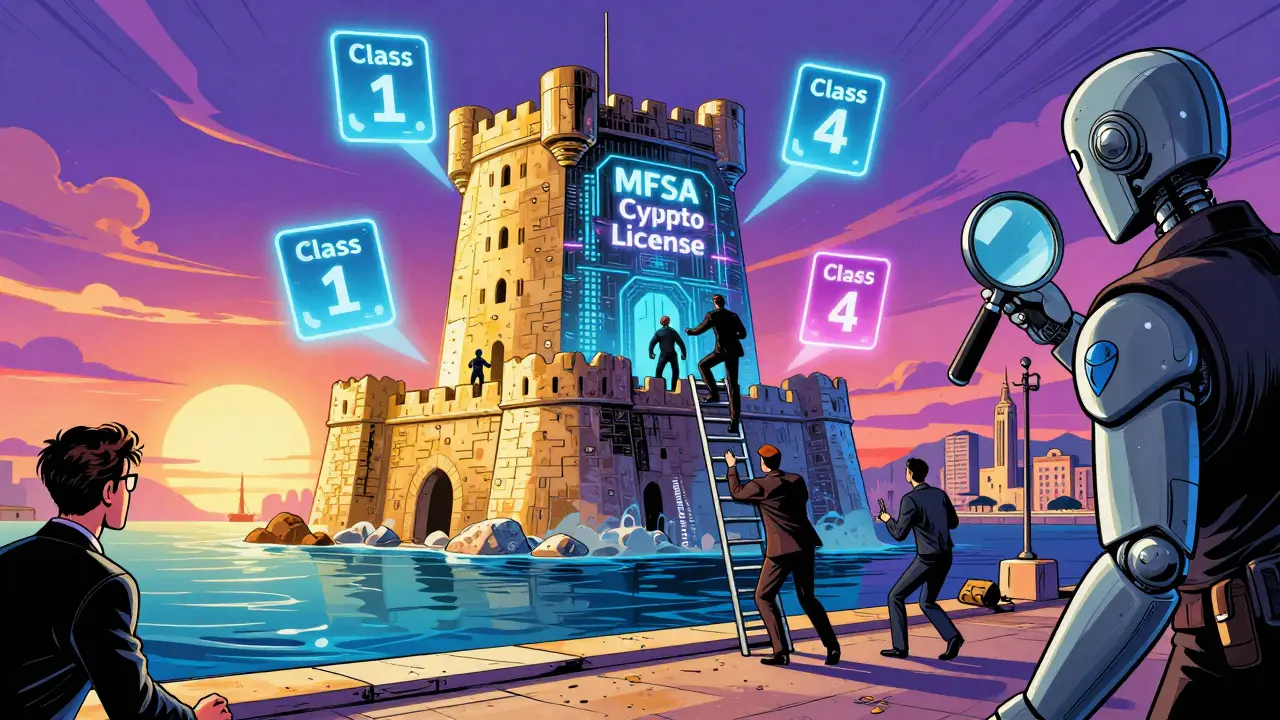
Crypto Business Licensing Requirements in Malta: What You Need to Know in 2025
Malta's crypto licensing system in 2025 requires businesses to meet strict capital, AML, and local presence rules. Learn the four license classes, hidden costs, approval timeline, and why it's still a top EU choice despite MiCA integration.
December 8 2025