
Buying land in the metaverse isn’t science fiction anymore-it’s a real investment strategy being used by companies like JP Morgan and celebrities like Snoop Dogg. In 2025, virtual real estate is no longer just a speculative bubble. It’s a tangible asset class with measurable value, built on blockchain technology, and owned through NFTs. But here’s the catch: not all virtual land is equal. Some parcels sit empty while others generate thousands in rental income. So how do you tell the difference? And more importantly, how do you avoid losing money in a space where prices can crash 80% in six months?
What Exactly Is Metaverse Real Estate?
Metaverse real estate is digital land you can own, develop, and sell. It’s not a 3D model you see in a game-it’s a verified, blockchain-backed asset. Each plot is an NFT, meaning it has a unique digital certificate proving you’re the only owner. These parcels exist inside platforms like Decentraland, The Sandbox, and Somnium Space. Unlike physical property, there’s no zoning law or building permit. You can build a nightclub next to a bank, a spaceship museum beside a coffee shop. The only limit is your imagination-and the platform’s technical rules.These virtual worlds aren’t connected. Decentraland isn’t linked to The Sandbox. Your land in one doesn’t show up in another. That’s why location matters more than ever. A plot near the main square in Decentraland can cost 10 times more than one on the edge of the map. Why? Because people go there. Events happen there. Traffic drives value.
How Does Ownership Work?
Every piece of virtual land is an NFT stored on a blockchain-usually Ethereum. When you buy land, you’re not just clicking a button. You’re signing a transaction with your crypto wallet. Once confirmed, the land is yours forever… unless the platform changes its rules. Some platforms, like Decentraland, guarantee permanent ownership with no recurring fees. Others, like Upland, treat land more like a subscription-you pay monthly to keep it. If you stop paying, you lose it.This is the biggest risk most new investors miss. You can’t assume ownership is permanent. Always check the platform’s terms before buying. Look for phrases like “permanent ownership,” “no maintenance fees,” and “non-revocable rights.” If the platform says “we reserve the right to change usage rules,” walk away. That’s not investment-it’s gambling.
Which Platforms Are Worth Considering in 2025?
There are dozens of metaverse platforms, but only four have real traction in 2025:- Decentraland: Uses MANA as its native token. The oldest and most established. Over 200,000 monthly active users. Known for high-traffic districts like Fashion Street and the Casino District.
- The Sandbox: Uses SAND. Strong focus on user-generated content and gaming. Partnered with major brands like Atari and Adidas. Land here often sells for higher premiums because of active development tools.
- Somnium Space: Uses CUBE. Built for VR immersion. Requires VR headset for full experience, which limits casual users but attracts serious investors. Higher entry cost but less competition.
- CryptoVoxels: Uses ETH directly. Smaller community, but land is cheaper and easier to develop. Popular with artists and NFT galleries.
Don’t buy into platforms with less than 50,000 monthly users. Low traffic means low demand. And if no one visits your land, no one will pay to rent it, visit it, or advertise on it.
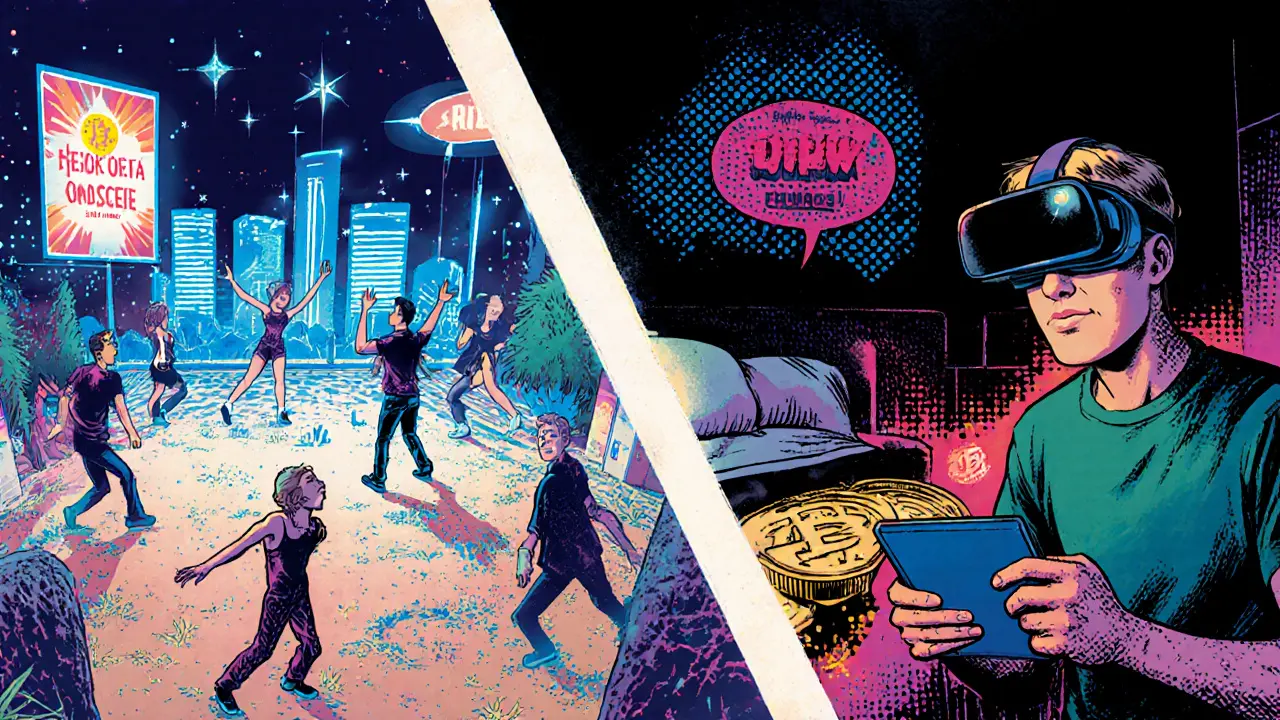
How to Buy Virtual Land: A Step-by-Step Guide
Buying land isn’t like buying a house on Zillow. Here’s how it actually works:- Set up a crypto wallet. Use MetaMask or Coinbase Wallet. Make sure it supports Ethereum and the platform’s native token (MANA, SAND, CUBE, etc.).
- Buy cryptocurrency. Buy ETH on Coinbase, Kraken, or Binance. Then swap it for the platform’s token using a decentralized exchange like Uniswap.
- Go to the platform’s marketplace. Each platform has its own land marketplace. Browse available plots. Filter by size, price, and location.
- Check the surrounding area. Is your plot next to a popular event space? A nightclub? A busy road? Proximity to high-traffic zones increases value.
- Place your bid or buy outright. Some land is listed at fixed prices. Others go to auction. In auctions, the winning bid often exceeds the asking price by 30-100%.
- Confirm the transaction. Pay the gas fee in ETH. Wait for the NFT to appear in your wallet. That’s your land.
Pro tip: Buy during market dips. When crypto prices fall, virtual land prices drop faster. The best time to buy is when the market is scared-not when everyone’s excited.
How Do You Make Money From Virtual Land?
Owning land isn’t enough. You need to make it work for you. Here are the proven ways to earn:- Rent it out. Lease your land to brands for pop-up stores, art galleries, or events. Rates range from $50 to $5,000 per month depending on location and size.
- Host events. Put on a concert, NFT drop, or virtual conference. Charge ticket sales in platform tokens. Some events earn over $50,000 in a single weekend.
- Build and sell digital experiences. Create a game, maze, or interactive art piece on your land. Sell access as a ticket or subscription.
- Advertise. Place branded billboards or interactive ads on your property. Companies pay to reach metaverse audiences.
- Flip it. Buy low, develop quickly, sell high. This is risky but has made some investors six-figure profits.
The most successful owners don’t just sit on land. They build something people want to visit. A blank plot is worthless. A virtual nightclub with live DJ sets and token-gated entry? That’s an asset.
Why Corporations Are Buying Into This
You might think this is just for crypto bros. But big players are in. PwC opened a virtual office in Decentraland to train employees. JP Morgan rented land to host client meetings. Samsung built a virtual showroom for its latest gadgets. Even the NBA has a presence in The Sandbox.Why? Because their customers are there. Gen Z and Millennials spend hours in these worlds. Brands that ignore them are losing future customers. Virtual land isn’t a fad-it’s a new channel for customer engagement.
The Risks You Can’t Ignore
This isn’t a safe investment. Here’s what can go wrong:- Platform failure. If The Sandbox shuts down tomorrow, your land becomes a digital ghost. No one can access it. No one can use it.
- Token crash. If MANA drops 70%, your land’s value drops with it-even if nothing changed on the platform.
- Regulation. Governments are starting to look at virtual assets. If the UK or US decides to tax virtual land like real estate, your profits could vanish overnight.
- Overhyped prices. Some plots sold for $1 million in 2021. Now they’re worth $10,000. Speculation drove the boom. Reality is bringing it back down.
The key is diversification. Don’t put all your money into one platform. Don’t buy the most expensive plot you can afford. Start small. Learn. Build. Then scale.
What’s Next for Metaverse Real Estate?
The future depends on three things:- VR adoption. If Apple Vision Pro and Meta Quest 3 drive mass adoption, user numbers will explode.
- Interoperability. Right now, you can’t take your land from Decentraland to The Sandbox. If platforms start talking to each other, value could multiply.
- Legal clarity. Clear ownership laws will bring institutional money. Without them, it stays a wild west.
Right now, metaverse real estate is still early. But it’s not the future. It’s the present. The people who succeed won’t be the ones who bought at the top. They’ll be the ones who built something real, waited out the noise, and kept adding value-even when no one was watching.
Can you make real money from metaverse real estate?
Yes, but only if you treat it like a business, not a lottery ticket. Some investors earn $1,000-$10,000 per month renting out virtual spaces. Others have sold land for 10x their original investment. But many have lost money by buying overpriced plots or ignoring platform risks. Success comes from building value-not just buying land.
Do I need a VR headset to invest in metaverse land?
No. You can buy, sell, and manage land entirely through a web browser. But if you want to develop or host events, a VR headset gives you a major advantage. It lets you see your land exactly how visitors will experience it. Most serious developers use one, but it’s not required to own property.
Is metaverse real estate better than traditional property?
It’s not better-it’s different. Traditional real estate gives you physical assets, rental income, and long-term equity. Metaverse land offers speed, creativity, and global access-but no physical backing. It’s higher risk, higher reward. Think of it as tech stocks vs. real estate: one is stable, the other is volatile but potentially transformative.
What’s the minimum amount needed to start?
You can buy a small plot in CryptoVoxels or Decentraland for under $200. But to make meaningful returns, you’ll need at least $1,000-$2,000 to buy a decent parcel near high-traffic areas. Don’t start with less than $500 unless you’re just experimenting.
Are metaverse land prices still rising?
Not overall. After the 2021-2022 boom, prices crashed by 70-90% in most markets. But top locations in active platforms like The Sandbox and Decentraland are stabilizing and seeing slow growth again. The market isn’t booming-it’s maturing. Smart buyers are now looking for long-term value, not quick flips.
Can I sell my metaverse land anytime?
Yes. All platforms have marketplaces where you can list your land for sale. But liquidity varies. Popular platforms like Decentraland have active buyers. Smaller ones might take weeks or months to find a buyer. Always check trading volume before buying.
Is metaverse real estate legal?
Yes, as long as you own the NFT. Ownership is recorded on the blockchain and legally recognized in many countries as digital property. However, tax treatment and inheritance laws are still unclear in most places. Consult a tax advisor familiar with crypto assets before making large investments.
Layla Hu
December 1, 2025 AT 12:46Been following this space since 2022. Bought a tiny plot in CryptoVoxels for $180. Still sitting there. Haven’t built anything yet. Not sure if I should sell or wait. It’s quiet but peaceful. Like a digital garden.
Still learning.
Nora Colombie
December 3, 2025 AT 12:09Wow another crypto bro thinking he’s Warren Buffett with a VR headset. You people are delusional. Virtual land? That’s not an asset, it’s a meme. The only thing growing here is the number of idiots throwing money at pixelated dirt. America’s next big bubble, and you’re all holding the bag.
Also, why are you all still using Ethereum? Gas fees alone should’ve killed this nonsense years ago.
Greer Dauphin
December 5, 2025 AT 06:03Ok so I bought a plot in Decentraland for 2.5 ETH last year… yeah that was dumb. Gas fees alone cost me $150 to list it. Then I realized no one’s even walking by my land. I tried putting up a fake disco ball and a sign that said ‘FREE BEER (IN TOKENS)’ and still nothing.
Turns out building a nightclub in the metaverse is harder than it looks. Also, who even has a VR headset anymore? I’ve got an old Quest 2 gathering dust. Anyone else feel like we’re all just playing Sims 4 with crypto?
Bhoomika Agarwal
December 7, 2025 AT 06:02Ohhh so now you want to invest in digital dirt while half of India still doesn’t have proper electricity? You think your NFT will feed your family? Ha!
Real estate in Mumbai costs more than your entire metaverse portfolio. You’re not an investor-you’re a tourist in someone else’s fantasy. Go build something real. Like a school. Or a hospital. Not a virtual bar where your avatar sips digital whiskey.
Katherine Alva
December 8, 2025 AT 15:55It’s wild how this feels like the early internet. Remember when people thought websites were just a fad? Now look.
Maybe this is the same. Not everyone will win. But the ones who build *something* meaningful-art, community, experiences-will outlast the speculators.
🌱 I’m not here to flip. I’m here to plant. And maybe, just maybe, someone will sit under my digital tree one day. 🌳
Nelia Mcquiston
December 9, 2025 AT 07:37There’s a fundamental difference between owning digital land and owning physical land. One has gravity. One has weather. One has neighbors who bring you soup when you’re sick.
Virtual land is a canvas. It’s not a home. And pretending it’s the same thing is like calling a PowerPoint presentation a symphony.
That said-I love the creativity. I just wish more people treated it as art, not a stock ticker.
Mark Stoehr
December 11, 2025 AT 01:15Stop wasting your money. This is a scam. The whole thing is rigged. Big tech is using this to get you to buy more crypto so they can steal your wallet. You think JP Morgan gives a damn about your NFT? They’re just using it to launder money and sell ads.
Also your wallet’s probably already hacked. You didn’t use a hardware one did you? No? Yeah. You’re already broke.
Shari Heglin
December 12, 2025 AT 05:53The article presents a misleading narrative by conflating speculative trading with investment. Ownership via NFT does not confer legal title, nor does it guarantee enforceable rights under any jurisdiction. The platforms’ terms of service explicitly reserve the right to alter, suspend, or terminate access. Therefore, the claim of ‘tangible asset class’ is semantically and legally inaccurate.
Furthermore, the valuation metrics cited are anecdotal and lack empirical rigor. Without standardized appraisal frameworks or regulatory oversight, this remains a high-risk, unregulated gambling environment.
Reggie Herbert
December 12, 2025 AT 07:03Metaverse real estate is just Web3 vaporware. You’re not buying land-you’re buying a token that points to a JPEG hosted on IPFS that could vanish tomorrow. And don’t get me started on the ‘traffic’ metrics. How do you even measure that? Are they counting avatar visits? Like, if 10 bots walk by your plot, is that real traffic?
Also, why is everyone still using Ethereum? Layer 2s exist. Polygon. Arbitrum. You’re paying $200 in gas to buy a pixel? That’s not investing. That’s donating to Vitalik’s vacation fund.
Murray Dejarnette
December 13, 2025 AT 15:30Bro I bought 5 plots last month and already made 300% profit. Just sold one for 8 ETH. You think it’s risky? Nah. It’s just early. Everyone’s scared right now-that’s when you buy.
Also I’m hosting a party in my Decentraland mansion this Friday. All welcome. Bring your own NFT snacks. I’ll stream it on Twitch. DM me for the invite link. We’re gonna have a DJ, a virtual karaoke booth, and a 1000 ETH giveaway. No cap. Just vibes.
Sarah Locke
December 14, 2025 AT 17:45Listen. If you’re reading this and thinking ‘I need to get rich quick’-stop. Right now.
This isn’t a lottery. It’s a sandbox. And the only thing you’re guaranteed to build is patience. I started with $300. I built a tiny art gallery. No one came for months. Then a teacher from Japan brought her class. Then a museum curator from Berlin found it. Now I get monthly rentals. Not because I flipped. Because I created.
You don’t need to be rich. You just need to care. And show up.
And yes, I’m still using a laptop. No VR. But I see the art. And that’s enough.
Mani Kumar
December 14, 2025 AT 22:38The entire concept is fundamentally flawed. Virtual land lacks scarcity in any meaningful economic sense. Unlike physical real estate, it is infinitely replicable. The NFT is merely a pointer. The underlying asset is non-rivalrous. Ergo, the price discovery mechanism is irrational.
Furthermore, the reliance on Ethereum introduces systemic risk. A single smart contract vulnerability could erase all value. This is not investment. It is algorithmic superstition.
Tatiana Rodriguez
December 15, 2025 AT 18:50I remember when I first logged into Decentraland. It was 2021. Everyone was screaming. Everyone was buying. I just stood there in my avatar with a banana for a hat, watching people run past me to buy plots that were already overpriced.
Then I found this one tiny corner near the old theater. No one wanted it. It was next to a broken fountain and a sign that said ‘Welcome to the future!’ in Comic Sans.
I bought it for $80. I turned it into a little library. I put up poetry. I invited people to leave notes. Now people come to read. Not to buy. Not to flip. Just to sit. And sometimes… someone leaves a drawing of a cat. And I cry a little. Not because I made money. But because I made something that mattered.
That’s the real metaverse. Not the hype. Not the NFT. Just… a quiet place where someone felt seen.
Philip Mirchin
December 16, 2025 AT 20:04As someone who’s lived in 7 countries, I’ve seen how digital spaces become cultural hubs. In Lagos, people meet in WhatsApp groups. In Tokyo, they hang out in VR chatrooms. This? This is the next step.
You don’t need to own land to benefit. Just participate. Go to an event. Say hi. Learn how to build a simple scene. You don’t need to be a coder. Just curious.
And yeah, some people are gonna lose money. But others? They’ll find community. And that’s worth more than any ETH.
Britney Power
December 18, 2025 AT 10:24Let’s be brutally honest: this entire industry is a Ponzi scheme disguised as innovation. The platforms are incentivized to inflate valuations to attract new capital. The ‘early adopters’ are the ones who sold at the peak. The rest are the suckers who bought the top. The fact that JP Morgan is involved doesn’t validate the asset-it validates their marketing budget.
And let’s not pretend regulation won’t come. When the SEC comes knocking, your ‘ownership’ will be worth exactly what your wallet balance says: zero.
Also, your avatar’s haircut is ugly.
Maggie Harrison
December 19, 2025 AT 00:28My first plot was a disaster. I spent weeks building a floating garden. No one came. Then I added a little sign: ‘If you’re sad, sit here. I made this for you.’
Someone left a note: ‘I lost my mom last week. This is the first time I smiled in months.’
I didn’t make money. But I made a difference.
That’s the real ROI. 🌸
Lawal Ayomide
December 19, 2025 AT 11:03You think this is new? In Nigeria, we’ve been trading digital assets for years. Fake Instagram followers. Fake likes. Fake followers. Same thing. You’re just calling it land now.
But hey, if you want to pay $10,000 for a pixel that no one can touch-go ahead. I’ll be here selling you the ‘VIP access’ to my WhatsApp group.
justin allen
December 19, 2025 AT 15:14Y’all are so naive. This isn’t about land. It’s about control. Meta, Apple, Google-they’re building walled gardens. You think you own your land? You own a license. They can delete your account. Freeze your wallet. Ban your avatar. And you’ll have zero recourse.
This isn’t freedom. It’s digital serfdom. And you’re paying rent in crypto.
ashi chopra
December 19, 2025 AT 20:10I bought land because I wanted to honor my grandmother. She loved gardens. So I built a digital one. No ads. No NFTs. Just flowers. And a bench.
People come to sit. Some cry. Some leave flowers in chat. One guy sent me a real photo of his mom’s garden-same roses.
I didn’t make money. But I kept her alive.
That’s enough.
Darlene Johnson
December 20, 2025 AT 12:49They’re watching you. Every click. Every purchase. Every time you log in. They’re building a profile. Selling your data. Then they’ll use your land to run ads on your face. You think you’re owning something? You’re the product.
And the NFTs? They’re just tracking codes. You’re not buying land. You’re buying a spy chip. And you’re paying for it in ETH.
Ivanna Faith
December 22, 2025 AT 06:52Just bought my first plot for 0.8 ETH. It’s in The Sandbox. Near the arcade. I’m gonna make a taco stand. 🌮
Also I’m gonna name it after my cat. His name is Sir Fluffington. He’s very serious about snacks.
Wish me luck. Or don’t. I’m doing this for me.
Akash Kumar Yadav
December 23, 2025 AT 20:45India has 1.4 billion people. You think a few rich guys buying pixels in California is progress? This is colonialism with NFTs.
Meanwhile, my cousin can’t get clean water. But you? You’re spending your rent money on a virtual disco.
Wake up.
samuel goodge
December 24, 2025 AT 07:16While the article presents a compelling case for metaverse real estate as an emerging asset class, it fails to address the critical issue of interoperability-or the lack thereof. The siloed nature of Decentraland, The Sandbox, and Somnium Space creates artificial scarcity, which is economically unsustainable in the long term. Moreover, the absence of a standardized protocol for asset portability renders all ‘ownership’ claims contingent upon platform longevity-a condition that, historically, has proven tenuous in digital ecosystems.
Additionally, the valuation metrics cited rely on anecdotal transaction data, which is inherently non-representative and subject to manipulation via wash trading. Until a transparent, auditable, and cross-platform pricing mechanism is established, this remains a speculative market, not an investment vehicle.
alex bolduin
December 25, 2025 AT 01:04My friend bought land in Decentraland for $500. Built a tiny coffee shop. Now people go there to chill, talk, play music. No ads. No NFTs. Just vibes.
He doesn’t care about profit. He cares about the people.
Maybe that’s the point.
Greer Dauphin
December 25, 2025 AT 23:42Wait… so you actually built something? I thought I was the only one who did that. I made a library too. But mine’s just books from Project Gutenberg. No one visits. Maybe I need a cat. Or a robot.
Also… your taco stand sounds amazing. I’m coming. Bring extra salsa.
Maggie Harrison
December 27, 2025 AT 12:56That’s why I keep doing it. Not for the money. For the notes.
Someone left one yesterday: ‘This garden helped me stop thinking about ending it.’
I didn’t know I could do that with pixels.
Thank you.