
Crypto Regulation: What’s Allowed, Blocked, and Enforced in 2025
When it comes to crypto regulation, the rules governments set for how digital assets can be used, traded, or taxed. Also known as cryptocurrency legal frameworks, it’s not about stopping crypto—it’s about controlling who can use it, where, and under what conditions. In 2025, this isn’t theoretical anymore. Real people lose access to their money, exchanges shut down overnight, and banks freeze accounts because someone didn’t follow the rules.
Look at OFAC cryptocurrency sanctions, U.S. government rules that block transactions with certain wallets, exchanges, or countries. Also known as blockchain sanctions, it’s why Syrian traders suddenly got access while Cuban users got locked out. It’s why crypto businesses must scan every transaction against a list of banned addresses—or face millions in fines. Then there’s crypto banking restrictions, how traditional banks respond when you try to turn crypto into cash. In Nigeria, banks only allow withdrawals through SEC-approved exchanges. In Mexico, banks can’t offer crypto services at all. In China, even holding crypto is illegal. These aren’t edge cases—they’re the new normal. And it’s not just about countries. It’s about platforms. Exchanges like BX Thailand disappeared because they couldn’t keep up with changing rules. Others, like YEX, vanished because they ignored compliance entirely.
What you’ll find here isn’t theory. It’s real stories: how Nigerian banks monitor every crypto-to-fiat move, how Mexico’s 2018 Fintech Law still shapes what you can do today, how OFAC’s rules force crypto firms to build entire compliance teams, and why trying to hide crypto offshore is riskier than ever. You’ll see what happens when meme coins like Fofar or LICO vanish without a trace—not because they failed, but because they never had legal standing. You’ll learn which airdrops are real and which are scams designed to steal your wallet info under the guise of "compliance." This isn’t about guessing what’s legal. It’s about seeing exactly where the lines are drawn—and how to stay on the right side.
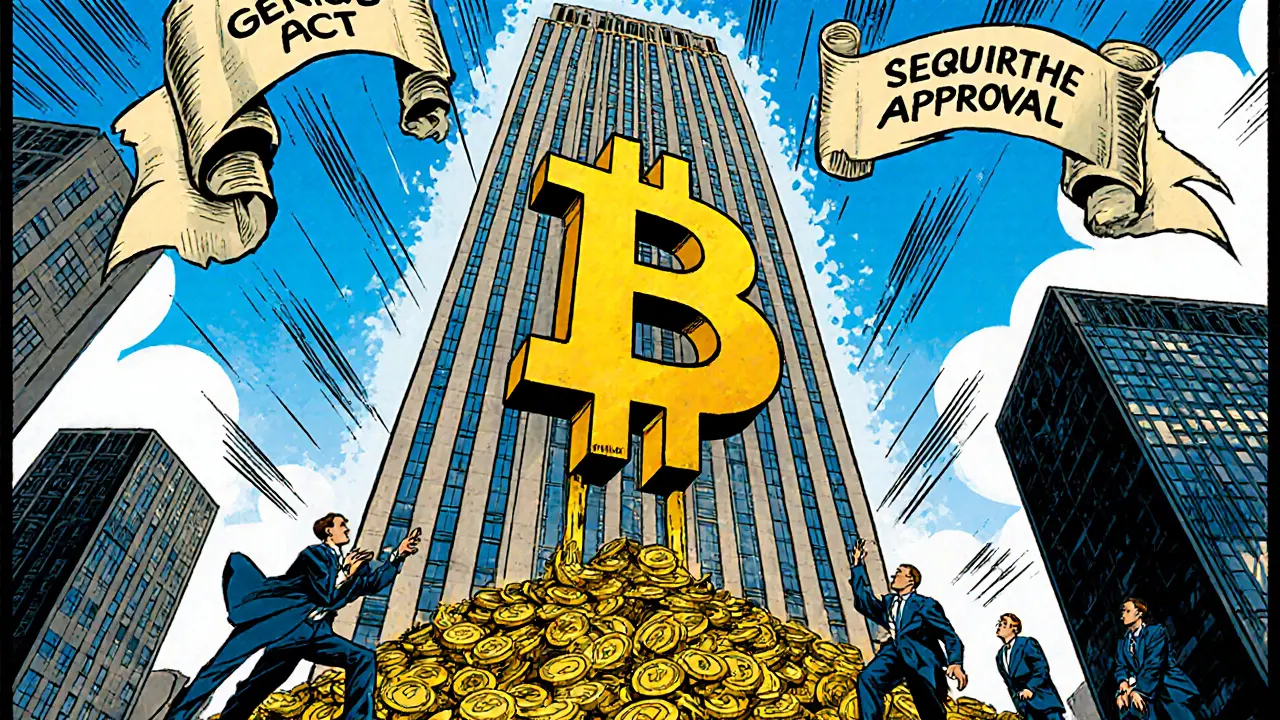
Institutional Crypto Adoption and Bitcoin ETF Approvals: How Regulation Is Changing the Game
Institutional investors are pouring billions into Bitcoin ETFs and crypto assets as regulation clears the way. With $58 billion in ETFs, corporate treasuries holding over a million BTC, and global adoption rising, crypto is no longer a fringe asset - it's a mainstream financial tool.
November 26 2025