
Blockchain Identity: The New Way to Own Your Digital Self
When working with blockchain identity, a cryptographic representation of a person or organization stored on a public ledger. Also known as decentralized ID, it gives you control over your credentials without a central authority. The concept encompasses self‑sovereign identity, a model where the user creates, manages, and shares identity data directly, and it requires a digital wallet, software that stores cryptographic keys and can sign attestations to prove who you are. At the same time, KYC, Know‑Your‑Customer checks required by regulators often interacts with blockchain identity, creating a push‑pull dynamic where privacy‑preserving IDs can satisfy compliance without exposing raw data.
Core Elements and How They Fit Together
Think of a blockchain identity as a three‑part puzzle. First, the decentralized identity, or DID, acts as a unique pointer on the chain that never changes. Second, the digital wallet holds the private keys that let you sign messages, making it possible to prove ownership of that DID. Third, a set of verifiable credentials, cryptographically signed attestations from issuers like universities or banks can be attached to the DID. This structure enables seamless cross‑platform authentication, reduces phishing risk, and lets you reuse the same identity across games, finance apps, and social networks. Because the data lives on a blockchain, anyone can verify the signature without needing to trust a third‑party server, which is what makes the whole system resilient to hacks and outages.
Real‑world projects illustrate the power of this stack. Some services let you log into a DeFi platform using only your wallet, bypassing passwords entirely. Others let you prove you’re over 18 without handing over your passport, thanks to a zero‑knowledge proof that references a verifiable credential stored under your blockchain identity. Governments are also testing self‑sovereign identity pilots for voting and public services, showing that the model can scale beyond niche crypto apps. In each case, the relationship between blockchain identity, digital wallets, and verifiable credentials is the engine that drives trust‑less interactions.
Below you’ll find a curated set of articles that break down these pieces, compare different implementations, and show you step‑by‑step how to create and protect your own blockchain identity. Whether you’re a developer looking for technical specs or a user curious about privacy benefits, the guides ahead will give you practical insights you can act on right now.
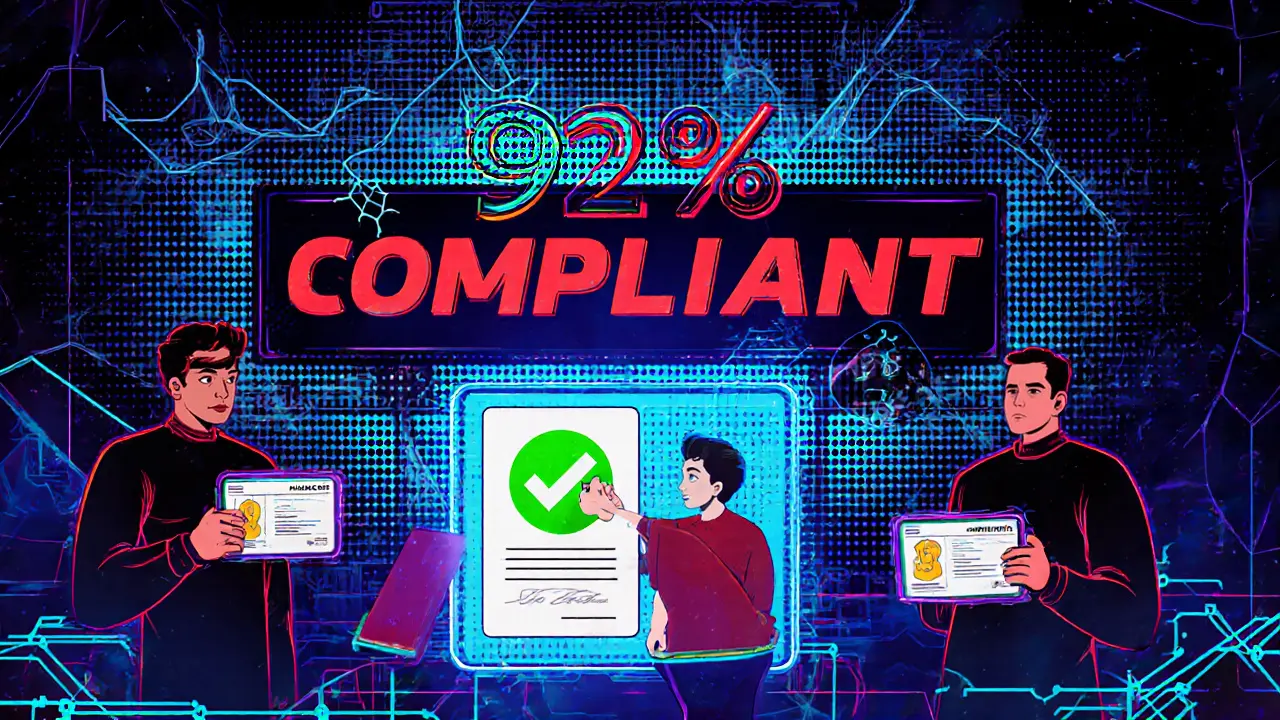
Future of KYC in Crypto Industry: How Compliance Is Reshaping Crypto in 2025 and Beyond
KYC in crypto is no longer optional-it's mandatory, fast, and powered by AI. By 2025, 92% of exchanges require identity verification. Here’s how it works, what’s changing, and what it means for users and the future of crypto.
October 28 2025
DID vs Traditional Identity Systems: A Practical Comparison
Explore the key differences between Decentralized Identity (DID) and traditional identity systems, covering security, privacy, implementation, and future trends.
October 10 2025