
Crypto Exchanges Banned in Russia: What Happened and Where to Trade Now
When crypto exchanges banned in Russia, a wave of regulatory crackdowns shut down platforms that allowed Russians to buy, sell, or trade digital assets. Also known as Russian crypto trading restrictions, this move was part of a broader effort to control financial flows and reduce reliance on foreign systems. It wasn’t just about stopping speculation—it was about keeping money inside the state’s financial system and preventing sanctions evasion.
The Russian government didn’t ban cryptocurrency itself, but it did block access to major international exchanges like Binance, Kraken, and Bybit. These platforms were either forced to withdraw or had their domains blocked by Roskomnadzor, the country’s internet regulator. At the same time, local exchanges like Kuna, a Ukrainian-based exchange that briefly served Russian users and Bybit, a global platform that lost its Russian licensing were cut off. The result? Russians couldn’t use their usual tools to trade Bitcoin or Ethereum without jumping through legal hoops or using VPNs—both of which carry risk.
What’s more, Russian banks now monitor crypto-related transactions closely. If you try to deposit rubles into a foreign exchange, your account could get flagged—or frozen. The central bank even pushed for a state-backed digital currency, the digital ruble, to replace private crypto use entirely. But people still trade. They use peer-to-peer platforms like LocalBitcoins and Paxful. They hold crypto in non-custodial wallets like Trust Wallet or MetaMask. And some even use decentralized exchanges like Uniswap, though that requires technical know-how and carries its own risks.
This isn’t just about rules—it’s about survival. With inflation, sanctions, and limited banking access, crypto became a lifeline for many Russians. But the government didn’t just want to regulate it—they wanted to eliminate it as an alternative. That’s why the list of crypto exchanges banned in Russia keeps growing. What’s left are underground networks, informal traders, and a growing number of people who know how to move crypto without leaving a trail.
Below, you’ll find real stories from people who’ve dealt with these restrictions firsthand. Some lost access to their funds. Others found clever ways to keep trading. And a few learned the hard way that not every "Russian-friendly" exchange is safe. This isn’t theory. It’s what’s happening right now.
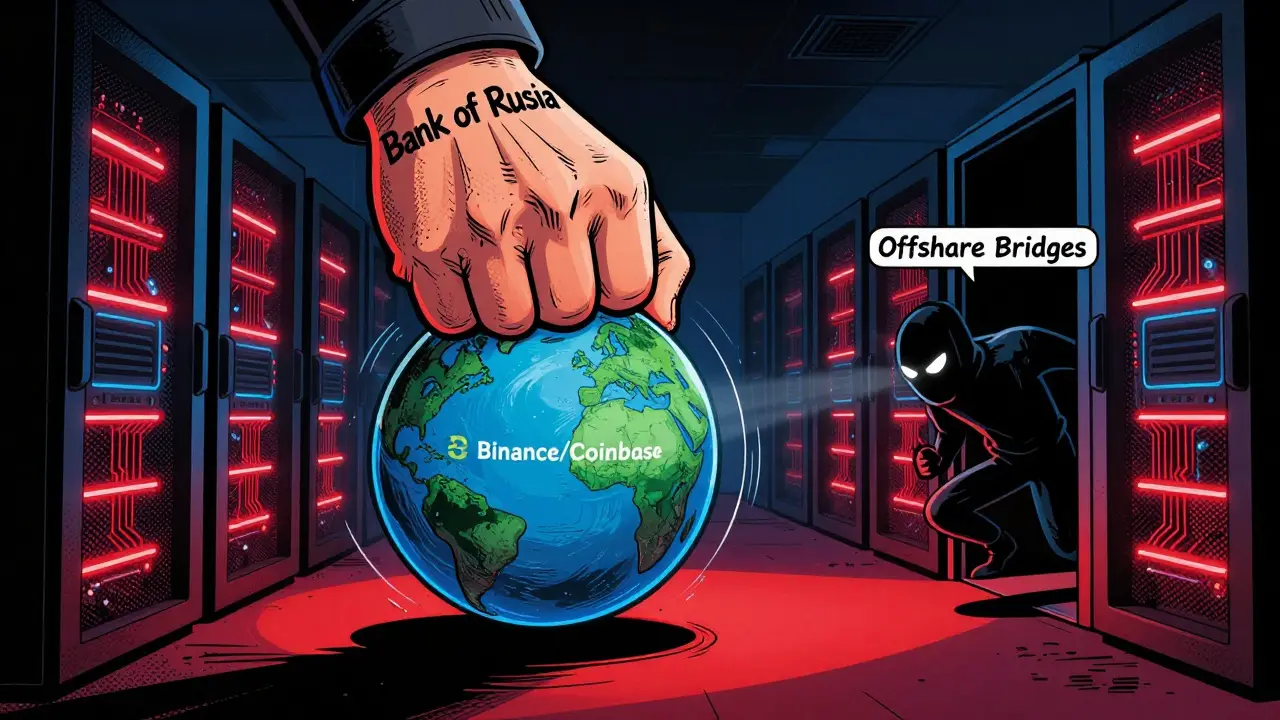
What Crypto Exchanges Are Banned in Russia? The Full Regulatory Breakdown
Russia doesn't ban all crypto exchanges-it bans the ones that don't follow its rules. Learn which platforms are blocked, why Garantex collapsed, and how the state is building its own crypto system.
December 4 2025