
Blockchain wasn’t born in a Silicon Valley startup. It didn’t appear overnight as some flashy tech trend. Its roots go back decades, buried in academic papers, cryptographer experiments, and quiet breakthroughs no one noticed at the time. Today, we think of blockchain as Bitcoin, NFTs, or DeFi-but that’s just the latest chapter. The real story starts long before anyone had heard of Satoshi Nakamoto.
The First Blocks: 1991 and the Birth of a Concept
In 1991, two researchers at Bellcore-Stuart Haber and W. Scott Stornetta-were trying to solve a simple but stubborn problem: how do you prove a digital document hasn’t been altered after it was created? They didn’t want to rely on a trusted third party. So they built something smarter. They chained documents together using cryptographic hashes. Each new document included a reference to the one before it. If someone changed even a single letter in an old file, the whole chain broke. It was elegant. It was secure. And it was the first working model of what we now call blockchain.
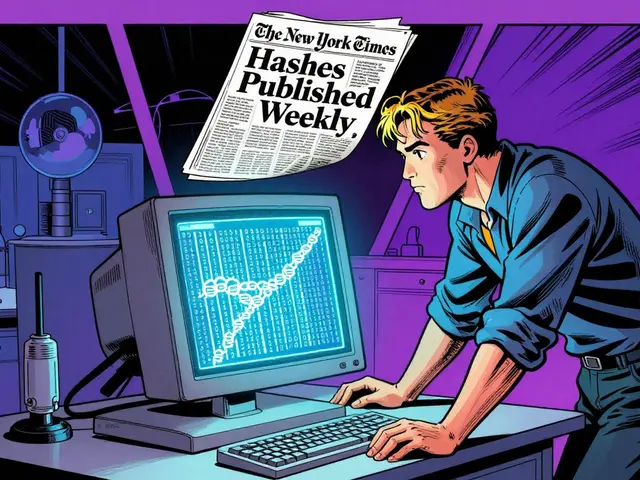
They didn’t call it blockchain back then. They called it a "secured log." But the structure was identical. A year later, they added Merkle trees-created by computer scientist Ralph Merkle-to bundle multiple documents into a single block. This made the system faster and more efficient. By 1995, they were publishing weekly hash summaries of their timestamped documents in The New York Times. Why? To prove it worked. To show that the system couldn’t be faked. That’s right: blockchain was publicly demonstrated in a newspaper before the internet even became mainstream.
The Long Pause: 1992-2008
After that, things went quiet. No one rushed to build on it. The tech world was focused on the web, email, and early mobile phones. But the idea didn’t die. In 1998, Nick Szabo, a computer scientist and cryptographer, dreamed up "b-money"-a decentralized digital currency where users would verify transactions without a bank. He never built it. But he laid out the core ideas: anonymous participants, cryptographic proof, and a shared ledger. Sound familiar?
In 2004, Hal Finney took things further. He created "Reusable Proof of Work," a system that reused computational effort to prevent spam and fraud. He was building on Adam Back’s Hashcash, which had been used to block email spam. Finney’s system kept a record of who owned what. It wasn’t fully decentralized, but it was a major step toward solving the double-spending problem-the biggest obstacle to digital cash. This was the missing piece. The puzzle was nearly complete.
By 2008, the world was in a financial crisis. Banks were failing. Trust in institutions was collapsing. And in that moment, someone with the pseudonym Satoshi Nakamoto dropped a 9-page whitepaper titled "Bitcoin: A Peer-to-Peer Electronic Cash System." It didn’t just propose a new currency. It combined all the pieces-Haber and Stornetta’s chain, Finney’s proof of work, Szabo’s decentralized ledger-and made them work together in a way no one had done before.
The Bitcoin Breakthrough: 2008-2013
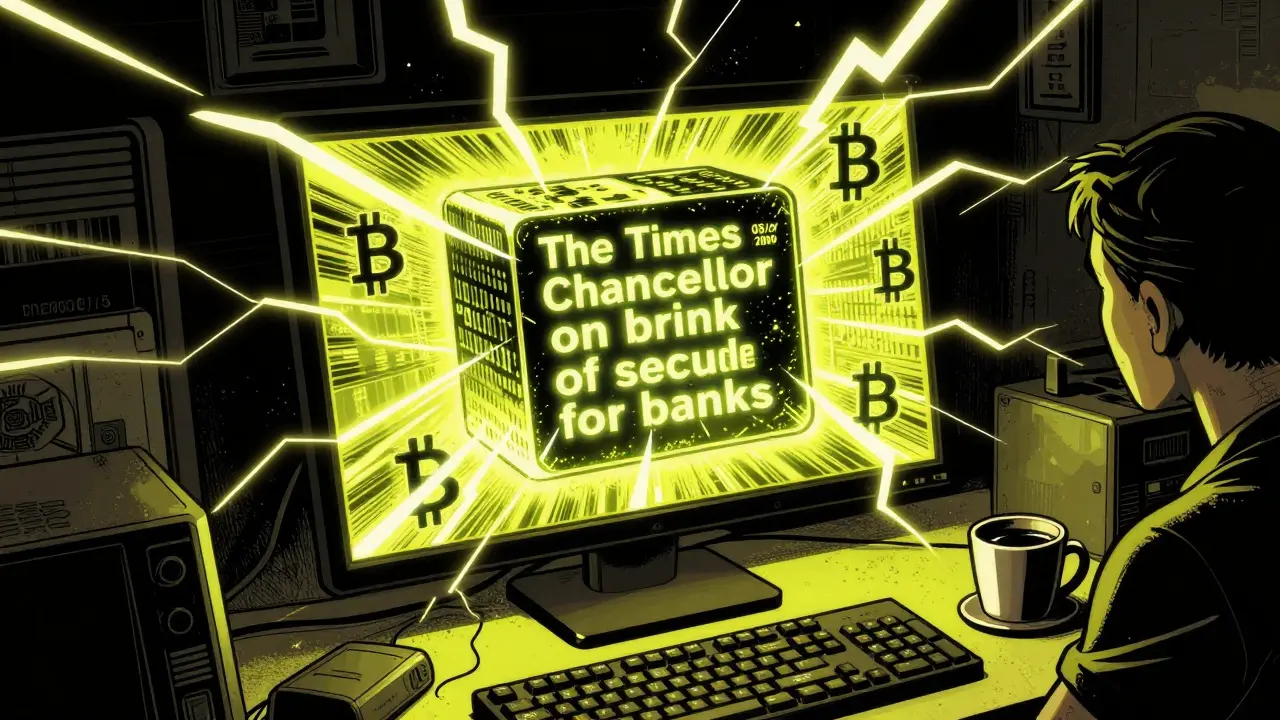
On January 3, 2009, Satoshi mined the first Bitcoin block-the "genesis block." Embedded in it was a message: "The Times 03/Jan/2009 Chancellor on brink of second bailout for banks." It wasn’t just a timestamp. It was a statement. Bitcoin wasn’t meant to replace cash. It was meant to replace trust in banks.
The network grew slowly at first. But in May 2010, a user named Laszlo Hanyecz made history. He paid 10,000 BTC for two pizzas. That wasn’t just a quirky stunt. It was the first time Bitcoin had real-world value. Someone accepted it as payment. That’s when blockchain stopped being a theory and became a tool.
By 2011, altcoins started appearing. Namecoin let users register domain names without central authorities. Litecoin improved Bitcoin’s speed. Bitcoin’s blockchain size grew from 20GB in 2014 to over 100GB by 2017. Every transaction ever made was recorded, permanently and publicly. No central server. No single point of failure. Just a growing chain of verified data.
The Smart Contract Revolution: 2013-2017
Bitcoin was great for sending money. But what if you could automate contracts? What if a payment only released when a condition was met-like a shipment arriving or a bill being paid? That’s where Ethereum came in.
In 2013, a 19-year-old Russian-Canadian named Vitalik Buterin proposed Ethereum. He saw Bitcoin’s potential but knew it was too limited. Ethereum wasn’t just a currency. It was a programmable blockchain. Developers could write code-called "smart contracts"-that ran automatically when conditions were met. No lawyers. No middlemen. Just code enforcing agreements.
By 2015, Ethereum launched. And everything changed. Suddenly, blockchain wasn’t just about money. It was about automation. About trustless systems. About building apps that couldn’t be shut down. By 2017, the ICO boom exploded. Startups raised hundreds of millions by selling tokens. Projects like EOS, Tezos, and Cardano emerged, each trying to outdo Ethereum’s speed, cost, or scalability.
But not everything went smoothly. In 2016, the DAO-a decentralized investment fund built on Ethereum-got hacked. $60 million vanished. The community had to choose: let the hack stand, or reverse it. They chose to reverse it. That split created Ethereum and Ethereum Classic. It was messy. It was controversial. But it proved something important: blockchain isn’t just code. It’s a social contract too.
The Maturation: 2018-Present
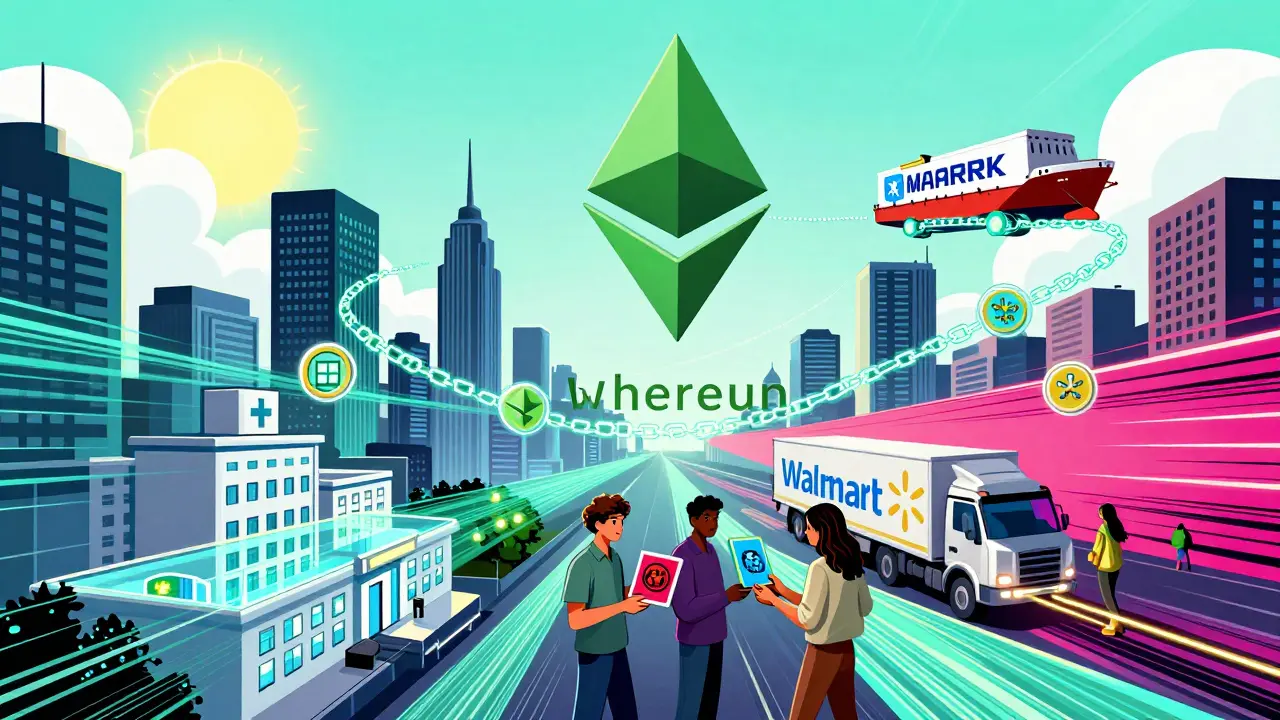
After the ICO bubble burst, things got serious. Companies stopped chasing hype and started building real tools. In 2015, the Linux Foundation launched Hyperledger-an open-source platform for enterprise blockchain. Banks, supply chains, and governments began testing it. Walmart started using blockchain to track food supply chains. Maersk used it to cut shipping paperwork by 40%. The technology was no longer just for crypto bros.
Then came DeFi. By 2020, decentralized finance platforms like Uniswap and Aave were offering loans, savings, and trading without banks. Total value locked in DeFi hit $10 billion in 2020 and climbed past $100 billion by 2021. People were using blockchain to do everything from borrowing money to earning interest-without a single bank involved.
NFTs exploded in 2021. Digital art, virtual land, music rights-all backed by blockchain. A Beeple NFT sold for $69 million. CryptoPunks became digital collectibles worth millions. The technology wasn’t just tracking money anymore. It was proving ownership of digital things.
The biggest technical shift came in 2022. Ethereum switched from Proof of Work to Proof of Stake. It cut energy use by over 99%. No more mining rigs. No more massive power bills. The network became faster, cheaper, and greener. This wasn’t just an upgrade. It was a reboot.
By 2023, interoperability became the focus. Blockchains like Solana, Polygon, and Avalanche started talking to each other. Cross-chain bridges let users move assets between networks. No more silos. No more locked-in ecosystems. Blockchain was becoming a connected web of systems.
What’s Next?
Today, blockchain isn’t one thing. It’s a toolkit. Governments are testing central bank digital currencies (CBDCs). Hospitals are using it to share patient records securely. Supply chains track everything from diamonds to vaccines. Identity systems let people own their data instead of corporations.
The blockchain file size for Bitcoin alone is now over 500GB. That’s more than half a million transactions recorded every day. The system has scaled, adapted, and survived crashes, hacks, and skepticism.
It’s no longer about whether blockchain works. The question now is: where will it be used next? And who will build it?
Who invented blockchain?
The first blockchain-like system was created by Stuart Haber and W. Scott Stornetta in 1991. They built a cryptographically secured chain to timestamp digital documents. Satoshi Nakamoto later combined their idea with other innovations to create Bitcoin in 2009, making it the first decentralized blockchain.
Was Bitcoin the first blockchain?
No. The concept existed for nearly two decades before Bitcoin. Haber and Stornetta’s 1991 system was the first working blockchain. Bitcoin was the first to make it decentralized, public, and usable as a currency. It took the idea and turned it into a working network.
How did Ethereum change blockchain?
Ethereum introduced smart contracts-self-executing code that runs on the blockchain. Before Ethereum, blockchains could only record transactions. After Ethereum, they could run apps, automate agreements, and support decentralized finance. It turned blockchain from a ledger into a programmable platform.
Why did Ethereum switch to Proof of Stake?
Proof of Work required massive amounts of electricity because miners competed to solve complex puzzles. Proof of Stake replaced mining with staking-where validators lock up cryptocurrency to secure the network. This cut Ethereum’s energy use by over 99%, made it faster, and reduced costs for users.
Is blockchain only used for cryptocurrency?
No. While it started with Bitcoin, blockchain is now used in supply chains, healthcare, voting systems, digital identity, and even art ownership through NFTs. Companies like Walmart, Maersk, and Siemens use it to track goods, verify documents, and automate contracts without relying on middlemen.
The blockchain didn’t evolve because someone wanted to make money. It evolved because it solved real problems-problems that couldn’t be fixed by traditional systems. It’s not magic. It’s math. It’s logic. And it’s still growing.


Lauren Brookes
February 17, 2026 AT 07:52Jeremy Fisher
February 19, 2026 AT 02:30Geet Kulkarni
February 19, 2026 AT 19:43Paul David Rillorta
February 20, 2026 AT 04:31Alex Williams
February 20, 2026 AT 22:33Charrie VanVleet
February 21, 2026 AT 19:53Scott McCrossan
February 23, 2026 AT 11:16Beth Erickson
February 25, 2026 AT 11:05Ruby Ababio-Fernandez
February 26, 2026 AT 22:26Anandaraj Br
February 27, 2026 AT 16:26Nova Meristiana
February 28, 2026 AT 23:16JJ White
March 1, 2026 AT 12:14James Breithaupt
March 2, 2026 AT 19:32Sarah Shergold
March 4, 2026 AT 03:50Andrew Edmark
March 5, 2026 AT 09:59sruthi magesh
March 6, 2026 AT 09:11Aileen Rothstein
March 7, 2026 AT 22:17Alan Enfield
March 7, 2026 AT 22:50Jennifer Riddalls
March 8, 2026 AT 19:34Ian Plunkett
March 10, 2026 AT 05:18