
MiCA Malta: What It Is and How It Shapes Crypto Regulation in Europe
When you hear MiCA, the Markets in Crypto-Assets Regulation, a sweeping EU law that standardizes how crypto assets are issued, traded, and supervised across all member states. Also known as EU Crypto Regulation, it’s not just paperwork—it’s the new rulebook for every exchange, wallet, and token project operating in Europe. And while MiCA applies to the whole EU, Malta, a small island nation that became known as "Blockchain Island" for being one of the first to create clear crypto rules back in 2018 has been quietly influencing how MiCA turned out. Malta didn’t wait for Brussels. It built its own framework first—and now, many of its ideas became the foundation of MiCA.
So what does this mean for you? If you’re using a crypto exchange, holding a token, or running a project, MiCA forces transparency. Issuers must publish whitepapers, exchanges need licenses, and stablecoins have to prove they’re backed. Malta’s Financial Services Authority, the agency that oversaw crypto businesses before MiCA, now helps enforce the EU-wide rules. That’s why so many companies that once moved to Malta for its friendly rules now stay because MiCA made those rules the standard. You don’t need to be in Malta to feel MiCA—you just need to use crypto in Europe.
Look at the posts below. You’ll see stories about banned exchanges, failed airdrops, and crypto crackdowns in places like Russia, Nigeria, and China. But MiCA Malta is the quiet counterpoint: a legal, transparent path forward. While some countries shut crypto down, MiCA says: "Here’s how to do it right." It’s why some projects still bother building in Europe—they know compliance isn’t a cost, it’s a license to grow. Whether you’re trying to claim a token, avoid a scam, or understand why a platform vanished, MiCA is the reason some things are still around—and others aren’t.
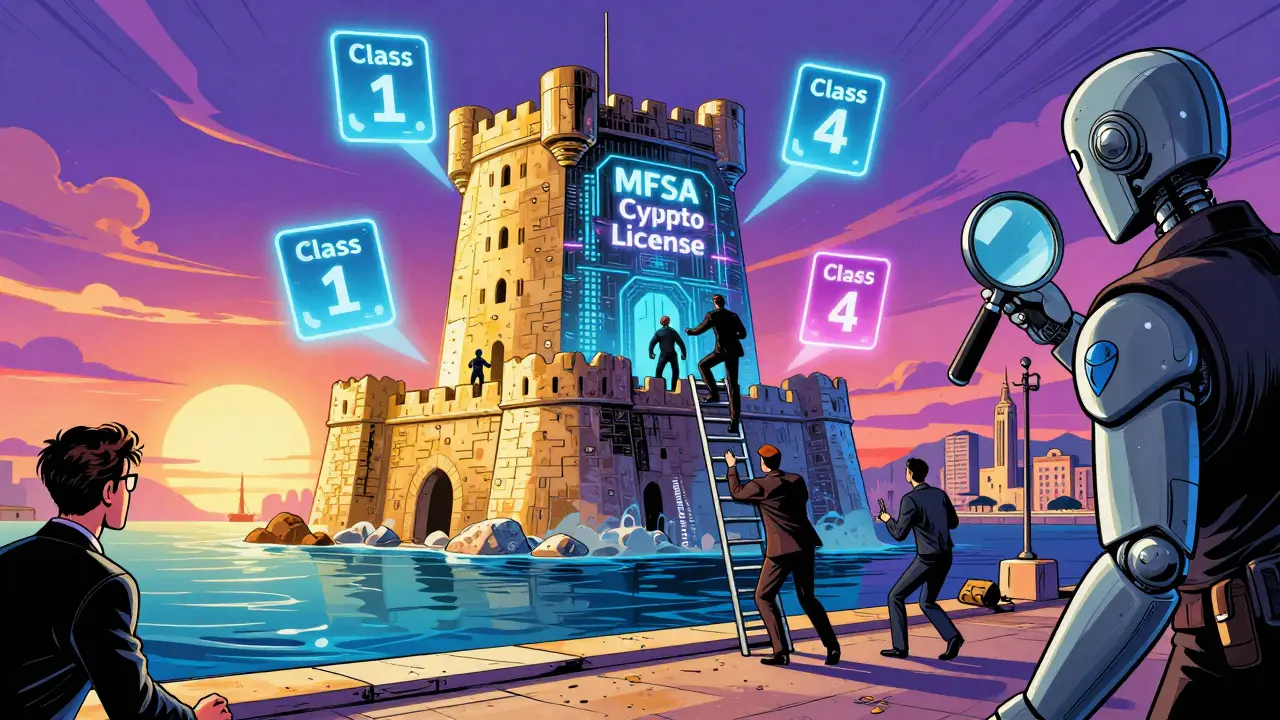
Crypto Business Licensing Requirements in Malta: What You Need to Know in 2025
Malta's crypto licensing system in 2025 requires businesses to meet strict capital, AML, and local presence rules. Learn the four license classes, hidden costs, approval timeline, and why it's still a top EU choice despite MiCA integration.
December 8 2025