FOFAR crypto: What It Is, Why It’s Missing, and What to Watch Instead
There is no such thing as FOFAR crypto, a cryptocurrency that was never launched, has no team, no whitepaper, and no blockchain presence. Also known as FOFAR token, it’s a ghost name used by scammers to trick new investors into checking fake websites or joining useless Telegram groups. This isn’t an oversight—it’s a pattern. Every week, new fake tokens like FOFAR appear, often with names that sound like real projects. They borrow letters from legitimate coins, slap on a flashy logo, and wait for someone to click.
These scams thrive because people hear "airdrop" or "free crypto" and act before thinking. Look at the posts here: ZWZ, NEKO, SUKU NFT, PNDR—each was a fake or abandoned project that pulled in thousands of hopeful users. None delivered. The same thing happened with FOFAR. No exchange lists it. No wallet supports it. No blockchain explorer shows a single transaction. It’s a digital ghost. The only thing moving is the scammer’s wallet, funded by people who thought they were getting in early.
Real crypto projects don’t hide. They publish code. They name their team. They update their roadmap. If a token’s website looks like a template, has no social media activity beyond a few bot comments, or asks you to connect your wallet to claim something—it’s a trap. The crypto airdrop scams, fraudulent distributions designed to steal wallet access or trick users into paying gas fees are everywhere. And they’re getting smarter. Some even copy real project names like SakePerp or Legion Network, just to confuse you.
What you’re seeing in this collection isn’t random. It’s a pattern: abandoned crypto projects, tokens launched with hype but no follow-through, leaving zero trading volume and silent teams are the norm, not the exception. Projects like Liquid Collectibles (LICO) and [Fake] Test (TST) followed the same path as FOFAR—flashy launch, zero substance, total silence. The difference? At least those had names people could search. FOFAR doesn’t even have that.
If you’re looking for real opportunities, focus on what’s active. Check if a project has live GitHub commits. See if its token is listed on CoinGecko or CoinMarketCap with real volume. Look for audits from reputable firms like CertiK or PeckShield. If none of that exists, walk away. You don’t need to chase every shiny new name. The best crypto moves are the ones you don’t make.
Below, you’ll find real stories of what happened when people believed in fake tokens—and what actually works in 2025. No fluff. No promises. Just facts about what’s real, what’s gone, and what to watch for next.
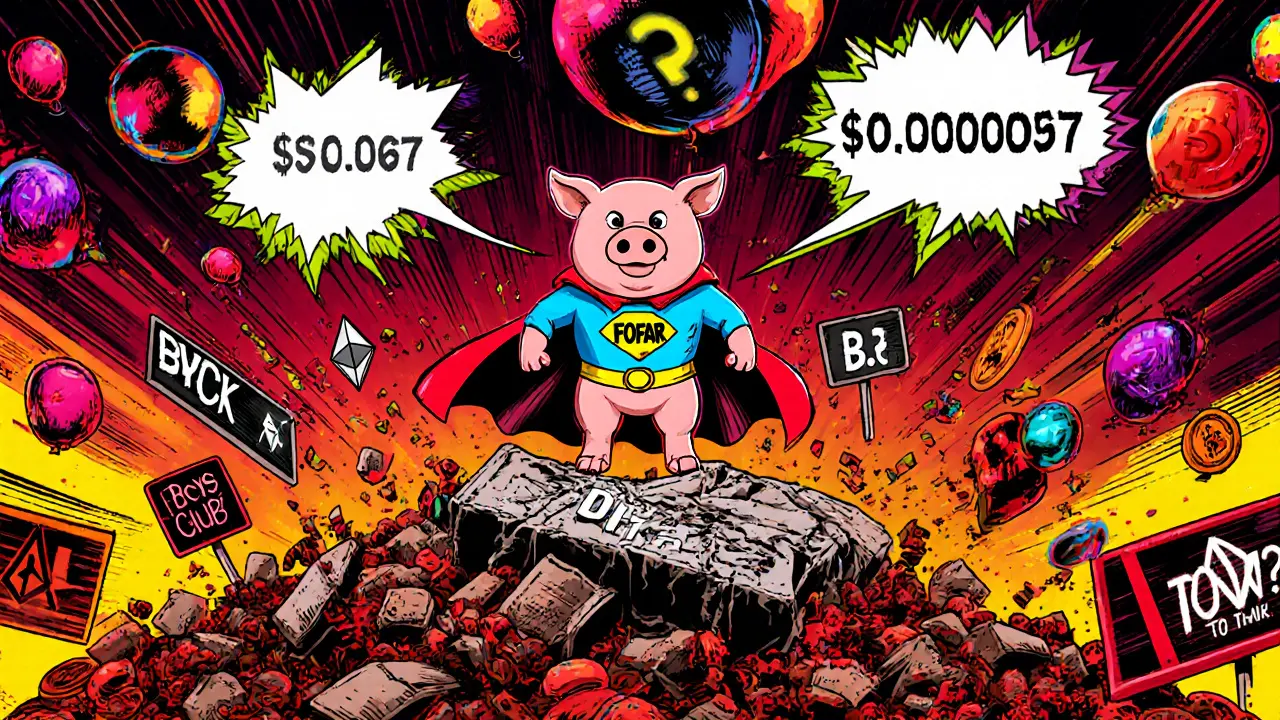
What is Fofar (FOFAR) Crypto Coin? The Truth Behind the Meme Token
Fofar (FOFAR) is a meme coin tied to the Pepe the Frog universe, but it lacks transparency, liquidity, and real utility. With conflicting blockchain data, zero team info, and extreme price inconsistencies, it's a high-risk gamble with little chance of long-term survival.
November 22 2025