Imagine sending a transaction only to find your funds frozen instantly. It sounds like a glitch, but in the world of digital assets, it’s a regulatory reality. As of March 2026, the landscape of cryptocurrency compliance has shifted dramatically. The U.S. government isn't just watching; they are actively freezing wallets and shutting down platforms that touch sanctioned networks. If you hold digital assets, run an exchange, or even just send money to a friend, understanding the OFAC sanctions list is no longer optional-it’s essential for keeping your money safe.
This isn't about vague rules anymore. We are talking about specific wallet addresses, smart contracts, and even AI trading bots being flagged. The Office of Foreign Assets Control has expanded its reach into the decentralized space, and the consequences for non-compliance are severe. You might think privacy coins or new DeFi protocols offer a shield, but the enforcement mechanisms have evolved to track those too. Let’s break down exactly what is on the list, how it affects you, and what you need to do to stay compliant in 2026.
Key Takeaways
- OFAC SDN List Growth: The list now includes over 1,200 specific cryptocurrency wallet addresses as of 2025, covering 17 different blockchain networks.
- Real-Time Enforcement: Exchanges must screen transactions against the list within 15 minutes of updates to avoid penalties.
- Expanded Scope: Sanctions now target DAOs, decentralized protocols, and even AI-powered trading bots used for money laundering.
- Asset Freezing: Stablecoins like USDT have been required to freeze hundreds of millions of dollars linked to sanctioned entities.
- Global Coordination: International agencies like Interpol and Europol are working directly with OFAC to raid crypto infrastructure hubs.
Understanding OFAC and the SDN List
The Office of Foreign Assets Control (OFAC) is a financial sanctions enforcement agency under the U.S. Department of the Treasury. Its main job is to block assets and restrict transactions with specific foreign countries, regimes, and individuals. For decades, this meant freezing bank accounts. Today, it means freezing digital wallets. The core tool they use is the Specially Designated Nationals (SDN) list. When an entity or person makes it onto this list, any property or interests in property subject to U.S. jurisdiction are blocked.
In the crypto context, this is where things get technical. Unlike a bank account, a crypto wallet doesn't have a name attached to it in the traditional sense. It has an address-a long string of characters. OFAC now publishes these specific addresses on the SDN list. If your funds interact with one of these addresses, even accidentally, you risk getting flagged. The list is maintained in XML format, specifically the sdn_advanced.xml file, which compliance systems ingest to filter transactions.
Why does this matter to you? Because U.S. jurisdiction extends beyond U.S. borders. If you use a U.S.-based exchange, or even a non-U.S. exchange that uses U.S. dollars or U.S. technology, you are subject to these rules. The goal is to prevent designated individuals from accessing the U.S. financial system. This includes stopping money laundering, terrorism financing, and illicit trade, such as the sale of oil by sanctioned regimes like Iran.
How Crypto Sanctions Work in 2026
The technical infrastructure of OFAC's cryptocurrency sanctions system underwent a major overhaul in 2025. The Crypto Compliance Guidance 2025 mandates real-time monitoring for all US-based exchanges. This means you can't just check the list once a week anymore. Updates happen constantly, and platforms must adapt instantly. The current sanctions framework covers 17 different cryptocurrency types. This includes major coins like Bitcoin (XBT) and Ethereum (ETH), as well as privacy-focused coins like Monero (XMR). Other covered networks include Litecoin, ZCash, Dash, Bitcoin Gold, Ethereum Classic, Bitcoin Satoshi Vision, Bitcoin Cash, Verge, and stablecoins like USD Coin and USD Tether.
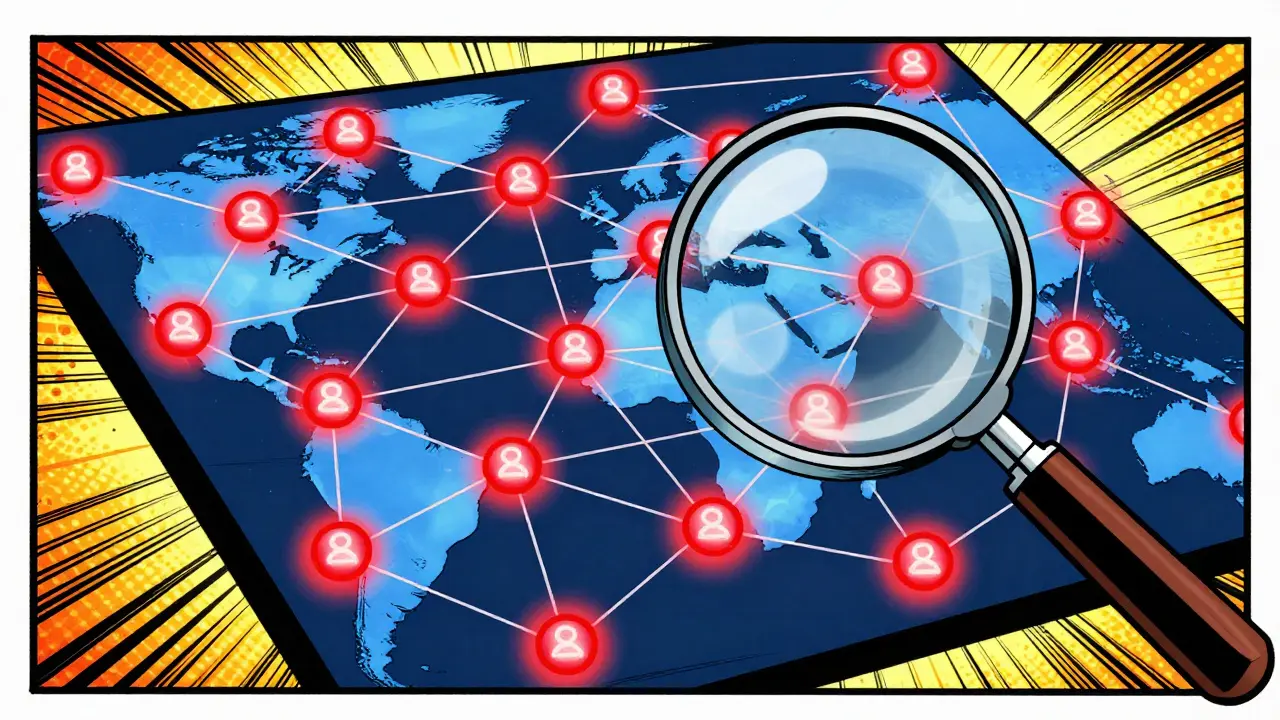
One of the most significant changes in early 2026 is the focus on Layer 2 networks and DeFi. Previously, sanctioned entities could move funds to scaling solutions to avoid detection. The OFAC Blacklist v2.0, launched in May 2025, closed this gap. It includes real-time alerts and expanded support for these networks. Additionally, in January 2025, OFAC expanded its criteria to include DAOs and decentralized protocols without formal governance structures. This means a smart contract itself can be sanctioned if it is deemed to be facilitating illicit activity.
The system assigns critical risk scores to sanctioned addresses. Compliance platforms like Scorechain update their monitoring systems within 15 minutes of OFAC releases. This speed is crucial. If a sanctioned address is identified, exchanges must block transactions immediately. If they don't, they face massive fines and potential loss of their banking licenses. The decentralized nature of crypto makes this harder than traditional banking, but the transparency of the blockchain actually helps law enforcement track the flow of funds.
Compliance for Businesses and Exchanges
Running a crypto business in 2026 requires sophisticated technical infrastructure. You cannot rely on manual checks. You need automated systems that integrate OFAC's XML data feeds into your transaction monitoring. The learning curve for this implementation typically ranges from 3 to 6 months. It requires investment in both technology and specialized compliance personnel. Organizations must maintain screening capabilities across multiple blockchain networks simultaneously.
Why multiple networks? Because sanctioned entities diversify. If they get blocked on Bitcoin, they might move to Tron or Arbitrum. Your system needs to catch them everywhere. The industry standard for rapid sanctions screening implementation is now the 15-minute update timeframe. If your system is slower than that, you are at risk.
Here is a comparison of what compliance looks like now versus the past:
| Feature | Pre-2025 Standard | 2026 Current Standard |
|---|---|---|
| Update Frequency | Daily or Weekly | Real-time (15 mins) |
| Coverage | Major Exchanges only | DeFi, DAOs, Layer 2 |
| Target Entities | Individuals & Companies | AI Bots, Smart Contracts |
| Data Format | TXT/CSV | XML/JSON with Risk Scores |
| International Sync | Minimal | High (Interpol/Europol) |
Support resources include OFAC's official guidance documents and industry working groups. However, the rapidly evolving nature of the cryptocurrency landscape requires continuous adaptation. Legal experts point to proposed regulations from May 2025 that would hold smart contract developers liable for enabling sanctions evasion. This is a potential game-changer for the DeFi ecosystem, though these regulations are still pending approval.
Real-World Case Studies
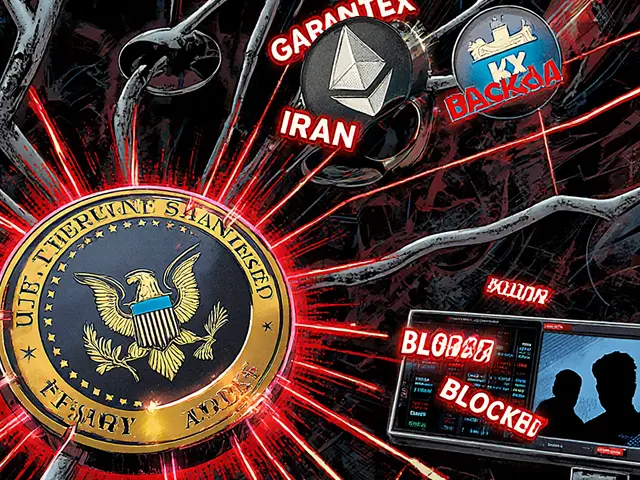
Theoretical rules are one thing; enforcement is another. Recent cases show exactly how this plays out. The Garantex case is the most prominent example. In March 2025, the U.S. Secret Service, along with German and Finnish law enforcement, seized over $26 million in cryptocurrency controlled by Garantex. The exchange had been sanctioned for facilitating money laundering. Even after the sanction, they tried to continue operations through a successor exchange called Grinex. This led to additional designations and the unsealing of indictments against executives Aleksandr Mira Serda and Aleksej Besciokov on March 7, 2025.
Another major case involved Iranian nationals Alireza Derakhshan and Arash Estaki Alivand. On September 16, 2025, they were designated for processing over $100 million in proceeds from Iranian oil sales using Ethereum and TRON wallets. Total inflows to their wallets exceeded $600 million. This shows how sanctioned networks operate, moving value across different chains to obscure the source.
Then there is the Lazarus Group, a nation-state actor. In Q1 2025, they stole $200 million via sanctioned DeFi protocols. This exemplifies how state-sponsored actors exploit decentralized platforms for illicit finance. The Department of State announced reward offers up to $5 million for information leading to the arrest of Garantex executives, demonstrating the high priority placed on this enforcement.
Stablecoins are also in the crosshairs. Market analysis shows that sanctioned entities increasingly rely on stablecoins like USDT for cross-border transfers. In March 2025, Tether was required to freeze $450 million in assets linked to sanctioned Iranian entities. This proves that even "private" transfers on public blockchains are visible and actionable.
Risks for Individual Users
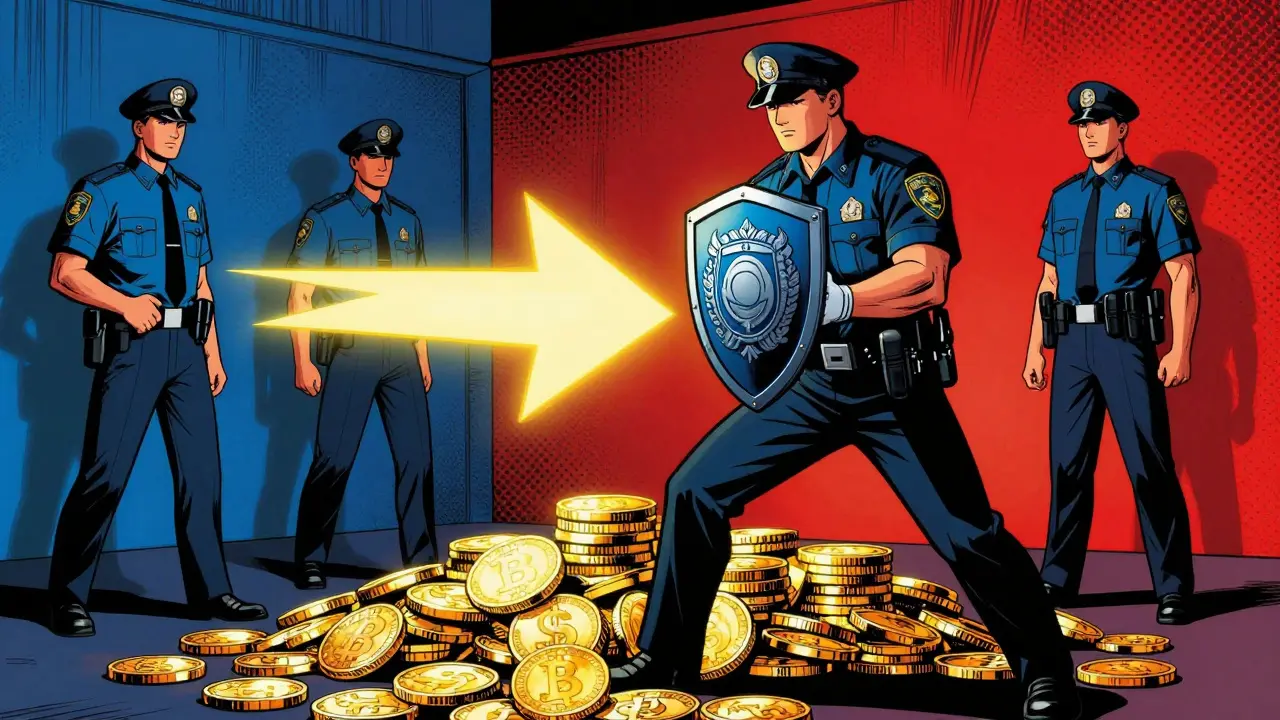
You might think you are safe because you aren't running an exchange, but you aren't. If you receive funds from a sanctioned address, your wallet could be flagged. This is known as "tainted funds." If you then try to move those funds to a regulated exchange, the exchange's screening system will block the transaction. In some cases, the exchange might freeze your entire account while they investigate.
Privacy coins like Monero are often seen as a way around this, but they are also on the sanctions radar. OFAC covers Monero explicitly. Using privacy coins to interact with sanctioned entities increases your risk profile significantly. Furthermore, the joint directive released by OFAC and the Financial Action Task Force (FATF) in April 2025 represents a significant step toward standardizing international cryptocurrency sanctions enforcement. This means European and Asian exchanges are also tightening their rules.
The February 2025 sanctioning of the first AI-powered autonomous trading bot used by a sanctioned entity to launder $60 million represents a new frontier. If you use automated trading bots, ensure they are not interacting with sanctioned protocols. The technical implementation involves integrating OFAC's XML data feeds into transaction monitoring systems, requiring expertise in blockchain analysis and regulatory compliance.
How to Stay Compliant
For individuals, the best defense is awareness. Before sending funds, check the recipient's address against the SDN list. You can do this manually using the OFAC website, or use third-party screening tools. If you are a developer building a wallet or exchange, you must implement automated screening. Do not rely on outdated lists.
Here is a checklist for basic compliance:
- Verify Recipients: Always check wallet addresses against the SDN list before sending large amounts.
- Use Reputable Exchanges: Stick to platforms that have robust compliance systems in place.
- Avoid High-Risk Coins: Be cautious with privacy coins or tokens associated with sanctioned jurisdictions.
- Monitor News: Keep up with OFAC announcements, especially regarding new wallet addresses.
- Document Transactions: Keep records of where your funds come from to prove they are not tainted.
Security experts highlight that the seizure of over $26 million in cryptocurrency controlled by Garantex demonstrates the increasing effectiveness of international cooperation. If you are caught on the wrong side of these sanctions, you could lose your assets and face legal trouble. The long-term viability of the current sanctions framework depends on OFAC's ability to adapt to rapidly evolving cryptocurrency technology while maintaining international cooperation and industry compliance.
Frequently Asked Questions
What happens if I accidentally send crypto to a sanctioned address?
If you send funds to a sanctioned address, those funds are effectively frozen. You cannot move them to a regulated exchange, and attempting to do so may flag your own account for investigation. In severe cases, you could face legal penalties for violating sanctions laws.
Does OFAC monitor all cryptocurrencies?
As of 2026, OFAC covers 17 major cryptocurrency types, including Bitcoin, Ethereum, and various stablecoins. They also monitor privacy coins like Monero and have expanded coverage to Layer 2 networks and DeFi protocols.
As of 2026, OFAC covers 17 major cryptocurrency types, including Bitcoin, Ethereum, and various stablecoins. They also monitor privacy coins like Monero and have expanded coverage to Layer 2 networks and DeFi protocols.
Can a smart contract be sanctioned?
Yes. Since January 2025, OFAC has expanded its criteria to include decentralized protocols and DAOs without formal governance structures. A smart contract can be designated if it facilitates illicit activity.
How often does the OFAC list update?
The list updates frequently, sometimes multiple times a day. Compliance platforms are expected to screen against new data within 15 minutes of an update to ensure they remain compliant with regulations.
What is the penalty for violating OFAC sanctions?
Penalties can include civil fines, criminal charges, and the freezing of assets. For businesses, it can mean losing banking licenses and facing massive financial penalties. Individuals can face imprisonment and fines.
Next Steps and Troubleshooting
If you suspect your wallet has been flagged, do not panic, but act quickly. First, stop all transactions. Contact the support team of the exchange or platform you are using. Be honest about your transaction history. If you are a business, audit your screening systems immediately. Ensure you are using the latest XML feeds from OFAC.
For developers, the key is integration. Use APIs that provide real-time access to the SDN list. Do not rely on static downloads. If you are an individual, consider using a hardware wallet for storage, but remember that moving funds to an exchange will still trigger screening. The collaboration between OFAC and international law enforcement agencies, including Interpol and Europol, led to six international raids on sanctioned crypto infrastructure hubs in 2024. This trend is continuing into 2026.
Stay informed. The regulatory landscape is moving fast. What is legal today might be sanctioned tomorrow. By understanding the OFAC sanctions list and how it applies to crypto addresses, you protect yourself and your assets from unnecessary risk. The future of crypto compliance is automated, real-time, and global. Adapt or get left behind.
kavya barikar
March 26, 2026 AT 19:15This information is crucial for everyone holding assets in the current market.
Zion Banks
March 27, 2026 AT 09:09They want to track every penny you own and control the flow of value completely.
aravindsai pandla
March 29, 2026 AT 07:34It is important to understand the rules before you engage with any platform.
Florence Pardo
March 29, 2026 AT 18:05I read through this carefully and it really makes me think about the future of money. We need to be careful with how we store our digital assets. Regulations are strict now and they are getting stricter every day. Many people ignore this important warning until it is too late. They lose their funds without understanding why it happened. I saw a case recently where a friend lost everything. It was very sad to watch them struggle with the loss. The money was gone and there was no way to get it back. Exchanges block everything instantly if they detect a flagged address. It happens so fast that you do not have time to react. We must stay alert and check our connections regularly. Please check your wallets before you send any large amounts. Safety is key in this new environment of crypto compliance. I worry about the small investors who do not have resources. They are the ones who get hurt the most in these situations.
Kevin Da silva
March 30, 2026 AT 10:46Got it.
Andy Green
March 31, 2026 AT 17:25Most people here are too scared to move their own money without permission.
Annette Gilbert
April 2, 2026 AT 07:32Oh great, another way to lose my money without any warning.
vu phung
April 4, 2026 AT 04:15The XML feed integration is key for any serious compliance system today.
Joshua T Berglan
April 5, 2026 AT 23:22Stay safe everyone :) We can handle this together.
Andrew Midwood
April 6, 2026 AT 06:56This is reallly important stuff for us to know.
Kayla Thompson
April 7, 2026 AT 20:49Only the smart ones survive this new regulatory environment.
Brijendra Kumar
April 9, 2026 AT 18:12You should have known better than to ignore the warnings.
Ananya Sharma
April 9, 2026 AT 19:29Just keep an eye on the list and you will be fine.
Alicia Speas
April 9, 2026 AT 22:06Compliance is necessary for the stability of the entire ecosystem.
Kevion Daley
April 11, 2026 AT 19:09Haha good luck trying to keep up with all of this.
Tammy Stevens
April 12, 2026 AT 07:10We need to adapt quickly to these changing standards.
Jeannie LaCroix
April 12, 2026 AT 23:36This changes everything we thought we knew about privacy.
Abhishek Thakur
April 13, 2026 AT 15:25The API integration is standard now for all major platforms.
Jackie Crusenberry
April 15, 2026 AT 09:33Too much reading for what I need to know right now.
Anna Lee
April 16, 2026 AT 12:35Hope everyone stays safe with this info and nothing bad happens.
Alice Clancy
April 17, 2026 AT 06:50Protect our money and keep the bad guys out of the system.
Neil MacLeod
April 18, 2026 AT 20:25This topic is quite dry for most people who just want to trade.
namrata singh
April 20, 2026 AT 05:46It is scary to think about how much power they have now.
DarShawn Owens
April 21, 2026 AT 12:59Sharing this helps everyone stay safe from potential issues.