
Crypto Project Health Checker
Evaluate Project Health
Enter key metrics to determine if a cryptocurrency project is likely active or abandoned. This tool is based on the failure patterns of projects like Liquid Collectibles (LICO).
Look for volume that indicates real activity. LICO had $0 volume.
Is the website functional? LICO had a static landing page.
When did the team last post or update? LICO's team went silent in 2022.
Is the price stable or volatile? LICO's price dropped 99.55% from all-time high.
How long has the project been active? LICO has been abandoned for over 2 years.
Project Health Assessment
When you hear "Liquid Collectibles" or "LICO", you might think it’s another promising crypto project trying to solve the big problem of NFTs being hard to sell. After all, the idea sounds smart: turn rare digital art into tradeable tokens so anyone can own a piece without buying the whole NFT. But here’s the reality - Liquid Collectibles (LICO) is not a working project. It’s a ghost. Launched on October 27, 2021, on the Binance Smart Chain, it promised to make NFTs liquid. Instead, it vanished.
What LICO was supposed to do
Liquid Collectibles aimed to be the first platform on Binance Smart Chain that let NFT owners turn their collectibles into fungible tokens - meaning, instead of owning one unique digital artwork, you’d own a fraction of it, represented by LICO tokens. The goal? Let regular people invest in high-value NFTs like CryptoPunks or Bored Apes without needing $100,000. The project claimed this would create better price discovery, instant trading, and DeFi features like staking and yield farming. It sounded like a solution to a real problem. NFTs are notoriously illiquid. If you own a rare NFT, you’re stuck waiting for someone to buy it at your price - often for months. Fractionalizing ownership made sense. Projects like Fractional.art and Unicly did it successfully. But Liquid Collectibles never delivered.The numbers don’t lie - LICO is dead
Look at the data, and there’s no room for doubt. As of November 2023:- Total supply: 13,003,178 LICO tokens
- Circulating supply: 0 (yes, zero)
- Market cap: $0 on CoinMarketCap, $1,400 on CoinLore (likely inflated or outdated)
- 24-hour trading volume: $0 on most exchanges, $18 on one - down 60% in a day
- Price: Around $0.00003, down 99.55% from its all-time high of $0.0237
- Last active: CoinLore lists August 24, 2025 - a date that hasn’t happened yet. That’s not a typo. It’s a sign the data is broken or fake.
No website, no team, no support
Visit liquidcollectibles.io today. You’ll see a static landing page. No login. No wallet connect. No staking portal. No NFT marketplace. Just text and a logo. No technical docs. No API. No developer resources. Nothing you’d expect from a blockchain project that claims to be building infrastructure. The team? Anonymous. No founders named. No LinkedIn profiles. No press releases. No interviews. Just a whitepaper that vanished along with the platform. Support channels? Dead. The official Telegram group, once with 2,400 members, hasn’t had a message since May 2022. The last admin post said: "Technical difficulties, stay tuned." They never did. The Twitter account @LiquidCollect last tweeted on November 24, 2021 - promising staking features that never arrived.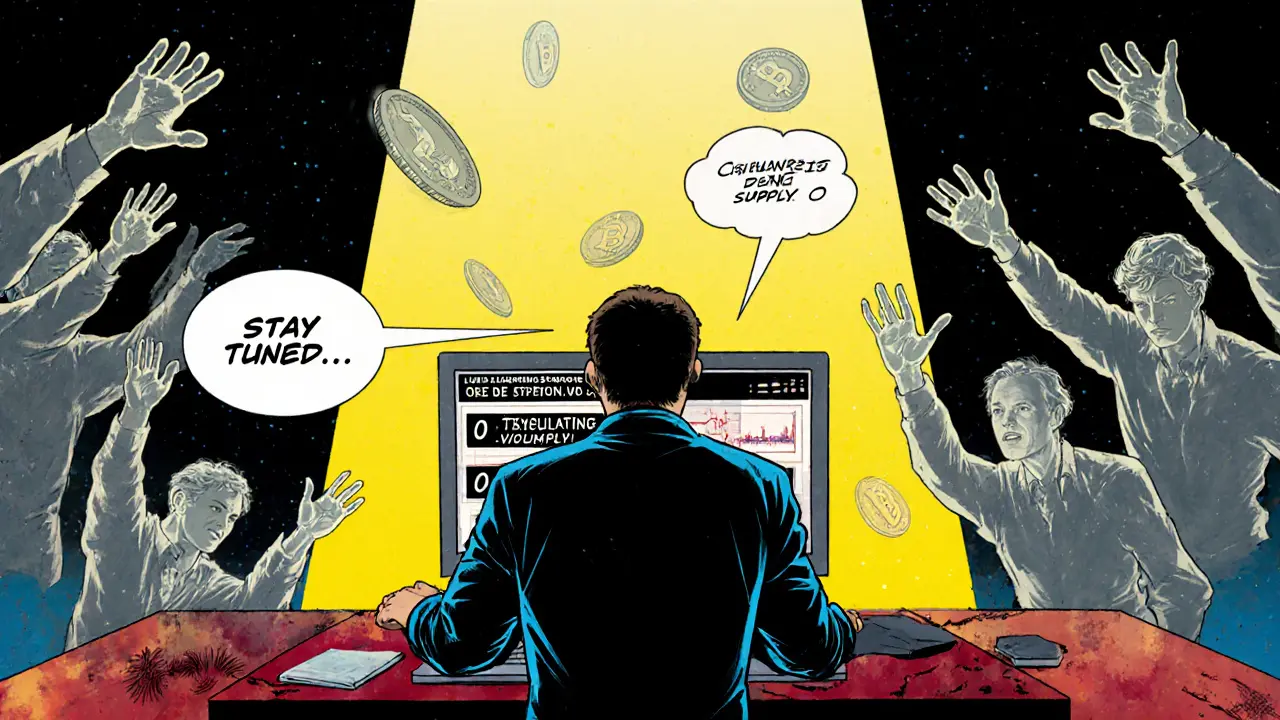
Users tried. They got burned.
People did buy LICO. Some even staked it, hoping to earn rewards. Here’s what happened:- A Trustpilot review from March 2022: "Tried to stake LICO as promised but the platform interface never worked. Contacted support twice with no response."
- A Reddit post from January 2022: "Liquid Collectibles website is down again. Anyone actually gotten this to work? Their Twitter hasn't posted since November."
Why did it fail when others succeeded?
Fractional.art raised millions. Unicly built real volume. Why did LICO collapse? First, it had no technical edge. It didn’t invent anything new. It copied ideas from platforms already working. But unlike them, it didn’t build a working product. Second, timing. LICO launched at the peak of the 2021 NFT mania. Everyone was buying NFTs. Everyone was chasing the next big thing. But when the market crashed in 2022, projects without real users or revenue disappeared. LICO had neither. Third, regulatory fear. The SEC started cracking down on fractionalized NFTs as potential securities in early 2022. Projects that couldn’t prove they weren’t selling unregistered securities got nervous. LICO’s team likely vanished before regulators came knocking.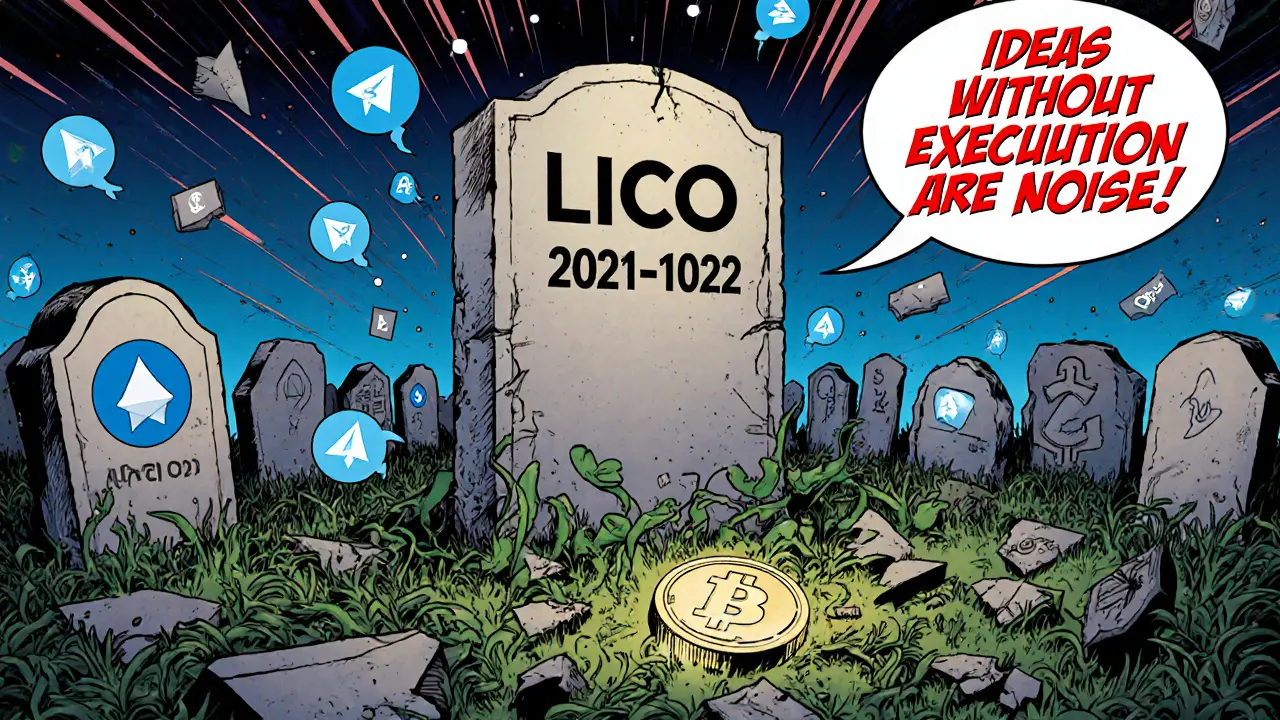
Is there any chance it comes back?
No. Crypto projects that go silent for more than 12 months almost never return - especially ones with zero trading volume, zero community, and zero code updates. LICO has been dead for over two years. The website is a tombstone. The tokens are worthless. The team is gone. Even if someone tried to revive it now, no one would trust it. No developer would touch it. No exchange would list it. No investor would touch it with a 10-foot pole.What you should do if you own LICO
If you bought LICO - whether in 2021 or later - you’re holding a digital artifact, not an investment. You can’t sell it. You can’t stake it. You can’t use it. The only thing left is to accept the loss and move on. Don’t try to recover your funds. Don’t chase "airdrops" or "recovery programs" - those are scams targeting people who still believe this project is alive. The only action you can take is to delete it from your wallet. Stop checking the price. Stop refreshing the website. It’s over.The bigger lesson
Liquid Collectibles isn’t just a failed token. It’s a warning sign. The crypto space is full of projects that sound brilliant on paper but collapse under the weight of empty promises. The ones that survive aren’t the ones with the flashiest websites or the loudest Twitter accounts. They’re the ones that ship real products, earn real users, and keep building even when the hype fades. LICO didn’t fail because the idea was bad. It failed because no one built it. And in crypto, an idea without execution is just noise. If you’re looking for real NFT liquidity solutions today, look at Unicly, Fractional.art, or Niftex - platforms that actually work. Avoid anything that sounds too good to be true, especially if you can’t find a single person who’s used it successfully. LICO is gone. Don’t let it be your next lesson in how not to invest.Is Liquid Collectibles (LICO) still active?
No, Liquid Collectibles is not active. The official website is a static landing page with no functionality. The team has been silent since 2022. Trading volume is zero, and the platform has been non-functional for over two years. CoinLore lists it as "Inactive / No price feed," despite a future "Last Active" date - a clear sign of data corruption or abandonment.
Can I still trade or stake LICO tokens?
No. There is no functioning platform to stake or trade LICO. Even if you hold the tokens in your wallet, you cannot interact with any official system. Exchanges like Bitget and CoinMarketCap show $0 trading volume. The staking feature was promised in 2021 but never launched. Any website claiming you can stake LICO today is a scam.
What happened to the LICO team?
The team behind Liquid Collectibles remains anonymous and has completely disappeared. No founders, developers, or company details have ever been disclosed. Social media channels (Twitter, Telegram) went silent in late 2021 and early 2022. There have been no updates, no responses to questions, and no public statements since then. This is a classic case of a rug pull or project abandonment.
Why does LICO still show up on crypto websites?
Some crypto data sites like CoinLore and Kriptomat still list LICO because they automatically pull token data from blockchain explorers. Just because a token exists on-chain doesn’t mean it’s active. Many abandoned tokens remain visible on these platforms with outdated or inaccurate prices. Always check trading volume, community activity, and official communications - not just the price.
Is LICO a scam?
While there’s no legal proof of fraud, LICO fits the profile of a classic exit scam. It raised awareness through hype, promised clear benefits, and then vanished without delivering anything. With zero trading volume, no team, no updates, and no user success stories, it’s safe to say the project was never intended to succeed. Investors who bought in were likely targeting short-term speculation, not long-term value - a common trap in the NFT boom of 2021.
Are there any working alternatives to LICO?
Yes. Platforms like Unicly (UNIC) and Fractional.art have successfully fractionalized NFTs with real trading volume and active communities. These projects have transparent teams, documented code, and functional platforms. Unlike LICO, they’ve survived the crypto winter and continue to operate. If you want to invest in NFT liquidity, focus on these established platforms instead of abandoned tokens.

Benjamin Jackson
November 10, 2025 AT 19:31It’s wild how many projects just vanish into thin air after the hype dies. I remember seeing LICO pop up in my feed back in 2021 - looked slick, sounded smart - but now? Just a digital ghost. Kinda makes you wonder how many others are out there with the same fate. At least this post gives closure. Sometimes the most valuable thing you can do is admit defeat and walk away.
Cydney Proctor
November 11, 2025 AT 03:24Oh please. Another ‘I told you so’ post about a dead token. Like anyone cared enough to track this thing beyond a quick flip. If you bought LICO, you weren’t investing - you were gambling with your eyes closed. And now you’re mad because the dice didn’t roll your way? Grow up.
Kathy Ruff
November 12, 2025 AT 05:14Thank you for writing this. I’ve been seeing people still asking about LICO in Discord groups, thinking it’s ‘coming back.’ It’s heartbreaking. This is exactly the kind of post that saves someone from getting scammed again. The real tragedy isn’t the lost money - it’s the trust people lose in crypto because of projects like this.
Ryan Inouye
November 12, 2025 AT 16:56Let’s be real - this was a Chinese rug pull disguised as a Canadian startup. The ‘team’ had zero verifiable presence, the domain was registered under a privacy shield, and the whitepaper? Written by an AI. They knew exactly what they were doing. This wasn’t incompetence. It was criminal.
John Doe
November 12, 2025 AT 19:19THEY’RE STILL WATCHING YOU. 🕵️♂️💀
Don’t you see? LICO didn’t just vanish - it was *erased*. The blockchain doesn’t lie. The zero supply? That’s not a glitch - that’s a wipe. Someone with access to the contract burned every single token… but why? To cover their tracks? Or to trigger a mass panic so they could buy back at pennies? This is deeper than you think. I’ve seen this script before. They’re coming for the next one. Stay alert.
Colin Byrne
November 13, 2025 AT 21:33One must observe the structural deficiencies inherent in the LICO protocol’s design. The tokenomics were fundamentally unsound - a non-circulating supply coupled with zero liquidity provision indicates a premeditated failure to establish market equilibrium. Moreover, the absence of a decentralized governance mechanism, coupled with an anonymous team, renders the entire initiative a quintessential example of centralized risk exposure. One might argue that the failure of LICO was not merely operational, but epistemological - a collapse of epistemic trust in the very notion of fractionalized NFTs as a viable asset class. The fact that CoinLore still lists it with a future timestamp underscores the alarming lack of data integrity across crypto analytics platforms - a systemic failure that undermines the credibility of the entire ecosystem.
Rob Ashton
November 15, 2025 AT 02:29For anyone who still holds LICO - I know it hurts. But please, don’t chase recovery scams. They prey on hope. You didn’t lose because you were dumb - you lost because you trusted something that never had a real foundation. That’s not your fault. The real win is learning to look for transparency: team profiles, open-source code, active community moderation. Those are the red flags you’ll start noticing next time. You’re not behind. You’re just getting started.
Cierra Ivery
November 16, 2025 AT 03:54Wait - so you’re telling me… that… the website… didn’t… WORK?!!??!!!
And the… Twitter… went… silent??
And… the… Telegram…?!!
Oh my GOD. I thought I was the only one who noticed. I bought LICO because the logo looked cool. I didn’t even read the whitepaper. I just liked the animation. Now I feel like a fool. But… wait - did anyone else think the logo looked like a potato with wings??
…I’m still holding it. I don’t know why.
Veeramani maran
November 17, 2025 AT 14:18bro i also bought licos in 2021 😭
then i forgot about it... now i check and its like... dead??
my friend say its scam but i dont know...
now i learn... next time i check team on linkedin first
if no linkedin = no trust
also no telegram = no future
thank you for post man 🙏
Angie Martin-Schwarze
November 18, 2025 AT 22:46i still have 12,000 licos in my wallet and i swear to god i check the price every day like its a habit... like if i refresh enough times it'll go back up... i know its dumb but i just... can't let go. i keep thinking 'maybe today'... and then i cry a little. i hate myself for it.
Sunidhi Arakere
November 20, 2025 AT 05:40Interesting. I never heard of this before. But now I see how dangerous it is to follow trends without research. In my country, we say: 'Don't chase the shadow of a ghost.' This project was a shadow. Thank you for the clear explanation.
Kevin Mann
November 21, 2025 AT 09:49THIS IS THE WORST THING I’VE EVER SEEN. 😭💔
My uncle bought LICO with his retirement money. He thought it was the next Bitcoin. Now he won’t talk to me. He’s in denial. He still says ‘they’ll come back.’ I showed him this post. He cried. I cried. His dog cried. I think the dog knew more than we did. LICO didn’t just kill his money - it killed his faith in the future. This isn’t crypto. This is emotional terrorism.
Janna Preston
November 21, 2025 AT 16:56Why does CoinLore even list this? It’s like having a Wikipedia page for a book that was never written. Is anyone at those data sites actually checking if projects are alive? Or are they just scraping blockchain data and calling it ‘market intelligence’? That’s not insight - that’s digital noise.
Meagan Wristen
November 23, 2025 AT 05:17Thank you for writing this with so much care. I’ve been trying to explain to my sister why LICO is dead, and I kept getting stuck on how to say it without sounding harsh. You didn’t just list facts - you gave people permission to grieve the loss of their hope. That matters more than the numbers.
Emily Unter King
November 24, 2025 AT 08:08Structural analysis: The fractionalization mechanism, while conceptually sound, was never implemented due to the absence of a functional smart contract audit, lack of liquidity pools, and non-existent oracle integration. The token’s non-circulating supply indicates a pre-minted, non-distributable supply - a red flag for tokenomics designed to inflate perceived value without real utility. The project’s collapse aligns with the broader pattern of 2021 NFT projects that relied on speculative hype rather than technical execution. The absence of a dev team further confirms the project was a front for capital extraction.
Robin Hilton
November 25, 2025 AT 12:01So what? It’s crypto. People lose money. That’s the game. You didn’t like the rules? Then don’t play. Don’t turn a failed gamble into a moral lecture. LICO didn’t steal anything - people gave their money to a team that never showed up. That’s not a crime. That’s a bad bet. Get over it.
Alexis Rivera
November 27, 2025 AT 11:41Every culture has its cautionary tales. In the U.S., we have the tulip mania. In Japan, the asset bubble. In crypto, we have LICO. It’s not about the token - it’s about the human tendency to confuse marketing with innovation. The real lesson isn’t that LICO failed. It’s that we keep falling for the same story: ‘This time, it’s different.’ It’s never different. Until we learn to value substance over spectacle, we’ll keep burying our hopes in dead code.
Colin Byrne
November 29, 2025 AT 08:35It is worth noting that the reference to a future date (August 24, 2025) as the last active timestamp on CoinLore is not merely an error - it is a symbolic manifestation of collective delusion. The system, in its algorithmic inertia, refuses to acknowledge finality. It clings to the illusion of potentiality. This mirrors the psychological state of the holders - they too refuse to accept the death of the project, projecting forward dates of resurrection into an empty void. The data does not lie. The data is mourning with them.