
The Core Logic of DePIN
At its heart, DePIN is about removing the middleman from the physical world. Traditional infrastructure is expensive to build because a single company has to buy all the equipment and hire all the staff. DePIN crowdsources this capital. Instead of one company building a tower, a thousand people buy small hotspots and earn tokens for keeping the network alive. This creates a massive advantage: cost. According to analysis from a16z Crypto, these decentralized networks can deploy infrastructure at 30-50% lower costs than traditional providers. Why? Because the community provides the capital and the labor in exchange for potential token upside. You aren't just investing in a coin; you're investing in a physical utility that provides a real service, like 5G connectivity or GPU rendering.Understanding the Two Main Investment Paths
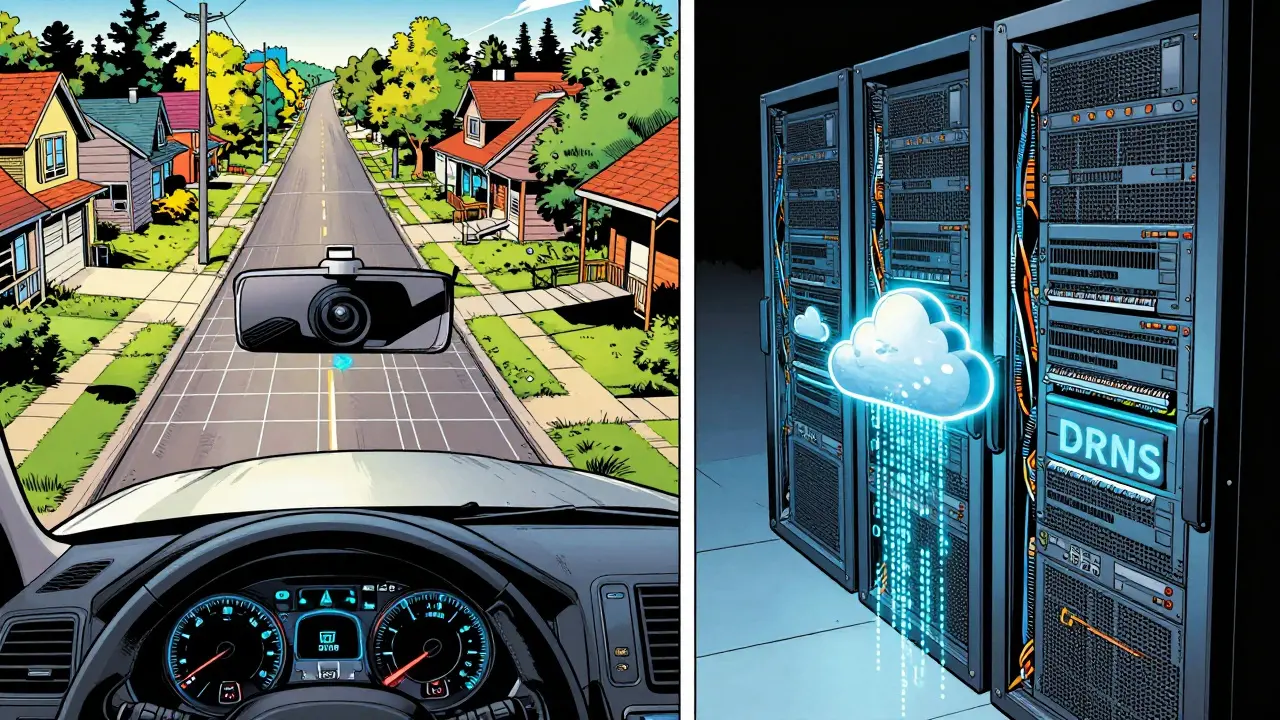
Not all DePIN projects are built the same. Depending on your risk tolerance and how much gear you want to buy, you'll likely land in one of two buckets: Physical Resource Networks (PRNs) or Digital Resource Networks (DRNs). Physical Resource Networks (PRNs) are location-dependent. Think of them as "real-world" grids. If you're using Helium to provide wireless coverage or Hivemapper to map streets with a dashcam, you're in a PRN. These require you to buy physical hardware-often ranging from $100 to $1,000-which creates a higher barrier to entry but often leads to stronger network effects. If you live in a rural area that big telcos ignore, a PRN might be your best bet for high rewards. Digital Resource Networks (DRNs) are location-agnostic. They deal with computing power, storage, and bandwidth. For instance, Filecoin lets you rent out extra hard drive space, while the Render Network allows people to share their GPU power for 3D rendering. These have lower entry costs because you can often use hardware you already own, but the competition is global and fierce.| Feature | Physical Resource Networks (PRN) | Digital Resource Networks (DRN) |
|---|---|---|
| Examples | Helium, Hivemapper | Filecoin, Render Network |
| Entry Barrier | High (Requires specific hardware) | Low to Moderate (Existing PCs/Servers) |
| Primary Value | Location-based coverage/data | Computational power/Storage |
| Scalability | Tied to physical geography | Global and instant |
How to Spot a Winner: The DePIN Checklist
Investing in DePIN is riskier than buying Bitcoin because you're dealing with physical hardware and regulatory red tape. To avoid "junk" projects, look for three specific markers identified by analysts at the Komodo Platform:- Real Utility: Does the network actually do something people pay for? Avoid projects that only reward users for "existing." Look for API calls and actual service transactions. For example, Hivemapper's data is now used by companies like Uber and Ford-that's real utility.
- Sustainable Tokenomics: Many early projects failed because they printed too many tokens, crashing the price. Look for projects with low annual inflation (ideally under 5% after the initial launch phase) and a clear way for tokens to be "burned" or removed from circulation as the network grows.
- Verifiable Proof of Work: How does the network know you're actually providing the service? This is the "verification problem." The best projects have innovative ways to prove a hotspot is online or a GPU is actually rendering a frame without needing a centralized authority to check.
The Risks You Can't Ignore
It's not all easy money. If you dive into this, you need to be aware of the "cold start problem." A wireless network is useless if only two people have hotspots. It needs a critical mass of users before it becomes valuable, which means early investors often carry the heaviest risk. Then there's the hardware decay. Unlike a digital token, a Helium miner or a dashcam can break, overheat, or become obsolete. Some users on Reddit have reported that as networks scale, the rewards per single node drop. In Helium's case, some daily earnings fell from $1.50 to $0.35 as more people joined. You have to calculate your "break-even" point-including electricity costs-before buying a device. Finally, keep an eye on the government. Telecom and energy sectors are heavily regulated. A change in FCC spectrum rules in the US can instantly slash your earnings by 20% or make your hardware illegal. Always check if a project has a legal strategy for the regions where it operates.
Practical Ways to Get Started
Depending on your technical skill and budget, there are three main ways to enter the DePIN space:- The Speculator (Low Effort): Buy the tokens on a major exchange like Binance or Coinbase. You don't buy hardware; you just bet on the network's growth. This is the fastest way to start but doesn't give you the "passive income" of running a node.
- The Provider (Medium Effort): Buy a pre-configured node (like a Helium hotspot) and plug it in. This requires some setup and a small investment in hardware, but it allows you to earn tokens directly from the protocol.
- The Power User (High Effort): Provide digital resources. If you have a high-end gaming PC or a server rack, you can join a DRN like Render or Filecoin. This requires more technical knowledge about software configuration and power management but can offer higher returns if you have the right gear.
The Road to 2030: What's Next?
We are currently in the "infrastructure build-out" phase. Experts like Chris Dixon from a16z believe DePIN could eventually capture 5-10% of global infrastructure value, potentially reaching a trillion-dollar market. We're already seeing a move toward specialization. Instead of general "crypto projects," we're seeing focused networks for 5G, AI compute, and mapping. One big trend to watch is the migration to faster blockchains. Helium moving to Solana was a game-changer because it slashed transaction costs by 80%, making the network much more efficient. As more DePIN projects move away from slow, expensive chains, the speed of deployment will only increase.Is DePIN more profitable than DeFi?
It's a different kind of risk. DeFi is purely financial and often more volatile. DePIN provides tangible real-world utility. While DeFi growth is measured by Total Value Locked (TVL), DePIN is measured by physical metrics like hotspots, terabytes of storage, or miles mapped. For those who prefer "hard assets," DePIN is often more attractive.
Do I need to be a coder to invest in DePIN?
Not necessarily. If you're just buying tokens, it's as easy as any other crypto investment. If you're running a node, most projects now sell "plug-and-play" hardware. However, DRN projects (like Filecoin) often require a steeper learning curve for software setup.
What happens if the token price crashes?
This is a major risk for hardware providers. If you spent $500 on a miner and the token price drops 90%, your "time to break even" extends significantly. This is why diversifying between PRNs and DRNs, and focusing on projects with real enterprise customers, is crucial.
Are there tax implications for earning rewards?
Yes. In many jurisdictions, including 47 U.S. states, rewards earned from providing infrastructure are treated as taxable income at the time they are received. Always consult a tax professional who understands crypto-assets.
Which is better: PRN or DRN?
It depends on your assets. If you have a strategic physical location (like a house in a growing neighborhood), a PRN like Helium could be great. If you have a powerful computer and a fast internet connection, a DRN like Render or Filecoin is a better fit.

Suvoranjan Mukherjee
April 4, 2026 AT 10:40This is a great breakdown of the DePIN stack! For anyone looking at DRNs, keep in mind that the latency overhead and the specific SLAs (Service Level Agreements) of your hardware can drastically affect your epoch rewards. If you're running high-TFLOPS GPUs, the efficiency ratio is where the real alpha is. Let's get these nodes spinning and decentralize the cloud! 🚀
vijendra pal
April 6, 2026 AT 02:30Exactlyyy!! DePIN is basically just crowdsourcing the real world lol 🌍’ it’s way better than just speculating on meme coins that do nothing!! I already got a couple miners and the setup was easy as pie 🥧💥
Susan Wright
April 6, 2026 AT 16:48Just a heads up for people looking at the hardware side-always check the power draw on your local circuit before plugging in a bunch of nodes. Some of these things can trip a breaker if you aren't careful, especially with high-end GPU rigs for Render. Also, look for community forums to see which firmware versions are actually stable before you update.
david head
April 8, 2026 AT 13:33totally agree with the breakdown 🚀 looks like a solid way to make some passive income if u got the gear 😎
Alexandra Lance
April 8, 2026 AT 22:41Oh sure, let's all just trust a few "innovative ways" to prove a node is online 🙄. It's so obvious that the big players will just spoof these proofs and suck up all the tokens while we're playing with our little home hotspots. Typical centralization masquerading as decentralization 🤡💅
Lauren Gilbert
April 9, 2026 AT 04:57It is quite fascinating when you step back and realize that we are essentially attempting to rewrite the social contract of how physical utility is distributed across a landscape. The notion that a person in a remote village could contribute to a global mapping project and be compensated in a way that bypasses traditional corporate exploitation is a poetic shift in our economic paradigm, though I wonder if the inherent greed of tokenomics will eventually overshadow the altruistic goal of shared infrastructure.
Sharhonda Walker
April 10, 2026 AT 21:36I've had some issues with my Hivemapper cam and the support was a bit slow to respond at first. Just make sure u check the warranty and the local laws about dashcams in your state befor you buy it because some places are weird about recording public roads 🚗💨
Sonya Bowen
April 11, 2026 AT 20:45The verification problem is the true technical hurdle here. Without a trustless way to verify physical work, the system reverts to a centralized authority.
Joshua Aldrich
April 11, 2026 AT 22:19it's kind of like how early internet ISPs started in small pockets and then merged. the real magic is when the network effect hits a tipping point where it's actually cheaper for the end user than the legacy option. though yeah, the hardware decay is a real pain... i had a node fry last month because of a power surge.’
Robert Coskrey
April 13, 2026 AT 19:39I concur with the analysis provided regarding the risk of hardware obsolescence!!! It is imperative to calculate the ROI carefully!!!
Hugo Lopez
April 14, 2026 AT 14:02Really like the comparison table! It makes it super easy to see the difference between the two paths. 🌟
Suzanne Robitaille
April 16, 2026 AT 09:00Imagine the sheer audacity of the corporate giants watching their empires crumble as we reclaim the grid! It is a symphony of liberation! 🌌 Though we must remain mindful and not let the lure of tokens blind us to the spiritual value of connection.
Carol Prates
April 17, 2026 AT 20:45Honestly, the a16z stats are probably inflated. They always pump these sectors to get their LPs excited. I'll believe the trillion-dollar market cap when I see it, until then it's mostly just a fancy way to buy expensive plastic boxes that gather dust.
Carmelita Gonzales
April 19, 2026 AT 04:52really appreciate the warning about taxes. a lot of people forget that rewards are income
Taylor Meadows
April 19, 2026 AT 21:42Most of you are just chasing a trend. You don't even understand the underlying protocol. It's just a bubble with some hardware attached to it.
Susan Payne
April 20, 2026 AT 19:29The lack of focus on regulatory compliance in some of these projects is an absolute travesty. It is simply a matter of time before the FCC shuts down the non-compliant nodes in waves.
Siddharth Bhandari
April 21, 2026 AT 09:33For those in India, please note that the import duties on specific DePIN hardware can be quite high, which pushes the break-even point further back.
akash temgire
April 22, 2026 AT 18:47The technical verification of DRN is superior to PRN.
alex rodea
April 22, 2026 AT 23:32This is a great way to start! Just take it slow and learn as you go. You got this!