When you hear the word "airdrop," you might think of free money just for signing up. But in crypto, airdrops aren’t gifts-they’re strategic moves. PandaSwap’s PND airdrop was no exception. It promised free tokens to users who followed simple steps, but behind the scenes, things got messy. By the time the dust settled, the token’s value had vanished, and users were left wondering if they’d been misled.
What Was the PandaSwap (PND) Airdrop?
The PandaSwap airdrop, hosted on CoinMarketCap in early 2025, offered 666,666 PND tokens to be split among 2,000 winners. Each winner could get up to 333.33 PND tokens. At the time of the announcement, that sounded like $20,000 in free crypto. It was a straightforward campaign: complete a few tasks, and you’d be entered into the draw. The tasks weren’t hard. You had to:- Add PandaSwap to your CoinMarketCap watchlist
- Follow @pandaswap_okex on Twitter
- Join the PandaSwap Telegram chat
- Subscribe to the PandaSwap announcement channel
- Retweet PandaSwap’s pinned tweet
Why Did PandaSwap Choose These Tasks?
Crypto projects don’t just pick random actions. Each step serves a purpose. Adding PandaSwap to your watchlist means CoinMarketCap now counts it as a "tracked" asset-something that helps with future exchange listings. Following Twitter and Telegram boosts visibility. Retweets create organic reach. These aren’t charity moves-they’re growth hacks. The fact that PandaSwap didn’t ask for a wallet address until after winning was smart. It kept the barrier low. But it also meant anyone could sign up dozens of times. No KYC. No IP checks. Just social media accounts. That’s why so many people joined. And why so many ended up disappointed.The Token That Disappeared
Here’s where things went sideways. On CoinMarketCap, PandaSwap’s PND token showed up with a price of $0. Trading volume? $0. Total supply? 0. Circulating supply? Also 0. The page was labeled as a "preview," meaning CoinMarketCap hadn’t fully verified it. That’s a red flag. If a token can’t even get listed properly, what’s the point of holding it? Meanwhile, CoinGecko listed a different token: Panda Swap (PANDA). It had a tiny price of $0.001633 and a $828.99 daily volume. That’s not the same as PND. But most people didn’t know that. They saw "Panda" and assumed it was the same thing. The confusion didn’t stop there. In July 2025, MEXC Exchange announced a contract swap for PANDA tokens. They shut down deposits, halted trading, and forced a 4-to-1 conversion: four old tokens became one new one. If you held PANDA before July 28, 2025, at 06:00 UTC, your balance was automatically adjusted. If you didn’t? You lost your tokens. MEXC made it clear: they wouldn’t help if you deposited after the cutoff. This wasn’t a soft upgrade. It was a hard reset. And it wiped out anyone who didn’t pay attention.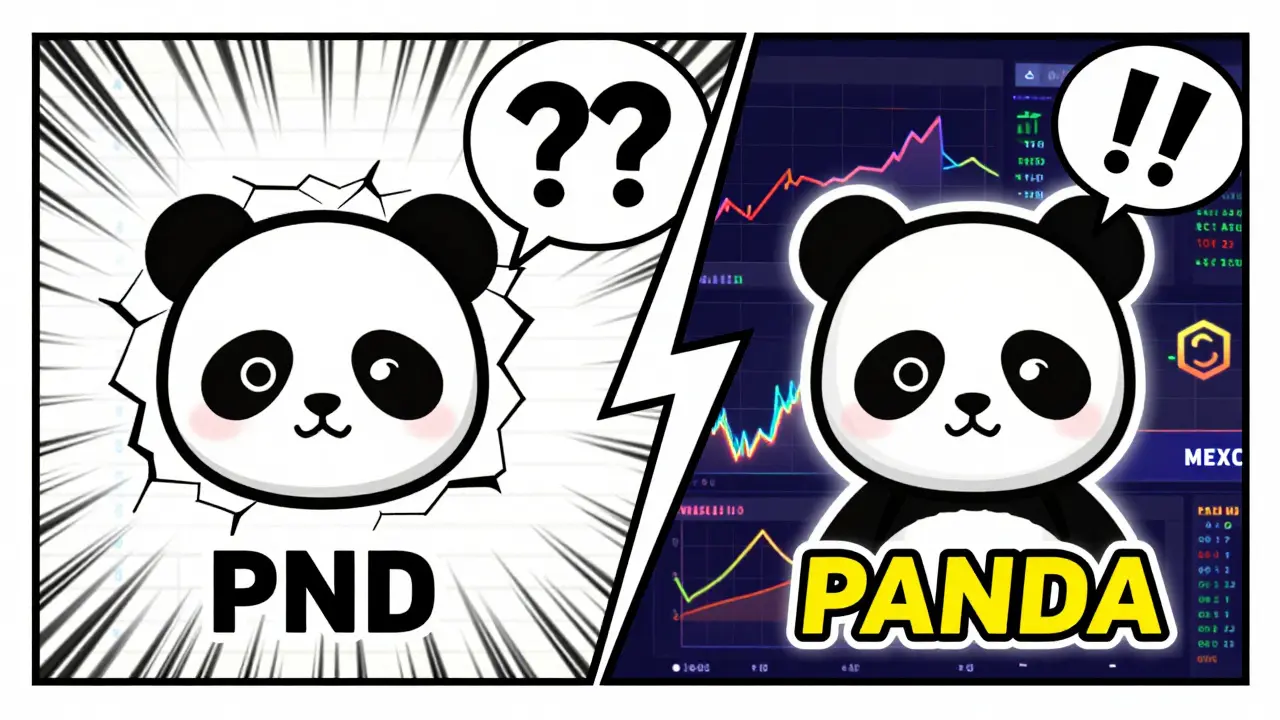
Was the Airdrop Real?
Technically, yes. The tokens were allocated. The winners were selected. But here’s the catch: no one could trade them. No exchange listed PND. No wallet showed balances. No blockchain explorer tracked transfers. The smart contract address-0x8eac...d5745c-was there, but empty. No transactions. No liquidity. No buyers. It’s possible the PND token was meant to be a placeholder-a way to seed a future network. But without liquidity, without trading, without a working DEX, it was just digital paper. And paper doesn’t hold value. Some users claimed they received their tokens in their wallets. But without a way to sell or swap them, they were worthless. You can’t pay for coffee with a token that no exchange accepts.What About Panda Swap (PANDA)?
Panda Swap (PANDA) is a different token. It’s traded on MEXC and Binance. It has a live price, a trading volume, and an active community. But it’s not the same as PandaSwap (PND). The names are nearly identical. The logos look similar. The websites are confusingly close. This isn’t a coincidence. It’s common in crypto. Projects copy names, reuse branding, and exploit confusion to attract attention. One team might launch PND. Another might launch PANDA. Both claim to be "the real PandaSwap." Neither can prove it. If you’re looking to participate in future airdrops, you need to check the official sources. Not the YouTube videos. Not the Reddit threads. Not the Telegram bots. Go to the project’s own website. Check the Twitter account. Look at the contract address. Verify everything.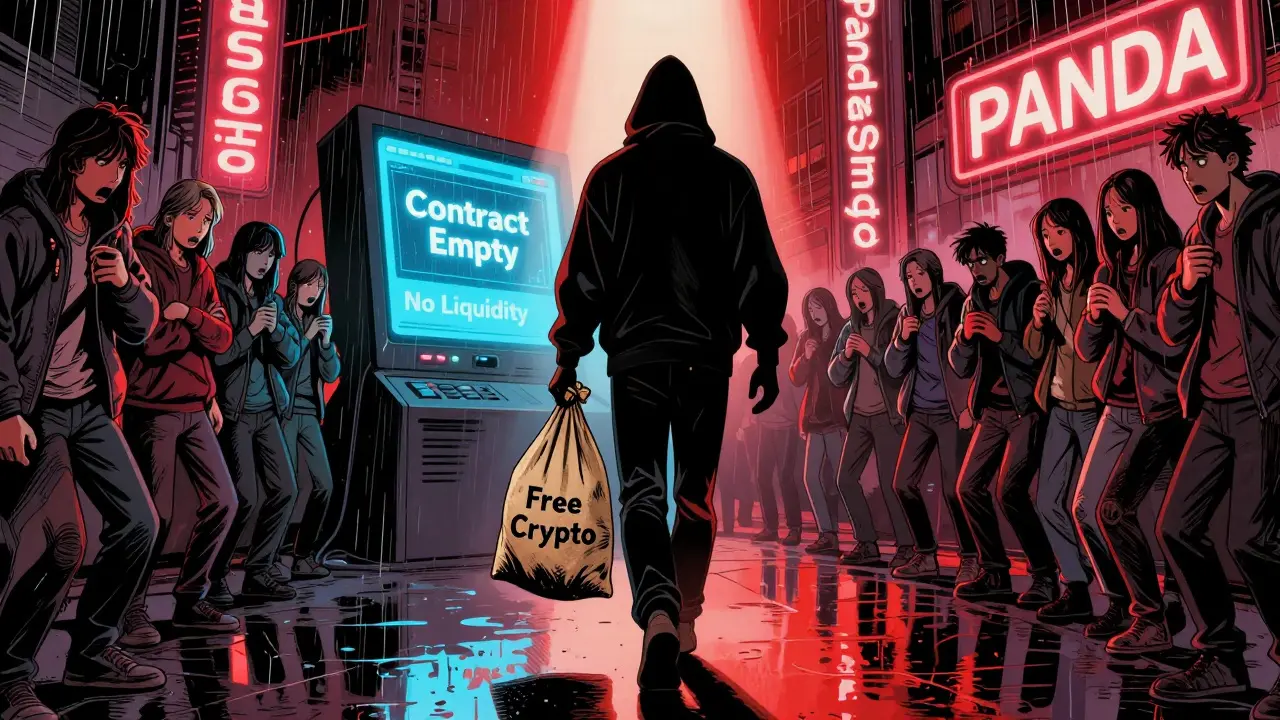
What Can You Learn From This?
This isn’t just a story about one failed airdrop. It’s a lesson in how crypto projects use hype to move money.- Airdrops aren’t free money-they’re marketing tools.
- Zero trading volume means zero value, no matter what the announcement says.
- Always check CoinMarketCap and CoinGecko side by side. If one shows $0 and the other shows a price, something’s wrong.
- Contract swaps like the one on MEXC can erase your holdings overnight if you’re not careful.
- Don’t assume similar names mean the same thing. PND ≠ PANDA.
Should You Join Future PandaSwap Airdrops?
If you see another PandaSwap airdrop, ask yourself: Is this the same team? Is the contract address the same? Is there real trading volume? Are major exchanges listing it? Right now, the answer to all those questions is no. The PND token is dead. The PANDA token is barely alive. And the original PandaSwap project seems to have vanished. Don’t chase hype. Chase utility. If a project can’t even get its token listed properly, it’s not worth your time.Was the PandaSwap (PND) airdrop a scam?
It wasn’t a scam in the legal sense-no one stole money or lied about the rules. But it was misleading. The airdrop promised value, but the token never became usable. Without trading, liquidity, or exchange support, the tokens had no real-world worth. Many participants were led to believe they’d won something valuable, when in reality, they got digital placeholders. It’s more accurate to call it a failed launch than a scam.
Can I still claim my PandaSwap (PND) tokens?
No. The airdrop campaign ended months ago. Even if you were a winner, the tokens were never activated on any blockchain network. No wallet received them. No exchange supports them. The smart contract is empty. There’s no way to recover or claim PND tokens now.
What’s the difference between PND and PANDA tokens?
PND was the original token for PandaSwap, built on the OKEx Chain. PANDA is a separate token, likely created by a different team, now traded on MEXC and Binance. They have different contract addresses, different supply numbers, and different development teams. The similarity in names is intentional confusion. If you’re trading or holding, make sure you know which one you’re dealing with.
Why did CoinMarketCap show $0 for PandaSwap?
CoinMarketCap only lists tokens that meet their verification standards. If a token has no trading volume, no liquidity, or no active blockchain activity, it’s marked as a "preview" and shows $0. This doesn’t mean the token is fake-it means it’s not functional. In PandaSwap’s case, the lack of any trading activity triggered this status. It’s a warning sign, not a technical error.
Are there any future PandaSwap airdrops planned?
As of now, there are no official announcements about new PandaSwap airdrops. The original team behind PandaSwap (PND) has not been active since mid-2025. The Panda Swap (PANDA) token has its own community and occasional promotions, but these are unrelated to the original airdrop. Always check the official Twitter and Telegram channels before trusting any new airdrop claim.
Will Lum
February 12, 2026 AT 04:30Santosh kumar
February 13, 2026 AT 07:28Christopher Wardle
February 14, 2026 AT 04:47John Doyle
February 14, 2026 AT 14:16monique mannino
February 15, 2026 AT 19:32Holly Perkins
February 16, 2026 AT 05:19Desiree Foo
February 16, 2026 AT 22:22Kaz Selbie
February 17, 2026 AT 18:58Robbi Hess
February 18, 2026 AT 06:01Keturah Hudson
February 19, 2026 AT 11:02Ace Crystal
February 19, 2026 AT 12:24Brittany Meadows
February 21, 2026 AT 01:41SAKTHIVEL A
February 21, 2026 AT 20:41krista muzer
February 23, 2026 AT 09:39Tammy Chew
February 24, 2026 AT 08:06Lindsey Elliott
February 26, 2026 AT 04:08Claire Sannen
February 27, 2026 AT 02:33Benjamin Andrew
February 28, 2026 AT 20:58