
Crypto Regulation Malta: What You Need to Know About the Island's Crypto Rules
When it comes to crypto regulation Malta, Malta’s legal framework for blockchain and digital assets, established in 2018 and refined since. Also known as the Malta Blockchain Framework, it was one of the first comprehensive systems in the world to give crypto businesses clear rules instead of bans or gray areas. Unlike countries that shut down crypto or ignore it, Malta built a system where companies can apply for licenses, follow specific rules, and operate legally. That’s why big names like Binance and OKX set up offices there—not because it’s cheap, but because they knew exactly what they had to do.
That system has three main parts: the Malta Virtual Assets Service Provider (VASP) license, a mandatory registration for any crypto exchange, wallet provider, or trading platform operating in Malta. Also known as crypto exchange license Malta, it requires strict KYC, AML checks, and ongoing reporting. Then there’s the Technology Services Provider (TSP) license, for blockchain developers, smart contract auditors, and nodes operators. And finally, the Distributed Ledger Technology (DLT) exchange license, which covers platforms that trade tokens as assets. These aren’t suggestions—they’re legal requirements. Skip them, and you’re breaking the law. The Malta Financial Services Authority (MFSA) doesn’t just hand out licenses. They audit, monitor, and can shut down firms that don’t follow through. That’s why some companies left after 2023—they couldn’t keep up with the cost or the pressure.
What’s changed since the early hype? The initial rush of startups slowed down. Some projects that got licenses never launched anything real. Others moved to places like the UAE or Singapore where taxes are lower and rules are looser. But Malta didn’t back down. It doubled down on compliance. Today, if you’re running a crypto business in Malta, you’re expected to have real staff, real offices, real audits, and real accountability. That’s not a bad thing—it’s what the industry needs. For users, it means less chance of a scam platform hiding behind a "Malta-licensed" badge. For investors, it means clearer rules when choosing where to trade or store assets.
So if you’re wondering why Malta still matters, it’s not because it’s the biggest crypto hub. It’s because it proved you can build a legal, transparent system for blockchain without banning it. And that’s rare. Below, you’ll find real cases—some successful, some failed—of how these rules played out in practice. No theory. Just what happened on the ground.
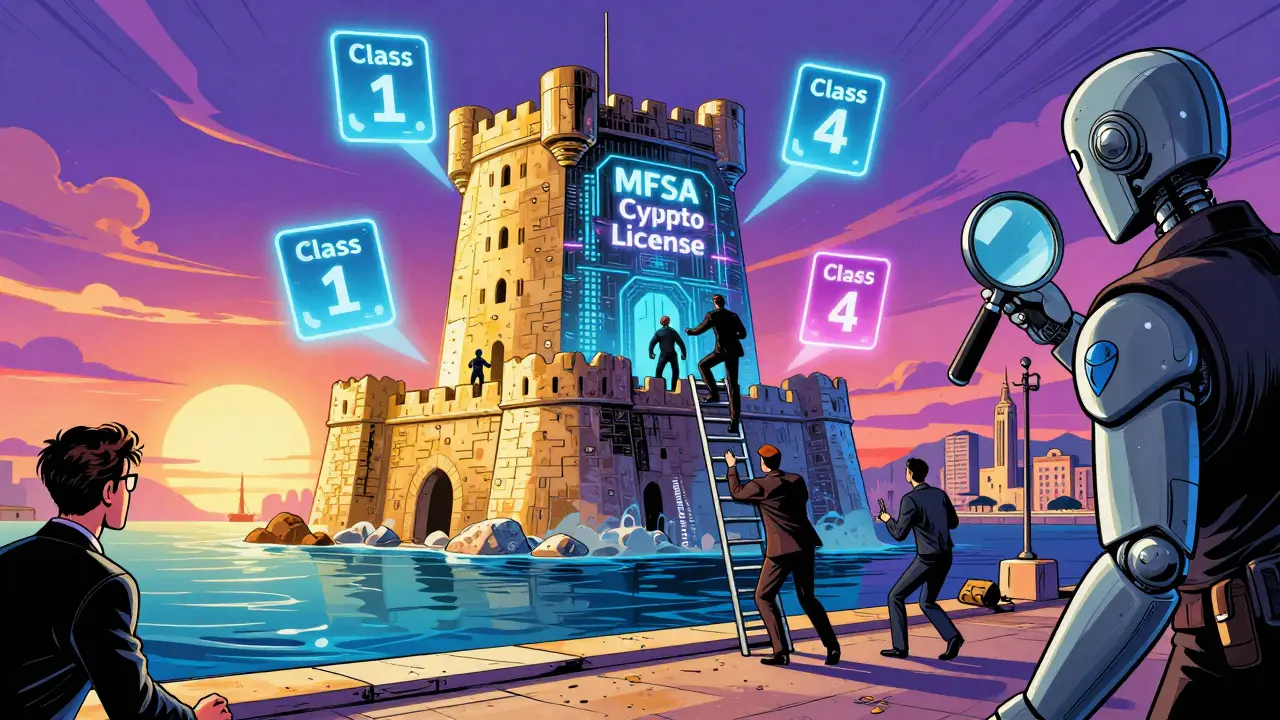
Crypto Business Licensing Requirements in Malta: What You Need to Know in 2025
Malta's crypto licensing system in 2025 requires businesses to meet strict capital, AML, and local presence rules. Learn the four license classes, hidden costs, approval timeline, and why it's still a top EU choice despite MiCA integration.
December 8 2025