You might think your Bitcoin sits in a digital wallet like cash in a pocket. But that's not how it works. Your coins live on the blockchain, locked by math. The only thing you actually own is a private key. If you lose that key, you lose the coins. If someone else gets it, they take them. That’s it. No customer support, no password reset.
Most people confuse keys and addresses. They use the terms interchangeably, but they are different things with different jobs. Understanding this difference isn't just academic-it's the difference between keeping your money safe and watching it vanish because you sent it to the wrong string of characters or shared a secret you shouldn't have.
The Core Difference: Secrets vs. Mailboxes
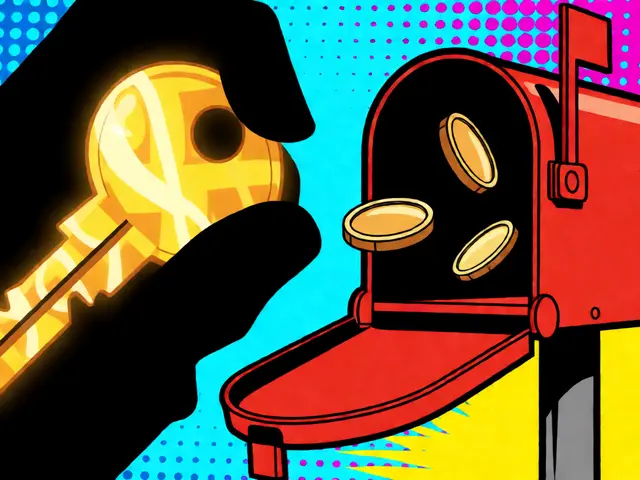
Think of the relationship between keys and addresses like a mailbox system. The address is where you receive mail. Anyone can see your address. You can print it on a business card. It’s public information. In crypto, this is your public address. It’s a shortened version of your public key, designed to be easier for humans to read and copy without making mistakes.
The private key is the physical key that opens that mailbox. It’s a long, random number. You never show this to anyone. If you hand someone your address, they can send you money. If you hand someone your private key, they can empty your account. This distinction is the bedrock of blockchain security. It allows for transparency (everyone sees the balance at an address) while maintaining ownership control (only the key holder can spend).
How Keys Are Made: The Math Behind the Magic
Where do these keys come from? They aren't chosen by a central authority. They are generated by mathematics. Specifically, they rely on asymmetric cryptography, also known as public-key cryptography. Unlike symmetric encryption, which uses one key to lock and unlock data, asymmetric systems use two related keys.
Here is the process:
- Private Key Generation: Your wallet software generates a random number. This number must be truly random. If the randomness is weak, hackers can guess your key. This number is your private key.
- Public Key Derivation: Using elliptic curve cryptography (specifically secp256k1 for Bitcoin), the private key is multiplied by a fixed point on the curve. This creates the public key. This step is easy for computers but impossible to reverse. You cannot derive the private key from the public key.
- Address Creation: The public key is hashed (using SHA-256 and RIPEMD-160 for Bitcoin) and encoded into a format like Base58Check. This creates the human-readable address you share with friends.
This chain-Private Key → Public Key → Address-is strictly one-way. You can always go down the chain, but you can never go up. This mathematical guarantee is why we don't need banks to verify who owns what. The math does the verification.
Hierarchical Deterministic Wallets: One Seed to Rule Them All
If every time you needed a new address, you had to back up a new private key, managing your finances would be a nightmare. Imagine writing down 50 different 256-bit numbers on paper. Enter Hierarchical Deterministic (HD) wallets.
An HD wallet uses a single master piece of data called a Recovery Seed (or mnemonic phrase). This is usually 12 to 24 words. From this seed, the wallet derives all other keys using a standard called BIP-39 and BIP-32.
When you restore a wallet on a new device, you enter those 12 words. The wallet doesn't "download" your history. Instead, it regenerates the exact same tree of private keys, public keys, and addresses. Because the derivation path is deterministic, it finds the same addresses every time. This means you only ever need to back up one thing: the seed phrase. Lose the seed, and you lose access to every address derived from it. Share the seed, and you give away total control.

Security Risks: Where People Get Burned
The biggest mistake newcomers make is treating their private key or seed phrase like a username. They type it into websites, store it in cloud notes, or email it to themselves. Here is why that is dangerous.
| Entity | Visibility | Function | Risk if Exposed |
|---|---|---|---|
| Private Key / Seed Phrase | Secret | Signs transactions; proves ownership | Total loss of funds; irreversible theft |
| Public Key | Semi-Public | Verifies signatures; intermediate step | Privacy leakage; potential quantum risk |
| Public Address | Public | Receives funds; identifies destination | None (safe to share) |
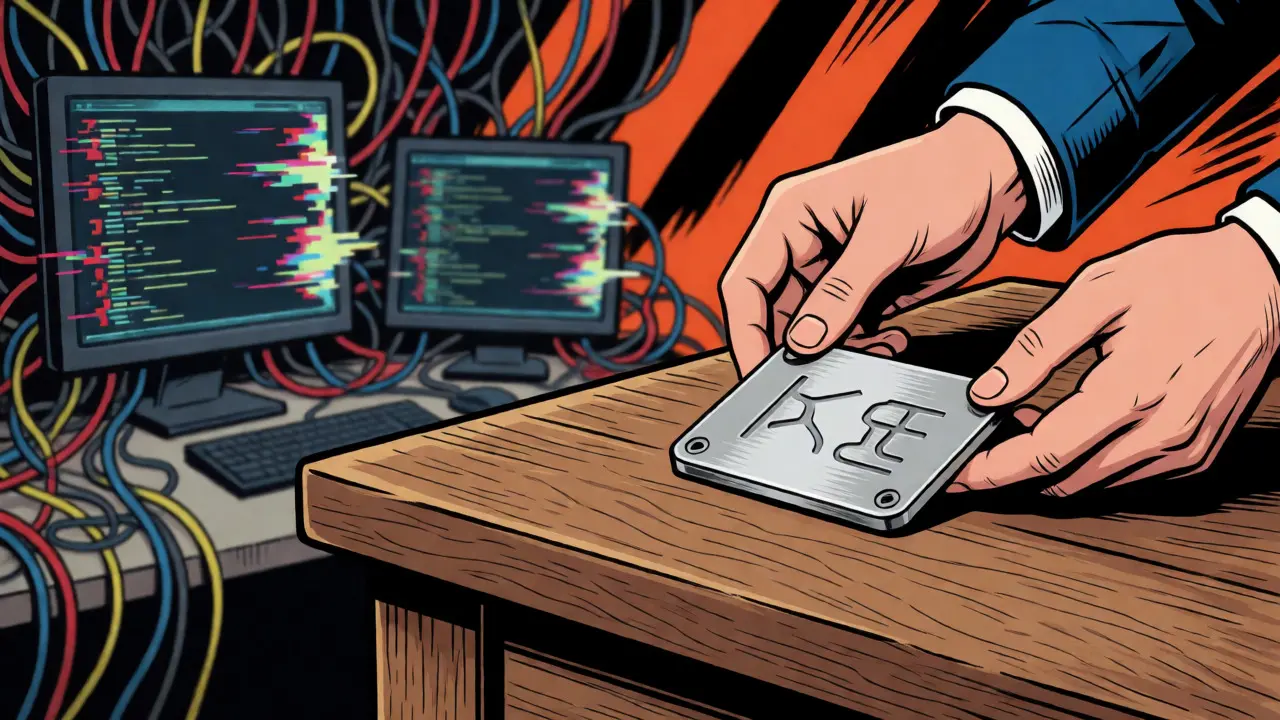
Storing seeds online is risky. Cloud providers can be hacked. Your laptop can get malware. The most secure method is offline storage. Many users write their seed phrase on paper. For better durability, serious holders punch the words into stainless steel plates. These resist fire, water, and rot. If your house burns down, a steel plate survives. A notebook might not.
Another common pitfall is reusing addresses. While you can receive multiple payments to the same address, privacy experts recommend generating a new address for each transaction. This makes it harder for outside observers to link all your transactions together and estimate your total net worth. HD wallets make this easy-they generate thousands of addresses automatically, so you never have to reuse one unless you want to.
Signatures: Proving Ownership Without Showing Your Secret
How does the network know you own the coins if you don't reveal your private key when spending? You use a digital signature. When you send Bitcoin, your wallet takes the transaction details and your private key, runs them through a signing algorithm (ECDSA for Bitcoin), and produces a signature. This signature is attached to the transaction along with your public key.
Miners and nodes check the signature against the public key. If the math checks out, the transaction is valid. Crucially, the signature proves you had the private key without revealing what the private key actually is. This is the magic of zero-knowledge principles in action. You prove knowledge without disclosure.
If you try to spend coins sent to Address A using the private key for Address B, the signature won't match. The network rejects the transaction. There is no ambiguity. Either the math works, or it doesn't. This eliminates disputes over ownership that plague traditional finance.
Beyond Bitcoin: Variations Across Networks
While Bitcoin sets the standard, other blockchains implement similar concepts with tweaks. Ethereum, for example, uses addresses that start with "0x" and are derived slightly differently (Keccak-256 hashing instead of RIPEMD-160). XRP Ledger uses account IDs that look different but serve the same purpose. Some chains, like Monero, add extra layers of privacy by using stealth addresses, which change for every transaction even though the underlying view key remains constant.
Despite these variations, the core logic holds: Private Key controls the funds. Public Address receives the funds. The bridge between them is cryptography. As we move toward 2026, research into post-quantum cryptography is heating up. Quantum computers could theoretically break current elliptic curve algorithms. However, migration paths exist, and networks are already preparing for these shifts. For now, the classical model remains robust.
Practical Steps for Secure Management
So, how should you handle your keys today? Follow these rules to stay safe:
- Never digitize your seed phrase. Don't take a photo of it. Don't save it in a text file on your desktop. Malware scans for these patterns.
- Use hardware wallets for significant amounts. These devices keep your private key inside a secure chip. Even if your computer is infected, the key never leaves the device. You approve transactions physically on the device screen.
- Verify addresses manually. Copy-paste errors happen. Malware can swap clipboard contents. Always check the first and last few characters of an address before sending large sums.
- Test small amounts first. Before sending your life savings to a new exchange or wallet, send a tiny test amount. Confirm it arrives correctly, then send the rest.
Understanding keys and addresses isn't about memorizing complex math formulas. It's about respecting the architecture. The blockchain is a trustless system, but that trustlessness relies entirely on your ability to manage your secrets. Keep your private keys offline, treat your seed phrase like gold, and understand that your address is just a label, not a lock.
Can I recover my private key if I lose my seed phrase?
Generally, no. The seed phrase is the backup for your private keys. If you lose the seed phrase and haven't exported individual private keys, your funds are permanently inaccessible. This is why backing up the seed phrase is critical.
Is it safe to share my public address?
Yes, public addresses are designed to be shared. Anyone can send funds to your address without needing permission. Sharing your address does not compromise your security or allow others to spend your funds.
What happens if I reuse the same address twice?
You will still receive both payments. However, reusing addresses reduces privacy. On-chain analysts can more easily cluster your transactions and estimate your total balance if you use the same address repeatedly. It is best practice to generate a new address for each incoming payment.
Do private keys expire?
No, private keys do not expire. They remain valid as long as the blockchain exists and the cryptographic algorithm behind them remains secure. However, future advancements in computing power (like quantum computing) may require migrating funds to new, more secure key types.
Why are there different types of addresses?
Different address formats often indicate different features or efficiency improvements. For example, Bitcoin's Bech32 (SegWit) addresses are cheaper to spend and more efficient than legacy P2PKH addresses. They all map to the same underlying keys but optimize how transactions are structured and verified.