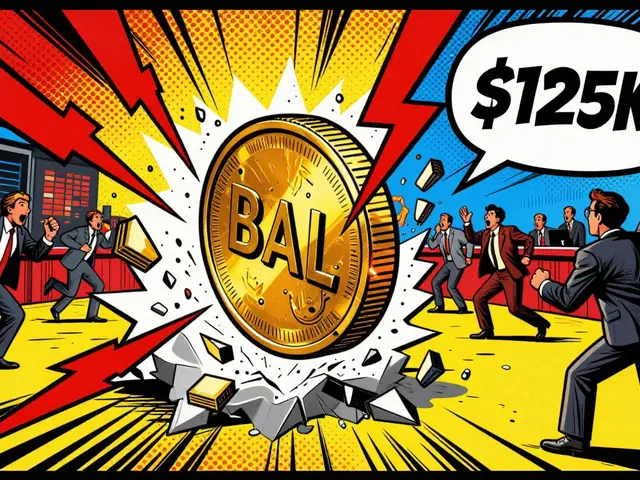
Imagine you want to swap tokens with zero slippage and keep your portfolio balanced automatically. Sounds perfect, right? Now imagine that same platform losing over $125 million in a single day because of a math error in its code. That is exactly what happened to Balancer in November 2025. If you are looking at Balancer V2 a decentralized exchange protocol using weighted liquidity pools on the Avalanche network today, you need to know more than just the APY numbers. You need to understand why it crashed, how it works now, and whether it is actually worth your time compared to giants like Trader Joe.
This review cuts through the hype. We will look at the real costs, the security scars from late 2025, and who this platform is actually for in early 2026.
The Quick Reality Check: Key Takeaways
- Safety First: The November 2025 exploit caused massive losses due to precision errors. New circuit breakers are in place, but risk remains higher than on established AMMs.
- Cost Efficiency: Swaps on Avalanche via Balancer cost roughly $0.0002, making it one of the cheapest options if the transaction succeeds.
- Liquidity Gap: Balancer holds only 2.3% of Avalanche’s DEX market share. Low liquidity means high slippage during volatile markets or large trades.
- Best For: Advanced users rebalancing complex multi-asset portfolios (e.g., 60/30/10 splits). Not for quick, high-frequency trading.
- Learning Curve: Expect to spend nearly 9 hours learning the interface before you feel comfortable executing a trade without errors.
What Is Balancer V2 on Avalanche?
To get straight to the point, Balancer is not just another copycat of Uniswap. Launched by Fernando Martinelli and Mike McDonald in 2019, the protocol was designed to solve a specific problem: rigid pool structures. Most decentralized exchanges force you into a 50/50 split between two tokens. Balancer lets you create pools with up to eight different tokens, each with custom weights ranging from 0.01% to 98%.
When Balancer expanded to Avalanche on June 14, 2024, it brought this "weighted pool" architecture to a network known for speed. The current version running on the Avalanche C-Chain as of January 2026 is Smart Pools v2.1.3. This update focused on gas optimization, reducing the computational load on the vault contract by about 35% compared to the original V1 design.
Why does this matter? If you hold a basket of assets-say, Bitcoin, Ethereum, and AVAX-and you want to maintain those exact percentages as prices move, Balancer automates that rebalancing. You don't have to manually sell BTC and buy ETH every week. The pool does it for you when traders interact with it. However, this complexity comes at a price, both in terms of technical risk and user experience.
The Elephant in the Room: The November 2025 Exploit
You cannot review Balancer in 2026 without talking about the disaster of November 3, 2025. A critical vulnerability in the invariant calculation allowed attackers to manipulate Balancer Pool Token (BPT) prices. The issue stemmed from "unidirectional rounding"-essentially, the system rounded down numbers during upscaling operations, creating tiny precision losses that hackers exploited to drain funds.
The total loss across Balancer V2 and its forks reached $125.7 million. While the direct impact on Avalanche was part of this broader ecosystem hit, it shook confidence deeply. Dr. Georgios Konstantopoulos, Chief Scientist at Paradigm, noted in a January 2026 interview that while the theory behind weighted pools is sound, the implementation risks in precision-sensitive calculations were "dangerous."
So, is it safe now? Balancer Labs responded quickly. They implemented a 3-day timelock for governance changes and activated emergency pause mechanisms. Specifically for Avalanche, they added circuit breakers to halt trading if price deviations exceed certain thresholds. However, Chainalysis analyst Katie Song warned that fundamental flaws in handling token scaling across different decimal precisions remain a concern until comprehensive fixes are fully audited and deployed.

Performance and Costs: How Does It Compare?
If security concerns you, let's look at the economics. Avalanche is famous for being cheap and fast. On average, a swap on Balancer V2 via Avalanche costs about $0.0002. Compare that to Ethereum, where the same action might cost over $1.27. This makes Balancer attractive for smaller trades, provided the network isn't congested.
However, low fees don't mean low slippage. Slippage is the difference between the expected price of a trade and the executed price. Because Balancer has lower liquidity than competitors, slippage can spike. During peak congestion periods on the Avalanche C-Chain, slippage on Balancer jumped to 2.7%, compared to an average of 0.8%. For context, Uniswap V3 often offers tighter spreads for major pairs due to deeper liquidity.
| DEX Platform | Market Share | Avg Swap Cost | 24h Volume | Key Strength |
|---|---|---|---|---|
| Trader Joe | 41.7% | $0.0003 | $287.4 Million | High Liquidity, Native Rewards |
| Pangolin | 28.5% | $0.0002 | $110.2 Million | User-Friendly Interface |
| Balancer V2 | 2.3% | $0.0002 | $3.1 Million | Custom Weighted Pools |
| Curve | 8.2% | $0.0004 | $45.0 Million | Stablecoin Swaps |
As the table shows, Balancer trails significantly in volume. Trader Joe dominates with over $287 million in daily volume. Why does volume matter? Higher volume usually means better pricing and less chance of your trade failing. Balancer’s niche is not volume; it is complexity management.
Who Should Use Balancer V2 on Avalanche?
Not every crypto trader needs Balancer. In fact, most shouldn't start here. Here is a breakdown of who benefits and who should stay away.
The Ideal User: The Portfolio Rebalancer
If you manage a diversified portfolio-for example, 60% BTC, 30% ETH, and 10% AVAX-and you want to automate the maintenance of these ratios, Balancer is unique. You can deposit these assets into a weighted pool. As traders swap against your pool, fees are generated, and the pool naturally tries to return to your set weights. Reddit user u/CryptoTrader89 reported saving $187 in gas fees by rebalancing a 5-token portfolio on Balancer instead of making multiple separate swaps on Uniswap.
The Risk-Taker: Yield Farmers
Liquidity providers (LPs) earn yield from swap fees and BAL token emissions. Currently, BAL rewards offer about 6.8% APY. Compare this to Trader Joe’s JOE token emissions at 15.3% APY. Unless you specifically want exposure to the BAL governance token, the incentives are weaker on Balancer. Additionally, the risk of impermanent loss is higher in weighted pools if asset prices diverge significantly.
Who Should Avoid It
If you are a high-frequency trader or someone looking to quickly flip meme coins, Balancer is the wrong tool. The interface is complex, requiring an average of 8.2 hours of study time for new users to grasp fully. Furthermore, during network congestion, transactions fail 17.3% of the time during peak hours. For simple swaps, stick to Trader Joe or Pangolin.

How to Trade on Balancer V2: A Practical Guide
If you decide to proceed, preparation is key. Many first-time users fail because they misunderstand token decimals. Here is how to set yourself up for success.
- Connect Your Wallet: Use MetaMask or WalletConnect. Ensure your wallet is configured for the Avalanche C-Chain (ChainID 43114). The RPC URL should be
https://api.avax.network/ext/bc/C/rpc. - Check Token Decimals: This is crucial. The 2025 exploit highlighted issues with non-18-decimal tokens like USDTe (which uses 6 decimals). Always verify the token contract address and decimal places before interacting. Miscalculations here caused 22.4% of failed transactions among new users in early 2026.
- Set Slippage Tolerance: Do not use the default settings. For stablecoin pairs (like USDT/USDC), set slippage between 0.3% and 0.8%. For volatile assets, increase this to 1.0%-2.5% to prevent transaction failures during price swings.
- Understand Emergency Pauses: Know that during security incidents, pool additions may be paused, but withdrawals usually remain open. Check the official Discord or Twitter for status updates before large deposits.
AvaLabs CTO Kevin Sekniqi pointed out in a January 2026 discussion that while Balancer adds value, its low volume reflects insufficient liquidity incentives compared to native DEXs. Be aware that you might face front-running risks in low-liquidity pools. In January 2026 alone, sandwich attacks extracted $412,000 from such pools on the network.
Future Outlook: Will Balancer Recover?
The future of Balancer on Avalanche hinges on its upcoming V3 upgrade, targeted for Q2 2026. This version promises concentrated liquidity positions similar to Uniswap V3, which could drastically improve capital efficiency. More importantly, it aims to fix the precision handling issues that led to the 2025 exploit.
Opinions on its viability are split. Messari’s Ryan Selkis predicts Balancer’s market share on Avalanche could grow to 5.1% by late 2026, driven by institutional adoption of weighted pools for professional portfolio management. Conversely, Delphi Digital’s Kevin Kelly forecasts a decline to 1.4%, citing unsustainable tokenomics as BAL emissions drop to 0.8% APY by year-end.
The biggest risk remains technical. Gauntlet Network’s stress tests suggest that under extreme market conditions similar to November 2025, potential losses could still reach $48 million if precision vulnerabilities persist. Until the V3 audit by OpenZeppelin is complete and deployed (scheduled for mid-February 2026), caution is advised.
Final Verdict
Balancer V2 on Avalanche is a powerful tool for a very specific job: automated, multi-asset portfolio rebalancing. It is not a general-purpose swap engine. If you are an advanced user who understands the risks of smart contracts, knows how to check token decimals, and values customization over convenience, Balancer offers features no other DEX on Avalanche matches.
However, for the average investor, the combination of low liquidity, high learning curve, and recent security history makes it a risky choice. Stick to Trader Joe or Pangolin for simple swaps. Only venture into Balancer if you have a clear strategy for using weighted pools and are comfortable monitoring the protocol’s security updates closely.
Is Balancer V2 on Avalanche safe to use in 2026?
It carries higher risk than standard AMMs due to the November 2025 exploit involving precision errors. While new circuit breakers and a 3-day governance timelock are in place, experts warn that fundamental scaling issues remain until the V3 upgrade is deployed. Use only with small amounts you can afford to lose.
Why is Balancer’s volume so low compared to Trader Joe?
Balancer focuses on complex weighted pools rather than simple swaps. It also offers lower yield incentives (6.8% APY vs Trader Joe’s 15.3%). Most retail users prefer the simplicity and depth of liquidity found in Trader Joe or Pangolin.
What caused the $125 million exploit in November 2025?
The exploit was caused by unidirectional rounding errors in the invariant calculation. Attackers manipulated BPT prices by exploiting precision loss when scaling tokens with different decimal places, particularly affecting stablecoin pools.
How much does it cost to swap on Balancer Avalanche?
Gas fees are extremely low, averaging $0.0002 per transaction. However, swap fees vary by pool creator, ranging from 0.0001% to 10%. Slippage can add hidden costs if liquidity is thin.
When will Balancer V3 launch on Avalanche?
The V3 upgrade, featuring concentrated liquidity and improved precision handling, is targeted for Q2 2026. Security audits by OpenZeppelin are scheduled for completion in mid-February 2026.
Can I withdraw my funds if Balancer pauses trading?
Yes. The emergency pause mechanism typically restricts adding new liquidity or swapping, but allows existing liquidity providers to withdraw their assets to protect capital during security incidents.