
Costa Ricans don’t wait for permission to use cryptocurrency. While most countries scramble to write laws around digital assets, Costa Rica has taken a different path - one where people and businesses just use crypto, without waiting for a rulebook. As of 2025, there’s no specific law banning or licensing crypto in Costa Rica. That doesn’t mean it’s lawless. It means they’re using what already exists - banking rules, business laws, and anti-money laundering systems - to make crypto work.
What the Central Bank Says (and Doesn’t Say)
The Central Bank of Costa Rica made it clear in 2023: cryptocurrencies aren’t money. They’re not legal tender. They’re not foreign currency. They’re just digital files that can be traded. That sounds like a restriction, but it’s actually a gift. Because if the government had said, "You can only use crypto if you get a license," most people would’ve stopped right there. Instead, they said, "It’s not money, so we won’t treat it like money - but if you’re trading it, follow the same rules as any financial business."
That’s why you’ll see Costa Ricans buying Bitcoin on local exchanges, sending Ethereum to friends in Mexico, or using Solana to pay for freelance work - all without needing a special permit. The government didn’t say "yes," but it didn’t say "no," either. And in practice, that’s the same as a green light.
How People Actually Use Crypto Day-to-Day
Most Costa Ricans don’t think of crypto as an investment. They think of it as a tool. For example:
- A freelance graphic designer in San José gets paid in USDT instead of USD because it’s faster and cheaper than PayPal or wire transfers.
- A small coffee exporter in Heredia uses Bitcoin to receive payments from buyers in the U.S. and Europe, avoiding 5% bank fees and 3-day delays.
- Students in Cartago use non-custodial wallets like Trust Wallet to store their savings, because they don’t trust local banks to protect their money from inflation.
- A tech startup in Limón raised $200,000 in ETH through a token sale - not as a security, but as a utility token for access to their platform. No SUGEF approval needed.
These aren’t outliers. They’re normal. Crypto isn’t a niche experiment here - it’s a workaround for real problems: slow banks, high fees, and limited access to global markets.
Where Crypto Businesses Operate (Without a License)
You won’t find a "Crypto License Office" in Costa Rica. But you will find dozens of crypto businesses operating legally - because they follow existing rules.
Any company offering exchange services, custody, or wallet solutions must comply with the same anti-money laundering (AML) rules that apply to banks and money transfer companies. That means:
- Verifying the identity of every customer
- Tracking every transaction over $1,000
- Reporting suspicious activity to authorities
- Keeping records for at least five years
That’s it. No special crypto forms. No new fees. No waiting for a government stamp. A company just registers as a normal business, opens a bank account (if they can), and follows AML rules. Some banks still refuse to work with crypto firms - but others don’t. And that’s enough.
Platforms like Binance and Kraken operate in Costa Rica because they don’t need local licenses - they’re foreign companies serving customers from abroad. Local exchanges like Bit2Me Costa Rica and LatamCrypto are registered as financial service providers under general commercial law. They don’t call themselves "crypto companies." They call themselves "payment service providers." And that’s how they fly under the radar.

NFTs, Tokens, and GameFi - No One’s Stopping Them
Costa Rica is quietly becoming a hub for NFTs and blockchain games. Artists mint NFTs on Ethereum and Solana. Gamers trade in-game items as tokens. Startups tokenize real estate or art for fractional ownership.
Why? Because there’s no law saying you can’t. The Superintendencia General de Entidades Financieras (SUGEF) only steps in if a token looks like a security - meaning it promises profits based on someone else’s work. If it’s just a digital collectible, a game item, or a membership pass? No problem.
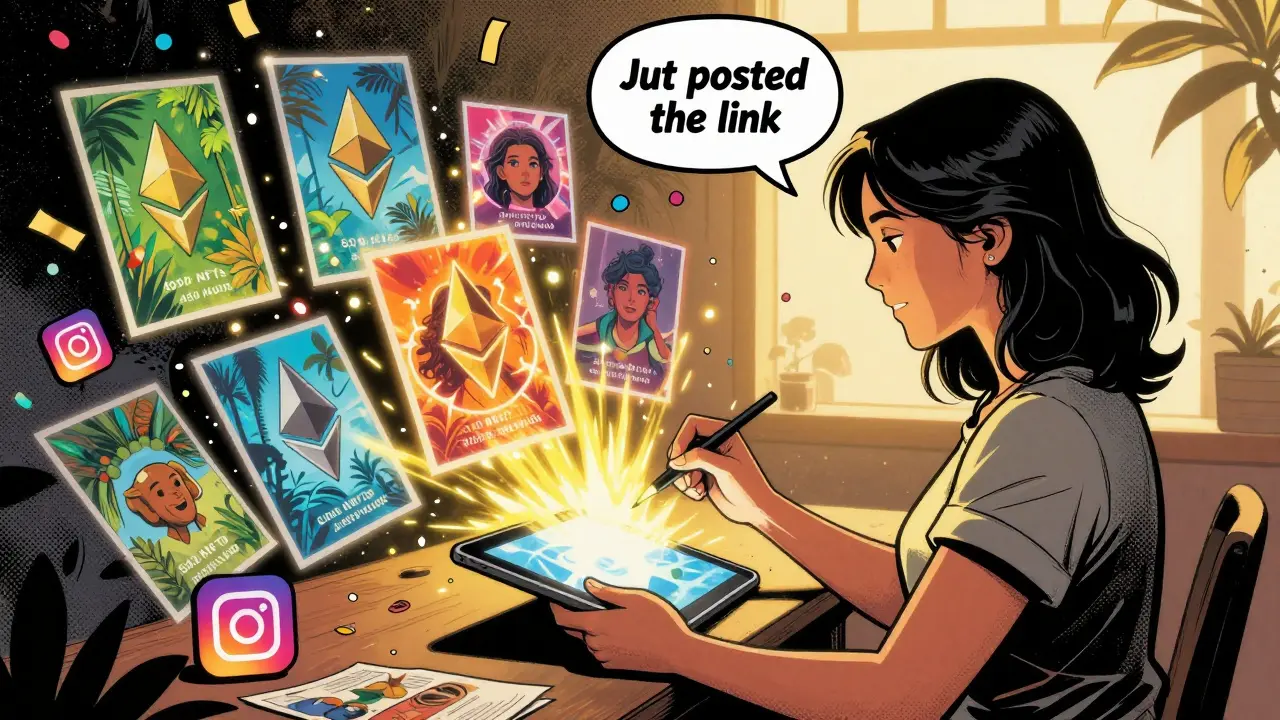
One artist in San José sold 500 NFTs of her digital paintings in 48 hours, earning $18,000 in ETH. She didn’t register anything. She didn’t file taxes on it yet - but she’s not hiding it either. She just posted the link on Instagram and got paid.
The Big Change Coming in 2026
Don’t get it wrong - Costa Rica isn’t ignoring regulation forever. In July 2025, the Legislative Assembly passed the first reading of Bill 22.837. This bill would require all Virtual Asset Service Providers (VASPs) to register with SUGEF. It defines exactly what counts as a crypto service: exchanges, custody, transfers, token issuance - even NFT marketplaces if they facilitate sales.
Under the new rules:
- All VASPs must register with SUGEF by mid-2026
- They must prove they have AML controls in place
- They must identify all customers and track high-risk transactions
- SUGEF will build a new KYC platform to monitor activity
But here’s the key: registration isn’t permission. It’s accountability. You don’t need approval to operate. You just need to prove you’re not laundering money. That’s a huge difference from countries that demand licenses before you even open your website.
Many local crypto firms are already preparing. Some hired compliance officers. Others upgraded their KYC systems. But none have shut down. Why? Because the rules are still evolving - and they’re not going to ban anyone who’s been following AML standards.
Why This Works - And Why It Might Not Last
Costa Rica’s crypto scene thrives because of what’s missing: bureaucracy. There’s no tax on crypto trades. No capital gains reporting. No mandatory reporting for small transactions. The government doesn’t track your wallet address. And that’s rare.
Compare that to El Salvador, where Bitcoin is legal tender but every transaction is monitored. Or to Panama, where crypto firms need special permits. Costa Rica is the opposite - it lets the market decide what works.
But change is coming. The 2026 registration deadline means the free-for-all is ending. Once SUGEF starts collecting data, the government will know who’s doing what. That could lead to tax reporting, stricter limits, or even pressure to align with international standards like FATF.
For now, though, Costa Ricans are using crypto the way it was meant to be used - as a tool, not a topic for lawmakers. They’re not waiting for permission. They’re just building.
What This Means for You
If you’re thinking about using crypto in a country with heavy rules, look at Costa Rica. You don’t need a license to send money across borders. You don’t need to file paperwork to accept Bitcoin as payment. You just need to be smart about security and follow basic financial rules.
And if you’re a business? The lack of red tape means you can launch faster. Test ideas. Build products. Get users. Then, when regulation arrives, you’re already operating - not starting from scratch.
Costa Rica isn’t a crypto utopia. It’s a practical experiment. And it’s working - for now.
Is cryptocurrency legal in Costa Rica?
Yes, cryptocurrency is legal in Costa Rica. There are no laws banning its use, ownership, or trading. However, the Central Bank states that crypto is not legal tender, meaning it can’t replace the colón or U.S. dollar for official payments. People and businesses can freely buy, sell, and use crypto as long as they follow general financial rules like anti-money laundering (AML) requirements.
Do I need a license to run a crypto exchange in Costa Rica?
As of 2025, no specific crypto license is required. However, any business offering exchange, custody, or wallet services must comply with general financial regulations, including AML and Know Your Customer (KYC) rules enforced by SUGEF. You must register as a legal business entity and follow the same compliance standards as money transfer companies. Starting in 2026, all Virtual Asset Service Providers (VASPs) must register with SUGEF under new legislation, but this is an accountability step - not a permission system.
Can I pay taxes on crypto in Costa Rica?
Currently, there is no specific tax on cryptocurrency transactions in Costa Rica. Capital gains from selling crypto aren’t taxed. Income earned in crypto is treated like any other income, but there’s no clear guidance on how to report it. The government hasn’t issued official tax rules for crypto, so most individuals and businesses don’t report crypto gains - though this could change after the 2026 regulatory update.
Are NFTs and blockchain games allowed in Costa Rica?
Yes, NFTs and blockchain games are fully legal. As long as the tokens aren’t structured as securities (i.e., promising investment returns), they fall outside SUGEF’s financial oversight. Artists, gamers, and developers regularly mint, sell, and trade NFTs on international platforms like OpenSea and Magic Eden. Local marketplaces for digital art and gaming assets operate without government interference.
Why don’t banks in Costa Rica accept crypto businesses?
Some banks avoid crypto businesses because they’re unsure how to classify them under existing financial rules. Others fear regulatory risk if they later face penalties for not reporting suspicious activity. But not all banks refuse - some work with crypto firms that have strong AML systems. The lack of clear guidance from regulators makes banks cautious, but it doesn’t make crypto illegal. Many crypto companies use offshore bank accounts or partner with fintech providers to bypass this issue.

Sherry Kirkham
March 10, 2026 AT 00:56Jennifer Pilot
March 11, 2026 AT 11:10Sharon Tuck
March 13, 2026 AT 09:09Ethan Grace
March 14, 2026 AT 19:21Jamie Hoyle
March 16, 2026 AT 11:04Jeffrey Dean
March 16, 2026 AT 11:12Brian T
March 16, 2026 AT 21:24Nash Tree Service
March 17, 2026 AT 07:56Denise Folituu
March 18, 2026 AT 19:02Eva Gupta
March 19, 2026 AT 18:20Ken Kemp
March 21, 2026 AT 14:51prasanna tripathy
March 23, 2026 AT 06:12James Burke
March 24, 2026 AT 05:03Bill Pommier
March 25, 2026 AT 02:54Issack Vaid
March 26, 2026 AT 13:32Josh Moorcroft-Jones
March 28, 2026 AT 03:52Emily Pegg
March 28, 2026 AT 14:36Jane Darrah
March 28, 2026 AT 15:29