You’ve probably seen it pop up in a search result or a spammy tweet: Clifford, often traded under the ticker CLIFF or CLIFFORD. It sounds like just another cute dog-themed meme coin from the wild west of 2021. But here is the hard truth you won’t find in its abandoned whitepaper: Clifford is effectively a dead token.
If you are holding a bag of CLIFF tokens and wondering if they will ever moon, or if you are just curious about what happened to this project, you need to look past the marketing fluff. This isn’t a guide on how to buy it-because you mostly can’t-but rather an autopsy of why it failed and what it tells us about the dangers of the meme coin sector.
The Origin Story: Born in the Hype, Died in Silence
To understand where we are, we have to look at where it started. Clifford Inu was launched on December 15, 2021. This timing is crucial. The world was obsessed with Dogecoin and Shiba Inu. Every day, dozens of new "inu" tokens were being created, hoping to catch the same viral wave. Clifford promised to be different by adding utility to the chaos.
The original pitch was straightforward. It claimed to be a deflationary token built on the Ethereum blockchain. The team promised a burn mechanism that would remove tokens from circulation over time, theoretically increasing scarcity. They also touted a stable liquidity pool with locked funds and a marketing tax on trades to fund community initiatives. On paper, it sounded like a slightly more sophisticated version of the thousands of copycat coins flooding the market.
However, the reality quickly diverged from the promise. While the launch date was clear, the technical execution was messy. Even today, data across major platforms contradicts itself. Some sources list the total supply as one trillion tokens, while others claim it is only one billion. One platform says it’s on Ethereum; another insists it’s on Solana. This confusion isn’t just a minor glitch; it’s a red flag that suggests poor documentation, potential rebranding attempts, or even multiple conflicting projects using similar names.
The Data Disconnect: Why You Can’t Trust the Charts
If you try to look up the current price of Clifford, you will hit a wall of inconsistency. This is one of the biggest risks with low-cap, inactive tokens. Let’s break down what different exchanges are telling us right now:
| Platform | Reported Supply | Blockchain | Status/Volume |
|---|---|---|---|
| Coinbase | 1 Trillion | Ethereum | Inactive / No Volume |
| Binance | 1 Billion | Unspecified | Not Listed / $0 Volume |
| CoinMarketCap | 1 Trillion | Ethereum | 0 Circulating / Illiquid |
| Crypto.com | N/A | N/A | Not Tradable |
Notice the pattern? Almost every major aggregator reports zero or near-zero trading volume. Binance explicitly lists it as "Not listed." Crypto.com states it is "not tradable yet." When a token has no circulating supply and no volume, the price you see is often a ghost number-a theoretical value based on stale data or a single, tiny transaction that doesn’t reflect real market interest.
The all-time high (ATH) figures are equally misleading. One source claims an ATH of $0.002344, while another says $0.000202. That is an eleven-fold difference in historical valuation. For a retail investor, this makes it impossible to calculate realistic returns or losses. If you bought in at the "high," your loss percentage depends entirely on which chart you believe. This ambiguity is a hallmark of abandoned projects.
The Meme Coin Graveyard: Context Matters
Clifford didn’t fail in a vacuum. It failed because it entered one of the most brutal sectors in finance. According to research from Messari, meme coins made up roughly 12% of all new token launches in 2021. However, data from Blockworks Research suggests that nearly 98.7% of meme coins launched during that period failed to sustain any meaningful value.
Why did Clifford join the 98.7%?
- No Community: Successful meme coins like Dogecoin or Shiba Inu built massive, organic communities on Reddit and Twitter. Clifford has virtually no presence. There are no active subreddits, and its official social media accounts have hundreds, not millions, of followers with little recent activity.
- No Utility: The promised staking mechanisms and burn features never gained traction. Without a working product or a passionate user base, there was no reason for people to hold the token long-term.
- Liquidity Evaporation: Once traders realized the momentum wasn’t there, they pulled their funds. With no new buyers entering, the liquidity pools dried up. Today, trying to sell your tokens would likely result in slippage so high that you’d get almost nothing back, or simply fail to execute the trade entirely.
Industry analysts like Ryan Selkis from Messari have noted that over 95% of tokens from the 2021 meme coin craze became completely illiquid within 18 months. Clifford fits this profile perfectly. It is a case study in what happens when hype outpaces substance.
Is Clifford a Scam or Just a Failure?
This is the question many holders ask. Legally, it’s complicated. A "scam" usually implies intentional fraud from the start-a rug pull where developers steal the liquidity pool. While Clifford’s development stalled, there isn’t widespread evidence of a malicious rug pull in the traditional sense. Instead, it appears to be a classic case of project abandonment.
The team may have lost interest, ran out of funding, or simply couldn’t compete with larger players. The lack of transparency regarding the contract address discrepancies and the silent shutdown of development channels points to negligence rather than outright criminality. However, for the investor, the outcome is the same: your asset has lost nearly all its value and has no path to recovery.
It’s important to distinguish between a bad investment and a fraudulent one. Clifford represents the former. It was a high-risk speculative asset that failed to deliver on its promises. The danger lies in the fact that these failures look like opportunities until it’s too late. The shiny website and the "deflationary" buzzwords masked the lack of fundamental value.
How to Spot Dead Tokens Before You Buy
Learning from Clifford’s fate can help you avoid similar traps in the future. Here is a checklist to evaluate any obscure crypto token before you commit capital:
- Check Liquidity Depth: Look at the order book on decentralized exchanges like Uniswap or Raydium. If the liquidity pool is small (under $100k), you are vulnerable to massive price swings and exit scams.
- Verify Contract Consistency: Ensure the contract address is the same across CoinMarketCap, CoinGecko, and the project’s official website. Discrepancies are a major red flag.
- Assess Community Authenticity: Don’t just look at follower counts. Read the comments. Are they real people discussing the tech, or bots posting generic hype? Check Discord and Telegram for active, non-paid moderators.
- Look for Locked Liquidity: Use tools like Unicrypt or Team.Finance to verify that the developers have locked the liquidity tokens. If they haven’t, they can pull the money anytime.
- Review Trading Volume Trends: A sudden drop in volume over weeks or months indicates losing interest. Sustained low volume means the token is effectively dead.
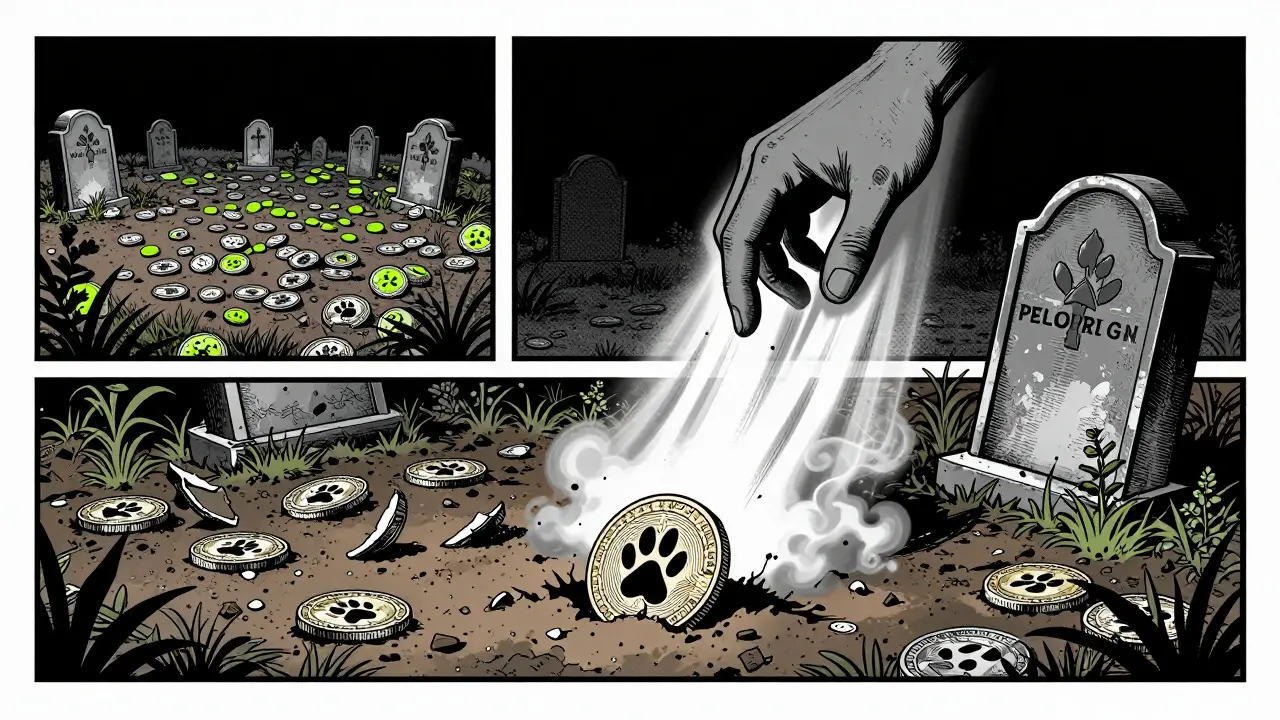
Clifford failed all these tests. Its liquidity vanished, its community went silent, and its data became inconsistent. By the time most investors noticed, the window to exit had closed.
What Should You Do With Your CLIFF Tokens?
If you still hold Clifford tokens, the harsh reality is that they are likely worthless. Here are your practical options:
- Accept the Loss: In crypto, not every bet wins. Treating it as a tuition fee for learning due diligence is the healthiest approach. Cut your losses mentally and move on.
- Audit Your Wallet: If you interacted with the Clifford smart contract, ensure your wallet hasn’t approved unlimited spending permissions for unknown contracts. Use tools like Revoke.cash to clean up approvals and secure your remaining assets.
- Ignore "Recovery" Services: Be wary of anyone claiming they can unlock value in dead tokens or recover your funds for a fee. These are secondary scams targeting desperate holders.
There is no secret strategy to revive a dead token. Without developer activity, marketing budget, and exchange listings, the code sits dormant on the blockchain. It exists, but it serves no economic purpose.
The Bigger Picture: Evolution of Meme Coins
Since Clifford’s launch in 2021, the meme coin landscape has evolved. Newer tokens like Pepe, Bonk, and Dogwifhat have emerged, often with better distribution mechanisms and stronger initial community engagement. However, the failure rate remains incredibly high.
The key difference with successful modern meme coins is speed and transparency. They build momentum quickly, get listed on reputable exchanges early, and maintain active social media presence. Clifford lacked all three. It launched in a crowded market, failed to gain traction, and faded into obscurity without a fight.
For the average investor, the lesson is clear: unless you are prepared to lose 100% of your investment, treat meme coins as entertainment, not investment. Diversify your portfolio with established assets like Bitcoin and Ethereum, and only allocate a small fraction to high-risk speculative plays. And always, always do your own research (DYOR) beyond the whitepaper.
Is Clifford (CLIFF) still active?
No, Clifford is effectively inactive. Major platforms report zero trading volume, no circulating supply, and a lack of developer updates since its launch in late 2021. It is considered an abandoned project.
What is the current price of CLIFF token?
The price is negligible and unreliable. Different exchanges show conflicting values ranging from $0.00000003 to $0.000092, but with zero trading volume, these prices are theoretical and do not reflect actual market value.
Where can I buy Clifford crypto?
You likely cannot buy it on major centralized exchanges like Binance or Coinbase Pro. It may exist on some decentralized exchanges (DEXs), but due to lack of liquidity, buying or selling would be extremely difficult and costly.
Is Clifford a scam?
While not definitively proven as a fraudulent rug pull, Clifford exhibits all the signs of a failed project. The lack of transparency, contradictory data, and abandonment suggest it was a poorly executed venture that lost all value.
Why is there conflicting information about Clifford's supply?
Data inconsistencies arise because the project is inactive. Aggregators scrape data from various sources, and without regular updates from the developers, errors persist. Some sources may refer to different versions or forks of the token.
Should I hold onto my CLIFF tokens?
Generally, no. With no development activity, community, or liquidity, the chance of recovery is near zero. It is advisable to accept the loss and focus on more viable investments.