The landscape of cryptocurrency investing shifted dramatically on April 16, 2025. For the first time, investors could buy shares tied directly to Solana, a high-speed blockchain platform known for its scalability and low transaction costs without ever touching a digital wallet or managing private keys. This wasn't just another product launch; it was a regulatory milestone. The Ontario Securities Commission (OSC) gave the green light to four major asset managers-Purpose Investments, Evolve Funds Group, CI Financial, and 3iQ Corp-to debut spot Solana exchange-traded funds (ETFs).
This move positions Canada as the global pioneer in altcoin ETF offerings. While the United States has stuck to Bitcoin and Ethereum, Canadian regulators have opened the door wider. If you are looking to diversify your portfolio beyond the big two cryptocurrencies, these new products offer a regulated, tax-efficient pathway. But before you rush to buy, you need to understand how they work, why the staking feature matters, and what risks remain on the table.
Why Canada Led the Way
You might wonder why this happened in Toronto rather than New York. The answer lies in regulatory philosophy. The U.S. Securities and Exchange Commission (SEC) has been cautious, approving only Bitcoin and Ethereum spot ETFs by late 2025. They worry about market manipulation and investor protection when it comes to smaller coins. Canada’s approach is different. The OSC updated its rules in January 2025 to create a clear framework for publicly traded cryptocurrency funds. This allowed them to approve Solana ETFs quickly, leveraging their experience from launching the world’s first Bitcoin ETF in February 2021.
This isn’t just about being first; it’s about accessibility. By approving these funds, Canada allows retail and institutional investors to gain exposure to Solana through standard brokerage accounts. You don’t need to navigate complex crypto exchanges or worry about losing your seed phrase. You simply buy shares on the Toronto Stock Exchange (TSX), just like you would for a stock mutual fund. This simplicity has driven significant early adoption, with assets under management growing rapidly in the months following the launch.
Understanding the Staking Advantage
Here is where things get interesting. Most ETFs simply track the price of an asset. If the price goes up, your share value goes up. If it goes down, you lose money. These Solana ETFs do something extra: they stake the underlying Solana coins.
Staking is a process where you lock up cryptocurrency to help secure the network. In return, you earn rewards, similar to interest on a savings account. Because Solana uses a Proof-of-Stake consensus mechanism, validators who secure the network earn new Solana coins and a portion of transaction fees. The approved ETFs, particularly the 3iQ Solana Staking ETF (ticker: QSLN), allocate a portion of their holdings to experienced validator operators.
This generates additional yield that gets added to the fund’s net asset value (NAV) daily. In contrast, U.S. crypto ETFs currently prohibit staking due to regulatory concerns about commingling customer assets. This means Canadian investors can potentially benefit from both price appreciation and staking rewards, while U.S. investors only get price movement. As of October 2025, the 3iQ ETF reported over $258 million CAD in assets, largely driven by its initial 0% management fee structure for the first year.
Comparing the Major Players
Not all Solana ETFs are created equal. While they all track the same underlying asset, their structures, fees, and features differ. Here is how the main contenders stack up:
| Issuer | Ticker | Key Feature | Management Fee (First Year) |
|---|---|---|---|
| 3iQ Corp | QSLN | Staking-enabled, daily yield accretion | 0% |
| Purpose Investments | PSOL | Direct spot exposure, established track record | Standard rate |
| Evolve Funds Group | ESOL | Spot exposure, TSX listed | Standard rate |
| CI Financial | CISOL | Institutional-grade custody | Standard rate |
The 3iQ ETF stands out because of its aggressive marketing around staking and its temporary zero-fee structure. However, remember that after the first 12 months, fees will apply. Purpose Investments and Evolve Funds Group offer more traditional structures, which might appeal to conservative investors who prefer simplicity over yield complexity. All of them trade on the TSX, meaning you can buy them through any Canadian brokerage account.

Tax Benefits and Account Eligibility
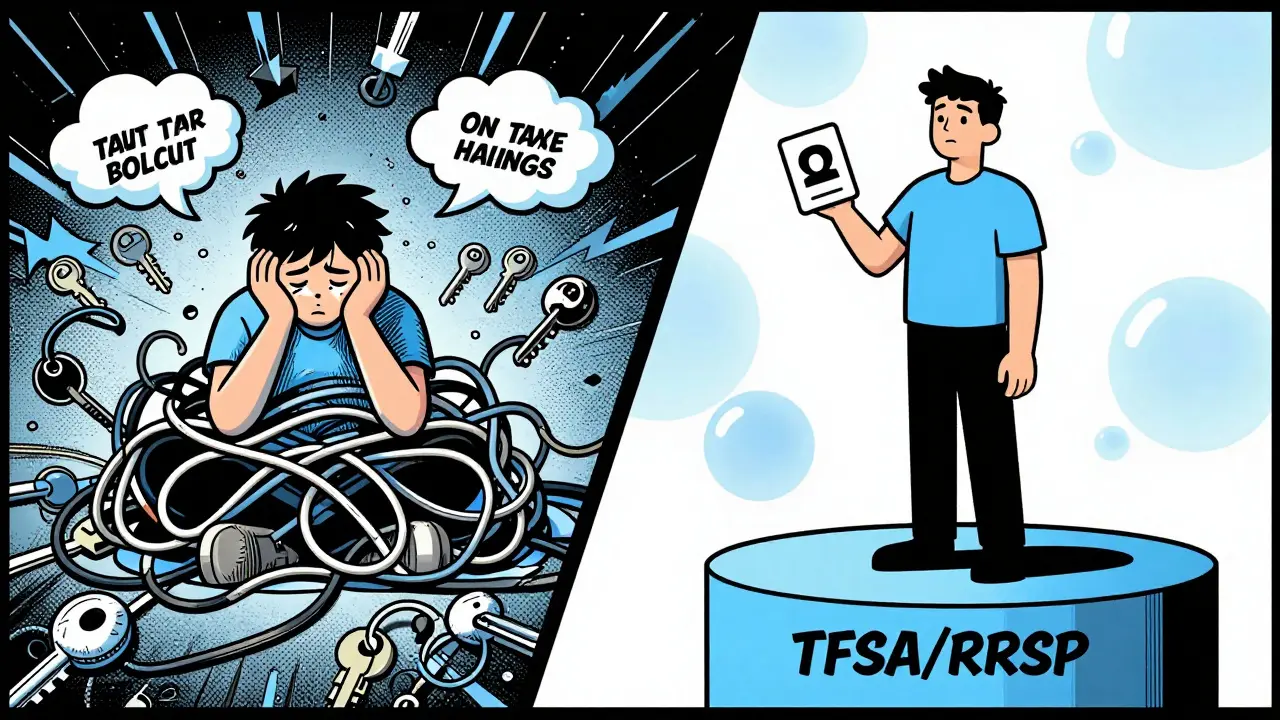
One of the biggest advantages of these ETFs is their compatibility with registered Canadian accounts. You can hold Solana ETFs inside a Tax-Free Savings Account (TFSA) or a Registered Retirement Savings Plan (RRSP). This is a game-changer.
If you buy Solana directly on an exchange, any gains are taxable. With an ETF in a TFSA, your growth is completely tax-free. In an RRSP, your gains are tax-deferred until withdrawal. Direct cryptocurrency holdings cannot be held in these registered accounts, making the ETF route significantly more efficient for long-term investors. This tax efficiency has been a major driver of interest among retail investors, as noted in discussions on platforms like r/CryptoCanada, where users highlighted the ability to "hold SOL in my TFSA without worrying about exchange risks."
Risks You Cannot Ignore
Despite the regulatory approval and tax benefits, Solana remains a volatile asset. It is not as stable as Bitcoin or even Ethereum. As of late 2025, Solana was trading in the $194-$203 range, but it has seen wild swings throughout the year. Its market cap of approximately $69 billion places it behind Bitcoin ($1.69 trillion) and Ethereum ($202 billion), meaning it carries higher risk and potential reward.
There is also the issue of network reliability. Solana has suffered from outages in the past, including a notable 11-hour halt in December 2024. While the ETF providers use segregated cold-storage custody and experienced validators to mitigate operational risk, the underlying asset’s performance is still tied to the health of the Solana network. If the network fails frequently, confidence in the asset may drop, affecting the ETF’s price regardless of staking yields.
Additionally, regulatory landscapes can change. While Canada is currently permissive, there is no guarantee that future governments will maintain this stance. Always consider your risk tolerance before allocating significant capital to altcoin products.
How to Get Started
Buying a Solana ETF is straightforward if you already have a brokerage account. Here is what you need to do:
- Open a Brokerage Account: If you don’t have one, open a self-directed account with a Canadian broker that supports TSX-listed securities. Ensure the account type matches your goals (e.g., TFSA for tax-free growth).
- Fund Your Account: Transfer cash into your brokerage account. You will need enough to cover the share price plus any trading commissions.
- Search for the Ticker: Look up the ticker symbol of the ETF you want to buy (e.g., QSLN for 3iQ, PSOL for Purpose).
- Place Your Order: Submit a buy order for the number of shares you wish to purchase. You can choose between market orders (buy at current price) or limit orders (buy at a specific price).
- Monitor Your Investment: Check the daily NAV and quarterly reports provided by the issuer to track performance and staking yields.
No technical skills are required. You don’t need to set up wallets, manage keys, or understand blockchain architecture. The ETF handles all the heavy lifting.
What Comes Next?
The launch of Solana ETFs is just the beginning. Industry analysts predict that other altcoins, such as XRP, Cardano, and Polkadot, will follow suit. The OSC’s willingness to approve staking-enabled funds suggests that Canada will continue to lead in innovative crypto products. Meanwhile, the U.S. market may eventually catch up, especially if regulations evolve to allow staking in Ethereum ETFs.
For now, Canadian investors have a unique advantage. You can access high-growth alternative cryptocurrencies with the safety and convenience of traditional finance. Whether you choose to stake for yield or simply track price appreciation, these ETFs provide a powerful tool for modern portfolio diversification.
Can I buy Solana ETFs in the United States?
No, not directly. As of late 2025, the U.S. SEC has only approved spot ETFs for Bitcoin and Ethereum. Solana ETFs are currently available only in Canada through the Toronto Stock Exchange. U.S. investors must buy Solana directly on cryptocurrency exchanges.
Are Solana ETFs safe?
They are safer than holding crypto directly because they eliminate private key management and exchange hacks. However, they still carry market risk. Solana’s price is volatile, and the underlying network has experienced outages. Regulatory changes could also impact their availability.
Do I pay taxes on staking rewards in the ETF?
If held in a non-registered account, yes. Staking rewards are considered income and are taxed accordingly. If held in a TFSA or RRSP, the earnings are tax-free or tax-deferred, respectively. Always consult a tax professional for your specific situation.
Which Solana ETF is best for beginners?
The 3iQ Solana Staking ETF (QSLN) is often recommended for beginners due to its transparent reporting and initial 0% fee structure. However, Purpose Investments (PSOL) offers a simpler, non-staking option if you prefer lower complexity.
Will Solana ETFs be approved in the US soon?
It is uncertain. The SEC has been cautious about altcoin ETFs. While some analysts predict eventual approval, regulatory hurdles remain significant. Canada is likely to remain the primary market for Solana ETFs for the near future.