
When you hear about countries leading in cryptocurrency adoption, you probably think of the U.S., Japan, or maybe Nigeria. But in 2025, Pakistan quietly climbed into the top three globally - beating out nations with far bigger economies and more tech infrastructure. According to Chainalysis’ 2025 Global Adoption Index, Pakistan landed at 3rd place, right behind India and the United States. Other reports placed it at 4th. Either way, it’s a massive leap from where it was just five years ago.
Back in 2018, Pakistan’s central bank outright banned cryptocurrency transactions. Exchange platforms were shut down. Banks were told not to touch any crypto-related activity. At the time, it looked like crypto had no future there. Fast forward to 2025, and Pakistan now has over 20 million people actively using digital currencies - that’s nearly 9% of its population. The total value of crypto held by Pakistanis sits between $20 billion and $25 billion. For context, that’s more than the entire crypto market of Canada or Australia.
Why Pakistan? It’s Not About Speculation
You might assume this surge is driven by young traders gambling on Bitcoin. But experts say otherwise. Kim Grauer, chief economist at Chainalysis, put it plainly: "Crypto adoption in Pakistan is mostly about utility, not gambling."
Here’s what’s really happening:
- Stablecoins for remittances: Over 10 million Pakistanis abroad send money home every year. Traditional remittance channels like Western Union charge 8-12% in fees. Using USDT or USDC cuts that to under 1%. A worker in Saudi Arabia or the UAE can send $500 in seconds, and the family in Lahore receives it almost instantly - no paperwork, no delays.
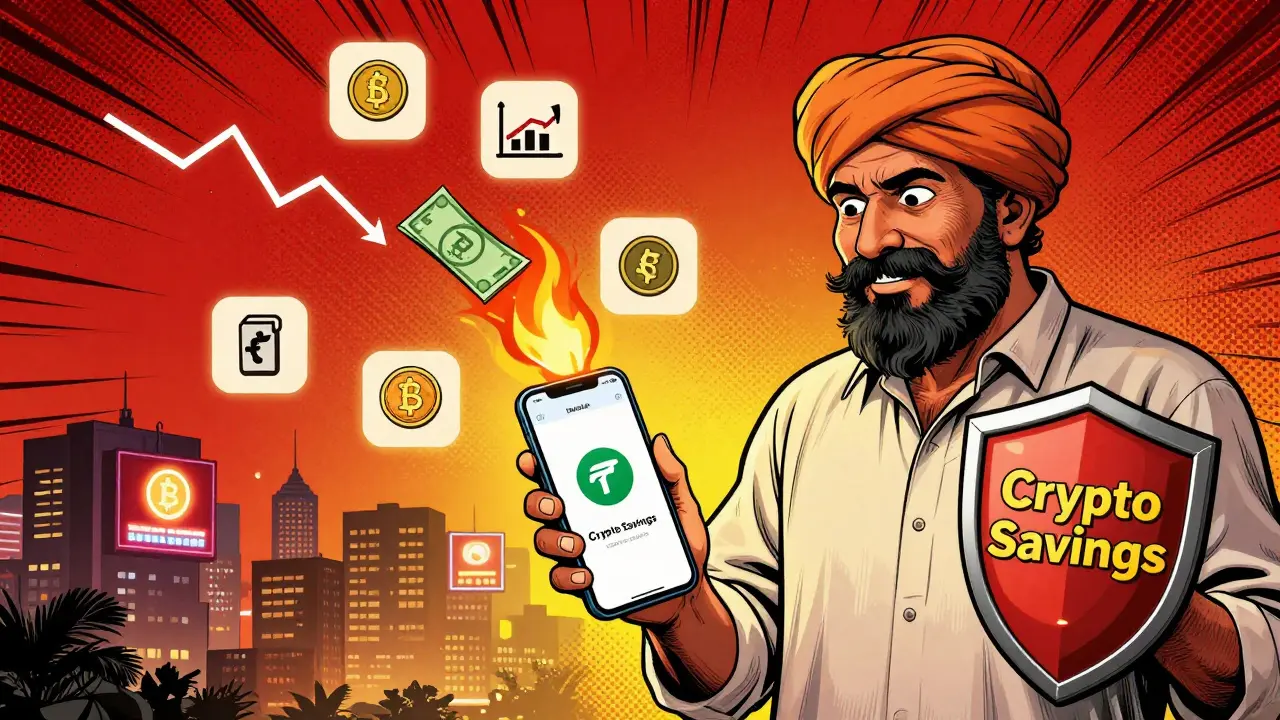
- Protection against inflation: Pakistan’s inflation hit 38% in 2024. The Pakistani rupee lost over 40% of its value against the dollar in two years. People aren’t buying crypto because they think it’ll go up - they’re buying it because their savings are evaporating. Holding even a small amount of Bitcoin or a stablecoin became a survival tactic.
- Access to financial services: Nearly 60% of Pakistan’s population is unbanked. Crypto wallets don’t require ID checks, credit scores, or branch visits. A farmer in Sindh can use a mobile app to store value, pay for seeds, or sell produce without ever setting foot in a bank.
This isn’t a speculative bubble. It’s a grassroots shift in how people manage money when the system fails them.
The Regulatory Flip: From Ban to Blueprint
The turning point came in 2024. After years of public pressure, protests from tech startups, and pressure from diaspora communities, the government did something unthinkable: it reversed course.
In July 2025, the Pakistan Virtual Assets Regulatory Authority (a federal agency established to license, monitor, and enforce rules for cryptocurrency and blockchain businesses) was officially launched. It’s not just a token body - it has real powers. It can issue licenses to exchanges, audit wallets, freeze illicit funds, and even shut down unregistered platforms.
At the same time, the Pakistan Crypto Council (a public-private body led by CEO Bin Saqib, created to bridge government policy and industry needs) began working directly with banks, telecom providers, and fintech firms. Their goal? Make crypto legal, safe, and easy to use.
By early 2026, over 120 licensed crypto platforms are operating in Pakistan. Users can now buy Bitcoin through their mobile wallets, pay utility bills in USDT, or even get loans backed by crypto - all regulated and traceable.
How Pakistan Compares to Other Top Adopters
Let’s put Pakistan’s position in perspective. Here’s how the top adopters stack up based on Chainalysis’ 2025 data:
| Rank | Country | Adoption Score (out of 100) | Primary Driver |
|---|---|---|---|
| 1 | India | 92.4 | Mass retail usage, P2P trading |
| 2 | United States | 89.1 | Institutional ETFs, corporate holdings |
| 3 | Pakistan | 87.6 | Stablecoin remittances, inflation hedge |
| 4 | Vietnam | 85.9 | Gaming, freelance payments |
| 5 | Philippines | 84.3 | Remittances, gig economy |
India leads because of sheer scale - over 100 million users. The U.S. leads because of institutional adoption: BlackRock, Fidelity, and others now offer Bitcoin ETFs. But Pakistan’s rise is unique. It didn’t need Wall Street or Silicon Valley to make this happen. It was ordinary people, using apps on old smartphones, bypassing broken systems.
Who’s Behind the Scenes?
Pakistan’s crypto boom didn’t happen in a vacuum. Behind the scenes, foreign players have stepped in - some with clear motives.
In August 2025, the Pakistan Crypto Council signed a partnership with World Liberty Financial (a U.S.-based blockchain firm co-founded by Zach Witkoff, linked to the Trump family’s political network). The deal promised to help Pakistan build a national blockchain infrastructure, train regulators, and integrate crypto into public services.
But it’s not all altruistic. MicroStrategy, led by Bitcoin billionaire Michael Saylor, reportedly holds over $62 billion in Bitcoin. Its team has met with Pakistani officials to explore using crypto reserves to back future sovereign bonds. Meanwhile, Turkish and UAE-based exchanges now handle 60% of Pakistan’s crypto volume.
This raises questions: Is Pakistan building its own financial future - or trading sovereignty for tech access?
What’s Next? The Road Ahead
Pakistan’s crypto adoption isn’t slowing. Projections suggest the number of users will hit 30 million by 2027. The government is now exploring a digital rupee backed by blockchain, and telecom giants like Jazz and Zong are testing crypto-integrated mobile wallets.
But risks remain. The country still struggles with cybersecurity, and scams are rising. Some users lose money to fake exchanges. Others get caught in regulatory gray zones. And if inflation spikes again, the pressure on crypto as a savings tool will only grow.
What makes Pakistan’s story different is that it didn’t wait for permission. People took matters into their own hands - and the government eventually caught up. That’s rare. Most countries either ban crypto or try to control it. Pakistan chose to adapt.
The world watches now. If Pakistan can keep its crypto ecosystem stable, transparent, and focused on real utility - not speculation or politics - it could become the model for other emerging economies. Not because it has the best tech, but because its people needed it most.
Why is Pakistan ranked so high in crypto adoption despite its economic challenges?
Pakistan’s high ranking comes from practical, everyday use - not speculation. With inflation hitting 38% and traditional banking failing millions, people turned to stablecoins for remittances, savings, and daily payments. Over 20 million users now rely on crypto because it works where banks don’t. Chainalysis confirms this is utility-driven adoption, not gambling.
How did Pakistan go from banning crypto in 2018 to leading global adoption in 2025?
Public pressure, especially from the diaspora and young tech entrepreneurs, forced the government to rethink its stance. By 2024, regulators realized crypto couldn’t be ignored. In July 2025, they created the Pakistan Virtual Assets Regulatory Authority to license and monitor crypto firms - turning chaos into structure. This legal clarity gave users confidence and attracted compliant businesses.
Is Pakistan’s crypto adoption sustainable?
Yes - if it stays focused on utility. The adoption is rooted in real needs: remittances, inflation protection, and financial access. Unlike countries where crypto is driven by speculation, Pakistan’s users aren’t chasing moonshots. They’re using stablecoins to pay bills and send money home. As long as regulators keep the system safe and transparent, this growth is built to last.
What role do stablecoins play in Pakistan’s crypto ecosystem?
Stablecoins like USDT and USDC are the backbone of Pakistan’s adoption. They’re used for 85% of crypto transactions in the country - mostly for sending money from abroad, saving against inflation, and paying for goods online. Because they’re pegged to the U.S. dollar, they’re stable, fast, and cheaper than traditional remittance services.
Are foreign companies exploiting Pakistan’s crypto boom?
Some are. U.S.-based firms like World Liberty Financial and MicroStrategy have entered partnerships with Pakistani regulators, bringing infrastructure and capital. But these deals often come with strings attached - like access to future blockchain contracts or influence over policy. While they help build the system, they also introduce external dependencies that could shift control away from local interests.
Final Thought
Pakistan didn’t win because it had the most tech talent or the deepest pockets. It won because its people refused to accept broken systems. And now, the world is watching to see if this bottom-up revolution can become a blueprint - not just for other developing nations, but for anyone tired of waiting for institutions to fix what’s broken.

Jeremy buttoncollector
February 25, 2026 AT 02:10Michelle Xu
February 26, 2026 AT 03:50Ryan Burk
February 27, 2026 AT 05:56Amanda Markwick
February 27, 2026 AT 08:35Sriharsha Majety
February 28, 2026 AT 22:25Tabitha Davis
March 1, 2026 AT 04:18Vishakha Singh
March 2, 2026 AT 19:28John Fuller
March 4, 2026 AT 00:58Maggie House
March 5, 2026 AT 00:20Robert Kromberg
March 5, 2026 AT 17:51Dee Resin
March 6, 2026 AT 10:28Tanvi Atal
March 7, 2026 AT 21:04Sony Sebastian
March 7, 2026 AT 21:31Cheryl Fenner Brown
March 8, 2026 AT 07:12Michael Teague
March 9, 2026 AT 14:52kati simpson
March 11, 2026 AT 13:33Cory Derby
March 12, 2026 AT 19:55Colin Lethem
March 14, 2026 AT 17:19lori sims
March 16, 2026 AT 06:39Reggie Fifty
March 17, 2026 AT 18:37Kristi Emens
March 18, 2026 AT 00:32Deborah Robinson
March 18, 2026 AT 04:26Jeremy buttoncollector
March 18, 2026 AT 11:04