Imagine sending money to someone across the world. You hit send, and it arrives instantly. The fee is less than a penny. No bank holds your funds for three days. No intermediary takes a huge cut. That is the promise of Dash, a cryptocurrency designed specifically for fast, private, and low-cost everyday payments. While Bitcoin often gets the spotlight as digital gold, Dash was built with a different goal in mind: to be practical digital cash.
If you are wondering what Dash actually is, how it differs from other coins, or whether it still matters in 2026, you have come to the right place. This guide breaks down the technology, the economics, and the real-world use cases of DASH without the jargon.
The Origin Story: From Darkcoin to Digital Cash
To understand Dash, you have to look back at where it started. The project launched in January 2014 as a fork of Bitcoin. At first, it was called Xcoin, then quickly rebranded to Darkcoin. The name change caused some confusion early on, leading many to associate it with illicit activities. However, in March 2015, the community voted to rename it to Dash-a portmanteau of "Digital Cash."
This rebranding wasn't just cosmetic. It signaled a shift in philosophy. The creators, led by Evan Duffield, wanted to fix specific problems they saw in Bitcoin. Bitcoin is secure and decentralized, but it is slow. Transactions can take ten minutes or more to confirm, and fees can spike during busy periods. Dash aimed to solve these issues by prioritizing speed and privacy from day one.
How Dash Works: The Two-Tier Network
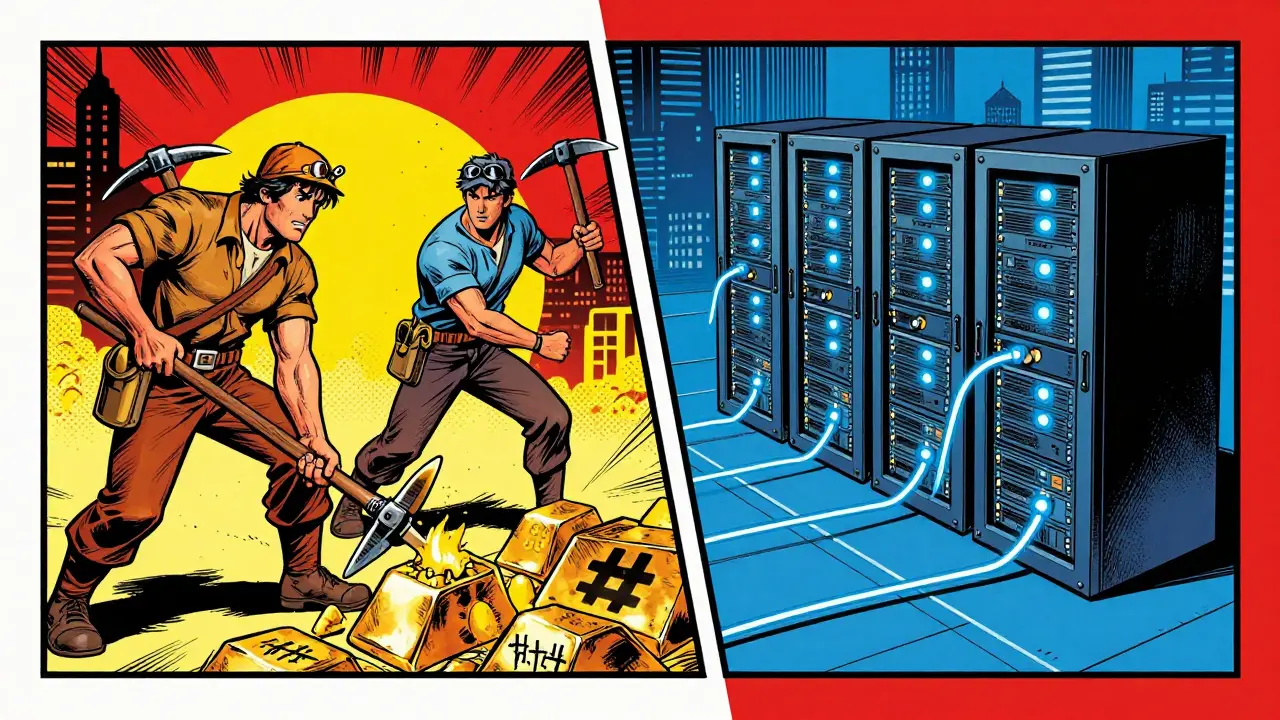
Most cryptocurrencies rely on a single network of miners to validate transactions. Dash uses a unique two-tier network architecture. This structure is the core reason why Dash is faster and more functional than many of its peers.
- Tier 1: Miners. Like Bitcoin, Dash has miners who compete to create new blocks using Proof-of-Work. However, Dash blocks are generated every 2.5 minutes on average, compared to Bitcoin's 10 minutes. This means your transaction confirms much quicker.
- Tier 2: Masternodes. This is Dash's secret weapon. Masternodes are servers that hold exactly 1,000 DASH as collateral. They don't mine new coins; instead, they provide advanced services like instant transactions, privacy mixing, and governance voting.
This split creates a symbiotic relationship. Miners secure the blockchain, while Masternodes enhance its functionality. If you want to run a Masternode, you need to lock up 1,000 DASH. As of 2026, this represents a significant investment, ensuring that operators are committed to the network's health.
Key Features: Why People Use DASH
Dash isn't just another altcoin; it offers specific tools that address common pain points in crypto usage. Here are the three features that set it apart.
| Feature | Standard Crypto (e.g., Bitcoin) | Dash (DASH) |
|---|---|---|
| Transaction Speed | 10+ minutes average | Instant (via InstantSend) |
| Privacy | Transparent ledger | Optional privacy (PrivateSend) |
| Governance | Developer consensus | On-chain voting via Treasury |
| Fees | Variable, often high | Fraction of a cent |
InstantSend
When you buy coffee with a credit card, you expect the payment to clear immediately. With standard Bitcoin, you might wait for several block confirmations. Dash's InstantSend allows transactions to bypass mining and be broadcast directly to masternodes for immediate settlement feature solves this. It locks the inputs of a transaction so they cannot be spent elsewhere. The result? Near-instant finality. For merchants, this eliminates the risk of double-spending attacks during the confirmation window.
PrivateSend
Cryptocurrency ledgers are public. Anyone can trace your Bitcoin history if they know your wallet address. Many users find this lack of privacy intrusive. Dash offers PrivateSend an optional privacy feature that mixes transactions to obscure their origin and destination. It works by breaking down your coins into smaller denominations and mixing them with coins from other users. This makes it difficult to trace where the money came from. Importantly, this is optional. You can choose to use it when you value privacy, or skip it when you need transparency for accounting purposes.
ChainLocks
Security is paramount in crypto. ChainLocks is a feature that makes the Dash blockchain instantly immutable. Once a block is created, Masternodes sign it, preventing any possibility of reorganization or 51% attacks on the last few blocks. This gives users absolute confidence that a confirmed transaction is final.
The Economics: Supply and Rewards
Like Bitcoin, Dash has a hard cap on its supply. There will only ever be 18.9 million DASH coins. This scarcity helps protect against inflation. But how are new coins distributed?
Dash uses a unique reward structure that incentivizes all parts of the network:
- 45% to Miners: They secure the network and process transactions.
- 45% to Masternodes: They provide advanced services and governance.
- 10% to the Treasury: This is the game-changer. This portion goes into a self-funding treasury system.
The Treasury allows Dash to fund development, marketing, and community projects without relying on venture capital or external investors. Proposals are submitted by developers or community members, and Masternode operators vote on which ones get funded. This makes Dash one of the first successful Decentralized Autonomous Organizations (DAOs). It ensures the project remains sustainable and aligned with the community's interests.
Dash vs. Bitcoin: Different Goals
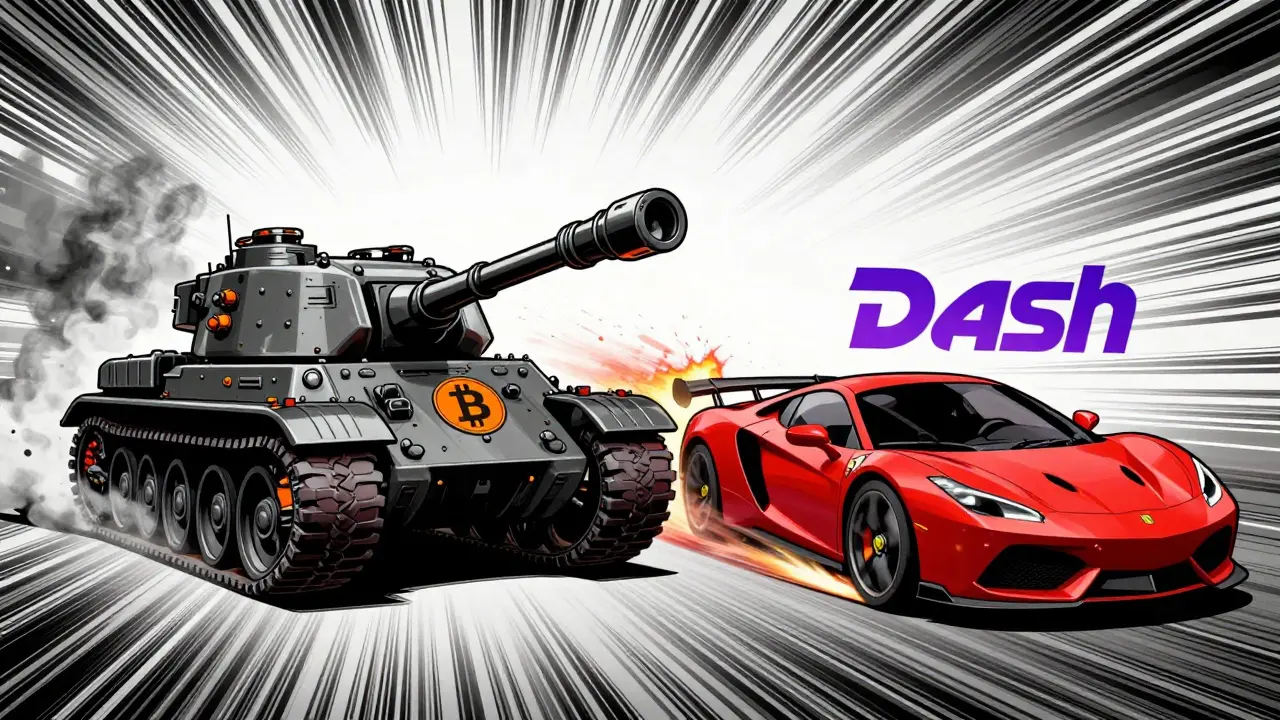
People often compare Dash to Bitcoin because Dash started as a Bitcoin fork. But comparing them is like comparing a sports car to a tank. Both are vehicles, but they serve different purposes.
Bitcoin is designed to be a store of value and a settlement layer. It prioritizes security and decentralization above all else. This makes it excellent for holding wealth over long periods, but less ideal for buying a cup of coffee due to slower speeds and higher fees.
Dash is designed to be a medium of exchange. It prioritizes usability, speed, and privacy. If you want to send money to a friend, pay a vendor, or move funds internationally without banking delays, Dash is optimized for that job. It doesn't try to be everything to everyone; it focuses on being the best possible digital cash.
Is Dash Still Relevant in 2026?
In the fast-moving world of crypto, longevity is rare. Dash has been operational since 2014. In crypto years, that is ancient history. Despite facing challenges early on-including reputational issues from its "Darkcoin" days and market volatility-Dash has survived and thrived.
As of 2026, Dash continues to evolve. The focus remains on merchant adoption and ease of use. While newer technologies like Layer 2 solutions on Bitcoin or Ethereum aim to solve similar speed and cost issues, Dash offers a simpler, native solution. You don't need complex bridges or sidechains to get instant transactions; they are built into the base layer.
For users who value financial sovereignty and want a straightforward tool for peer-to-peer payments, Dash remains a top contender. It is available on most major exchanges, making it easy to buy, sell, and trade.
Can I mine Dash with my computer?
Technically yes, but practically no. Dash uses the X11 hashing algorithm, which was designed to resist specialized mining hardware (ASICs) initially. However, ASICs were eventually developed for X11. To mine profitably today, you would need dedicated industrial-grade equipment. Most people prefer to buy DASH on an exchange rather than mining it.
Is Dash anonymous?
Dash is not fully anonymous by default, but it offers strong privacy options. Standard transactions are transparent like Bitcoin. However, if you use the PrivateSend feature, your transaction history is obscured through coin mixing. This provides a high level of confidentiality, though it is not unbreakable against sophisticated forensic analysis.
How much does it cost to run a Masternode?
You need exactly 1,000 DASH to run a Masternode. This amount must be held in a specific wallet address and cannot be moved while the node is active. Additionally, you need a reliable server with a static IP address. The cost fluctuates based on the market price of DASH, so the dollar value changes daily.
What is the maximum supply of Dash?
The maximum supply of Dash is capped at 18.9 million coins. This limit is hardcoded into the protocol, ensuring that inflation cannot exceed this ceiling. This scarcity model is similar to Bitcoin's 21 million cap, though Dash reached its current supply trajectory faster due to its initial distribution.
Is Dash legal to use?
In most jurisdictions, Dash is treated similarly to other cryptocurrencies like Bitcoin. It is legal to buy, sell, and hold DASH in countries such as the United States, Canada, and most of Europe. However, regulations vary by country. Some nations restrict the use of privacy-enhancing features. Always check local laws before engaging in large-scale transactions or running a Masternode.