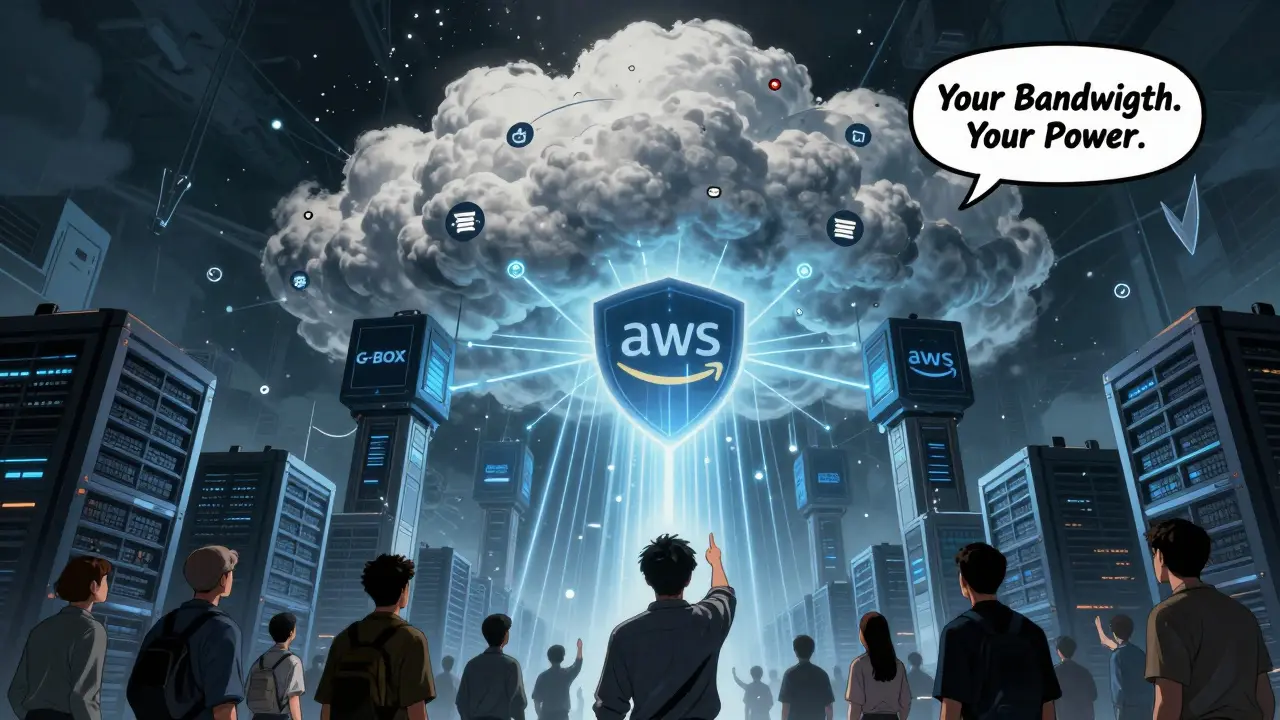
The Gather (GAT) crypto coin isn't just another altcoin. It's a token built around a simple but powerful idea: turn your unused internet bandwidth and computing power into real money. Unlike Bitcoin, which mines blocks, or Ethereum, which runs smart contracts, Gather lets everyday users contribute to a decentralized network that handles secure messaging, data routing, and even AI processing - and gets paid in GAT tokens for doing it.
Launched in 2019 with one goal - helping content creators earn from traffic - Gather completely changed direction in April 2024. A new team from Hong Kong took over, rebuilt the core tech, and relaunched it as a full-blown decentralized infrastructure project. Today, it’s not just about money. It’s about privacy, control, and using hardware you already own to power the next generation of the internet.
How Gather Works: The GProto Protocol and G-BOX
Gather runs on something called the GProto a secure, encrypted communication protocol designed to create distributed long-link clusters for decentralized data routing. Think of it like a peer-to-peer VPN network, but instead of just hiding your data, it routes traffic for others - and pays you for it.
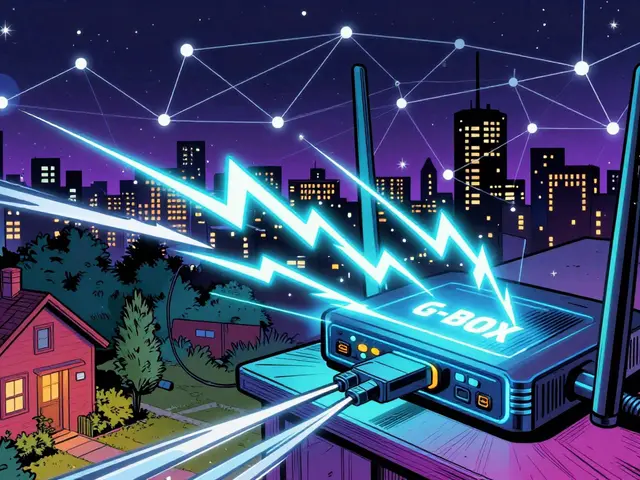
The magic happens through a small hardware device called the G-BOX a physical device designed to connect to home routers and contribute computing power to the Gather network. You plug it into your router, leave it on, and it quietly shares your unused bandwidth and processing power. No downloads, no mining rigs, no crazy electricity bills. It’s designed to run silently in the background.
Here’s the catch: G-BOX isn’t mandatory. You can still earn GAT tokens just by installing the Gather app on your phone or computer. But if you want the best rewards - and to help build the network - the G-BOX is the way to go. It’s the bridge between your home and the decentralized infrastructure of the future.
Tokenomics: Supply, Circulation, and Value
The GAT token is the lifeblood of the Gather ecosystem. There will only ever be 100 million GAT coins created. Right now, about 10 million are in circulation. That means 90% of the supply is still locked up - likely for future network growth, team incentives, or ecosystem grants.
As of February 2026, GAT trades around $0.60 to $0.70 depending on the exchange. That’s a far cry from its all-time high of $46.86 in 2021, but it’s also a far cry from where it was in early 2024, when it was under $0.10. The price has climbed steadily since the April 2024 relaunch, with a 95% gain over the last year according to CoinGecko.
Market cap fluctuates between $6 million and $8 million, and daily trading volume ranges from $20K to $120K - low compared to major coins, but growing. Its ranking on crypto tracking sites varies wildly: CoinMarketCap puts it at #4739, while LiveCoinWatch says #26800. That’s not because it’s weak - it’s because it’s still small. Most big platforms don’t list it yet.
Why Gather Is Different: DePIN and Decentralized Communication
Gather doesn’t compete with Bitcoin or Ethereum. It competes with companies like Cloudflare, AWS, and even WhatsApp - but in a decentralized way.
It’s part of a new wave of projects called DePIN Decentralized Physical Infrastructure Networks, where users contribute real-world resources like bandwidth, storage, or computing power in exchange for crypto rewards. Other DePIN projects include Filecoin (storage), Helium (wireless networks), and Akash (cloud computing). Gather is one of the few focusing on secure, encrypted communication as its core function.
Where other crypto projects rely on software alone, Gather adds hardware. That’s rare. It means the network isn’t just virtual - it’s physical. And physical infrastructure is harder to shut down, easier to scale, and more resilient than server farms owned by a single company.
Imagine a future where your smart TV, router, or even your old laptop helps route encrypted messages between users across the globe - without any central server logging your data. That’s what Gather is building.

Price Predictions and Market Outlook
Analysts are watching Gather closely. DigitalCoinPrice predicts GAT could hit $2.28 by the end of 2027. Others believe it could break $2.50 by late 2026. Even more ambitious forecasts suggest it could reach $3.45 if adoption spikes.
Why the optimism? Three reasons:
- Token unlock potential - With 90% of GAT still locked, future releases could spark buying pressure if demand grows.
- Hardware adoption - If G-BOX sales hit 100,000 units, the network becomes exponentially more valuable.
- DePIN momentum - Investors are pouring money into decentralized infrastructure. Gather fits perfectly.
But here’s the reality: Gather isn’t a get-rich-quick coin. It’s a long-term bet on infrastructure. If you’re looking for a coin to flip in a week, look elsewhere. If you believe in a decentralized internet built by users - not corporations - then Gather is worth paying attention to.
How to Get Started with Gather
You don’t need to be a tech expert to join. Here’s how:
- Visit the official site - Go to gather.global and download the app for Windows, macOS, Android, or iOS.
- Create a wallet - You’ll need an Ethereum-compatible wallet like MetaMask. GAT runs on Ethereum, so your wallet must support ERC-20 tokens.
- Connect and earn - The app will start using your idle bandwidth. You’ll see your earnings update in real time.
- Upgrade to G-BOX (optional) - If you want higher rewards, buy a G-BOX from the official store. It costs around $99 and pays for itself in 6-12 months based on current rates.
There’s no mining rig. No staking. No locking up your coins. Just plug in, run the app, and earn.
Where to Buy GAT
GAT is listed on a handful of decentralized exchanges (DEXes) like Uniswap and PancakeSwap. It’s not on Coinbase, Binance, or Kraken - yet. That means you’ll need to use a crypto wallet and swap ETH or BNB for GAT directly on those platforms.
Because it’s not on major exchanges, liquidity is low. You might see big price swings on small trades. Always use limit orders. Don’t try to buy large amounts in one go.
Keep an eye on the official Gather social channels - Twitter (@GatherGlobal), Telegram (@gathertop), and Medium - for updates on exchange listings. A major listing could trigger a significant price move.
Is Gather Safe? Risks and Red Flags
No crypto is risk-free. Gather has some serious red flags - and some strong signs of legitimacy.
Red flags:
- Confusing history - Was it launched in 2019? Relaunched in 2024? The team changed. The roadmap shifted. That’s confusing for investors.
- Low liquidity - Trading volume is tiny. That means big players can move the price easily.
- Hardware cost - The G-BOX isn’t cheap. If you’re not sure about the project, spending $100 upfront is risky.
Good signs:
- Active development - The team posts weekly updates on Medium and responds to questions on Telegram.
- Real product - G-BOX exists. It’s not vaporware. You can hold it in your hands.
- Clear use case - It solves a real problem: who owns your internet traffic?
If you’re comfortable with risk and believe in decentralized infrastructure, Gather is worth a small investment. If you’re risk-averse, wait until it’s listed on a major exchange.
What’s Next for Gather?
The roadmap is ambitious:
- Integrate AI-powered content routing by Q3 2026
- Launch decentralized email and messaging apps built on GProto
- Enable G-BOX users to rent out computing power for AI training
- Partner with universities and research labs for decentralized data processing
They’re not just building a coin. They’re building a new internet layer - one where users control the pipes, not the corporations.
Is Gather (GAT) a good investment in 2026?
Gather isn’t a typical crypto investment. It’s a bet on decentralized infrastructure. If you believe the future of the internet will be built by users - not Big Tech - then yes, GAT has long-term potential. But don’t expect quick gains. It’s a 3-5 year play. Start small, monitor growth, and only invest what you can afford to lose.
Can I mine Gather (GAT) like Bitcoin?
No. Gather doesn’t use proof-of-work mining. You earn GAT by sharing your unused bandwidth and computing power through the Gather app or G-BOX device. It’s more like contributing to a distributed network than mining.
Do I need a G-BOX to earn GAT?
No, you don’t need a G-BOX to earn GAT. The mobile and desktop apps let you earn just by sharing idle bandwidth. But the G-BOX gives you 5-10x higher rewards, so if you want serious earnings, it’s the best option.
Where can I buy GAT coin?
GAT is available on decentralized exchanges like Uniswap and PancakeSwap. You’ll need ETH or BNB to swap for GAT. It’s not listed on Coinbase, Binance, or Kraken yet. Always use a trusted wallet and never send funds to unknown addresses.
Is Gather a scam?
There’s no evidence Gather is a scam. The team is active, the G-BOX is real, and the code is open. But it’s still early, and the project has changed direction multiple times. Proceed with caution. Do your own research. Don’t trust social media hype.
If you’re curious about the future of decentralized networks, Gather is one of the few projects turning theory into hardware. It’s not flashy. It doesn’t have a celebrity spokesperson. But it’s building something real - one router at a time.
precious Ncube
March 1, 2026 AT 17:25Jan Czuchaj
March 1, 2026 AT 18:48KingDesigners &Co
March 2, 2026 AT 16:31Felicia Eriksson
March 4, 2026 AT 02:31aaron marp
March 5, 2026 AT 22:17Patrick Streeb
March 5, 2026 AT 23:34Phillip Marson
March 6, 2026 AT 14:28Tracy Whetsel
March 6, 2026 AT 17:15Alyssa Herndon
March 8, 2026 AT 13:41Ifeanyi Uche
March 8, 2026 AT 15:07Jeff French
March 10, 2026 AT 07:17Elana Vorspan
March 10, 2026 AT 12:21Kenneth Genodiala
March 10, 2026 AT 13:06Michael Rozputniy
March 12, 2026 AT 12:45Danny Kim
March 13, 2026 AT 14:06Cathy Sunshine
March 15, 2026 AT 07:42Tanvi Atal
March 17, 2026 AT 06:42Trenton White
March 18, 2026 AT 07:14Cheryl Fenner Brown
March 19, 2026 AT 10:04Michael Teague
March 19, 2026 AT 23:19kati simpson
March 21, 2026 AT 15:32Jan Czuchaj
March 21, 2026 AT 21:02