Remember the late 2021 crypto boom? That was when Spintop Network launched its highly anticipated blockchain gaming hub and associated SPIN token airdrop campaign. If you are searching for details on the Spintop airdrop today, July 31, 2026, you might be wondering if it is still active, how much those tokens were worth, or whether you missed out. The short answer is that the primary distribution window closed years ago. However, understanding exactly how this campaign worked offers valuable lessons for anyone navigating the current landscape of GameFi gaming finance ecosystems combining play-to-earn mechanics with blockchain technology and decentralized exchanges.
The Core Mechanics of the Spintop Airdrop
To understand why the Spintop airdrop generated so much buzz back in November 2021, we need to look at the specific numbers. The project allocated 2,500,000 SPIN tokens the total supply distributed during the initial public airdrop phase to the first 5,000 eligible participants. This meant each person who successfully completed the requirements received exactly 500 SPIN tokens. At the time of distribution, these tokens were valued at approximately $5 per allocation, making it a modest but attractive entry point for new users.
The distribution model was strictly first-come, first-served. Once the cap of 5,000 participants was hit, the doors closed. This created a sense of urgency that drove massive traffic to their social channels. For context, this initial drop represented about 18.5% of the total initial token supply allocation, showing that Spintop intended to distribute a significant portion of its assets directly to the community rather than holding them all in reserve.
- Total Tokens Distributed: 2,500,000 SPIN
- Per User Allocation: 500 SPIN
- Participant Cap: 5,000 users
- Estimated Value at Launch: ~$5 USD per user
How You Qualified: The Task List
You couldn’t just click a button and get free money. Spintop required genuine engagement to prevent bots from draining the supply. The verification process was designed to build an active community around their Binance Smart Chain a blockchain platform developed by Binance for smart contracts and dApps with lower fees than Ethereum ecosystem. Here is what you had to do to qualify:
- Join Telegram: You needed to join both the official Spintop Telegram group and their announcement channel.
- Twitter Engagement: Follow Spintop on Twitter and retweet their pinned post. Crucially, your account needed a minimum of 10 followers. This rule filtered out brand-new bot accounts.
- Human Verification: Complete an exclusive airdrop form that included a quiz to prove you were human.
There were also optional tasks. Following them on Medium, joining their Discord server, and subscribing to their newsletter could boost your visibility within the community, though they weren't mandatory for receiving the base 500 SPIN tokens. Many users found the human verification quiz frustratingly complex, but it served its purpose in keeping the distribution clean.
Beyond the Main Drop: Partnerships and Guilds
The primary airdrop was just one part of Spintop’s strategy. They executed supplementary campaigns to widen their reach. One notable partnership was with CoinMarketCap a leading cryptocurrency data aggregator and exchange ranking platform. Through this collaboration, Spintop allocated 900,000 additional SPIN tokens. These were distributed among 5,000 winners selected through CoinMarketCap’s platform, with individual allocations reaching up to 180 SPIN tokens per winner.
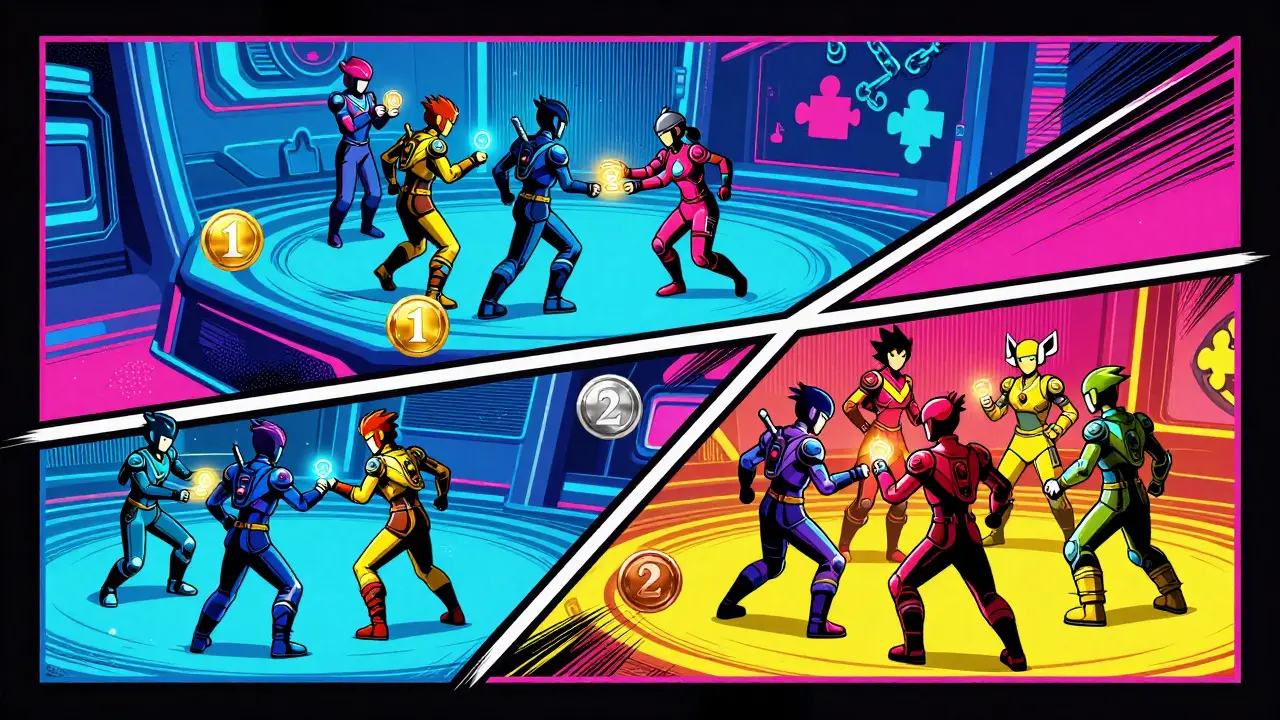
Another unique feature was the guild-based reward system. Spintop encouraged users to form or join guilds-community groups that competed against each other. The top three performing guilds received differentiated airdrop allocations based on their rank:
| Guild Rank | Reward Percentage | Purpose |
|---|---|---|
| 1st Place | 2.5% | Incentivize top-tier community leadership |
| 2nd Place | 1.5% | Reward competitive secondary groups |
| 3rd Place | 1% | Encourage broader participation |
This structure forced users to collaborate. If you wanted more tokens, you had to help your guild grow and engage. It turned a passive airdrop into an active community-building exercise.
Tokenomics and Vesting Schedules
Getting the tokens was only half the battle. What happened next mattered more for long-term value. Spintop implemented a complex vesting schedule to prevent immediate dumping. When the Token Generation Event (TGE) the moment when a new cryptocurrency token is officially created and becomes tradable occurred on December 3, 2021, only 20% of certain token pools were unlocked immediately.
For private sale participants, the situation was even tighter. They received 14.28% of their allocation at TGE. The remaining tokens vested linearly over six months. This means if you bought in early, you couldn’t sell everything on day one. The monthly unlocks of 20% over four months for other allocations helped stabilize the price by controlling the supply hitting the market. This approach is standard in modern DeFi decentralized finance protocols aiming to reduce volatility through controlled token release projects, but it was particularly strict for Spintop given the hype around their launch.
Current Status in 2026: Is It Still Relevant?
Fast forward to July 2026. The Spintop airdrop campaigns concluded by early 2022. All announced distributions were completed. So, where does the project stand now? The reality is stark. As of recent data, the project maintains a relatively small market capitalization, hovering around $96,950. This suggests limited sustained market adoption despite the comprehensive distribution strategy used in 2021.
The broader GameFi sector the intersection of gaming and financial incentives using blockchain technology has cooled significantly since the peak of 2021. Many projects that launched during that frenzy struggled to retain users once the novelty wore off and the bear market set in. Spintop’s vision was to create a gaming hub featuring Gamepedia-a blockchain play-to-earn game aggregator allowing users to search and select P2E games. While the concept remains valid, execution proved difficult.
User feedback from the airdrop period highlighted mixed experiences. Early participants reported straightforward claim processes. However, many expressed frustration with the social media requirements and the decline in community activity after the tokens were distributed. Today, while the platform may still exist, the intense community engagement seen during the airdrop has largely dissipated.
Lessons for Modern Airdrop Hunters
If you are looking for the next big airdrop in 2026, Spintop serves as a case study in both effective marketing and the challenges of long-term retention. Here is what you can take away from their campaign:
- Social Proof Matters: The requirement for 10 Twitter followers seems minor, but it effectively filtered out low-effort bots. Modern airdrops often use similar heuristics.
- Vesting Protects Value: Projects with strict vesting schedules (like Spintop’s 6-month linear unlock) tend to have less immediate price crash upon launch, though they require patience.
- Community > Tokens: The guild system showed that incentivizing group behavior creates stronger communities than individual rewards alone. Look for projects that encourage collaboration.
- Timing is Everything: Spintop launched during a bull run. In 2026, the market dynamics are different. Be wary of projects trying to replicate 2021 strategies without adapting to current economic conditions.
The landscape has evolved. We now see increased sophistication in airdrop mechanisms, including gamification features and staking incentives that go beyond simple social media follows. Spintop’s legacy is not just in the tokens it distributed, but in how it demonstrated the power-and limitations-of community-driven distribution models in the Web3 space.
Is the Spintop airdrop still active in 2026?
No, the primary Spintop airdrop campaign concluded in early 2022. The initial distribution of 2,500,000 SPIN tokens to 5,000 participants was capped and completed years ago. Any claims of ongoing "free" drops should be verified carefully to avoid scams.
How much was the Spintop airdrop worth?
At the time of distribution in late 2021, each participant received 500 SPIN tokens, which were valued at approximately $5 USD. The total value has fluctuated significantly since then, reflecting broader market trends in the GameFi sector.
What blockchain network does SPIN use?
The SPIN token operates on the Binance Smart Chain (BSC). This choice allowed for lower transaction fees compared to Ethereum, making it more accessible for smaller transactions and frequent gaming interactions.
Did Spintop partner with any major platforms?
Yes, Spintop partnered with CoinMarketCap for a secondary distribution of 900,000 SPIN tokens. They also utilized Telegram, Discord, Twitter, and Medium for community building and verification purposes.
What is the current status of the Spintop Network?
As of 2026, Spintop Network exists but has seen limited growth in market capitalization, hovering around $96,950. The initial hype from the 2021 airdrop has faded, and user engagement has declined compared to its launch period.