
You’ve probably heard of Pokémon GO. You walk around, catch digital creatures, and have fun. Now imagine if those creatures were NFTs you actually owned, and catching them paid you in cryptocurrency. That’s the promise behind MetaTrace, a Polygon-based GameFi project that combines augmented reality with blockchain rewards. The native token, TRC, sits at the center of this ecosystem. But before you download the app or buy the token, you need to know what’s really going on under the hood. Is this the next big thing in Web3 gaming, or is it a high-risk micro-cap asset?
This article breaks down exactly what MetaTrace is, how the TRC token works, who built it, and-most importantly-the stark reality of its market performance as of mid-2026.
Key Takeaways
- MetaTrace (TRC) is a utility token on the Polygon network powering an AR geolocation game similar to Pokémon GO but with crypto rewards.
- The project claims a "Free-to-Play and Earn" model, allowing users to earn without buying expensive NFTs upfront.
- Market data shows extreme volatility: TRC dropped 99.9% from its all-time high of $0.121 in December 2023 to fractions of a cent in 2026.
- Liquidity is extremely low, with daily trading volumes often under $4,000, making large trades risky due to slippage.
- Data discrepancies across exchanges suggest potential issues with supply tracking or holder concentration.
What Exactly Is MetaTrace?
At its core, MetaTrace is a mobile application that overlays a digital game world onto the real-world map. If you’ve ever played an augmented reality (AR) game where your phone camera shows virtual objects in your physical environment, you already understand the mechanic. The twist here is blockchain integration.
Players move their avatars in sync with their real-life movements. As they explore locations, they search for "reward boxes." These aren’t just cosmetic items; they contain tradable assets like NFTs, non-fungible tokens representing unique in-game characters or pets, crypto pets, partner prizes, and the native TRC token.
The platform positions itself as a "Free-to-Play and Earn" (F2P2E) ecosystem. This is a significant distinction from earlier "Play-to-Earn" models that required players to purchase expensive starter kits or NFTs just to begin playing. MetaTrace claims you can start exploring and earning through interactions with partners and advertisers without an initial financial barrier. The goal? To motivate people to get outside, engage in physical activity, and enter the Web3 space simultaneously.
The TRC Token: Utility and Architecture
So, what does the TRC coin actually do? It is not a standalone blockchain coin like Bitcoin or Ethereum. Instead, it is an ERC-20 compatible token built on the Polygon network, a Layer 2 scaling solution for Ethereum known for low transaction fees and fast processing speeds. This choice makes sense for a gaming application, where frequent micro-transactions would be prohibitively expensive on the Ethereum mainnet.
The smart contract address for TRC on Polygon is 0x40d9fc77027a281d85de1fa660c887e645ae26c3. Within the game, TRC serves as the primary reward currency. When you find a reward box, win a tournament, or complete specific exploration tasks, you are likely compensated in TRC. While detailed governance or staking mechanisms are not prominently advertised in public aggregators, the token acts as the economic backbone for player incentives and potentially future in-app purchases.
Who Built MetaTrace?
In the crypto world, the team behind the code matters almost as much as the code itself. Public descriptions from sources like CoinMarketCap indicate that MetaTrace was developed by professionals with experience at major gaming studios. Names frequently associated with the development background include:
- Niantic (creators of Pokémon GO and Ingress)
- Wargaming (developers of World of Tanks)
- Kama Games
- Game Insight
However, there is a notable lack of transparency regarding specific leadership. Unlike many established projects that list their CEO, CTO, and lead designers publicly, MetaTrace’s aggregator pages do not provide individual names or corporate entity details. There is also no readily available information about venture capital backers, incubators, or public code repositories. This anonymity is common in early-stage or highly speculative crypto projects but adds a layer of risk for investors who prefer verified teams.
Market Performance: The Sharp Decline
If you are looking at TRC as an investment, you need to look at the numbers. And the numbers tell a story of extreme volatility and significant loss of value.
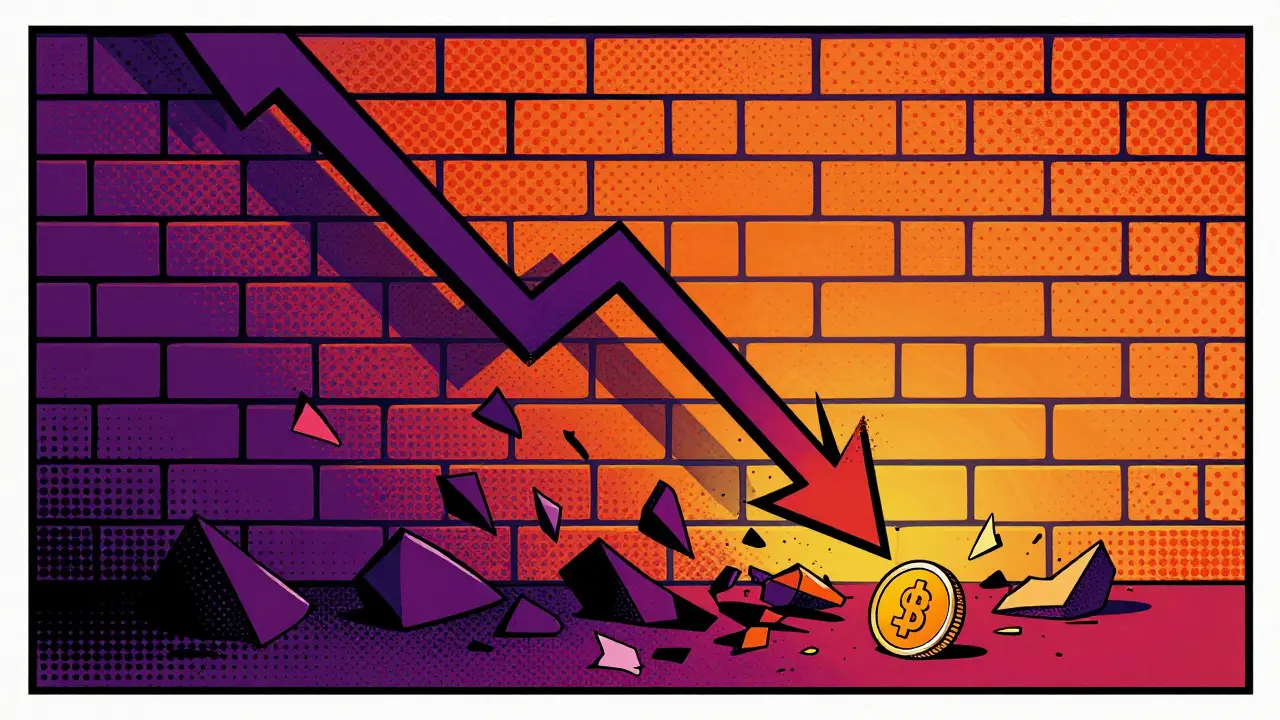
MetaTrace reached its All-Time High (ATH) of $0.121 on December 22, 2023. Since then, the token has experienced a catastrophic drop. By mid-2026, data from aggregators like CryptoRank places the price at approximately $0.000163. That represents a decline of roughly 99.9%.
To put that in perspective: if you had invested $1,000 at the peak, it would now be worth about $1. This kind of drawdown is typical for many low-cap GameFi tokens that fail to maintain user engagement after the initial hype cycle fades.
| Metric | Value / Range | Source Context |
|---|---|---|
| All-Time High Price | $0.121 | Dec 22, 2023 |
| Current Price Estimate | $0.000008 - $0.000163 | Crypto.com / CryptoRank |
| 24-Hour Volume | $396 - $3,090 | P2P Army / CryptoRank |
| Market Cap | $57k - $615k | Varies significantly by source |
| Max Supply | 5 Billion TRC | Consistent across most sources |

Data Discrepancies and Liquidity Risks
One of the biggest red flags for any crypto investor is inconsistent data. When you check different platforms for TRC, the numbers don’t always line up.
For instance, Bitget reports a total and circulating supply of 4.99 billion TRC, resulting in a fully diluted valuation (FDV) of around $615,000. However, CryptoRank lists a circulating supply of only 355 million TRC against a max supply of 5 billion. P2P Army shows even more confusing data, sometimes listing prices near $0.009 while showing tiny circulating supplies. These inconsistencies suggest that either the token distribution is opaque, or different exchanges are pulling data from different snapshots of the blockchain.
More concerning is the liquidity. With 24-hour trading volumes often reported between $396 and $3,090, the market is incredibly thin. If you tried to sell a large amount of TRC, you would likely crash the price further because there simply aren’t enough buyers to absorb the sale. This is known as high slippage. Additionally, Bitget’s on-chain data once showed only 34 holders for the token contract. While this number might be incomplete (tracking only certain wallet types), it hints at severe centralization, where a few wallets control the majority of the supply.
How to Buy and Use TRC (If You Still Want To)
Despite the risks, some users still want to participate in the MetaTrace ecosystem. Here is how the process generally works today:
- Get a Polygon-Compatible Wallet: You will need a non-custodial wallet like MetaMask or Trust Wallet that supports the Polygon network.
- Acquire MATIC or USDT: Since TRC lives on Polygon, you need gas fees paid in MATIC (Polygon’s native token) or stablecoins like USDT to facilitate swaps.
- Find a Trading Venue: TRC is not listed on major spot markets like Binance or Coinbase. You may find pairs on smaller centralized exchanges like MEXC (TRC/USDT) or use decentralized exchange (DEX) interfaces like Bitget’s Web3 swap.
- Swap for TRC: Execute the swap carefully. Due to low liquidity, double-check the price impact before confirming the transaction.
Once you have TRC, you can import it into the MetaTrace app to claim rewards, though remember that the "earning" potential is currently tied to a token with very low market value.
Is MetaTrace Worth It in 2026?
Let’s be direct. MetaTrace occupies a very small niche in the crowded GameFi sector. Its market share is effectively 0.00% compared to giants like Bitcoin or Ethereum. The combination of a 99.9% price drop, low liquidity, and lack of transparent team information makes it a high-risk, speculative asset.
On the positive side, the concept of Free-to-Play AR gaming is sound. If the developers manage to attract a massive user base through partnerships and advertising, the token could see renewed interest. However, based on current metrics, there is little evidence of growing adoption. There are no recent announcements of major roadmap milestones, burns, or new features driving demand.
For gamers, the app might offer a novel way to explore your city. For investors, TRC should be treated with extreme caution. Never invest money you cannot afford to lose entirely, especially in micro-cap tokens with such volatile histories.
What blockchain is MetaTrace (TRC) built on?
MetaTrace (TRC) is a token built on the Polygon network. It is not a standalone Layer-1 blockchain but rather an ERC-20 compatible token that utilizes Polygon’s infrastructure for low-cost and fast transactions.
Why did TRC price drop so much?
The TRC token dropped approximately 99.9% from its all-time high of $0.121 in late 2023. This decline is attributed to broader bearish trends in the GameFi sector, loss of user interest, low liquidity, and potentially unsustainable tokenomics where supply outpaced demand.
Can I earn TRC without spending money?
Yes, MetaTrace promotes a "Free-to-Play and Earn" model. Players can theoretically start exploring the map and collecting rewards without purchasing NFTs upfront. However, the actual value of these earnings depends on the market price of TRC, which is currently very low.
Where can I buy TRC token?
TRC is not available on major exchanges like Binance Spot or Coinbase. It can be traded on smaller centralized exchanges like MEXC or swapped via decentralized platforms like Bitget’s Web3 interface using Polygon-compatible wallets.
Who is the team behind MetaTrace?
Public sources state the app was developed by professionals with experience at Niantic, Wargaming, Kama Games, and Game Insight. However, specific names of founders, CEOs, or lead developers are not publicly disclosed in standard aggregator listings, adding a layer of anonymity to the project.
What is the maximum supply of TRC?
The maximum supply of MetaTrace (TRC) is capped at 5 billion tokens. Most data aggregators confirm this figure, although circulating supply numbers vary significantly between platforms.