
For anyone trying to trade Bitcoin or Ethereum while living in mainland China, the answer is simple but frustrating: almost every major exchange is off-limits. If you are sitting in Shanghai or Beijing and try to log into Binance, Coinbase, or Kraken, you will likely hit a dead end. The Great Firewall blocks these sites, local banks freeze any funds sent to them, and the legal risks are real.
But here is where it gets messy. You might have seen headlines in mid-2025 claiming that even *owning* crypto became illegal. Those stories were recycled rumors from 2021. The reality in 2026 is more nuanced. While trading on centralized platforms is strictly prohibited and heavily enforced, holding digital assets isn't technically a crime for individuals-though doing so carries significant financial and legal hurdles. Understanding exactly which doors are closed, which ones are slightly ajar, and why the government is pushing its own digital currency is crucial for navigating this complex landscape.
The Core Ban: What Is Actually Prohibited?
To understand what is banned, we have to look at the timeline. The crackdown didn't happen overnight. It started in September 2017 when the People's Bank of China (PBOC) ordered all domestic cryptocurrency exchanges to shut down. This was the first major wave, wiping out local platforms like Huobi and OKX from operating within Chinese borders.
Then came the bigger hammer in September 2021. Authorities issued a "blanket ban" that expanded beyond just exchanges. This regulation classified cryptocurrency-related business activities as illegal financial operations. Specifically, it targeted:
- Centralized Trading Platforms: Any service matching buyers and sellers of crypto for fees is considered an illegal financial intermediary.
- Cryptocurrency Mining: Large-scale mining operations were deemed energy-intensive and economically unviable, leading to their closure across provinces like Inner Mongolia and Sichuan.
- ICO Services: Initial Coin Offerings and related fundraising mechanisms remain strictly forbidden.
Crucially, the ban applies to both domestic and foreign entities. This means that while Binance is a global platform, it cannot legally serve customers with Chinese identification or bank accounts. Similarly, Coinbase and Kraken block users based on IP addresses and KYC (Know Your Customer) data linked to China.
Major Exchanges Blocked in China
You don't need a secret list to know which exchanges are inaccessible. Virtually all top-tier centralized exchanges (CEXs) are blocked. Here is how the restrictions apply to the most well-known names:
| Exchange Name | Access Status | Enforcement Method |
|---|---|---|
| Binance | Blocked | IP blocking, account suspension for Chinese ID/Bank cards |
| Coinbase | Blocked | Geographic restrictions, no fiat on-ramps for China |
| Kraken | Blocked | Strict KYC rejection for Chinese residents |
| Huobi (HTX) | Delisted/Blocked | Originally Chinese, forced to delist Chinese users and rebrand globally |
| OKX | Restricted | No fiat trading pairs for CNY, strict geographic bans |
The enforcement isn't just about website access. It’s about the financial plumbing. Chinese banks are under strict orders to monitor transactions. If your bank account sends money to a known crypto-related entity-even if it’s an offshore company-the transaction can be flagged, frozen, and reported to authorities. This creates a massive barrier to entry for anyone trying to move Renminbi (CNY) into Bitcoin or stablecoins like USDT.
The 2025 Rumor Mill: Is Holding Crypto Illegal?
In May and June 2025, social media exploded with claims that China had updated its laws to make private ownership of cryptocurrency completely illegal. Posts circulated suggesting that as of May 31, 2025, merely having Bitcoin in your wallet could lead to criminal charges.
These reports were false. Fact-checkers and legal analysts confirmed that these were recycled headlines from the 2021 crackdown. As of 2026, there has been no official announcement from the PBOC or the Supreme People's Court declaring private possession of crypto a criminal offense for individuals. However, the distinction is vital: while you might not go to jail for holding a coin, you have zero legal protection if you lose it, get scammed, or face issues transferring it. The state does not recognize crypto as legal tender or property with full rights.
This ambiguity creates a gray area. You aren't arrested for holding, but you are aggressively penalized for trading. This drives much of the activity underground.
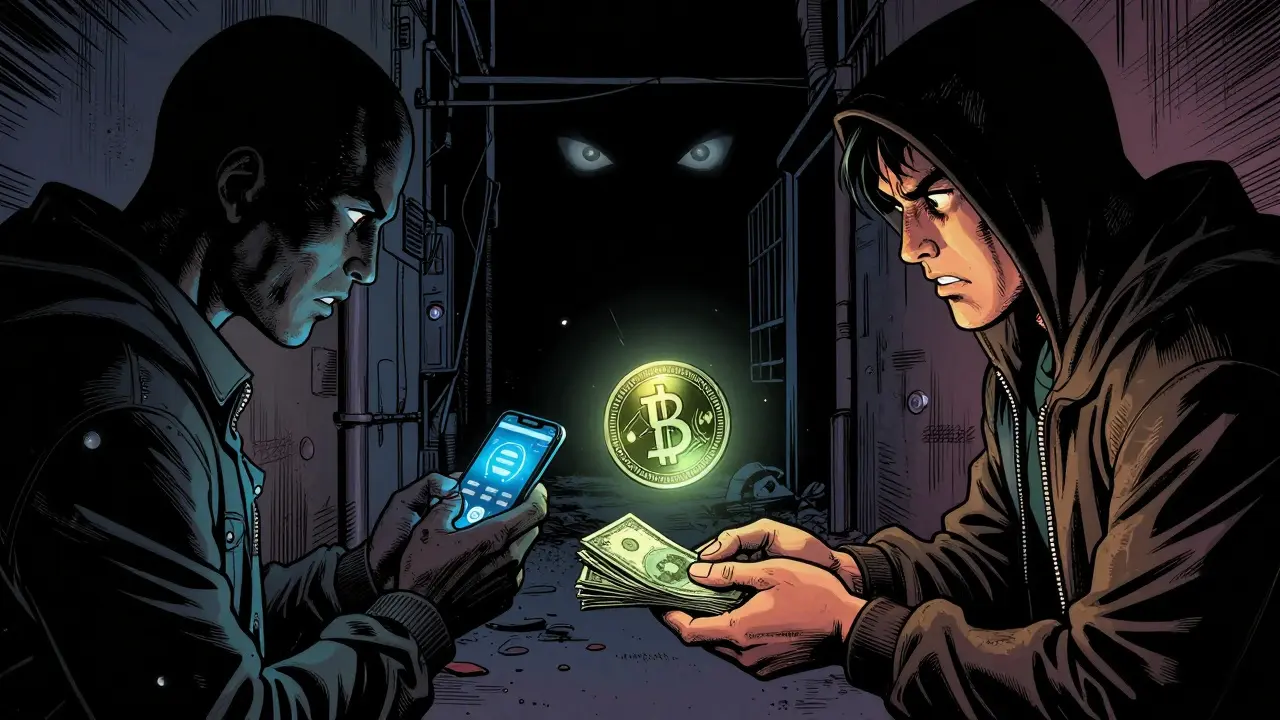
How People Still Trade: OTC and DEXs
Despite the bans, demand remains high. So, how do people in China still buy and sell crypto? They bypass the centralized exchanges entirely.
Over-the-Counter (OTC) Trading: This is the most common method. Instead of using an app, traders meet privately or use peer-to-peer (P2P) platforms that operate in a regulatory blind spot. These trades often involve direct bank transfers between individuals, cash payments, or third-party payment apps like Alipay and WeChat Pay, though these platforms also increasingly flag suspicious crypto-related transfers. The risk here is counterparty fraud; if the other person doesn’t send the crypto or the money, you have little recourse.
Decentralized Exchanges (DEXs): Platforms like Uniswap or PancakeSwap don’t have a central server to block. They run on blockchain protocols. Users connect via wallets like MetaMask. However, accessing these sites often requires bypassing the Great Firewall using VPNs, which itself is a legal gray area in China. Furthermore, getting crypto *into* your wallet initially still requires solving the fiat on-ramp problem, usually through OTC methods.
Offshore Accounts: Some wealthy individuals hold foreign bank accounts or passports, allowing them to use international exchanges like Coinbase without triggering domestic alerts. This is risky and requires careful structuring to avoid capital flight investigations.
The State Alternative: e-CNY and Digital Yuan
China hasn’t abandoned digital money; it just wants to control it. The centerpiece of this strategy is the e-CNY (Digital Yuan). Unlike Bitcoin, which is decentralized and anonymous, the e-CNY is a Central Bank Digital Currency (CBDC). It is fully traceable, centrally issued by the PBOC, and designed to replace physical cash and commercial bank deposits.
The government promotes e-CNY as the safe, legal alternative to crypto. It offers instant settlement and works offline. By developing a robust CBDC infrastructure, China aims to maintain monetary sovereignty while participating in the digital economy. There are also discussions about a yuan-backed stablecoin for cross-border trade, which would allow controlled exposure to digital assets without relinquishing state oversight.
This dual approach-banning decentralized crypto while promoting state-controlled digital currency-highlights the core conflict. The state fears losing control over capital flows and monetary policy. Decentralized exchanges threaten that control; e-CNY reinforces it.
Risks and Enforcement in 2026
If you are considering navigating these restrictions, you must understand the risks. Enforcement has become sophisticated.
- Bank Account Freezes: This is the most immediate consequence. Banks use AI-driven monitoring to detect patterns associated with crypto trading (e.g., rapid small transfers, interactions with known mixer services). If flagged, your account can be frozen for months during an investigation.
- Legal Prosecution: While holding isn't illegal, organizing trading groups, running OTC desks, or facilitating large-scale capital flight can lead to charges of illegal fundraising or disrupting financial order. Penalties include fines and imprisonment.
- Surveillance: Authorities monitor blockchain addresses linked to Chinese entities. Wallets associated with banned activities may be blacklisted, preventing interaction with compliant services.
The market impact is also significant. When rumors of stricter enforcement circulate, global prices often dip due to fear of reduced liquidity from Chinese investors. Conversely, any hint of policy softening-such as comments from regulators in July 2025 about potential future adjustments-can cause price spikes. However, as of now, the ban remains firm.
Conclusion: Navigating the Gray Area
The landscape for crypto in China in 2026 is defined by prohibition and adaptation. Centralized exchanges like Binance and Coinbase are effectively banned for residents. Private ownership exists in a legal gray zone, tolerated but unprotected. The state pushes e-CNY as the only legitimate digital currency option.
For those determined to participate, the path involves high-risk workarounds like OTC trading and decentralized protocols, all while avoiding the scrutiny of the banking system. It is a game of cat and mouse where the stakes are your financial freedom and legal standing. Always prioritize security, verify counterparties rigorously, and stay informed on regulatory updates, as the situation can shift rapidly.
Is it illegal to own Bitcoin in China in 2026?
No, private ownership of cryptocurrency is not explicitly criminalized for individuals in 2026. However, it is not protected by law, and engaging in trading activities on centralized exchanges is illegal. You face risks of bank freezes and lack of legal recourse if you lose funds.
Can I use Binance if I live in China?
Officially, no. Binance blocks users with Chinese IP addresses and rejects Chinese identification documents and bank accounts. Using it requires circumvention methods like VPNs and offshore accounts, which carry legal and financial risks.
What happened to the rumor that crypto ownership became illegal in May 2025?
The rumor was false. It was recycled news from the 2021 ban. No new laws were passed in 2025 making private possession a crime. The existing restrictions on trading and mining remain in place.
How do people in China buy crypto if exchanges are banned?
Most users rely on Over-the-Counter (OTC) peer-to-peer trading, decentralized exchanges (DEXs), or offshore bank accounts. These methods avoid direct interaction with banned centralized platforms but come with higher risks of fraud and surveillance.
What is the e-CNY and how does it differ from Bitcoin?
The e-CNY is China's state-backed digital currency issued by the People's Bank of China. Unlike Bitcoin, it is centralized, fully traceable by the government, and intended to replace cash rather than challenge the banking system.