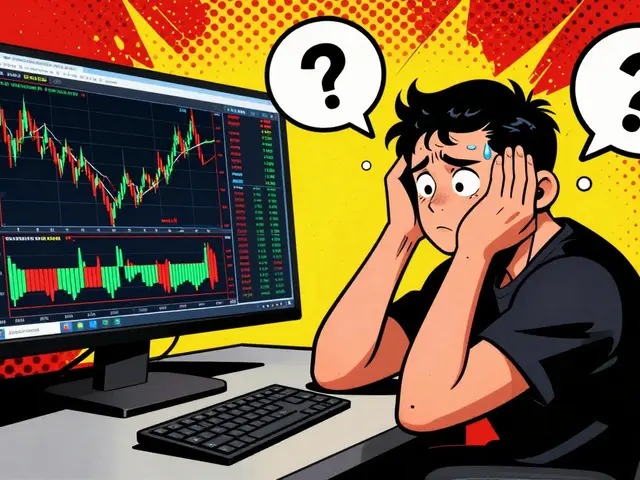
Staring at a screen filled with jagged green and red lines can feel like trying to read a foreign language without a dictionary. If you’ve ever opened a crypto exchange app and felt instantly overwhelmed by the flashing numbers and moving graphs, you’re not alone. Most beginners lose money not because they lack information, but because they don’t know how to interpret the visual data right in front of them. Reading crypto trading charts isn’t about predicting the future with magic; it’s about understanding probability based on past behavior. It is the single most important skill for anyone who wants to trade digital assets without gambling their savings away.
Charts are simply history recorded visually. They show you where the price has been, how fast it moved there, and how many people were buying or selling along the way. By learning to read these signals, you stop guessing and start making decisions backed by evidence. This guide will walk you through the essential components of chart reading, from the basic shapes of candles to the deeper meaning behind volume spikes, helping you build a framework that works whether you are trading Bitcoin or a smaller altcoin.
Understanding Chart Types: Why Candlesticks Rule
Before you dive into complex patterns, you need to choose the right type of chart. There are three main types you will encounter: line charts, bar charts, and candlestick charts. While line charts are simple-connecting only the closing prices-they hide too much detail. They smooth out the volatility that defines crypto markets, making them useless for short-term trading. Bar charts offer more data but are harder to read quickly.
Candlestick charts are the industry standard for a reason. Used by nearly 90% of intermediate to advanced traders, they provide four critical pieces of information in a single visual block: the opening price, the closing price, the highest price reached during the period, and the lowest price. Each "candle" represents a specific timeframe, such as one hour, one day, or one week. The body of the candle shows the range between the open and close. If the close is higher than the open, the candle is typically green or white (bullish). If the close is lower, it is red or black (bearish). The thin lines extending from the top and bottom, called wicks or shadows, show the extreme highs and lows. Mastering this visual language is your first step toward clarity.
| Chart Type | Data Displayed | Best For | Limitations |
|---|---|---|---|
| Line Chart | Closing prices only | Long-term trend overview | Hides intraday volatility |
| Candlestick Chart | Open, High, Low, Close (OHLC) | Detailed price action analysis | Can look cluttered on small timeframes |
| Bar Chart | OHLC (vertical bars) | Space-efficient viewing | Harder to distinguish bullish/bearish quickly |
The Role of Timeframes in Analysis
A common mistake new traders make is focusing on the wrong timeframe. Crypto markets never sleep, running 24/7, which means price action happens constantly. You can view charts on intervals ranging from one minute to one month. Your choice of timeframe should match your trading style. Scalpers, who hold positions for minutes, might look at 1-minute or 5-minute charts. Swing traders, who hold for days or weeks, rely on daily charts. Long-term investors often look at weekly or monthly views.
Here is a rule of thumb: always analyze the bigger picture first. Start with the daily or weekly chart to identify the overall trend. Is Bitcoin generally going up or down over the last month? Once you know the dominant direction, zoom in to a 4-hour or 1-hour chart to find entry points. Trying to trade against the major trend on a tiny timeframe is like swimming upstream-it’s possible, but exhausting and risky. Many beginners get stuck in "timeframe paralysis," switching back and forth between minutes and months until they see what they want to see. Stick to two or three timeframes max to keep your analysis clean.
Identifying Support and Resistance Levels
Price doesn’t move in straight lines. It bounces off certain levels repeatedly. These levels are called support and resistance. Support is a price floor where buying pressure tends to be strong enough to prevent the price from falling further. Think of it as a cushion catching a falling object. Resistance is a ceiling where selling pressure stops the price from rising. Imagine a ball hitting a glass pane and bouncing back down.
To find these levels, look for areas where the price has reversed multiple times in the past. If Bitcoin dropped to $60,000 three times in the last year and bounced each time, $60,000 is a strong support level. When the price breaks through resistance, that level often becomes new support-a concept known as role reversal. Drawing horizontal lines on your chart at these key zones helps you visualize where you might enter a trade (near support) or take profits (near resistance). Ignoring these levels is one of the fastest ways to buy high and sell low.
Reading Candlestick Patterns for Signals
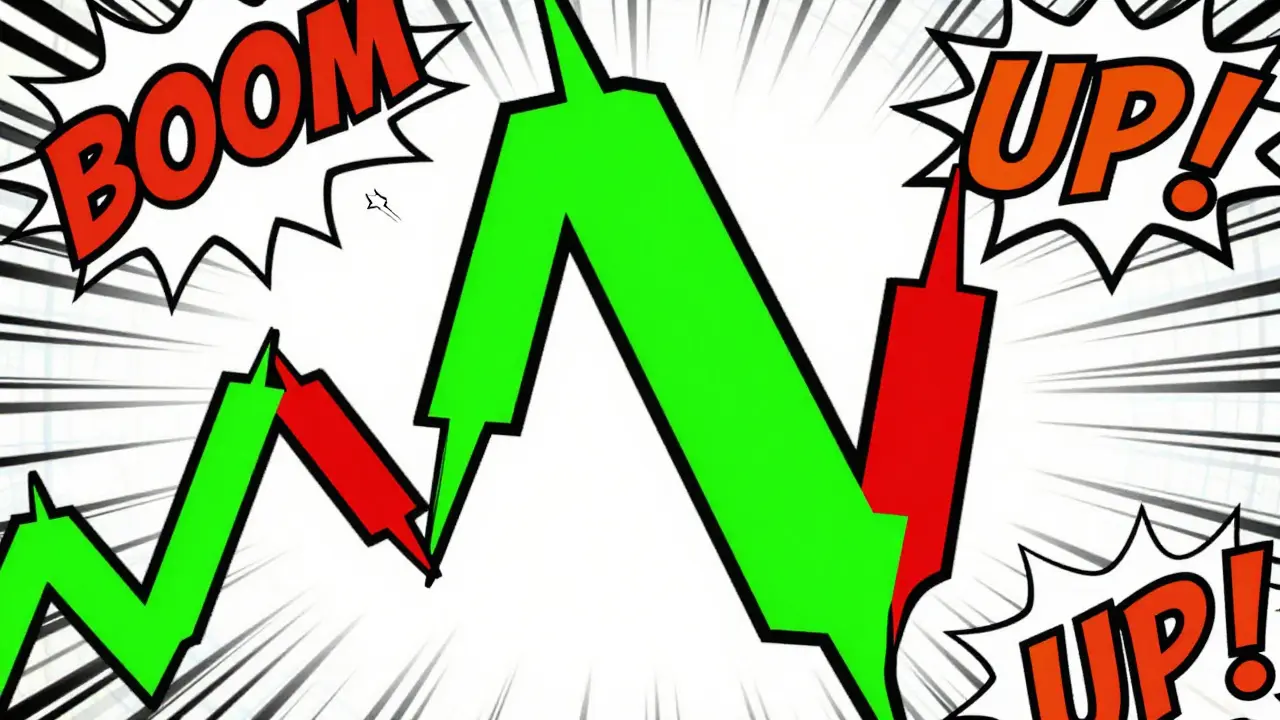
Once you understand individual candles, you can start recognizing patterns formed by groups of them. These patterns suggest potential future movements based on historical psychology. One of the most reliable is the "Bullish Engulfing" pattern. This occurs when a small red candle is followed by a large green candle that completely covers (engulfs) the body of the previous one. It signals that buyers have taken control from sellers, often indicating a reversal upward.
Conversely, a "Bearish Engulfing" pattern happens when a large red candle follows a small green one, suggesting sellers are stepping in aggressively. Other common patterns include the "Doji," which looks like a cross and indicates indecision in the market, and the "Hammer," a small body with a long lower wick that suggests rejection of lower prices. While no pattern is 100% accurate, studies show that combining these patterns with other tools significantly improves success rates. For instance, a Bullish Engulfing pattern appearing at a known support level is far more powerful than one appearing in the middle of nowhere.
The Critical Importance of Volume
Price tells you what happened; volume tells you how strong the move was. Volume bars sit below the main price chart and show the number of trades executed during each period. High volume confirms a trend, while low volume suggests weakness. Imagine a price surge accompanied by massive volume-that’s a strong signal that big players are involved, and the move is likely to continue. Now imagine a similar price surge with tiny volume. That’s often a trap, likely to reverse soon because there isn’t enough conviction behind it.
Always check volume before entering a trade. If you see a breakout above resistance, look at the volume bars. Are they taller than the average of the last 20 periods? If yes, the breakout is likely genuine. If no, be cautious. Volume divergence is another key signal: if the price is making new highs but volume is decreasing, it suggests the trend is losing steam and a reversal may be imminent. Treating volume as an afterthought is a critical error that costs traders dearly.
Common Pitfalls and How to Avoid Them
Even with knowledge, emotions can derail your strategy. One major pitfall is "indicator overload." Beginners often add ten different lines and oscillators to their chart, hoping one will give them the answer. This creates noise and confusion. Stick to the basics: price action, volume, and maybe one or two indicators like Moving Averages or RSI. Simplicity wins.
Another danger is ignoring liquidity. In smaller altcoins with low trading volumes, charts can be manipulated easily. A few large trades can create fake breakouts or false patterns. Always prefer trading assets with high liquidity, like Bitcoin or Ethereum, especially when you are learning. Finally, never risk more than you can afford to lose. Use stop-loss orders to protect your capital. Technical analysis is about managing risk, not eliminating it entirely.
Building Your Trading Plan
Reading charts is useless without a plan. Define your rules before you click "buy." What pattern triggers an entry? Where is your stop-loss? Where do you take profit? Write it down. Backtest your strategies on historical data to see how they would have performed. Tools like TradingView allow you to replay past market conditions, letting you practice without risking real money. Consistency is key. Treat trading like a business, not a casino. Over time, your ability to read charts will sharpen, turning chaotic screens into clear maps of opportunity.
What is the best chart type for beginners?
Candlestick charts are widely considered the best for beginners because they provide comprehensive data (open, high, low, close) in an easy-to-read format. Line charts are too simplistic, hiding crucial volatility details, while bar charts are less intuitive for quick visual assessment.
How do I know if a trend is strong?
A strong trend is confirmed by increasing volume. If prices are rising and volume bars are getting taller, the uptrend has momentum. Conversely, if prices rise but volume drops, the trend is weak and may reverse. Also, look for higher highs and higher lows in uptrends.
What does a long wick on a candle mean?
A long upper wick indicates that buyers pushed the price up, but sellers forced it back down before the period closed, signaling potential resistance. A long lower wick means sellers tried to push the price down, but buyers rejected those lower levels, signaling potential support.
Should I use indicators like RSI or MACD?
Indicators can be helpful supplements, but they lag behind price action. It is better to master reading raw price action and volume first. Use indicators sparingly to confirm signals you already see in the candlesticks and volume, rather than relying on them as primary decision-makers.
Why do chart patterns fail sometimes?
Patterns fail due to low liquidity, sudden news events, or manipulation by large holders (whales). In low-volume markets, a few large trades can distort patterns. Always check volume and avoid trading illiquid assets if you are relying heavily on technical patterns.