
When you stake your Ethereum, you lock it up to help secure the network and earn rewards. But what if you could earn those rewards without locking your ETH? That’s the promise of liquid staking protocols. They give you a token-like stETH or rETH-that represents your staked ETH and lets you trade it, lend it, or use it in DeFi. Sounds great, right? But behind the convenience lies a web of risks most users don’t fully understand.
De-Pegging: When Your stETH Isn’t Worth 1 ETH
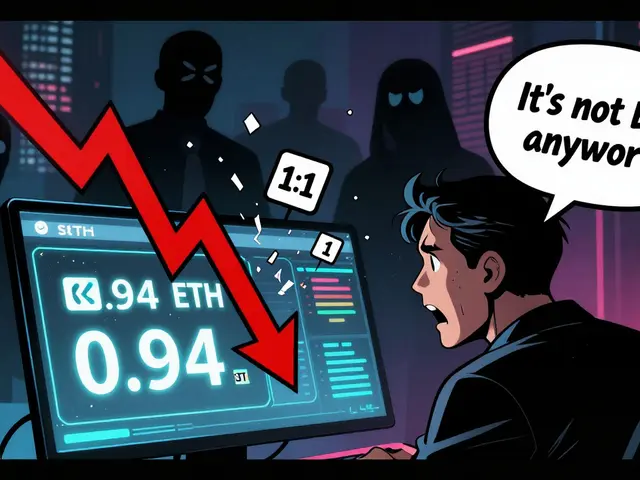
The biggest fear isn’t losing your ETH-it’s losing its value. Liquid staking tokens are supposed to trade at a 1:1 ratio with the underlying asset. But they don’t always. In June 2022, during the collapse of Celsius Network, stETH dropped as low as 0.94 ETH on major exchanges. Users couldn’t swap it back to ETH because the liquidity pools on Curve Finance had dried up. This wasn’t a glitch-it was a systemic failure. When panic hits, and everyone tries to exit at once, the market can’t absorb the volume. Your token might still represent a claim on ETH, but if no one’s buying, it’s worth less. CoinGecko data shows stETH traded below 0.99 ETH more than 15 times in just six months. That’s not normal. That’s volatility masked as stability.Smart Contract Holes: Code Is Law-Until It’s Broken
Liquid staking protocols run on smart contracts. These are automated programs that handle deposits, rewards, and withdrawals. But code isn’t perfect. Bugs happen. OpenZeppelin and Trail of Bits have audited many of these protocols, but audits aren’t insurance. They’re snapshots. A contract can pass an audit today and still be exploited tomorrow. Ankr’s risk analysis in early 2023 warned that “smart contracts holding the original unstaked assets are susceptible to hacking.” And it’s not theoretical. In 2023, a minor exploit on a lesser-known liquid staking platform drained $1.2 million because of an unchecked function call. Even Lido, the largest player, has had its governance contracts scrutinized after users noticed unexpected changes in validator selection. If the code fails, your ETH vanishes. No chargeback. No customer service. Just silence.Slashing: You’re On the Hook for Validator Mistakes
When you stake directly, you’re responsible for your own validator. If it goes offline or signs conflicting blocks, you lose a portion of your stake-up to 1 ETH per slashing event. With liquid staking, you outsource that responsibility. But you don’t outsource the risk. If a validator in the protocol’s pool gets slashed, the loss is distributed across all token holders. Galaxy Research confirmed that slashing risk remains “fully exposed” to users of liquid staking services. And unlike direct staking, where you can choose reliable operators, you have no control over who the protocol picks. With Lido managing over 32% of all staked ETH, a single validator failure could ripple across billions in value. You’re not just trusting code-you’re trusting the protocol’s selection of strangers running nodes.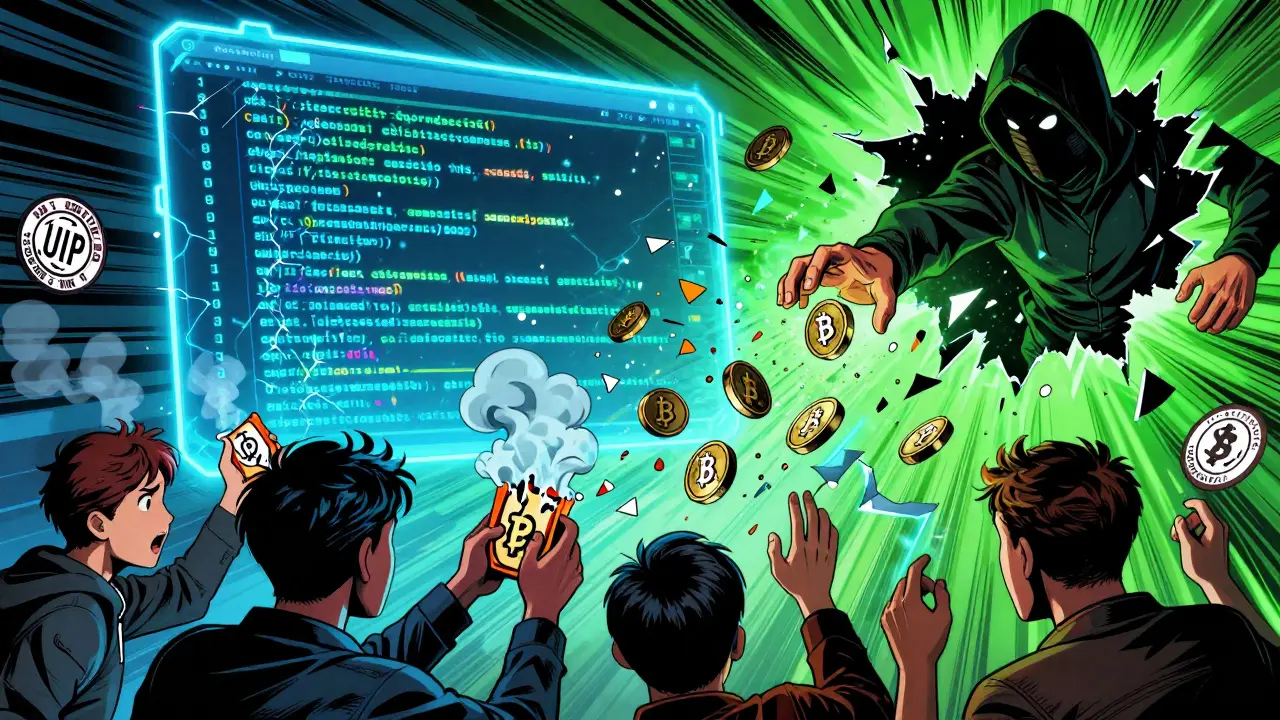
Centralization: Too Big to Fail (and Too Big to Trust)
The whole point of blockchain is decentralization. But liquid staking is making it worse. Lido controls roughly one-third of all staked Ethereum. That means one organization-through its DAO-has outsized influence over network security. If Lido’s governance is compromised, or if its top LDO holders collude, they could shift validator assignments, delay withdrawals, or even manipulate reward distribution. Rocket Pool reduces this risk by requiring users to stake 8 ETH plus 2.4 ETH in RPL to run a minipool. That’s expensive. It limits participation to serious operators. Lido’s model, by contrast, lets anyone deposit 0.0001 ETH and get stETH. The result? Massive centralization. The SEC flagged this in August 2025, noting that “concentrated control over validator infrastructure poses systemic risk to Ethereum’s consensus.” If Lido goes down, the entire network stumbles.Token Models: Rebasing vs. Reward-Bearing-Which One Are You Holding?
Not all liquid staking tokens are the same. Some, like stETH, are reward-bearing. Your balance stays the same, but each token becomes worth more over time as rewards accrue. Others, like some Solana-based tokens, are rebasing. Your balance grows daily, but the token’s price per unit drops. This matters for taxes, accounting, and how you track your returns. Most users don’t realize this distinction until they get hit with a tax bill. A rebasing token might show you earned 5% in rewards, but if the token’s value dropped 3% due to market conditions, your net gain is 2%. And if you’re trading on a DEX, the price you see might not reflect the true value of your claim. Confusion here leads to poor decisions-and financial surprises.Regulatory Time Bomb
The SEC didn’t just issue a warning in August 2025-it signaled intent. The agency is now examining whether liquid staking tokens are unregistered securities. If they are, platforms like Lido and Rocket Pool could be forced to shut down their services in the U.S., or face massive fines. That would trigger a chain reaction: exchanges delist LSTs, liquidity evaporates, and prices crash. Even if you’re outside the U.S., you’re not safe. Global markets move together. A regulatory crackdown in America sends tremors through DeFi. Your stETH might be worth 0.98 ETH today, but if Coinbase and Kraken are forced to freeze trading, it could plummet to 0.85 ETH overnight. No one knows what’s coming, but the signs are clear: regulators are watching.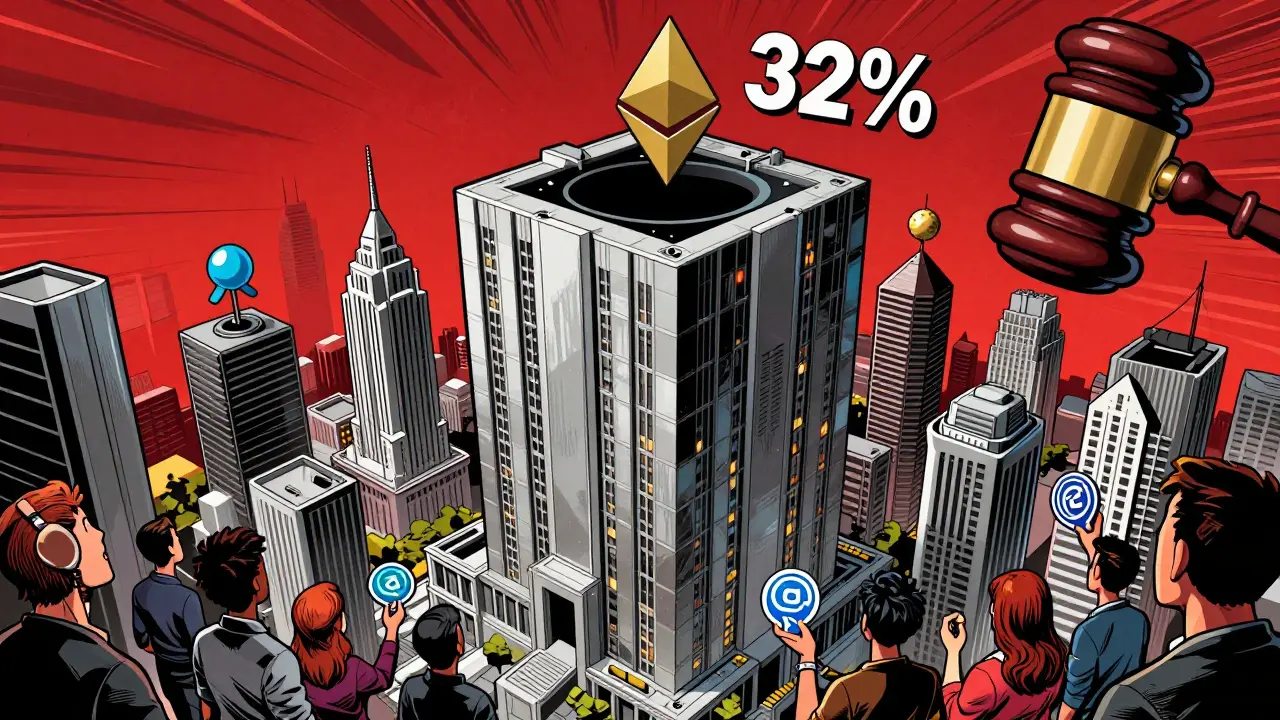
What You Can Do to Protect Yourself
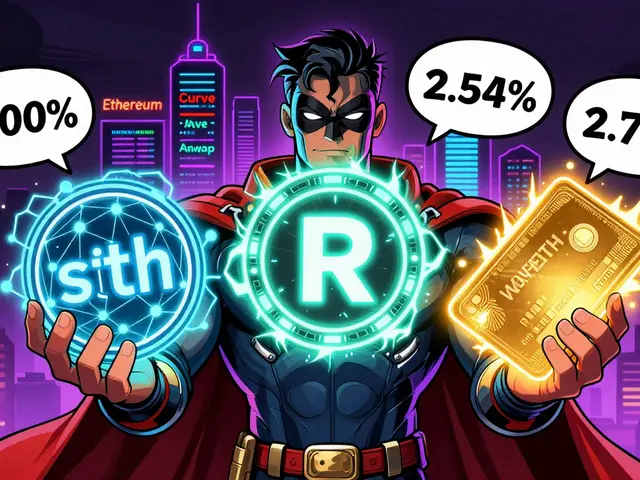
You don’t have to avoid liquid staking-but you need to treat it like a high-risk investment, not a passive income tool.- Diversify your protocols. Don’t put all your ETH into stETH. Try Rocket Pool’s rETH, or Origin Ether (OETH), which has built-in slashing protection and deeper liquidity.
- Check the audits. Look up which firms audited the protocol. OpenZeppelin? Trail of Bits? If it’s only been audited by a little-known firm, walk away.
- Monitor liquidity. If you’re holding stETH, check its trading volume on Uniswap and Curve. If daily volume drops below $50 million, the risk of de-pegging spikes.
- Understand the token model. Is your token rebasing or reward-bearing? Know how it affects your taxes and balance tracking.
- Don’t ignore the news. Follow Lido DAO votes, Rocket Pool updates, and SEC announcements. A single governance proposal could change everything.
There’s no magic fix. Liquid staking is a trade-off: convenience for control. The rewards are real-but so are the risks. The market grew from nothing to $14 billion in three years. That speed means corners were cut. And when the next crash comes, it won’t be the blockchain that fails. It’ll be the people who thought their stETH was as good as ETH.
Frequently Asked Questions
Is stETH always worth 1 ETH?
No. stETH is supposed to trade at a 1:1 ratio with ETH, but it doesn’t always. During market stress-like the 2022 Celsius collapse-it dropped as low as 0.94 ETH. This de-pegging happens when liquidity dries up and traders panic. Even today, stETH trades below 0.99 ETH more than 15 times a year. It’s not broken-it’s volatile.
Can I lose my ETH in liquid staking?
Yes. If the smart contract is hacked, your ETH could be drained. If the validators in the pool get slashed, your stETH loses value. If the protocol shuts down due to regulatory action, you might not be able to redeem your tokens. You’re not just risking price drops-you’re risking total loss.
Why is Lido so risky?
Lido controls about 32% of all staked ETH. That’s more than the next five competitors combined. If Lido’s governance is compromised, or if its node operators are hacked, it could destabilize the entire Ethereum network. Centralization is the opposite of what blockchain was built for-and Lido’s dominance makes it the biggest single point of failure in DeFi.
Are there safer alternatives to Lido?
Yes. Rocket Pool requires users to stake 8 ETH plus 2.4 ETH in RPL to run a minipool, which limits centralization. Origin Ether (OETH) includes built-in slashing protection and deep liquidity pools. Both have lower TVL than Lido, but they spread risk more evenly. If you’re risk-averse, these are better choices.
Should I use liquid staking if I’m new to crypto?
Not unless you’re willing to learn. Liquid staking isn’t like saving in a bank. You need to understand smart contracts, token models, liquidity, and governance. It takes 20-40 hours of study to assess the risks properly. If you’re just looking for passive income, stick with direct staking or a regulated exchange. Don’t gamble with your ETH on a product you don’t fully understand.
Will the SEC ban liquid staking?
Not necessarily. But the SEC’s August 2025 statement suggests LSTs could be classified as securities. That means platforms may have to register, restrict U.S. users, or shut down. If that happens, liquidity will vanish, prices will crash, and redemption windows may close. It’s not a ban-it’s a regulatory earthquake.
Next Steps
If you’re already using liquid staking, check your token’s current price against ETH on a DEX like Uniswap. If it’s below 0.98 ETH, consider moving part of your position to a different protocol. If you’re thinking about starting, test with a small amount-say, 0.1 ETH-and monitor it for 30 days. Watch how it behaves during market dips. Read the audit reports. Join the protocol’s Discord. Ask questions. Don’t assume it’s safe because it’s popular. The biggest risks aren’t the ones you can see-they’re the ones you don’t know you’re taking.
Katie Haywood
February 4, 2026 AT 20:01Paul Jardetzky
February 5, 2026 AT 22:38Paul Gariepy
February 6, 2026 AT 21:03Udit Pandey
February 7, 2026 AT 10:45Sharon Lois
February 8, 2026 AT 09:30mahikshith reddy
February 8, 2026 AT 11:07Brendan Conway
February 8, 2026 AT 22:27orville matibag
February 10, 2026 AT 04:20perry jody
February 11, 2026 AT 06:35Jim Laurie
February 13, 2026 AT 02:31Josh Flohre
February 14, 2026 AT 13:51Jesse Pasichnyk
February 15, 2026 AT 03:40Jordan Axtell
February 16, 2026 AT 03:23James Harris
February 17, 2026 AT 14:44Alex Garnett
February 18, 2026 AT 16:49aryan danial
February 19, 2026 AT 20:55Ryan Chandler
February 21, 2026 AT 05:25Ajay Singh
February 22, 2026 AT 06:37Oliver James Scarth
February 24, 2026 AT 03:15Kieren Hagan
February 24, 2026 AT 20:52sachin bunny
February 25, 2026 AT 14:42Olivette Petersen
February 26, 2026 AT 21:06Michelle Anderson
February 27, 2026 AT 06:35Matt Smith
February 28, 2026 AT 06:13Joshua Herder
March 1, 2026 AT 09:18laura mundy
March 2, 2026 AT 00:14Jacque Istok
March 3, 2026 AT 14:27Mendy H
March 4, 2026 AT 13:42Paul Gariepy
March 6, 2026 AT 06:14