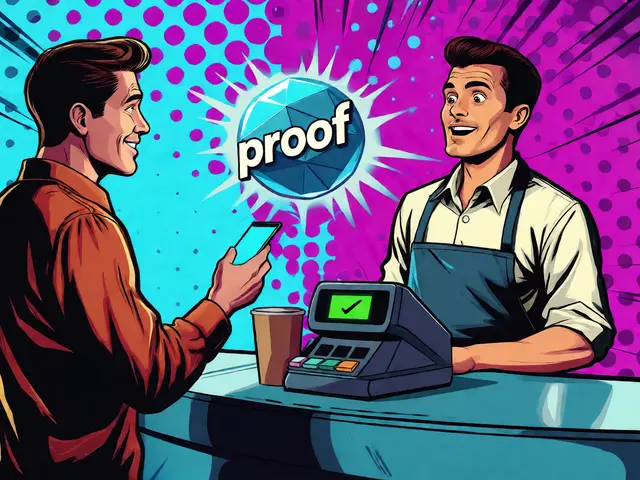
Imagine proving you have enough money to buy a coffee without showing anyone your bank balance. That’s the core promise of Zero-Knowledge Proof technology. It sounds like magic, but it’s hard math. For years, this concept lived in academic papers, too slow for real-world use. Today, it is reshaping how blockchains handle privacy and speed. If you’ve ever wondered why Ethereum transactions are expensive or why private crypto coins struggle with regulation, zero-knowledge proofs (ZKPs) are likely the answer. They solve the "impossible triangle" of blockchain: security, scalability, and decentralization. By September 2026, we are no longer asking if ZKPs work. We are watching them become the standard infrastructure for digital finance.
What Are Zero-Knowledge Proofs?
At its simplest, a zero-knowledge proof lets one party (the prover) convince another party (the verifier) that a statement is true. The catch? The prover reveals nothing else about the data. Think of it like a password. You prove you know the password by typing it correctly. The server knows you know it, but it doesn’t need to see your face, your location, or your other passwords. In blockchain, this means verifying a transaction is valid without revealing who sent it, how much was sent, or what assets were involved.
The concept dates back to 1985, when researchers Shafi Goldwasser, Silvio Micali, and Charles Rackoff first described it. But it wasn’t until the mid-2010s that it became practical. Early implementations, like Zcash, used these proofs to hide transaction details. Now, the technology has moved beyond just hiding data. It is being used to compress massive amounts of blockchain data into tiny cryptographic signatures. This allows networks to process thousands of transactions off-chain while still guaranteeing their correctness on the main chain.
The Two Main Contenders: zk-SNARKs vs. zk-STARKs
Not all zero-knowledge proofs are created equal. Developers generally choose between two main types: zk-SNARKs and zk-STARKs. Understanding the difference helps you grasp where the industry is heading.
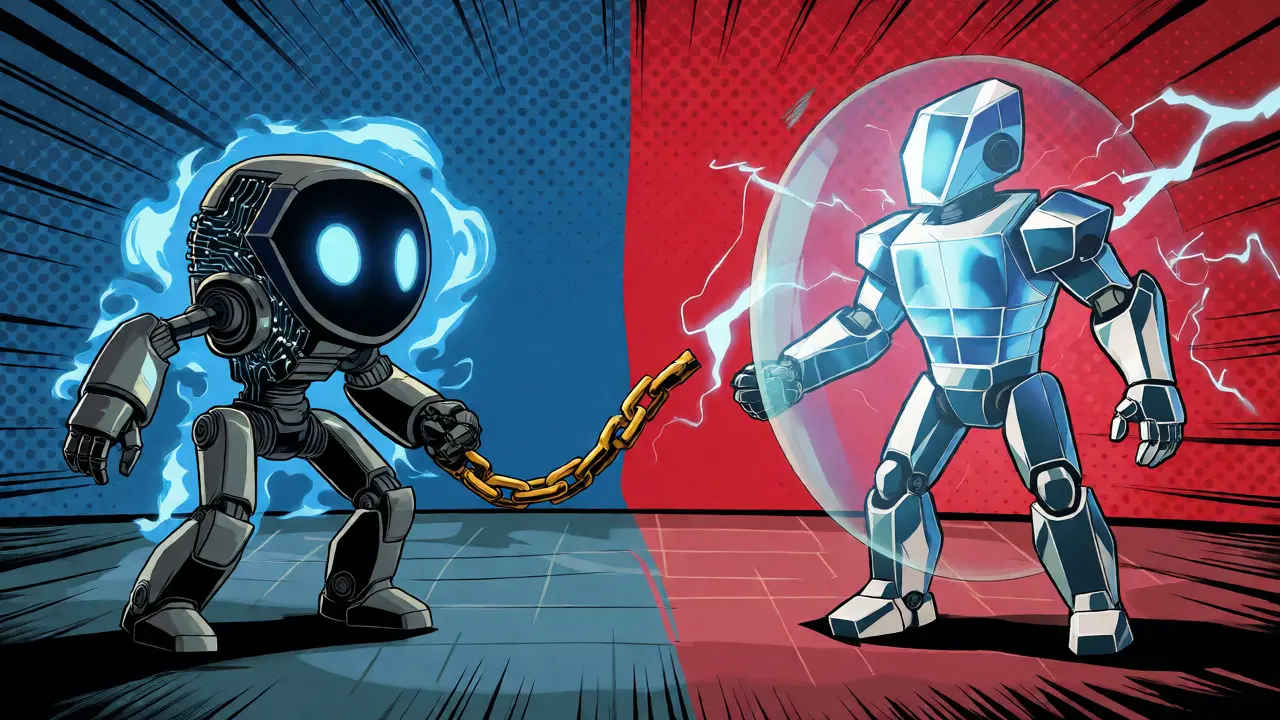
zk-SNARKs stand for "Succinct Non-Interactive Arguments of Knowledge." They are incredibly efficient. A proof generated by a zk-SNARK is tiny-often just 200 bytes. This makes them cheap to verify on-chain. However, they require a "trusted setup." Imagine a ceremony where a group of people generates a public key together. If even one person acts maliciously or loses their secret share, the system could be compromised. While major projects like Zcash and zkSync have managed this risk well, it remains a philosophical hurdle for purists who want trustless systems.
zk-STARKs, or "Scalable Transparent Arguments of Knowledge," remove the trusted setup. They rely on collision-resistant hash functions rather than elliptic curves. This makes them transparent and theoretically more secure against future quantum computers. The trade-off? Size. A zk-STARK proof is much larger, often around 45 kilobytes. Verifying it costs more gas fees. As hardware improves, this cost gap is shrinking, making STARKs increasingly attractive for high-security applications.
| Feature | zk-SNARKs | zk-STARKs |
|---|---|---|
| Proof Size | Tiny (~200 bytes) | Large (~45 KB) |
| Trusted Setup | Required | Not Required |
| Quantum Resistance | Vulnerable | Resistant |
| Verification Cost | Low | Higher |
| Primary Use Case | Privacy Coins, Rollups | High-Security L2s, Gaming |
How ZKPs Are Solving Blockchain Scalability
Ethereum processes about 15-30 transactions per second. Bitcoin handles roughly 7. These numbers are fine for storing value, but terrible for running a global financial network. Enter ZK-Rollups. Instead of executing every transaction on the main Ethereum blockchain, rollups bundle thousands of transactions together. They execute these off-chain, generate a single zero-knowledge proof that the batch is valid, and submit that proof to Ethereum.
This method drastically reduces congestion. Networks like Starknet and Polygon zkEVM can handle over 2,000 transactions per second. More importantly, they inherit Ethereum’s security. If the proof checks out, the state update is accepted. There is no need for challengers to watch for fraud, as seen in optimistic rollups. The cryptography does the work instantly. This shift has turned Layer 2 solutions from experimental side-chains into the primary venue for DeFi activity.
Real-World Applications Beyond Crypto
You might think ZKPs are only for crypto traders. But the most exciting developments are happening outside the blockchain bubble. Financial institutions are adopting this tech to meet strict regulatory requirements while preserving customer privacy.
Take BlackRock’s BUIDL Fund. When they tokenized $240 million in US Treasuries, they needed to ensure investors were accredited. Traditionally, this meant sharing sensitive identity documents. With ZKPs, an investor can prove they meet the net worth requirement without revealing their actual income or assets. The regulator sees a "true" flag; the issuer sees compliance; the user keeps their privacy. Similarly, HSBC used ZK proofs for a gold trading platform, cutting settlement times by 73% because confidential price discovery didn’t require exposing trading strategies to competitors.
Identity verification is another huge frontier. Estonia ran municipal elections using ZK-based voting systems in 2024. Voters could prove they cast a ballot and that it was counted correctly, all without linking their vote to their personal ID. This model could revolutionize digital identities, allowing users to log into services with a cryptographic proof of age or citizenship, rather than handing over a passport scan.
The Developer Challenge: Steep Learning Curves
Despite the benefits, building with ZKPs isn’t easy. Writing smart contracts in Solidity is hard enough. Writing circuits for ZK proofs requires thinking differently. You aren’t writing imperative code; you’re defining mathematical constraints. Languages like Circom and Cairo are powerful but unforgiving.
A developer survey from 2024 showed that experienced blockchain engineers spent 4-6 months becoming proficient in ZK circuit design. Debugging is painful. If a circuit fails, the error messages are often cryptic. One developer reported spending 117 hours debugging a single circuit for a DeFi app. However, tools are improving. Frameworks like Noir and Halo2 are abstracting away some complexity, allowing developers to write code closer to Rust or JavaScript. The barrier is lowering, but it remains a specialized skill set.
Hardware Acceleration and Future Performance
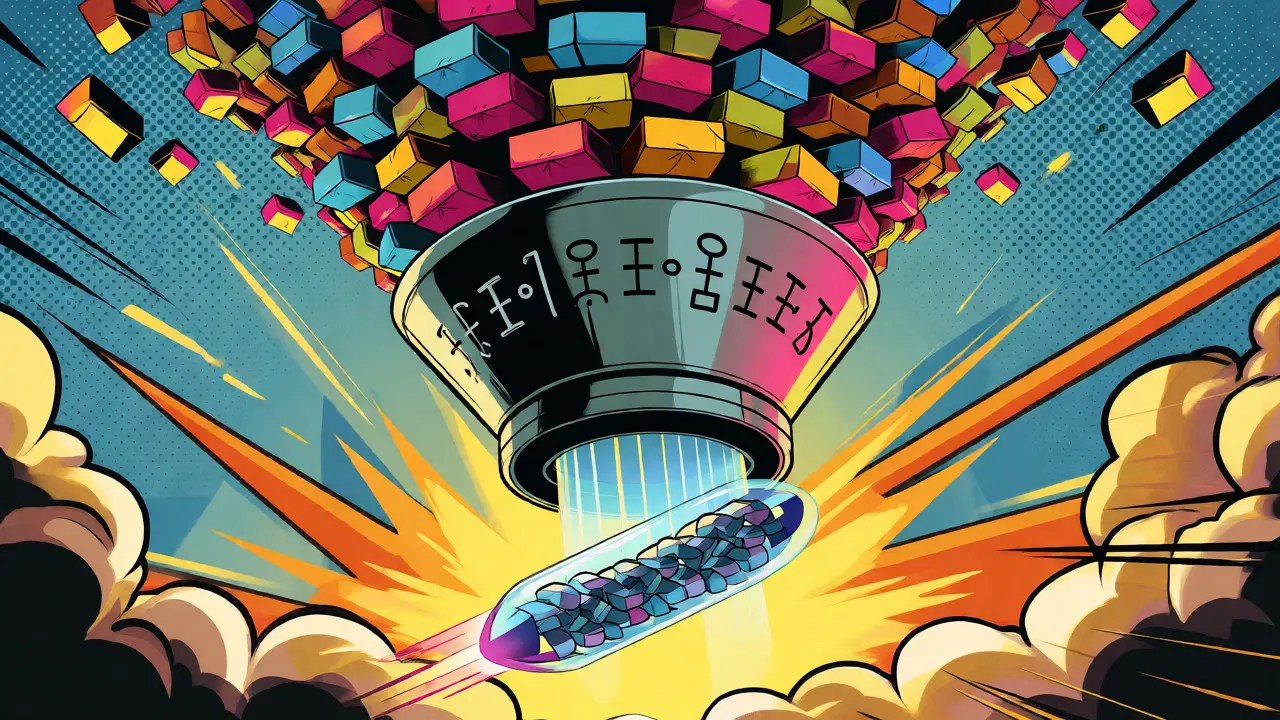
The biggest bottleneck for ZKPs has always been computation time. Generating a proof can take seconds or minutes, which is too slow for real-time payments. That is changing fast. Hardware acceleration is moving from theory to practice.
NVIDIA announced a "ZK Coprocessor" designed specifically for these calculations. By leveraging tensor cores, they claim 50x faster proving times. Other startups are building dedicated ASICs (Application-Specific Integrated Circuits) for ZK math. As hardware gets cheaper and faster, the cost of generating proofs will drop below $0.001 per transaction. This makes micro-transactions viable. Imagine paying for news articles or streaming content with fractions of a cent, verified instantly by your phone’s processor.
Regulatory Acceptance and Compliance
Privacy technologies often clash with regulators. Anti-Money Laundering (AML) laws demand transparency. ZKPs offer a middle ground called "selective disclosure." You can prove you aren’t on a sanctions list without revealing your name. You can prove you paid taxes without showing your full return.
The EU’s MiCA framework formally recognized ZK-proofs as compliant privacy tech in 2024. This was a turning point. It signaled that governments see ZKPs not as a way to evade laws, but as a tool to enforce them efficiently. In the US, the SEC is still cautious, but guidance is evolving. As more enterprises adopt ZKPs for supply chain tracking and medical records, regulators are becoming more comfortable with the technology’s auditability.
Key Takeaways
- Privacy meets Compliance: ZKPs allow users to prove facts (like age or solvency) without revealing underlying data, satisfying both users and regulators.
- Scalability Solution: ZK-Rollups are currently the most effective way to scale Ethereum, offering 10-50x throughput improvements with strong security guarantees.
- Two Tech Paths: zk-SNARKs offer smaller sizes but require trusted setups; zk-STARKs are transparent and quantum-resistant but larger.
- Hardware is Key: Dedicated processors are reducing proof generation times from minutes to milliseconds, enabling real-time applications.
- Enterprise Adoption: Major banks and funds are already using ZKPs for tokenized assets, moving the tech beyond speculative crypto trading.
Are Zero-Knowledge Proofs safe from hackers?
The underlying mathematics is considered very secure. However, implementation errors are common. Studies show that many custom ZK circuits contain vulnerabilities due to coding mistakes, not math flaws. Auditing and standardized libraries are critical for safety.
Will Zero-Knowledge Proofs replace Optimistic Rollups?
Likely, yes. Optimistic rollups assume transactions are valid unless challenged, leading to long withdrawal delays (up to 7 days). ZK-rollups provide immediate finality upon proof verification. As ZK hardware becomes cheaper, the economic advantage shifts entirely to ZK solutions.
Can I run a ZK node on my smartphone?
Soon. Current devices struggle with complex proofs, but new mobile-optimized algorithms and hardware accelerators are making this feasible. By late 2026, lightweight clients capable of verifying ZK proofs locally are expected to be mainstream.
What is the difference between ZKPs and encryption?
Encryption hides data so only authorized parties can read it. Zero-Knowledge Proofs allow verification of data without reading it at all. You don’t need a key to check a ZK proof; you just need the proof itself. This enables public verification of private facts.
Why do zk-SNARKs need a trusted setup?
They rely on elliptic curve cryptography parameters that must be generated randomly. If the randomness is predictable or leaked, the system's security breaks. Projects mitigate this by having large multi-party ceremonies where participants destroy their secret shares after use.