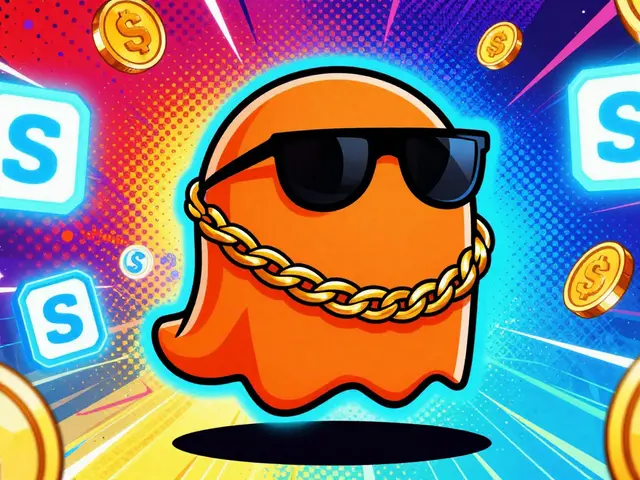
Ever heard of a ghost chasing dots and thought it might be the next big thing in crypto? That’s exactly where CLYDE (GUZUTA) comes in. It’s a meme token on the Solana blockchain that takes its name from Clyde, the orange ghost from the classic video game PAC-MAN. But don’t let the cute branding fool you-this isn’t just another fun project. It’s a high-risk, low-liquidity asset that requires serious caution if you’re thinking about buying.
If you’ve stumbled across GUZUTA on social media or a price tracker, you probably have questions. Is it legit? How do you buy it? And why does the price look like scientific notation? This guide breaks down everything you need to know about CLYDE (GUZUTA) so you can make an informed decision without getting burned by hidden fees or empty promises.
The Origin Story: PAC-MAN Meets Crypto
CLYDE (GUZUTA) launched in 2024 as a community-driven meme coin. The creators wanted to build a vibe similar to PEPE-the massive frog-themed token that proved memes could move markets-but with a twist. Instead of charging taxes on every trade, they promised a zero-tax policy. In crypto terms, this means when you buy or sell GUZUTA, you keep 100% of your tokens. No hidden cuts for marketing, no automatic burns, no reflections sent to other holders.
The idea sounds great on paper. Simple trading equals happy traders. However, this model also means the project doesn’t automatically generate a treasury to fund development or liquidity. It relies entirely on community momentum. If people stop talking about Clyde, the engine stops running. There are no complex utility features, staking rewards, or governance rights attached to the token at launch. It’s pure speculation based on brand recognition and social hype.
Technical Specs: Running on Solana
To understand how GUZUTA works, you first need to know where it lives. It operates on the Solana blockchain, which is known for fast transaction speeds and incredibly low fees. This makes it ideal for meme coins, where traders often execute dozens of small buys and sells in a single day. Unlike Ethereum, where gas fees can eat up your profits, swapping GUZUTA costs fractions of a cent.
Technically, GUZUTA follows the SPL token standard, which is the equivalent of ERC-20 on Ethereum but optimized for Solana’s architecture. You won’t find it on major centralized exchanges like Coinbase or Kraken yet. Instead, it trades primarily on decentralized exchanges (DEXs) like Raydium. This means you interact directly with smart contracts rather than a company holding your funds. While this offers more freedom, it also removes consumer protections. If you send tokens to the wrong address, they’re gone forever.
Tokenomics: The Supply Shock
Here is where things get tricky. When looking at CLYDE’s supply, you’ll see numbers that look like typos. The total supply is approximately 696.69 trillion GUZUTA tokens. Yes, trillion. This hyperinflationary supply is common in meme coins because it allows the unit price to stay extremely low, creating the illusion that the token is "cheap."
| Metric | Value | Implication |
|---|---|---|
| Total Supply | ~696.69 Trillion | Extremely high; keeps unit price near zero |
| Circulating Supply | Conflicting Data | Some sources say 0, others say equal to total |
| Buy/Sell Tax | 0% | No friction for traders, but no auto-funded treasury |
| Blockchain | Solana (SPL) | Low fees, high speed, non-custodial risk |
| Max Supply Cap | None | Supply is fixed at current total, no new minting planned |
Data inconsistency is a major red flag here. Some aggregators report the circulating supply as zero, while others claim it matches the total supply. This confusion suggests poor data indexing or lack of transparency from the developers. For a retail investor, this uncertainty makes it hard to calculate true market capitalization. If only a fraction of those 696 trillion tokens are actually in wallets, the real float is tiny, making the price highly susceptible to manipulation by large holders.
Market Reality: Micro-Cap Volatility
Let’s talk numbers, because they tell a stark story. As of mid-2026, CLYDE (GUZUTA) has a market capitalization hovering between $58,000 and $140,000, depending on which platform you check. To put that in perspective, top-tier meme coins like DOGE or SHIB have market caps in the billions. GUZUTA is what we call a micro-cap asset.
The price per token is roughly $0.000000000025 (2.5 x 10^-11). Seeing all those zeros is disorienting, but it reflects the massive supply. More importantly, the liquidity is thin. Liquidity pools on Raydium sit around $70,000 to $99,000. This means if someone tries to sell $10,000 worth of GUZUTA at once, they could crash the price significantly due to slippage. You might think you’re selling at one price, but the exchange executes your order at a much lower rate because there aren’t enough buyers waiting in the pool.
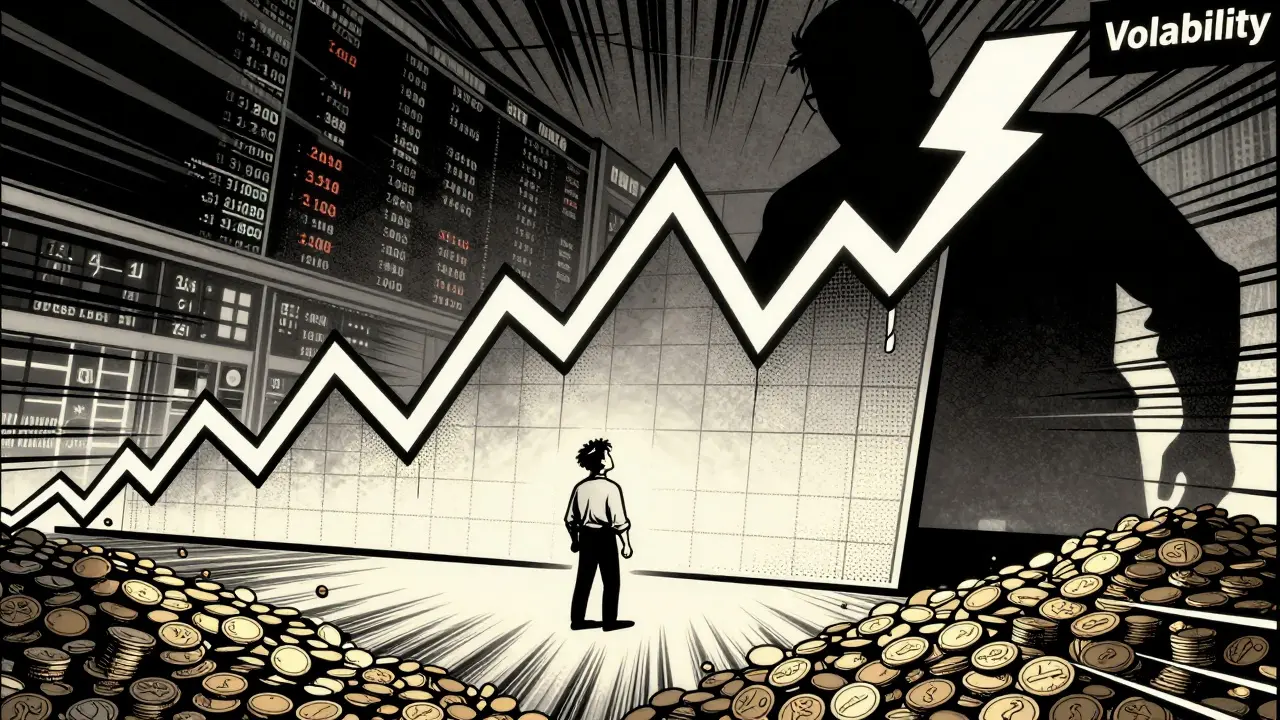
Volatility is extreme. On some days, the price drops 13%; on others, it spikes 80% because a few thousand dollars moved the entire market. This isn’t investment-grade stability; it’s gambling-grade variance. The all-time high was back in July 2024, and since then, the token has lost over 98% of its value. Recovering from that depth requires massive influxes of new money, which hasn’t happened consistently.
How to Buy GUZUTA (Step-by-Step)
If you decide to take the risk, you can’t just click "buy" on Binance or Coinbase. You need to use a decentralized workflow. Here is the safest path to acquiring CLYDE (GUZUTA):
- Set Up a Solana Wallet: Download a non-custodial wallet like Trust Wallet or Solflare. These apps give you control over your private keys. Never share your seed phrase with anyone.
- Acquire SOL: Buy Solana (SOL) on a major centralized exchange like Binance, Coinbase, or Kraken. You need SOL to pay for gas fees and to swap for GUZUTA.
- Transfer SOL to Your Wallet: Send the SOL from your exchange account to your Trust Wallet or Solflare address. Double-check the network-it must be Solana, not Ethereum or BSC.
- Connect to a DEX: Open the wallet app and navigate to the "Swap" feature, or connect your wallet to Raydium.io via a browser. Solflare has built-in swap functionality that aggregates prices from multiple DEXs.
- Find the Contract Address: Since GUZUTA is obscure, it might not appear in search bars. You will likely need to paste the official contract address (starting with 4a1giKd...) manually. Always verify this address from the official project website or Twitter to avoid scams.
- Execute the Swap: Enter the amount of SOL you want to trade. Set your slippage tolerance slightly higher (e.g., 1-2%) to ensure the transaction goes through despite volatility. Confirm the swap.
Once the transaction confirms, GUZUTA will appear in your wallet. Remember, you are now self-custodying these assets. If you lose your phone or forget your password, no customer support team can help you recover them.
Risks vs. Rewards: Is It Worth It?
Why would anyone buy a token with such shaky fundamentals? The reward is asymmetric. Because the market cap is so small ($58k-$140k), a relatively modest inflow of interest could double or triple the price quickly. Meme coins run on narratives. If a viral tweet or influencer mentions "Clyde Ghosting the Market," FOMO (Fear Of Missing Out) could drive short-term gains.
However, the risks heavily outweigh the potential for most investors. First, there is no underlying utility. Second, the developer team remains largely anonymous, offering no roadmap beyond "community building." Third, regulatory scrutiny on meme coins is increasing globally. Without clear compliance frameworks, projects like GUZUTA exist in a gray area. Finally, the likelihood of rug pulls-where developers abandon the project and drain liquidity-is always present in unverified micro-caps. While GUZUTA has been active since 2024, longevity doesn’t guarantee safety.
Experts generally view GUZUTA as a speculative play, not an investment. Bitget’s own prediction models suggest minimal long-term growth, projecting only single-digit ROI over several years under best-case scenarios. This implies that even in a bull market, GUZUTA may struggle to capture significant capital compared to established competitors.
FAQ: Common Questions About CLYDE (GUZUTA)
Is CLYDE (GUZUTA) a scam?
There is no definitive proof that CLYDE (GUZUTA) is a scam, as it has traded publicly since 2024 with verifiable on-chain activity. However, it exhibits many characteristics of high-risk speculative assets, including anonymous developers, conflicting supply data, and extreme volatility. Always treat interactions with micro-cap meme coins as potentially risky.
Can I buy GUZUTA on Binance or Coinbase?
No, CLYDE (GUZUTA) is not listed on major centralized exchanges like Binance or Coinbase for direct spot trading. You must buy Solana (SOL) on these platforms and transfer it to a Web3 wallet to swap for GUZUTA on a decentralized exchange like Raydium.
Why is the price of GUZUTA so low?
The price is extremely low (around $0.000000000025) because the total supply is massive-approximately 696 trillion tokens. This is a common tactic in meme coins to make the unit price appear affordable, encouraging retail buyers who prefer owning millions of tokens rather than a fraction of one.
What is the zero-tax policy?
The zero-tax policy means that the smart contract governing GUZUTA does not charge any fee on buy or sell transactions. Many meme coins charge 1-10% taxes to fund marketing or redistribute rewards. GUZUTA charges nothing, allowing traders to keep their full position, but it also means the project lacks an automated revenue stream.
Is GUZUTA a good long-term investment?
Most analysts consider GUZUTA a high-risk speculative asset rather than a long-term investment. With a micro-cap valuation, thin liquidity, and no fundamental utility, it depends entirely on community hype. Historical data shows a 98% drop from its all-time high, suggesting significant downside risk for long-term holders.