You’ve probably seen the hype. Social media feeds are flooded with posts promising free tokens from a project called DOGGY is a cryptocurrency or NFT project often confused with other dog-themed tokens in the market. The promise is simple: connect your wallet, complete some tasks, and get rich quick. But here is the hard truth that most promoters won’t tell you: there is no verified, legitimate airdrop for a major project simply named "DOGGY" as of mid-2026. In fact, searching for this specific term usually leads to one of two outcomes-either you find a dormant, low-volume NFT collection, or worse, a phishing site designed to drain your wallet.
The confusion is real, and it’s dangerous. The crypto space is littered with copycat projects that use similar names to trick users who are actually looking for legitimate opportunities like the massive DOGS token is a Telegram-native cryptocurrency built on the TON blockchain that distributed billions of tokens in 2024. If you are clicking on links labeled "DOGGY airdrop," you are likely falling into a trap set by scammers exploiting the fame of successful projects. Before you risk your funds, you need to understand exactly what is out there, how these scams work, and where the real value lies.
The Confusion: DOGGY vs. DOGS vs. Doge
To protect yourself, you first need to separate fact from fiction. There are three main entities floating around with similar names, and they are completely different.
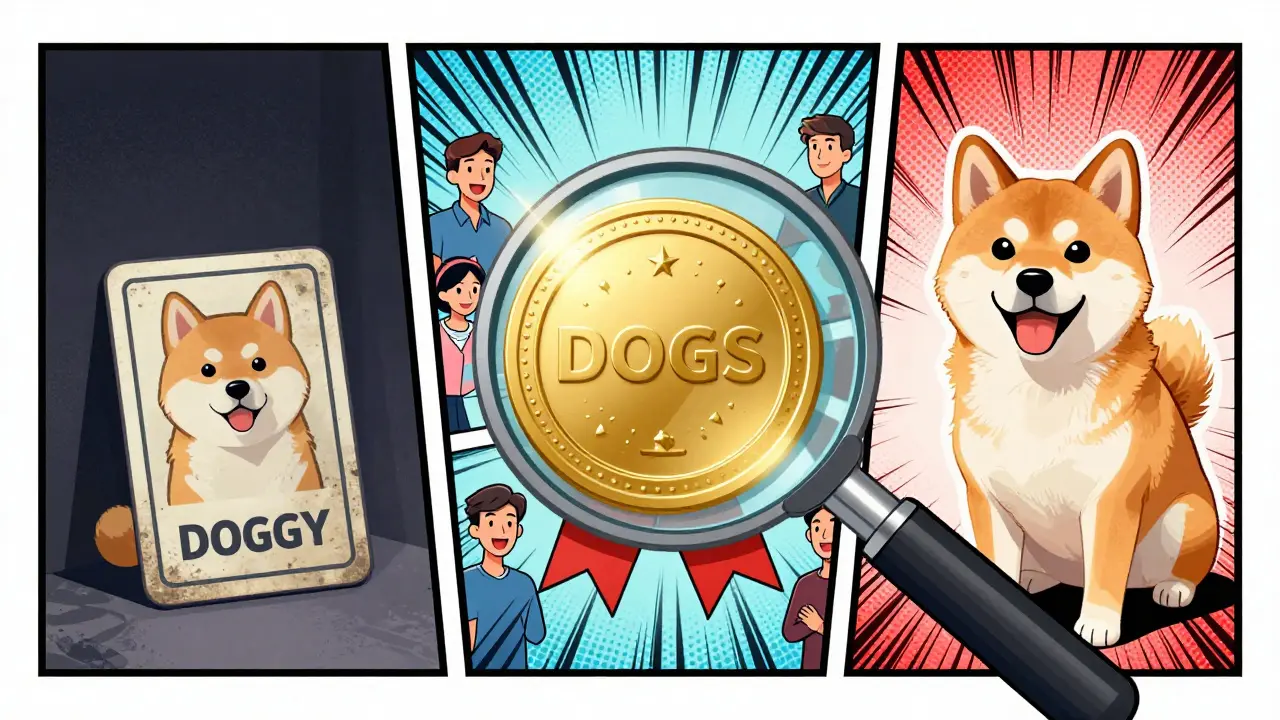
First, there is the actual DOGGY is an NFT collection consisting of 10,000 pixelated generative avatars known as Crypto Doggy. This is not a fungible token you can easily swap or stake in the traditional sense. As of recent market data, it trades at fractions of a cent with near-zero volume. It is an art collection, not a high-yield investment vehicle. There has been no major, widely publicized airdrop campaign for this specific NFT project that matches the viral claims circulating online.
Second, there is the DOGS token is a highly successful meme coin launched on the TON blockchain, inspired by Pavel Durov's dog Spotty. This project executed one of the largest airdrops in history in late 2024. It distributed over 380 billion tokens to more than 20 million users. This is the project most people *think* they are signing up for when they see "dog coin airdrop." However, the official name is DOGS, not DOGGY. The spelling matters immensely.
Third, there is Dogecoin is the original meme cryptocurrency created in 2013, which operates on its own proof-of-work blockchain. While Dogecoin has had promotional giveaways, it does not run under the name DOGGY, nor does it typically distribute tokens via complex task-based airdrops in the way modern Layer-2 or Telegram mini-apps do.
| Project Name | Type | Blockchain | Airdrop Status | Risk Level |
|---|---|---|---|---|
| DOGGY | NFT Collection | Ethereum/Solana (Varies) | No major verified airdrop | High (Scam Impersonation) |
| DOGS | Fungible Token | TON Blockchain | Completed (Sept 2024) | Medium (Volatility) |
| Dogecoin | Fungible Token | Dogecoin Chain | Rare/Official Only | Low (Established) |
| DOG•GO•TO•THE•MOON | Runes Token | Bitcoin | Completed (April 2024) | Medium (Niche) |
Why "DOGGY" Airdrop Claims Are Dangerous
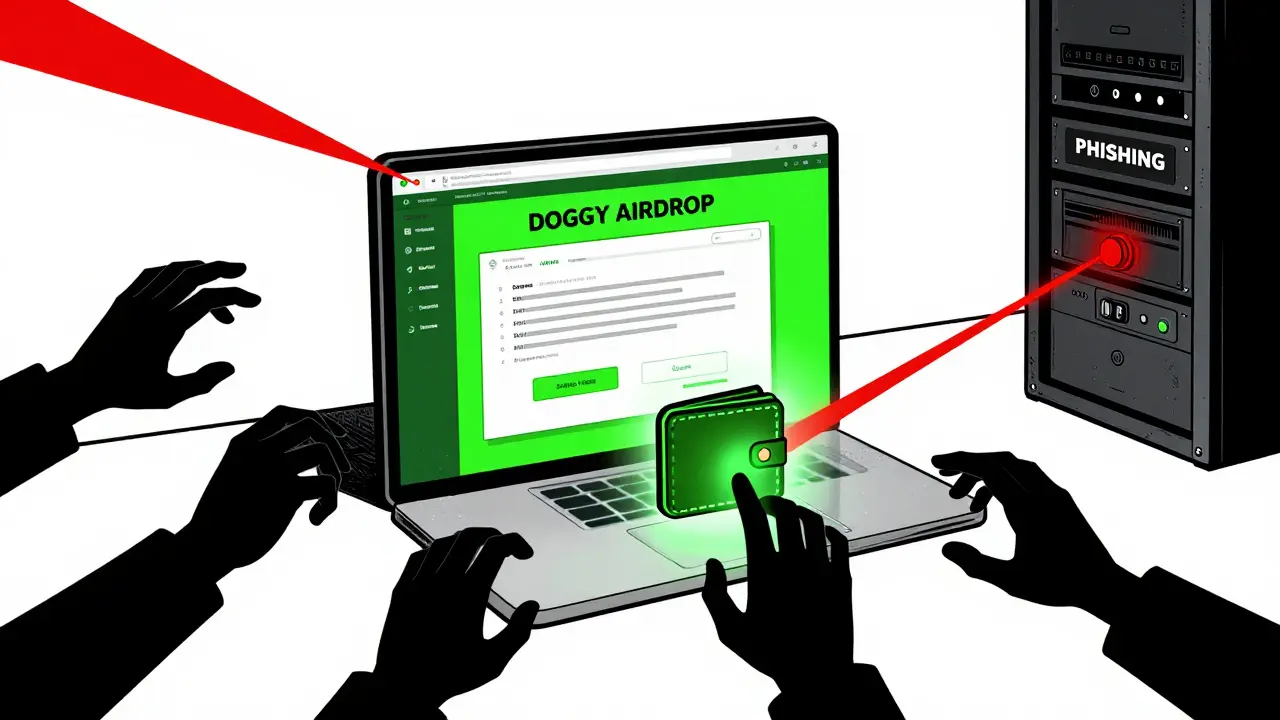
If you encounter a website or Telegram bot claiming to offer a "DOGGY airdrop," you are likely facing a phishing attempt. Scammers rely on cognitive bias; they know you want free money, and they know you might miss the subtle difference between "DOGS" and "DOGGY." Here is how these traps typically operate.
The Wallet Drain: You are asked to connect your MetaMask, Tonkeeper, or Phantom wallet to "claim" your rewards. The moment you sign the transaction, you aren't receiving tokens. You are approving a malicious smart contract that transfers all your existing assets to the attacker’s address. This is the most common method used in fake airdrops.
The Gas Fee Scam: Some sites will let you "claim" but require you to pay a small gas fee or network verification cost upfront. Once you send that ETH, SOL, or TON, nothing happens. No tokens arrive. The site disappears. They profit from the tiny fees paid by thousands of hopeful victims.
Data Harvesting: Even if they don’t steal your crypto immediately, many fake airdrop sites require excessive permissions. They may ask for access to your contacts, phone number, or social media accounts. This data is then sold on the dark web or used for targeted SMS spam campaigns.
In 2025 and 2026, we have seen a surge in these types of attacks specifically targeting users familiar with the TON ecosystem. Because the legitimate DOGS token was so popular, scammers registered domains like `doggy-airdrop.com` or `get-doggy-tokens.io`. These look professional but are entirely fraudulent. Always check the URL. Legitimate projects use their official Twitter (X) handles and verified websites.
The Real Success Story: The DOGS Token Airdrop
Let’s look at what a legitimate, massive airdrop actually looks like, using the DOGS token as the benchmark. This helps you identify red flags in future opportunities. The DOGS project was built on the TON Blockchain is The Open Network, a blockchain layer developed by Telegram to enable fast, secure transactions within the messaging app. Its success wasn’t random; it was strategic.
The distribution model was based on user activity within Telegram. The project allocated 73% of its supply to long-term Telegram users. The criteria were transparent: account age and interaction levels. This meant you didn’t have to click suspicious links; you just had to be an active, genuine user of the platform. By September 2024, over 17 million people had claimed their tokens, making it one of the fastest launches in crypto history.
Key takeaways from the DOGS model that distinguish it from scams:
- Transparency: The tokenomics were published before the launch. 81.5% went to the community. 10% went to the team with a 12-month vesting period.
- No Upfront Payment: Users never had to send crypto to receive the airdrop.
- Official Channels: All announcements came through the official DOGS Telegram channel and verified exchange listings like KuCoin and Gate.io.
- Utility Integration: The token was integrated directly into the Telegram Wallet interface, providing immediate utility rather than just speculative value.
If a "DOGGY" project asks you to send money, connect a private key, or install an unknown browser extension, it fails every single one of these legitimacy checks.
Other Legitimate Dog-Themed Opportunities
If you are interested in dog-themed crypto projects that have actually delivered value, you should look beyond the fake DOGGY hype. Two other projects stand out for their organic growth and fair distribution methods.
DOG•GO•TO•THE•MOON: This project operated on the Bitcoin blockchain using the Runes protocol. In April 2024, it airdropped 100 billion DOG tokens to holders of Runestone Ordinals. Unlike typical marketing-heavy launches, this project relied on an organic approach with no paid promotions or centralized exchange listings initially. If you held specific Ordinals before block 840,249, you received tokens automatically. This demonstrates how niche communities (like Bitcoin Ordinals collectors) can benefit from targeted, technical airdrops rather than broad, scam-prone campaigns.
Crypto.com Promotions: Occasionally, major exchanges run legitimate campaigns. For example, Crypto.com previously offered $200,000 in DOGS tokens to users who purchased CRO during a specific window. Notice the pattern? It required action on a trusted, regulated platform (Crypto.com), not an unknown third-party website. Always prefer airdrops hosted by established entities like Binance, Coinbase, or Crypto.com over standalone websites.
How to Verify Any Airdrop Claim
Before you engage with any new project, run it through this checklist. It takes less than two minutes and could save you thousands of dollars.
- Check the Contract Address: Never trust a link in a DM or a comment. Go to CoinMarketCap or CoinGecko and search for the token. Copy the official contract address from there. Compare it to the one provided by the airdrop site. If they don’t match, it’s a scam.
- Verify Social Proof: Look at the project’s official Twitter/X account. Is it verified? Do they have a large, engaged following? Check the comments. Are real people discussing the tech, or is it just bots saying "GM" and "To the moon"?
- Analyze the Team: Legitimate projects have public founders or at least anonymous teams with a track record. If the team is completely unknown and refuses to provide any background, proceed with extreme caution.
- Use a Burner Wallet: If you must participate in a risky airdrop, use a separate wallet that contains only the minimum amount needed for gas fees. Never connect your main savings wallet to unverified dApps.
- Search for "Scam" Reports: Type "[Project Name] scam" into Google. If there are Reddit threads or Trustpilot reviews warning about stolen funds, believe them. The crypto community is vigilant; if something is wrong, someone has already posted about it.
What to Do If You’ve Already Connected Your Wallet
If you realize too late that you connected your wallet to a suspicious "DOGGY" site, act immediately. Time is critical.
First, revoke your approvals. Use tools like Revoke.cash (for Ethereum/EVM chains) or the built-in security features in wallets like Tonkeeper. This cuts off the malicious contract’s permission to move your assets. Second, transfer any remaining funds to a new, clean wallet. Generate a new seed phrase and move everything over. Third, monitor your transaction history for any unauthorized outgoing transfers. If you see losses, report them to the relevant blockchain explorer and consider filing a report with local cybercrime authorities, though recovery is rare.
Remember, the goal of these scams is speed. They want you to panic-click and approve transactions without reading. Slowing down is your best defense.
Future Outlook: Where Will Dog Coins Go?
The popularity of dog-themed coins shows no sign of fading, but the mechanism is evolving. We are moving away from simple meme coins toward utility-driven ecosystems. The TON blockchain, for instance, is integrating payments directly into Telegram chats. Future "airdrops" may not be free tokens dropped into your lap, but rewards for participating in governance, staking for security, or using decentralized applications (dApps).
Projects like DOGS are exploring token burn votes and charitable donations decided by holders. This adds a layer of responsibility and engagement that pure speculation lacks. As regulatory scrutiny increases globally in 2026, vague projects with no clear roadmap or legal structure will struggle to survive. Stick to projects with clear documentation, active development, and transparent teams.
The "DOGGY" airdrop you’re chasing likely doesn’t exist. Don’t let FOMO (Fear Of Missing Out) cloud your judgment. The real opportunities are in understanding the technology, verifying the sources, and avoiding the traps set by bad actors. Stay safe, stay skeptical, and keep your keys private.
Is there a real DOGGY airdrop in 2026?
No, there is no verified, legitimate airdrop for a major project named "DOGGY." Most claims are scams impersonating the successful DOGS token or referring to a dormant NFT collection with no active distribution program. Always verify the exact spelling and official channels before participating.
What is the difference between DOGGY and DOGS token?
DOGS is a legitimate cryptocurrency on the TON blockchain that completed a massive airdrop in 2024. DOGGY is primarily an NFT collection with minimal trading volume and no major airdrop history. Scammers often use the name DOGGY to trick users looking for DOGS.
How can I tell if a crypto airdrop is a scam?
Red flags include requests for upfront payment, connections to unknown wallets, lack of verified social media presence, and poor grammar on official sites. Always cross-reference contract addresses on CoinMarketCap or CoinGecko and never share your private seed phrase.
Did the DOGS token airdrop end?
Yes, the main DOGS token airdrop concluded in September 2024. Any current offers claiming to give away free DOGS tokens are likely fraudulent. The token is now traded on major exchanges like KuCoin and Gate.io.
Is it safe to connect my wallet to claim airdrops?
Only if the project is fully verified and reputable. For unverified projects, use a burner wallet with minimal funds. Never connect your primary wallet containing significant assets to unknown dApps, as malicious contracts can drain your funds instantly.