
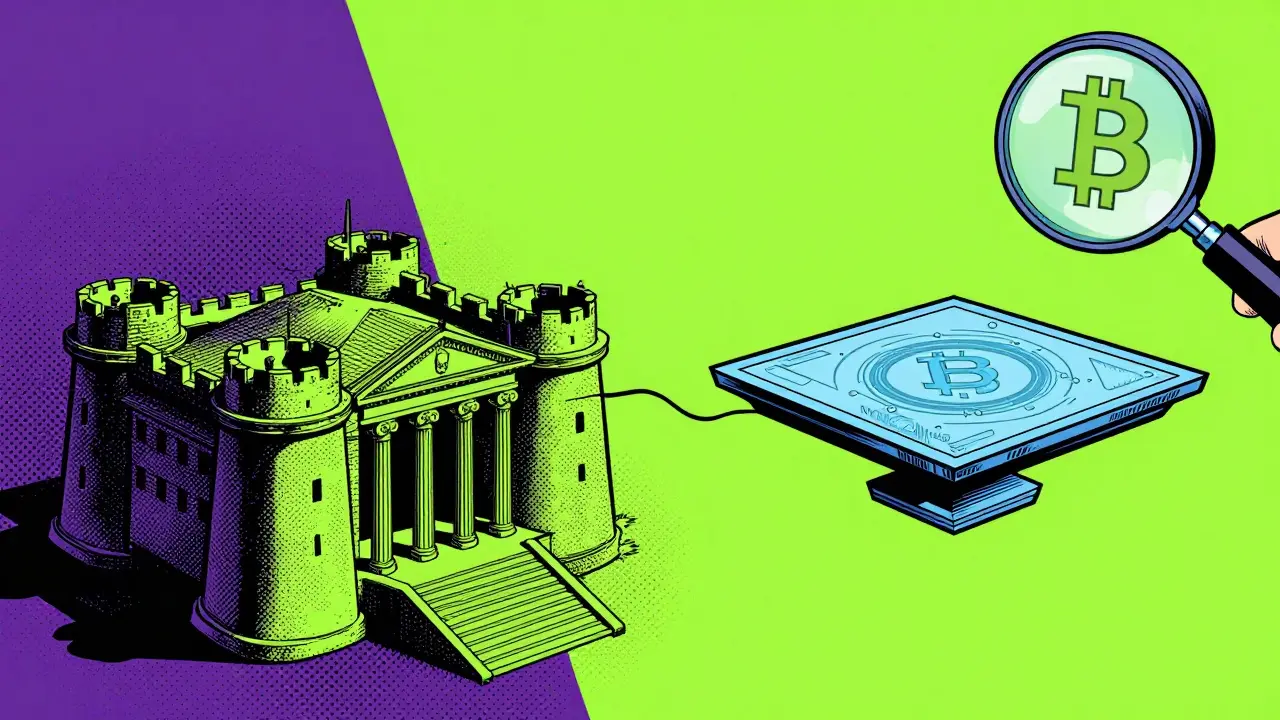
You hold Bitcoin in a secure wallet, but when you try to cash out to your Colombian savings account, the transfer hangs indefinitely. It’s not a glitch; it’s policy. As of March 2026, Colombia banking ban on crypto transactions is the reality financial institutions face under strict supervision. The Financial Superintendency of Colombia has drawn a hard line that separates traditional banking services from the digital asset world. This creates a unique friction point for investors and businesses alike. You aren’t breaking the law by owning crypto, but the system makes moving money through traditional channels nearly impossible.
The Core Prohibition Under SFC Rules
To understand why your bank blocks these transfers, we need to look at the regulator behind the scenes. The Financial Superintendency of ColombiaSFCColombian government body responsible for supervising financial institutions issued clear directives that effectively shut the door on crypto integration within supervised banks. The framework emerged after a public consultation in July 2022, shifting toward a more restrictive stance than previous guidelines.
Under these rules, supervised financial institutions cannot hold custody of cryptoassets. They cannot invest in them. Most critically for daily users, they cannot facilitate transactions involving digital assets. This means your online banking platform or mobile app simply refuses to process a payment to a known exchange address. It’s a blanket prohibition covering the full spectrum of activities banks usually handle.
This isn’t just about blocking a single transfer type. The restriction covers the entire relationship between a bank and a digital asset. If a customer attempts to deposit funds from an exchange into their checking account, the bank’s compliance system flags it. If they try to send pesos to a wallet provider, the transaction is halted. The logic is risk mitigation. The SFC identifies inherent risks in electronic currencies related to money laundering and asset concealment. By removing the bank entirely from the equation, they aim to reduce exposure to these systemic threats.
Reporting Thresholds and UIAF Obligations
While banks say no, other parts of the financial infrastructure are required to keep a close watch. For Payment Service Providers (PSPs) and exchanges operating legally in the country, the rules are different but equally demanding. These entities act as the gatekeepers for the flow of digital money.
The Financial Information and Analysis UnitUIAFUnit responsible for analyzing financial intelligence and combating money laundering sets specific triggers for reporting. Any crypto transaction exceeding USD 150 requires mandatory capture of full sender and recipient data. This is lower than many global thresholds, creating a high bar for privacy. If you move more than roughly 700,000 COP worth of digital assets, your identity and destination are logged.
This real-time reporting requirement forces businesses to invest heavily in compliance technology. RegTech adoption has risen because manual processes fail to meet the speed demands of these regulations. Exchanges must submit suspicious transaction reports instantly. The cost of non-compliance is severe. Some providers have faced fines topping USD 1.5 million for failing to capture the necessary data points. For smaller fintechs, this operational overhead can be the difference between survival and shutdown.
| Feature | Colombia | Brazil | Chile |
|---|---|---|---|
| Banking Access | Prohibited for banks | Allowed | Unrestricted |
| Tax Legislation | Existing income tax | Dedicated crypto tax law (2025) | Standard capital gains |
| Custody Services | Banned for financial firms | Licensed operators | Approved custodians (2025) |
| Stablecoin Rules | Sandbox prerequisite (expired 2023) | Regulated | Regulation pending |
Workarounds: The Bancolombia Exception
If the restrictions are so tight, how do large players still offer crypto services? The answer lies in corporate structuring and separating banking licenses from trading platforms. A prime example is BancolombiaLargest bank in Colombia providing traditional financial services.
Despite the strict SFC rules preventing the bank itself from touching crypto, Bancolombia launched the Wenia crypto exchangeA cryptocurrency trading platform backed by Bancolombia. This entity operates separately from the core banking license. Similarly, they introduced the COPW stablecoin. This signals that institutional support exists even within a restricted environment.
However, this works differently for the average person. While institutional players can build parallel ecosystems, regular retail customers often find themselves stuck. You can open an account on Wenia, but funding it via direct bank transfer might still trigger the same compliance alerts at the bank level. The workaround usually involves using third-party payment processors or international gateways that route funds without triggering the SFC blockades directly at the local bank interface.
The Gray Area of Taxes and Intangible Assets
Trading restrictions are one thing, but the tax authorities view things differently. You do not own illegal property when you hold Bitcoin here. The tax treatment aligns with standard economic frameworks. Digital assets are treated as intangible property. When you sell or trade crypto, any profit falls under existing personal or corporate income tax brackets.
There is no special tax regime exclusively for crypto yet. This creates uncertainty during filing season. Investors must self-report gains based on capital realization events. For businesses engaged in crypto commerce, this means maintaining rigorous ledgers. The absence of dedicated legislation compared to neighbors like Brazil (which passed comprehensive crypto tax laws effective January 2025) leaves room for interpretation. You need to know that profits are taxable, but the mechanism depends on how you classify the activity in your annual declaration.
Regional Context: How Colombia Compares
Understanding the local rules is easier when you look at the broader map. Latin America has seen a surge in stablecoin adoption for cross-border payments, yet each country handles regulation differently. Colombia sits in a middle ground. Unlike countries that imposed outright bans, Colombia avoids prohibiting ownership.
Compare this to ArgentinaNation that recognized Bitcoin for international trade in 2025, which allowed Bitcoin as legal payment for trade. Or ChileCountry approving digital asset custodians in 2025, where three custodians received approval from the Financial Markets Commission. Mexico expanded its Fintech Law in 2024 to explicitly include custody services. Peru even launched blockchain-based government bonds. In this light, Colombia’s banking ban appears conservative.
By 2025, only 12% of emerging markets had outright bans on crypto trading, down from 19% in 2023. Colombia fits the trend of avoiding prohibition while managing risk through restriction. The approach prioritizes consumer protection and anti-money laundering compliance over rapid innovation.

Compliance Costs and Operational Reality
For Virtual Asset Service Providers (VASPs) trying to set up shop, the barrier to entry is high. Participation in the regulatory sandbox was once a prerequisite for new business models, but the original sandbox program expired in December 2023. This created a gap in guidance. New entrants now rely on general standards for anti-money laundering systems mandated by the Superintendency of Companies.
Implementing these measures requires significant infrastructure. You cannot simply sign up for a basic merchant account. Businesses must deploy systems capable of identifying suspicious flows above the threshold. Staff training is essential to ensure employees recognize the indicators of illicit fund movement. Failure leads to reputational damage and financial penalties. Many companies are automating these audit trails to speed up onboarding while keeping regulators satisfied.
Outlook for 2026 and Beyond
As we move through March 2026, the question remains: will this ban lift? Minister of Finance Ricardo Bonilla has acknowledged that cryptocurrencies are a reality. His statements at the June 2023 Banking Convention emphasized that regulation is coming, though it must protect the autonomy of the Central Bank.
Current industry experts anticipate a shift toward comprehensive regulation rather than indefinite banking restrictions. The pressure comes from market demand. The Latin American region continues to lead in stablecoin usage. Keeping banks completely disconnected limits liquidity and efficiency. There is speculation that future legislation could define specific risk management systems that allow greater access. Until then, the path for crypto in Colombia remains functional but difficult.
Is cryptocurrency illegal in Colombia?
No, cryptocurrency is not illegal. However, traditional banks are prohibited from facilitating transactions or holding custody of digital assets. You can own and trade crypto, but moving money through standard banking channels is restricted.
Do I need to pay taxes on crypto gains?
Yes. Digital assets are classified as intangible property. Profits from trading are subject to personal or corporate income tax rates depending on whether you are an individual investor or a business.
Why can't my bank transfer money to an exchange?
The Financial Superintendency prohibits financial institutions from facilitating crypto transactions. Banks filter these requests to avoid violating the regulation and potential fines.
What happens if I send crypto below 150 USD?
Transactions under the USD 150 threshold generally avoid mandatory reporting requirements by PSPs to the UIAF, but they may still face scrutiny if patterns suggest suspicious activity.
Are there approved ways to access crypto in Colombia?
Yes, authorized exchanges and Payment Service Providers operate legally. Institutional players like Bancolombia have subsidiaries such as Wenia that provide regulated access points separate from traditional banking licenses.
Matt Bridger
March 30, 2026 AT 18:50The regulatory framework outlined here presents significant hurdles for financial inclusion in the digital sector the implications extend far beyond mere transaction blocking affecting broader economic sentiment. Institutional separation appears necessary but may inadvertently stifle legitimate innovation efforts within the region.
Shaira Vargas
March 30, 2026 AT 19:09Oh my god this is such a nightmare for anyone trying to save money online why does the government hate us so much its really stressing me out
Shubham Maurya
March 30, 2026 AT 23:10@Shaira lol you sound scared but the numbers speak for themselves bro 😂 your emotions are clouding the obvious fact that AML laws are working perfectly fine tbh 🛑💸 #colombia #crypto
Justin Garcia
April 1, 2026 AT 00:07You are completely wrong about this logic. The regulation is effective and necessary.
Liam Robertson
April 2, 2026 AT 19:06I think we should look at the positive side where Wenia still offers a solution for local users to stay compliant. There is light at the end of the tunnel for those willing to adapt to new channels.
Alex Lo
April 4, 2026 AT 16:13so basically i read teh whole thing and it says banks cant touch crypto anymore in colombia which is really interesting becuse before they used to allow it but now its banned completely by the superintendency. you know how they try to stop money laundering right well they think crypto helps wash dirty money so they blocked transfers to exchanges entirely. its kinda hard to get funds out now if you dont have a special account or something like wenia which is linked to bancolombia but still separate technically. i hope we see changes soon because paying bills with pesos while holding btc is annoying for sure. the uiaf rules are also super strict with the 150 dollar limit which feels low compared to other countries nearby like brazil or chile. maybe next year they will fix the sandbox program that expired last december otherwise new companies wont open easily. everyone talks about taxes being tricky too since theres no specific law yet just general income tax rules applied loosely. i think the goverment wants to protect people but sometimes protection ends up hurting growth too much honestly. hopefully the central bank realizes this friction limits their own economy potential in the digital age. its frustrating seeing neighbors move forward while col stays stuck behind with red tape everywhere. i mean owning is fine but moving cash is the real pain point for daily traders today. regulatory certainty would help everyone sleep better at night regarding compliance issues. businesses need clear guides not vague directives that change every few months during public consultations. cost is high for fintechs trying to enter market due to regtech requirements for reporting data instantly. small guys cant compete with big banks who have resources for legal teams and audit systems already. maybe we wait for 2027 updates to see if min finance ricardo bonilla pushes for reform legislation eventually. until then we adapt with third party processors instead of direct bank links. thats my take after reading through all the sections in detail here.
Wade Berlin
April 5, 2026 AT 07:07Wow quite the wall of text to say nothing substantive. You clearly missed the point about compliance costs being the real issue not just the bans themselves. Try reading closer next time.
Addy Stearns
April 5, 2026 AT 20:43the essence of regulation lies not in control but in understanding the flow of value through modern societies when we observe restrictions placed upon digital assets we see a reflection of societal anxiety regarding trust in centralized versus decentralized systems. colombia stands at a crossroads where tradition meets innovation in the most tangible ways possible the prohibition on banking facilitation is essentially a rejection of risk rather than an endorsement of technology itself. philosophy teaches us that barriers often serve to clarify rather than obstruct our path toward clarity if ownership is permitted then the barrier is merely transactional and not existential in nature. this distinction matters deeply for how we perceive freedom in economic expression during these times historical precedents show that financial tools often become accepted once fears subside regarding their misuse cases. perhaps the current stance is temporary until mechanisms mature enough for safe integration into existing frameworks we must consider whether restriction serves the citizen or the institution more effectively in the long run. true progress requires balancing security needs with the liberty individuals expect when managing personal wealth privately silence from policymakers creates voids filled by speculation which can be more damaging than honest uncertainty itself. eventually laws catch up to reality not through decree but through inevitable pressure from market forces acting collectively it is fascinating to watch how culture shifts slowly under weight of new economic paradigms like blockchain. patience is required when dealing with bureaucracy yet history favors those who endure through transitional periods patiently wisdom comes from observing the interplay between power structures and grassroots adoption patterns alike.
Tiffany Selchow
April 7, 2026 AT 05:40Lets keep our country safe instead of copying what Brazil does. They do everything wrong and we should not follow their bad example.
Elizabeth Akers
April 9, 2026 AT 03:26i feel like everyone is worried but maybe we just need to wait and see how things evolve in the coming years chill vibes needed here imho
Raymond K
April 10, 2026 AT 00:28Great point about taking things slow, you know how important it is to keep a calm head during all these changes. Sometimes color ful ideas get lost in the noise but steady growth is the key to unlocking future possiblities. Just remember to check your local exchange rates before moving any funds around!
Katrina Tate
April 10, 2026 AT 06:39The data suggests a high correlation between reporting thresholds and market liquidity reduction in restricted zones. Numbers indicate compliance overhead outweighs immediate utility gains for retail participants.
Leah Lara
April 11, 2026 AT 09:49This policy ruins everything.
Beverly Menezes
April 12, 2026 AT 16:43We can find peace in the middle ground where regulations protect us without stopping progress entirely. Its okay to be frustrated but lets stay kind to each other.
Jamie Riddell
April 14, 2026 AT 07:28Its understandable to feel overwhelmed by new rules sometimes empathy goes a long way in these discussions. we should listen more before judging the situation too quickly.
Chris R
April 14, 2026 AT 08:26Absolutely correct, staying respectful helps bridge gaps between different perspectives on regulation. We all want a secure financial future regardless of the tools used to get there. Keep pushing for clarity and transparency.
Ronald Siggy
April 15, 2026 AT 21:31Let us focus on actionable steps we can take today to remain compliant with the new guidelines. Knowledge is power and knowing the limits keeps us safe from penalties.
Alex Kuzmenko
April 17, 2026 AT 00:07For sure man! i agree we gotta stay smart abouwt the rules so we dont get finned later. Good tip there thanks for sharing it.