Buying an ASIC miner in 2026 is no longer about just picking the fastest chip. It’s a high-stakes calculation involving electricity costs, cooling infrastructure, and manufacturer reliability. You aren't just buying a box that makes noise; you are deploying industrial-grade equipment where every joule per terahash (J/TH) directly impacts your bottom line. With the market dominated by a few key players, choosing the wrong manufacturer can mean months of negative cash flow or constant hardware failures.
The landscape has shifted dramatically since the early days of GPU mining. Today, Application-Specific Integrated Circuits (ASICs) are specialized machines designed for one purpose: hashing power with maximum efficiency. The top manufacturers-Bitmain, MicroBT, Canaan, ElphaPex, and Bitdeer-each offer distinct advantages depending on your scale, location, and budget. This guide breaks down who wins where, so you don’t waste capital on hardware that doesn’t fit your operation.
Who is the best ASIC manufacturer for beginners?
MicroBT is often considered the best choice for beginners due to its user-friendly firmware, comprehensive documentation, and strong presence in the retail segment. Their WhatsMiner series offers a good balance of efficiency and ease of setup compared to more complex institutional models.
Market Leaders: Who Dominates the Hashrate?
Understanding the market share gives you a clue about reliability and community support. In 2025 and moving into 2026, the industry is highly consolidated. According to Hashrate Index data from late 2024, Bitmain holds approximately 55% of the global market. They set the standard for raw performance and efficiency. If you see a new record for J/TH, it’s likely a Bitmain machine.
MicroBT follows closely with 28% market share. They have carved out a loyal following among professional miners who value firmware stability over peak theoretical speed. Canaan holds about 12%, primarily serving budget-conscious miners and emerging markets where lower upfront costs matter more than peak efficiency. Newer entrants like ElphaPex (3%) and Bitdeer (2%) are niche players, focusing on specific algorithms or vertical integration.
Why does this matter? Market share correlates with resale value and parts availability. If your Bitmain unit fails, finding a replacement hashboard is easier than sourcing parts for a lesser-known brand. However, dominance also means higher prices and potential scalping issues during supply shortages.
Efficiency Wars: J/TH Breakdown by Brand
Efficiency is the single most important metric for profitability. Electricity accounts for 70-85% of your operational costs. A machine that uses less power to produce the same hash rate pays for itself faster. As of late 2024 and early 2025, the top-tier models are achieving between 12 and 17.5 J/TH.
| Manufacturer | Model | Hash Rate | Efficiency (J/TH) | Power Draw | Cooling Type |
|---|---|---|---|---|---|
| Bitmain | Antminer S21 XP Hyd | 473 TH/s | 12 J/TH | 5,676W | Hydrocooling |
| MicroBT | WhatsMiner M66S Immersion | 247 TH/s | 19.9 J/TH | 5,452W | Immersion |
| MicroBT | WhatsMiner M60S | 186 TH/s | 17.5 J/TH | ~3,255W | Air Cooled |
| Canaan | Avalon A1566 | 150 TH/s | 21.5 J/TH | ~3,225W | Air Cooled |
| Bitdeer | SealMiner A2 Pro Hyd | N/A (Proprietary) | Optimized for Internal Use | 7,450W | Hydrocooling |
Bitmain’s S21 XP Hyd leads the pack with 12 J/TH. That is a massive leap from the 15+ J/TH standards of just two years ago. However, this efficiency comes at a premium price point ($14,474 MSRP) and requires hydrocooling infrastructure. For air-cooled setups, MicroBT’s M60S at 17.5 J/TH remains a strong contender, offering a sweet spot for miners with electricity costs between $0.05 and $0.08 per kWh.
Canaan’s Avalon A1566 lags behind at 21.5 J/TH. While less efficient, its lower entry price (~$1,800) makes it viable only if you have access to extremely cheap power (below $0.04/kWh). If your electricity is expensive, Canaan units will struggle to break even after the Bitcoin halving cycles reduce block rewards.
Cooling Technologies: Air vs. Hydro vs. Immersion
In 2026, how you cool your miner is as important as the miner itself. Traditional air cooling is becoming obsolete for large-scale operations due to heat management limits and noise. The industry is shifting toward liquid solutions.
Hydrocooling: Used by Bitmain’s top-tier S21 XP series, hydrocooling circulates water through cold plates attached to the hashboards. This allows the chips to run hotter without throttling, resulting in better efficiency. However, it adds complexity. You need pumps, reservoirs, and leak detection systems. Setup costs increase by $500-$1,200 per unit.
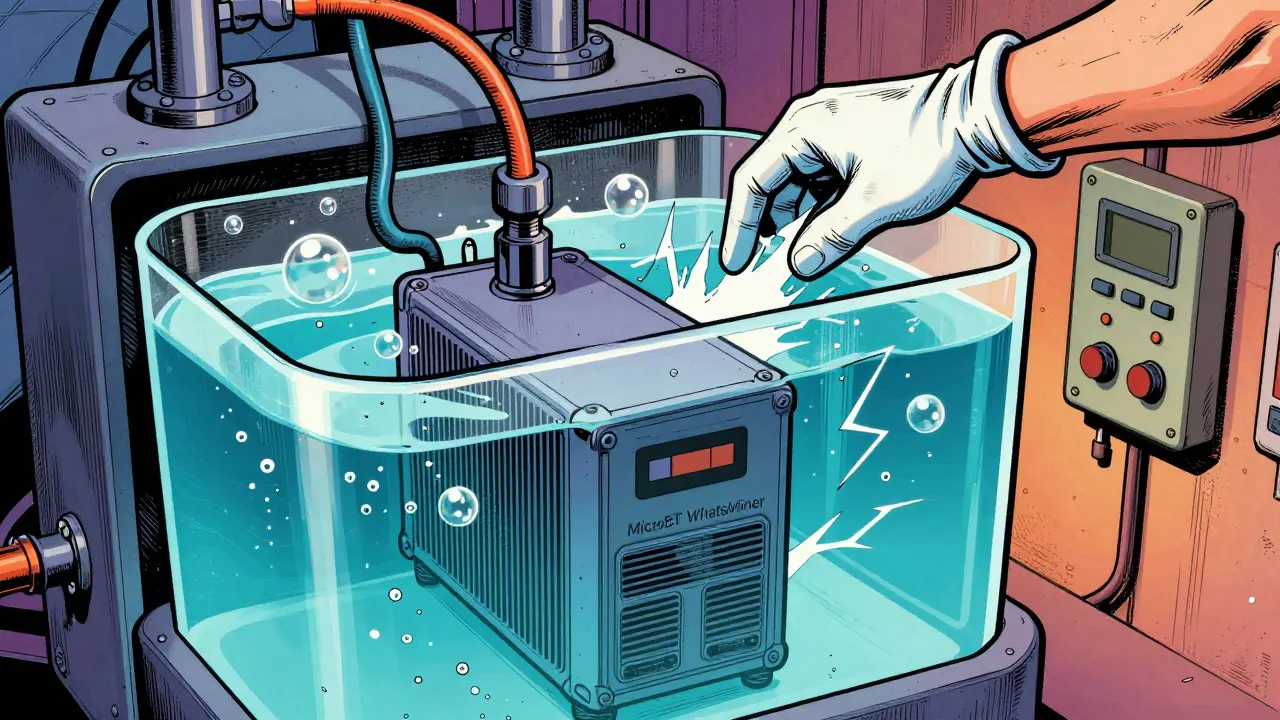
Immersion Cooling: MicroBT’s M66S Immersion model submerges the entire unit in dielectric fluid. This eliminates fans entirely, reducing noise to near zero and allowing for extreme overclocking. Immersion tanks are expensive upfront but offer superior thermal performance (15-20% better than air) and extend hardware lifespan. By Q4 2024, 35% of new deployments were using some form of liquid cooling.
If you are running a small farm at home, stick to air-cooled units like the MicroBT M60S or Canaan A1566. They are loud (95dB+), but they plug into standard outlets and require no plumbing. For industrial sites, hydro or immersion is mandatory to maximize density and efficiency.
Cost Analysis: Upfront Price vs. Long-Term ROI
Don’t be fooled by the sticker price. A cheaper miner might cost more over its lifetime due to higher electricity bills. Let’s look at a real-world scenario.
Imagine you pay $0.06/kWh for electricity.
• Bitmain S21 Pro: Consumes 3,510W. Daily electricity cost: ~$5.05.
• Canaan A1566: Consumes ~3,225W. Daily electricity cost: ~$4.64.
On paper, Canaan saves you $0.41 a day. But the S21 Pro produces 234 TH/s while the A1566 produces 150 TH/s. The Bitmain unit generates significantly more revenue, easily offsetting the extra power cost. The breakeven analysis shows that unless your power is below $0.04/kWh, the higher efficiency of Bitmain and MicroBT pays off within months.
However, consider the initial investment. Bitmain’s premium models often sell for 200-300% above MSRP due to scalpers. MicroBT units tend to hold closer to their listed prices, making them more predictable for budgeting. Canaan’s low entry price is attractive for cash-strapped miners, but the risk of obsolescence is higher given their slower innovation cycle.
Reliability and Support: What Users Really Say
Spec sheets lie; uptime tells the truth. Community feedback from Reddit’s r/BitcoinMining and Trustpilot reviews highlights stark differences in customer experience.
Bitmain: Users report 99.7% uptime on S21 series units over eight-month periods. The hardware is robust. However, their customer support is notoriously difficult to reach, and pricing volatility is a major complaint. Trustpilot rating: 3.8/5.
MicroBT: Praised for firmware stability. Nic Carter of Castle Island Ventures notes that MicroBT’s consistent yield rates make them the "professional miner's choice." However, users have reported occasional auto-reboot bugs that require firmware patches. Their documentation is superior, with detailed guides for thermal management. Trustpilot rating: 4.1/5.
Canaan: Struggles with support responsiveness. Average response times for technical inquiries hit 72 hours. Noise levels are a frequent complaint, requiring additional soundproofing investments. Trustpilot rating: 3.5/5.
ElphaPex & Bitdeer: ElphaPex excels in community support via Discord, with responses under 15 minutes, but suffers from long shipping delays (11+ weeks). Bitdeer’s hardware is rarely available to retail buyers, limiting insights to institutional reports.
Niche Players: Scrypt and Vertical Integration
Not all ASICs mine Bitcoin. The Scrypt algorithm, used by Litecoin and Dogecoin, has its own ecosystem. ElphaPex dominates this space with the DG Hydro 1, delivering 20 GH/s. While it consumes more power (6,200W) than competitors like Fluminer’s L1 Pro, its hash rate advantage appeals to dedicated altcoin miners.
Bitdeer takes a different approach. Spun off from Bitmain, Bitdeer focuses on vertical integration. They build miners (SealMiner series) specifically for their own mining facilities. This allows for optimized software-hardware synergy but means independent operators rarely get access. If you’re not partnering with Bitdeer, their hardware isn’t an option for you.
Regulatory and Environmental Factors
The regulatory environment is tightening. The EU’s Energy Efficiency Directive (effective Jan 2025) mandates that new ASICs achieve ≤15 J/TH. This effectively bans older, inefficient models from European markets. If you operate in Europe, you must buy Bitmain S21 series or newer MicroBT immersion units to comply.
Environmental concerns are driving the shift to green energy and efficient cooling. Miners in regions with unstable grids, like Nigeria, favor Canaan’s lower-cost units despite inefficiencies because they can afford fewer replacements. In contrast, US institutional farms (which grew 22% in Q4 2024) overwhelmingly choose Bitmain for its proven track record and efficiency compliance.
Future Outlook: What’s Next for ASIC Manufacturers?
The race for efficiency continues. Bitmain announced the S22 series targeting 10 J/TH, scheduled for Q3 2025. MicroBT is developing the M70 series with expected 140 TH/s at 14 J/TH. Canaan faces delays with their A16 series due to 5nm chip yield issues.
Industry analysts predict consolidation. With thinning margins and intense competition, 2-3 manufacturers may exit the market by 2026. Bitmain’s R&D investment ($1.2 billion in 2024) positions them strongly, while newer entrants like ElphaPex face scrutiny over supply chain resilience.
For buyers, the advice is clear: prioritize efficiency and support over lowest upfront cost. Choose Bitmain for maximum performance and institutional scale, MicroBT for reliability and ease of use, and Canaan only if budget constraints are absolute and electricity is nearly free. Always verify current pricing and availability, as the market fluctuates rapidly with Bitcoin’s price action.
Is it worth buying an ASIC miner in 2026?
Yes, but only if you have access to cheap electricity (below $0.08/kWh) and understand the operational complexities. The margin for error is slim, and efficiency is critical. High-efficiency models from Bitmain and MicroBT remain profitable, while older or less efficient models may not cover power costs.
Which ASIC manufacturer has the best customer support?
MicroBT generally receives higher marks for documentation and firmware support. ElphaPex offers exceptional community-driven support via Discord. Bitmain and Canaan lag behind, with Bitmain having limited direct support channels and Canaan suffering from slow response times.
Can I mine Litecoin with a Bitcoin ASIC?
No. Bitcoin ASICs use the SHA-256 algorithm, while Litecoin uses Scrypt. You need a specialized Scrypt ASIC, such as those from ElphaPex or Fluminer, to mine Litecoin and Dogecoin efficiently.
What is the difference between hydrocooling and immersion cooling?
Hydrocooling uses water pipes connected to cold plates on the hashboards, requiring pumps and reservoirs. Immersion cooling submerges the entire miner in non-conductive dielectric fluid, eliminating fans and allowing for higher density and quieter operation, though with higher initial tank costs.
Are Bitdeer miners available to the public?
Generally, no. Bitdeer focuses on vertical integration, building SealMiner units primarily for their own mining facilities. Independent retailers rarely have stock, making them inaccessible for most individual or small-scale miners.