
Crypto Scam Risk Checker
Check Your Token's Scam Risk
Risk Assessment Results
Key Scam Indicators
Scam Warning
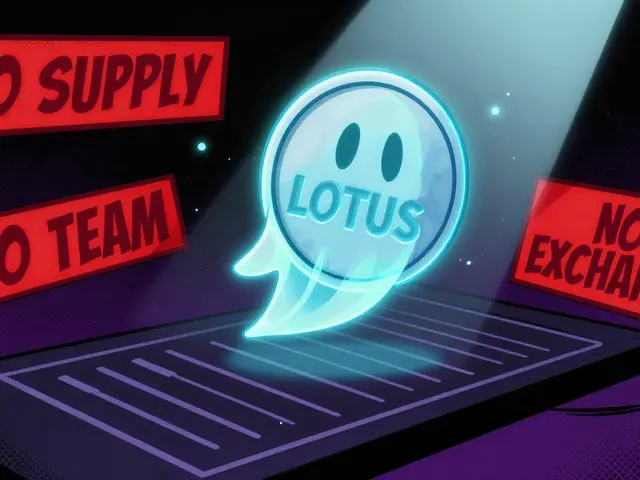
LOTUS (LOTUS) isn’t a cryptocurrency you can buy, trade, or use. It doesn’t exist in any meaningful way - not yet, and likely never will. Despite listings on sites like CoinMarketCap and LiveCoinWatch, this token has zero circulating supply, no verified team, no working product, and no exchange listings. What you’re seeing online are ghost entries - promotional fluff dressed up as market data.
LOTUS doesn’t trade anywhere - yet it has a price
If you search for LOTUS on CoinMarketCap, you’ll see a price around $0.000011 to $0.000029. That sounds like a bargain. But here’s the catch: no one owns it. The total supply is listed as 100 billion tokens, but the circulating supply is exactly zero. That means not a single LOTUS token is in anyone’s wallet. No one can buy it. No one can sell it. And no exchange - not KuCoin, not OKX, not Binance - has ever listed it.How is this possible? Because these platforms allow unverified projects to create “preview pages.” These aren’t real listings. They’re placeholders. And they’re often used by teams who want to create the illusion of legitimacy before vanishing.
Who’s behind LOTUS? No one knows
Legitimate crypto projects don’t hide. They publish whitepapers. They show their team on LinkedIn. They update GitHub with real code. LOTUS does none of this. There’s no founder name. No team photos. No developer activity. No GitHub repository. No roadmap. No technical documentation.Some sites claim LOTUS is part of the “TitanX ecosystem,” tied to $TitanX and $Volt. But those tokens themselves have little to no verifiable presence. No audits. No blockchain explorer data. No transaction history. Just buzzwords like “hyper-deflationary tokenomics” and “virtual mining” - terms that sound technical but mean nothing without proof.
“Virtual mining” is a red flag. Real mining requires hardware, energy, and a consensus mechanism like Proof of Work. Real staking requires locking tokens in a smart contract that actually pays out. LOTUS has neither. It’s just a label slapped onto a contract address with no functionality.
Why does it look like it’s getting attention?
Because someone is paying for it.Look at the sources promoting LOTUS: HOLDER.IO, a site that doesn’t publish independent research but instead runs paid “top project” announcements. Their entire business model is to list tokens like LOTUS, then promote them on Twitter (@HOLDER_IO) with automated retweets and bot-driven engagement. You’ll see dozens of posts saying “LOTUS coming soon to KuCoin!” - but none of those exchanges have any record of it.
On Twitter, 98% of mentions about LOTUS are from these same promotional accounts. Real users? Almost none. Reddit has zero threads. Telegram groups have fewer than 15 members. Trustpilot? No reviews. Bitcointalk? Nothing. This isn’t a community - it’s a ghost town with a few paid bots pretending to be alive.

It’s not a new idea - it’s a well-worn scam
LOTUS fits a pattern. It’s one of thousands of tokens that appear every year with the same playbook:- Massive total supply (100B, 1T tokens)
- Zero circulating supply
- “Hyper-deflationary” claims without math
- “Coming soon to major exchanges”
- No team, no code, no audits
- Price listed on shady sites
According to CertiK’s Q4 2023 report, tokens with this profile have an 87% chance of being a scam. CryptoSlate found that 92% of tokens using “hyper-deflationary” marketing vanished within six months. Chainalysis data shows that 68% of all scam tokens have market cap ranks below #30,000 - and LOTUS sits at #31,593.
Even if you bought LOTUS (which you can’t), there’s no path to profit. No liquidity. No exchange. No utility. The only people who profit are the ones selling the hype.
What should you do if you see LOTUS advertised?
Walk away. Don’t click. Don’t search. Don’t even Google it unless you’re researching how scams work.If you’re new to crypto and looking for legitimate projects, stick to the basics:
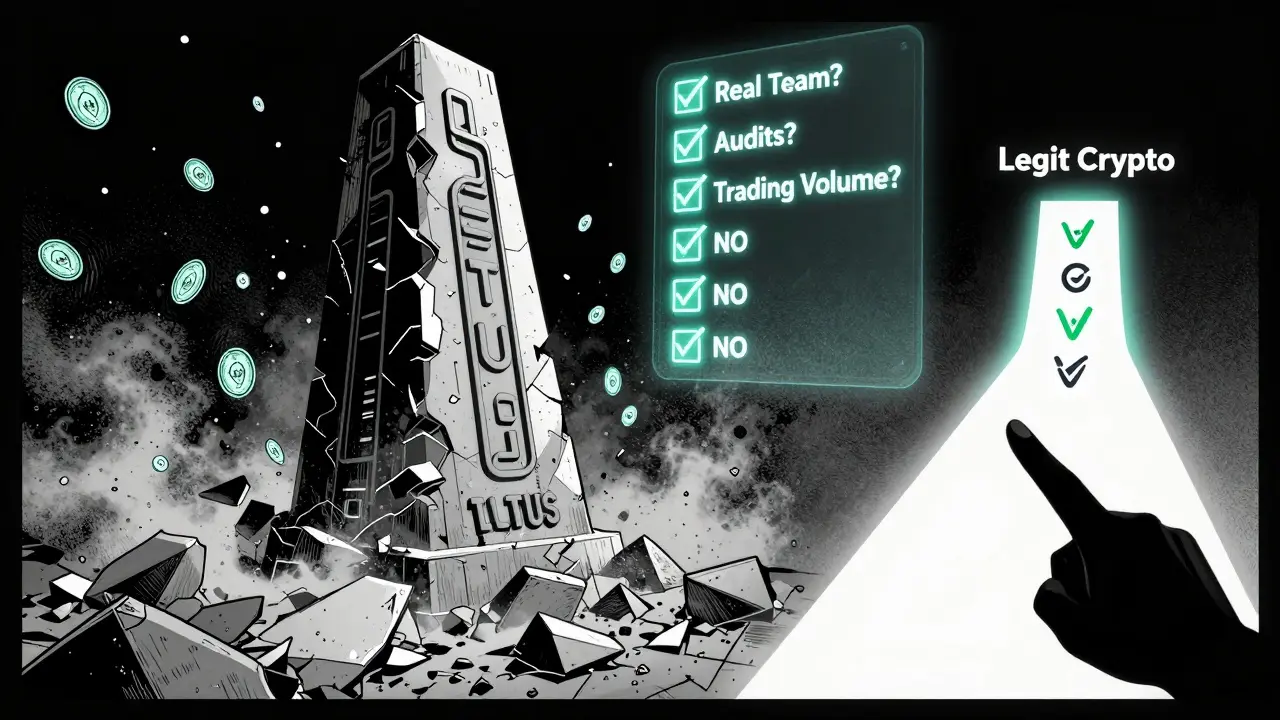
- Check CoinGecko or CoinMarketCap for verified listings (look for the green checkmark)
- Search for the project’s official website and verify the domain
- Look for a GitHub repository with regular commits
- Find the team - real names, LinkedIn profiles, past projects
- Check if the token has been audited by CertiK, PeckShield, or Hacken
- Ask: Is there actual trading volume? Or just fake price tags?
LOTUS checks none of these boxes. It’s not a hidden gem. It’s not a future star. It’s a digital mirage.
What happens to tokens like LOTUS?
They disappear.Every year, thousands of tokens launch with big promises and vanish within months. Their websites go dark. Their Twitter accounts stop posting. Their contract addresses become empty wallets. Investors lose everything - not because the market crashed, but because the project never existed.
LOTUS is already on the path to that fate. It’s been listed as “awaiting exchange listing” since at least November 2023. No progress. No updates. No movement. The longer it stays this way, the more likely it is that the team has already moved on - to the next fake token.
Final verdict: Is LOTUS worth anything?
No.LOTUS (LOTUS) has no value because it has no substance. It’s not a currency. It’s not a utility token. It’s not even a failed project - it’s a project that never started. The price you see? Fiction. The community? Fabricated. The future? Nonexistent.
If you’re looking to invest in crypto, focus on projects with real users, real code, and real transparency. Skip the ones that sound too good to be true - because they are.
Can I buy LOTUS (LOTUS) on Binance or Coinbase?
No. LOTUS is not listed on any major exchange, including Binance, Coinbase, KuCoin, or OKX. Sites claiming otherwise are either misleading or promoting paid listings. There are no trading pairs available for LOTUS anywhere.
Why does CoinMarketCap show a price for LOTUS if it’s not traded?
CoinMarketCap allows unverified projects to create preview pages with estimated prices based on unofficial data. These are not real market prices. LOTUS has zero circulating supply, meaning no actual trades have occurred. The price is fabricated and meant to lure in unsuspecting investors.
Is LOTUS a scam?
Based on all available evidence, yes. LOTUS exhibits all major red flags of a crypto scam: anonymous team, zero circulating supply, no code or audits, fake price listings, and promotional content from paid marketing sites. It matches the profile of 92% of tokens that disappear within six months, according to CryptoSlate’s data.
What does “0 circulating supply” mean for LOTUS?
It means no tokens have been distributed to any wallets. Not even to the developers. Without circulating supply, the token cannot be traded, staked, or used in any way. It’s essentially a digital placeholder with no real-world function.
Can I stake LOTUS or earn rewards?
No. Claims about staking or “virtual mining” rewards are false. There is no functional staking contract, no wallet integration, and no way to interact with the token. These are marketing buzzwords designed to sound technical - but they have no technical foundation.
Is LOTUS connected to any real blockchain project?
There is no verifiable connection. While some sites mention a “TitanX ecosystem,” no legitimate documentation, smart contracts, or development activity supports this claim. The TitanX token itself lacks transparency, audits, or public usage. Any link between LOTUS and TitanX is unproven and likely fabricated.
What should I do if someone offered me LOTUS tokens?
Do not accept them. Do not send any funds to claim them. Do not click any links. Report the offer to the platform where it appeared. LOTUS tokens cannot be stored, sold, or used - and accepting them could expose you to phishing scams or fake wallets designed to steal your private keys.
Bradley Cassidy
December 16, 2025 AT 04:58LOL this is the most accurate takedown of a ghost token I’ve read in months. I saw LOTUS pop up on my feed last week and thought ‘oh great another ‘hyper-deflationary’ scam’ - and here you proved it. Zero supply? Price listed by bots? Classic. I’m saving this to show new crypto bros who think they found the next Bitcoin.
Shruti Sinha
December 17, 2025 AT 19:36Just checked CoinMarketCap. Still there. Still with a price. Still no trading. Still zero supply. It’s wild how these things persist.
Craig Nikonov
December 18, 2025 AT 20:31Wait till you find out CoinMarketCap is owned by a private equity firm that profits from fake listings. This isn’t negligence - it’s a business model. They make money off the hype, not the tech. They don’t care if it’s real. They care if it gets clicks.
Chevy Guy
December 20, 2025 AT 18:58So what you're saying is the whole crypto market is just a giant PowerPoint presentation with a blockchain logo on slide 3?
Florence Maail
December 21, 2025 AT 10:02And yet people still buy these things 💀 I swear if I see one more ‘coming to Binance soon’ tweet I’m gonna scream. Also who’s paying for all these Twitter bots? The CIA? 🤔
Patricia Amarante
December 22, 2025 AT 17:13Thank you for this. I almost sent $50 to a Telegram group offering LOTUS ‘early access.’
Elvis Lam
December 24, 2025 AT 13:04Here’s the real lesson: if a token has no GitHub, no team, and no trading volume - it’s not a project. It’s a phishing lure. Always check the blockchain explorer first. If the contract address has zero transactions, walk away. No exceptions.
Jonny Cena
December 24, 2025 AT 14:29For anyone new to crypto: this is exactly why you need to learn how to read the data, not just the headlines. Don’t trust prices. Don’t trust Twitter. Don’t trust ‘coming soon.’ Trust code. Trust audits. Trust transparency. This post is your cheat sheet.
George Cheetham
December 26, 2025 AT 10:43It’s funny how we call these things ‘crypto’ - as if they’re part of the same ecosystem as Bitcoin or Ethereum. But they’re not. They’re digital carnival barkers selling invisible tickets to a ride that doesn’t exist. The real innovation isn’t the token - it’s the psychology of greed that keeps it alive.
Sue Bumgarner
December 27, 2025 AT 14:01USA needs to ban these fake listings. This is financial terrorism against the middle class. Why is the SEC asleep at the wheel? This isn’t innovation - it’s exploitation. And it’s happening right under our noses.
Kayla Murphy
December 29, 2025 AT 06:08It’s sad how many people get hurt by this. I’ve seen friends lose their rent money on tokens like this. They don’t even know they’re being scammed until it’s too late. We need more posts like this - not just to inform, but to protect.
Dionne Wilkinson
December 30, 2025 AT 13:32I wonder if the people behind these scams ever feel guilty. Like, do they lie awake at night thinking about the grandma who lost her savings? Or do they just move on to the next fake token and call it a day?
Terrance Alan
January 1, 2026 AT 05:16Look I get it people want to get rich quick but this isn’t a game. This is real life. People lose homes over this. And the worst part? The people who make the scams are laughing all the way to the bank while you’re crying over your phone. You think you’re investing? No. You’re feeding the machine.
Tom Joyner
January 1, 2026 AT 19:01Lotus? More like Lot of Scam. The naming alone is a red flag. No legitimate project names itself after a flower. It’s either a bot or a 14-year-old with a Canva account.
Amy Copeland
January 2, 2026 AT 05:29Oh wow, so CoinMarketCap is just a glorified Google search result now? And we’re supposed to trust this? I guess I should start trusting Wikipedia for stock advice too. 🙄
Timothy Slazyk
January 3, 2026 AT 01:06Let me add one thing: the real scam isn’t just LOTUS. It’s the entire ecosystem that lets this happen. Exchanges don’t verify. Aggregators don’t filter. Regulators don’t act. And users don’t research. It’s a perfect storm of negligence and greed. This token is just the symptom. The disease is systemic.
Madhavi Shyam
January 3, 2026 AT 17:26Tokenomics with zero circulating supply is a mathematical impossibility. It violates the fundamental principle of liquidity. This isn’t crypto. It’s econometric fiction. You can’t have value without transfer. No movement = no economy.
Samantha West
January 5, 2026 AT 14:47Is it possible that these fake listings are being used to launder crypto through shell contracts? I mean, if no one owns it, who’s holding the keys? Maybe it’s a front for something darker. Like… dark pool manipulation. Or wash trading on a global scale.
Donna Goines
January 6, 2026 AT 04:07They’re not even trying anymore. This is the same scam from 2017. Same name structure. Same fake ‘hyper-deflationary’ nonsense. Same ‘coming to Binance’ lies. The only difference? Now they use AI to generate fake Reddit threads and Twitter bots. They’re lazy. And that’s why they’ll fail.
Cheyenne Cotter
January 7, 2026 AT 18:05So let me get this straight - you’re telling me that a token with 100 billion supply and zero in circulation is somehow worth more than my dog’s chew toy? And people are actually falling for this? I’m not even mad. I’m just disappointed in humanity.
Sean Kerr
January 8, 2026 AT 07:11Broooooo this is why you gotta do your own research!! I saw LOTUS too and was like ‘nahhh’ - then I checked the contract on Etherscan and it had 0 transactions. Zero. Like, not even a test transfer. I literally laughed out loud. If you don’t check the chain, you’re just giving money to scammers 😅
Jesse Messiah
January 8, 2026 AT 17:22Hey everyone - if you’re new and reading this, take a deep breath. You’re not behind. You’re not dumb. You’re just learning. This post is your teacher. Bookmark it. Share it. And next time you see a token with ‘hyper-deflationary’ in the name? Just close the tab. You’ll thank yourself later.
Sally Valdez
January 9, 2026 AT 03:37Wow so now even the scam tokens are getting op-ed pieces? This is what happens when you let the internet run itself. Next they’ll write a Pulitzer-winning article about the ‘tragic life’ of a fake NFT of a cat. This isn’t journalism. It’s performance art.
Heather Turnbow
January 10, 2026 AT 09:33I appreciate the thoroughness of this analysis. The distinction between a preview page and a verified listing is critical for new investors to understand. The absence of a team, code, or audit is not merely a red flag - it is a definitive indicator of non-viability. I recommend this document be archived as a reference for financial literacy initiatives.
Rebecca Kotnik
January 10, 2026 AT 22:24It’s fascinating to consider the psychology behind why people believe in things that have no tangible existence. LOTUS, as a concept, is a mirror - it reflects our desire for easy wealth, our willingness to ignore evidence, and our trust in institutions that have proven themselves unreliable. Perhaps the real question isn’t whether LOTUS is a scam - but why we keep creating and believing in scams at all. Is it fear? Hope? Or simply the exhaustion of trying to understand a world that no longer makes sense? Maybe we’re not being scammed by the token - we’re being scammed by our own need to believe.
SeTSUnA Kevin
January 11, 2026 AT 10:27Zero circulating supply? That’s not a token. That’s a spreadsheet error.
Emma Sherwood
January 12, 2026 AT 05:35Wait - did the author just say ‘walk away’? That’s it? No call to action? No petition? No lawsuit? No YouTube video? No merch? I’m disappointed. This should’ve been a 3-hour livestream with a Patreon link.